

Why governance changes in Azerbaijan’s Nakhchivan matter






Azerbaijan: the model of governance in Nakhchivan
Nakhchivan, which has no direct land connection with the rest of Azerbaijan, has effectively been governed as a “state within a state”. Its legal status and model of governance are now undergoing a significant transformation.
This transformation, first announced in 2022, carries a number of implications for the legal distribution of powers and the style of political governance.
This article examines the legal aspects of these changes and their political prospects.

Legal framework
Nakhchivan’s autonomy is anchored in historical treaties and enshrined in Azerbaijan’s constitution. Under the 1921 Treaty of Kars, the Nakhchivan Autonomous Republic is recognised as an integral part of the Republic of Azerbaijan with a special status.
Any change to this status is possible only through lawful and constitutional procedures. It cannot be revoked on the basis of external assumptions. Recent developments show that while the formal status of autonomy remains intact, the legal foundations of governance in Nakhchivan are being revised.
In recent months, the Azerbaijani authorities have carried out constitutional reforms in Nakhchivan.
The Milli Majlis has approved a series of significant amendments to the constitution of the Nakhchivan Autonomous Republic. These changes redistribute the powers of the autonomous institutions and integrate Nakhchivan more closely into Azerbaijan’s unified legal framework.
- An authorised representative office of the President of the Republic of Azerbaijan has been established in the territory of the Nakhchivan Autonomous Republic. The office will carry out executive functions defined by the President and will be headed by a representative directly subordinate to him. For the first time, a direct representative of the central executive authority has acquired a legally defined status in Nakhchivan.
- Under the new Article 28-1 of the constitution, the President of Azerbaijan gains the power to dissolve the Supreme Majlis of Nakhchivan in certain cases. These include a request by 31 deputies or the loss of legal capacity. The change strengthens central oversight of the Supreme Majlis and allows for a rapid political response in emergency situations.
- The constitution of the Nakhchivan Autonomous Republic removes the provision defining the chair of the Supreme Majlis as the “highest official”. Previously, executive authority in Nakhchivan was effectively concentrated in the hands of the Supreme Majlis chair. This arrangement violated the principle of the separation of powers. The new changes address this imbalance by ensuring that executive authority in Nakhchivan is exercised exclusively through the institution of the presidency, in line with the country’s constitution.
- Nakhchivan’s cabinet of ministers will no longer report to the Supreme Majlis. Its work will instead be regulated by rules approved by the President of Azerbaijan. At the same time, several ministries and committees in Nakhchivan are being abolished and reorganised as regional branches of republican-level institutions.
- Bodies such as the Customs Committee and the State Security Service no longer operate in Nakhchivan as independent structures. They now function as subdivisions directly subordinate to Baku. Experts say the integration of other ministries and committees is inevitable. These institutions had previously contributed to Nakhchivan functioning as a de facto separate state.
As a result of these legal reforms, Nakhchivan’s special status formally remains in place. However, the institutions of the autonomous republic are being aligned with Azerbaijan’s unified legal system. This restores a clearer balance of powers. The Supreme Majlis continues to operate as a local legislative body, while executive authority becomes integrated into the central system of governance.
Political outlook
The changes to Nakhchivan’s system of governance mark a new phase in Azerbaijan’s political landscape. From 1995 until the end of 2022, Nakhchivan was effectively run by Vasif Talibov. As chair of the Supreme Majlis, he also exercised control over the executive branch.
Sources close to the government say this arrangement gave Nakhchivan a semi-autonomous model of governance that differed from the rest of the country.
Over many years, this led to the emergence of a closed and corrupt system based on personalised rule. Despite receiving substantial financial subsidies from the central budget, the autonomous republic repeatedly attracted scrutiny over the opaque use of public funds. In the autumn of 2022, a series of arrests of senior officials followed. Investigators uncovered the embezzlement of millions of manats. These developments exposed the collapse of the existing governance model.
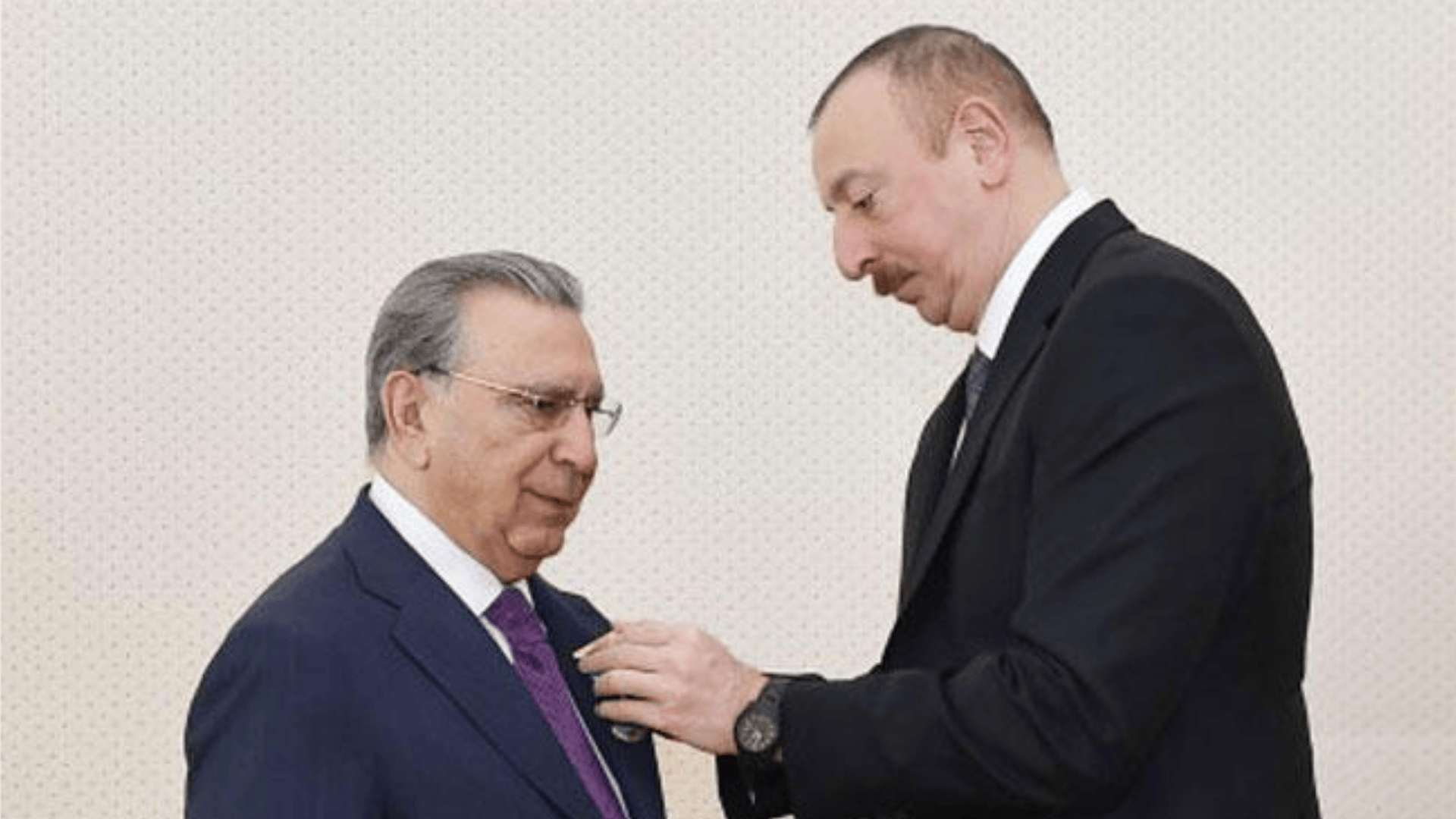
The political transformation formally began with Talibov’s resignation in December 2022. Soon after, President Ilham Aliyev appointed his authorised representative to the Nakhchivan Autonomous Republic, Fuad Najafli. In doing so, he effectively put in place a new model of executive governance in the autonomy.
The president’s representative was tasked with establishing direct engagement with the public, combating corruption and bribery, and carrying out personnel reforms. Politically, this move is seen as marking the end of the so-called “khan” period in Nakhchivan’s history. Control over the region now lies directly with the president of Azerbaijan. No autonomous centre of power outside the central authorities remains.
The current changes are also part of a broader policy of centralisation of power. After the liberation of the Karabakh region from occupation in 2020, the president also introduced the institution of special representatives there. Applying a similar model in Nakhchivan suggests that all regions of the country are being incorporated into a unified system of governance.
Political observers close to the government note that while Nakhchivan was previously perceived as a “state within a state”, this division is now being dismantled and political and institutional unity within Azerbaijan is being strengthened. Constitutional reforms and parallel structural changes are aimed at eliminating the effect of “dual power”.
The transformation also has a geopolitical dimension. Nakhchivan is located in a strategically sensitive region, bordering Turkey and Iran. Since 1921, Turkey has acted as a guarantor of Nakhchivan’s autonomous status and has maintained special ties with the region. Restructuring governance in Nakhchivan under Baku’s direct control may facilitate even closer coordination between Ankara and Baku.
Azerbaijan: the model of governance in Nakhchivan