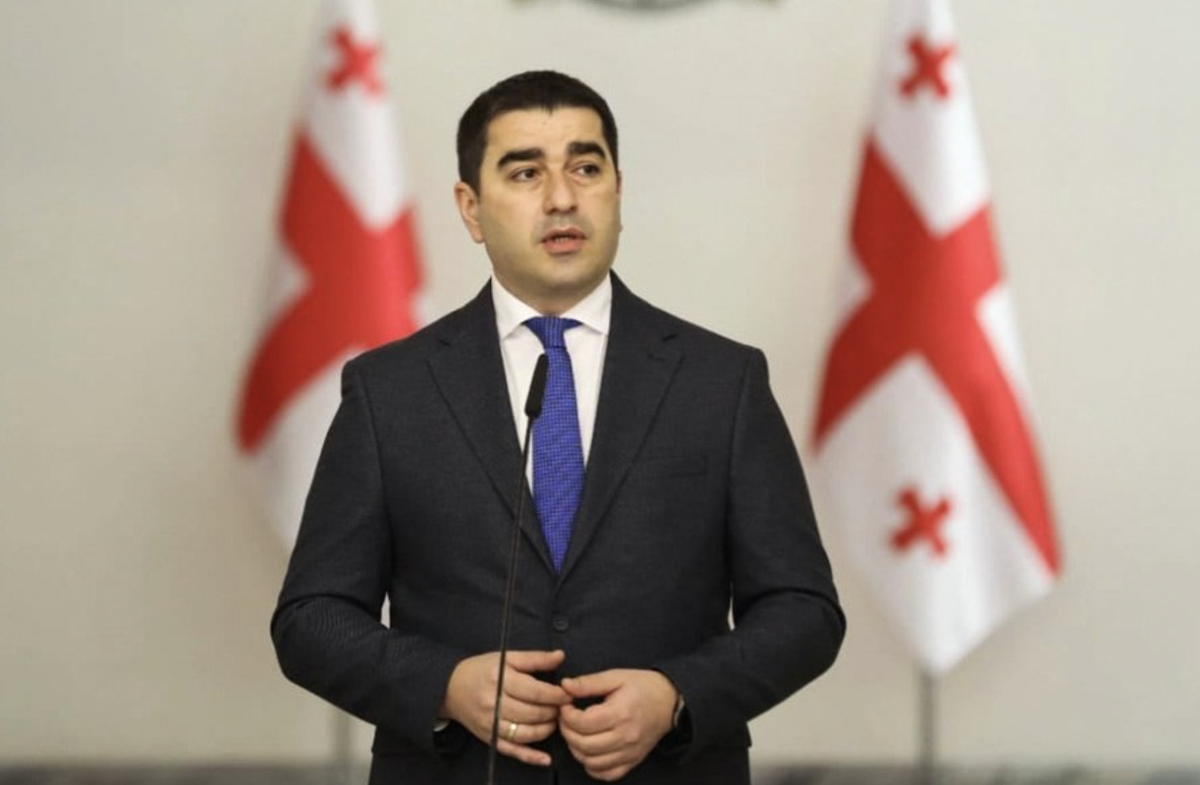
Post-conflict Azerbaijan: what Ilham Aliyev told local TV channels






Ilham Aliyev’s year-end interview
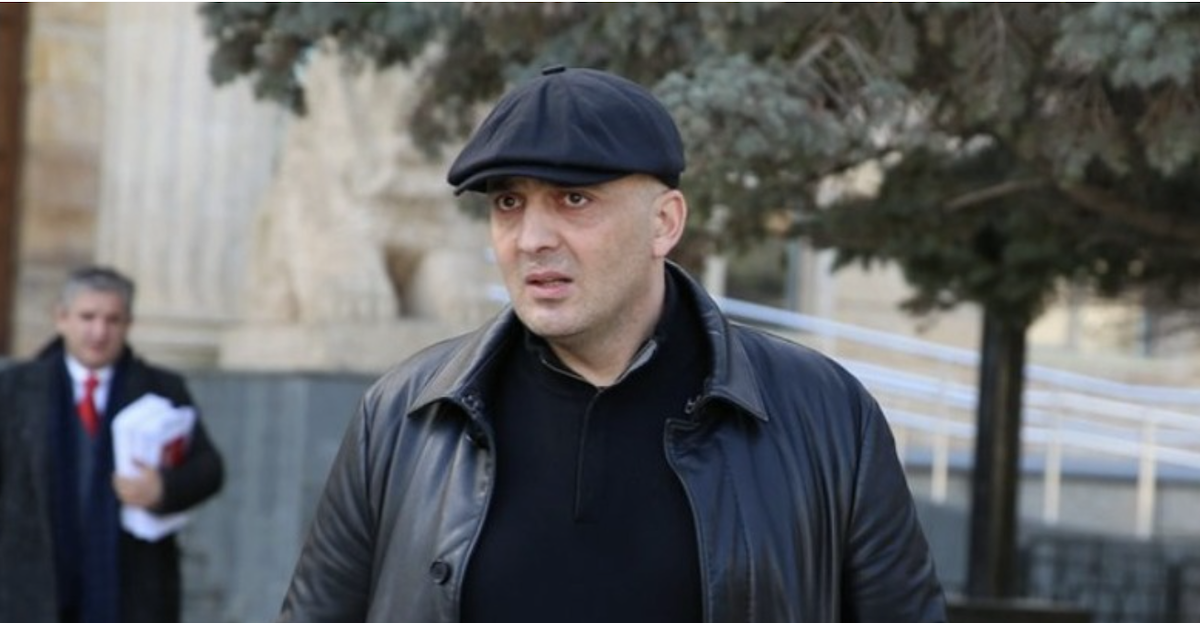
Azerbaijan’s President Ilham Aliyev has given an extensive interview to local television channels. In the annual conversation, which has become a tradition, he reviewed the outcomes of 2025 and outlined priorities for the period ahead.
Below are the key points from the interview, focusing on relations with Armenia, social policy, foreign ties and domestic politics.
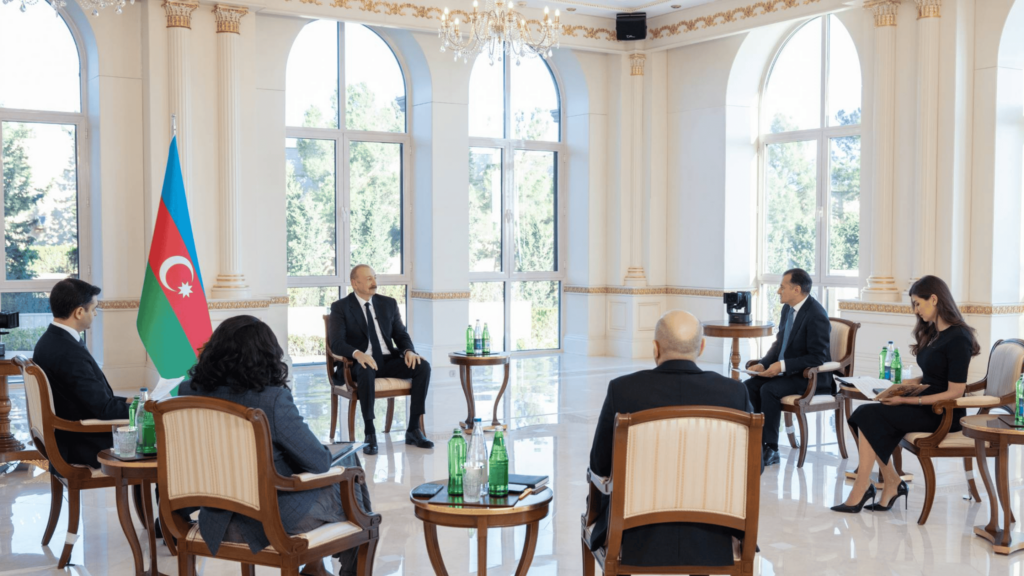
Relations with Armenia: peace process and prospects
Ilham Aliyev highlighted the historical significance of 2025 for Azerbaijan, saying that the Armenian-Azerbaijani conflict had been politically resolved that year and that the country had, for the first time since gaining independence, begun living in a state of peace.
He noted that even a few months of peaceful conditions had already led to positive political and economic trends, and that public confidence in stability had increased. According to Aliyev, the Azerbaijani people would now live in a state of lasting peace.
Peace agreement and normalization
In an interview, President Aliyev said that the process of comprehensive normalization with Armenia had already delivered the desired results for Baku. He noted that, under bilateral agreements, all necessary issues had been resolved in line with Azerbaijan’s objectives.
Aliyev also recalled the initialling of the peace agreement text between Azerbaijan and Armenia in August 2025 in Washington, with the participation of US President Donald Trump, as well as the signing of a joint declaration by both sides.
He described the event as historic, signalling the political conclusion of the conflict, and said that the opposing side had also accepted the new reality. According to Aliyev, Armenia now recognises the territorial integrity and sovereignty that Azerbaijan secured following its 2020 victory.
Border definition and communications
Statements from President Ilham Aliyev indicate that the process of mutual recognition of state borders between Azerbaijan and Armenia has largely been agreed. In particular, a consensus has been reached on opening a transport route known as the Zangezur corridor.
Aliyev noted that the route, which will connect Azerbaijan with its exclave of Nakhchivan, has already received political backing from the US president. He added that while the name of the corridor could change, its purpose would remain the same.
The corridor is expected to provide direct transport links between mainland Azerbaijan and Nakhchivan, while also opening new regional transit opportunities. Aliyev said he believed Armenia would not renege on the agreement, describing such a move as “suicidal.”
He also stressed that the new communications would benefit Armenia itself, giving the country access to Russia’s railway network through Azerbaijan and to Iran’s railways via Nakhchivan.
According to the president, these projects should leave “no losing side,” as regional economic cooperation will benefit all parties.
Aliyev said that by closing the chapter on the conflict, Azerbaijan had achieved long-term peace in the region. He added that without decisive steps, including local counter-terrorism operations carried out in September 2023, the Washington meeting on 8 August and subsequent peace agreements would not have been possible.
He said that Azerbaijan now hopes to sign a formal peace agreement based on mutual recognition of territorial integrity and that the country is already beginning to experience the benefits of the post-conflict period. According to Aliyev, conditions are now more favourable for meeting all of Azerbaijan’s national objectives.
Social policy and public welfare
In an interview, President Ilham Aliyev said that social policy remains a consistent priority for the state.
He stressed that Azerbaijani citizens are at the centre of government policy, adding that this is more than just a slogan. According to Aliyev, all government decisions and programmes are aimed at improving citizens’ welfare, with recent large-scale reforms and social investments serving as a clear demonstration of this commitment.
Salaries, pensions, and social welfare
President Ilham Aliyev said that recent economic achievements have primarily aimed to raise citizens’ incomes. He noted that over the past 20 years, the minimum wage in Azerbaijan has increased more than 40-fold. Revenues from oil and gas projects and economic reforms have largely been directed to the social sector.
Since 2018, the government has implemented five major social reform packages, reaching around four million people. In 2025 alone, 1.4 billion manats were allocated from the state budget for social measures.
As a result, salaries, pensions, and benefits are regularly increased, with pensions indexed. Social support is adjusted according to available resources and economic sustainability, he added.
Aliyev stressed that he seeks to avoid populism and follows the principle of aligning expenditures with the state’s actual financial capacity. At the same time, he highlighted that social spending will continue to grow in line with economic development.
Social protection and regional development
President Ilham Aliyev also spoke about special programmes aimed at improving social welfare.
He said that under a self-employment model designed to reduce unemployment, more than 100,000 people have received support to establish small businesses.
Aliyev added that the government’s position is to minimise dependence on social assistance, while providing broad employment opportunities for anyone willing to work, particularly in recently liberated territories. He noted that official statistics reflect a low level of unemployment.
Regional revival and the “Great Return”
In the interview, the restoration of liberated Karabakh and Eastern Zangezur was highlighted as a key priority. Ilham Aliyev said that rebuilding the liberated territories is one of the government’s main policy objectives.
He explained that, in the first phase, these regions were connected to Azerbaijan’s main infrastructure network, effectively linking all liberated areas to the centre. Basic infrastructure, including electricity, roads, and water supply, was built from scratch.
Over the past five years, new power plants with a total capacity of 307 MW have been constructed in Karabakh and Eastern Zangezur, previously destroyed reservoirs such as Sarsang and Sugovushan have been restored, and new ones have been built, including on the Zabukhchay River.
Even in the most challenging geographic conditions, hundreds of kilometres of roads, dozens of bridges, and tunnels have been completed, connecting cities and districts. Key transport projects include the restoration of the Barda-Agdam railway, the Agdam-Stepanakert highway, and several mountain routes, including the Kalbajar-Lachin road, which are being upgraded to modern four-lane highways.
Aliyev said these investments aim to unify the entire region, improve national connectivity, and reduce travel times.
Speaking about the resettlement process, he expressed satisfaction with the progress of the State Programme for the “Great Return.” Around 70,000 people are now living in 32 towns and villages, many of whom are former internally displaced persons.
The president said he expects this number to grow significantly in 2026, but he avoided giving exact forecasts, noting that progress depends on the schedule of practical works.
He added that the strategy focuses on creating social conditions in the returning communities comparable to those in Baku, ensuring that the quality of life in new towns and villages matches that of the country’s most developed regions.
As the regions are revitalised, the incentive to move to the capital is expected to decrease. Moreover, people from across Azerbaijan are likely to relocate to Karabakh for work and residence. Stepanakert and Agdam are set to develop as the main urban centres in the liberated territories, while the entire region will be fully integrated into the country’s economic framework.
Foreign relations: global and regional partnerships
A significant part of the interview focused on Azerbaijan’s foreign policy priorities. President Ilham Aliyev described 2025 as a turning point in Azerbaijan-US relations, noting that the new US administration under President Donald Trump has taken a pragmatic approach to the region and is interested in elevating relations with Azerbaijan to a strategic level.
He said that under the Trump administration, the effects of the 907 amendment have effectively been suspended. While full repeal still requires congressional approval, Aliyev stressed that symbolically, the step carries great significance.
According to the president, this has removed a key political obstacle in Azerbaijan-US relations. A special working group has been established to prepare a strategic partnership charter between the two countries, and active discussions are already underway.
Since late 2025, Azerbaijan has been sending high-level delegations to the US in succession, working on concrete cooperation projects in trade, economic development, transport, and defence.
Aliyev expressed hope that this intensive dialogue would soon yield practical results, taking bilateral partnership to a qualitatively new level.
Balancing relations between the West and Russia
In the interview, Ilham Aliyev emphasised that Azerbaijan maintains a balanced approach in its relations with both the West and Russia, guided by national interests. He criticised what he described as double standards in certain international circles, citing a specific example.
He noted that just two years after the start of the Russia-Ukraine war, Armenia’s trade turnover with Russia rose from $2 billion to $12 billion. Although this growth involved sanction circumvention and grey imports, neither the European Commission nor the European Parliament criticised Armenia. By contrast, Aliyev pointed out that Azerbaijan’s economic growth results entirely from legitimate activity, with the country becoming a regional trade hub without violating Western sanctions.
Through this statement, Aliyev implicitly signalled that Baku seeks cooperation with both Moscow and the West on transparent rules and does not intend to violate the sanctions regimes of either bloc.
At the same time, economic ties with Russia continue to develop, particularly in transport. The president recalled that the international North-South transport corridor is not limited to the traditional Russia-Iran route via Rasht-Astara.
With the opening of the Zangezur corridor, the Soviet-era USSR-Iran route will be restored, creating a second branch of the North-South corridor via Russia, Azerbaijan, Armenia, and Iran.
Azerbaijan also sees the project as complementing the Middle Corridor (China–Central Asia–Azerbaijan–Turkey–Europe). In the post-conflict period, Aliyev said, Azerbaijan is becoming a key player in the region’s transport and logistics map, cooperating with both Russian and Western partners.
Regional partners and neighbours
President Ilham Aliyev also addressed Azerbaijan’s relations with its immediate neighbours. Speaking about ties with Turkey, he recalled that the 2021 Shusha Declaration formally elevated relations between Ankara and Baku to the level of an alliance.
He said that the countries cooperate within the framework of official alliance, including a military partnership, holding regular joint exercises and maintaining mutual defence obligations. Aliyev added that he calls on all Turkic states to strengthen security cooperation, noting that military-political coordination within the Organization of Turkic States could further contribute to regional stability.
Turning to another key neighbour, Iran, Aliyev highlighted the strategic importance of bilateral relations. He stressed that Azerbaijan-Iran cooperation, particularly regarding alternative connections to Nakhchivan via Iranian territory, is of strategic significance. He noted that new bridges and roads are already under construction along the Aras River. Once completed, the route will reduce the distance between mainland Azerbaijan and Nakhchivan via Iran to just 50 kilometres, ensuring continuous road and rail links for the Nakhchivan Autonomous Republic with both Iran and Turkey.
Aliyev also emphasised that these regional transport projects are “beneficial for Armenia” as well, providing the country with new transit opportunities and helping it emerge from economic isolation.
Overall, his comments suggest that in the post-war period Azerbaijan is pursuing a multi-vector foreign policy. On one hand, it is strengthening strategic partnerships with the US and the West, while on the other, it is deepening pragmatic cooperation with regional powers such as Turkey, Russia, and Iran.
He concluded that the new international context presents significant opportunities for the country. With the burden of war lifted, Azerbaijan has entered a new phase of business activity, travel, and tourism, and the government’s current goal is to fully realise these opportunities.
Azerbaijan’s peacekeeping mandate in Gaza
President Ilham Aliyev said that while Azerbaijan had received requests related to the situation in Gaza, the possible format and mandate for participation remain unclear.
He stressed that peacekeeping missions and combat operations are different concepts, and Azerbaijan has never considered taking part in combat operations. Aliyev recalled that the country previously carried out only peacekeeping tasks and the protection of strategic facilities in Iraq, Kosovo, and Afghanistan, and has no intention of engaging in fighting beyond its borders.
The president emphasised that Azerbaijan has itself suffered significant losses in wars and under no circumstances will it put the lives of its citizens at risk for external conflicts.
At the same time, Aliyev noted that Azerbaijan has consistently supported the Palestinian issue in international forums, but believes that the problems of Arab countries should primarily be resolved by the Arab states themselves. He argued that it is inappropriate for non-Arab Muslim countries to take the “leading role” in these processes.
According to Aliyev, Azerbaijan acts in line with the positions of the League of Arab States and the Organization of Islamic Cooperation and considers that additional involvement would not produce tangible results.
Domestic policy: governance and signs of reform
Speaking on anti-corruption measures, President Ilham Aliyev said that over his 22 years in office he has gained significant experience in personnel selection and management. He explained that officials who fail to justify public trust or “stray from the right path” are either subject to criminal proceedings or punished administratively.
Aliyev noted that numerous criminal cases have been opened concerning corruption and abuses of power. While stressing the importance of structural reforms, he said that forming “honest and upright personnel” is even more critical. Acknowledging that the process is not always smooth, the president affirmed his commitment to continuing a determined effort to increase transparency and accountability across the state apparatus.
He also highlighted the role of public oversight, noting that many decisions are made based on signals received from local communities. Issues raised by citizens are investigated, and when confirmed, appropriate measures are taken.
Recalling the high moral spirit in society following the post-war period, Aliyev emphasised that everyone, particularly officials, should act with pride and responsibility. He said that in the aftermath of such a great victory, the public mood is highly positive, and the government must be intolerant of bureaucratic misconduct.
The president underlined that both he and all state bodies are obliged to uphold this principle. He added that Azerbaijani society is progressive enough to demand justice from authorities, especially given the country’s historical achievements.
Aliyev concluded that in the new circumstances, improving the governance system, including the continuation of personnel reforms, remains one of the key priorities.
On the new governance model
Aliyev also addressed the improvement of governance models, noting that the institution of presidential special representatives, applied in regions such as Karabakh and Eastern Zangezur, has proven effective. He suggested that this more flexible model could potentially be extended to other regions in the future.
He explained that reducing the number of local executive structures in these areas and operating special representative offices directly accountable to the central government has increased administrative efficiency. Regardless of the territorial governance model chosen, Aliyev emphasised that the key to success remains professional and dedicated personnel.
Ilham Aliyev’s year-end interview