Georgia’s ombudsman to challenge 2025 repressive laws in court






Georgia’s ombudsman to challenge laws
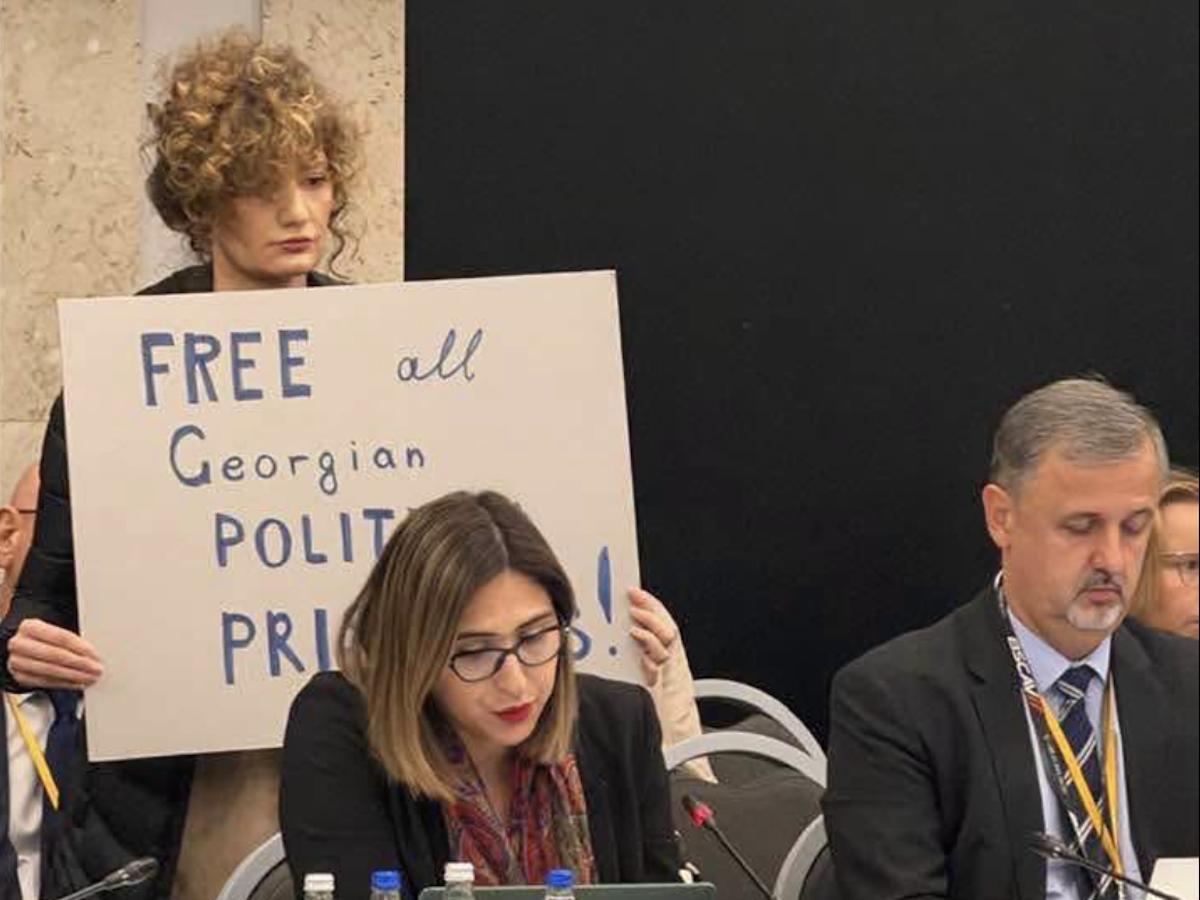
Georgia’s ombudsman, Levan Ioseliani, has said his office will challenge repressive legislative amendments adopted by the ruling Georgian Dream party in 2025 at the Constitutional Court, arguing they violate human rights and fail to meet international standards of necessity and proportionality.
Ioseliani said legislative packages adopted over the past year, including amendments to the law on assemblies and demonstrations, contain a number of problematic provisions. He noted that lawmakers adopted the changes in two stages. At each stage, the Public Defender appealed to the OSCE’s Office for Democratic Institutions and Human Rights, which issued negative assessments of the initiatives.
He said the past year, like the one before it, had been difficult in terms of human rights. Ioseliani added that there are clear grounds to argue the amendments restrict fundamental freedoms. He described provisions related to protests as particularly troubling, warning they could, in practice, mean that demonstrations would now require state permission.
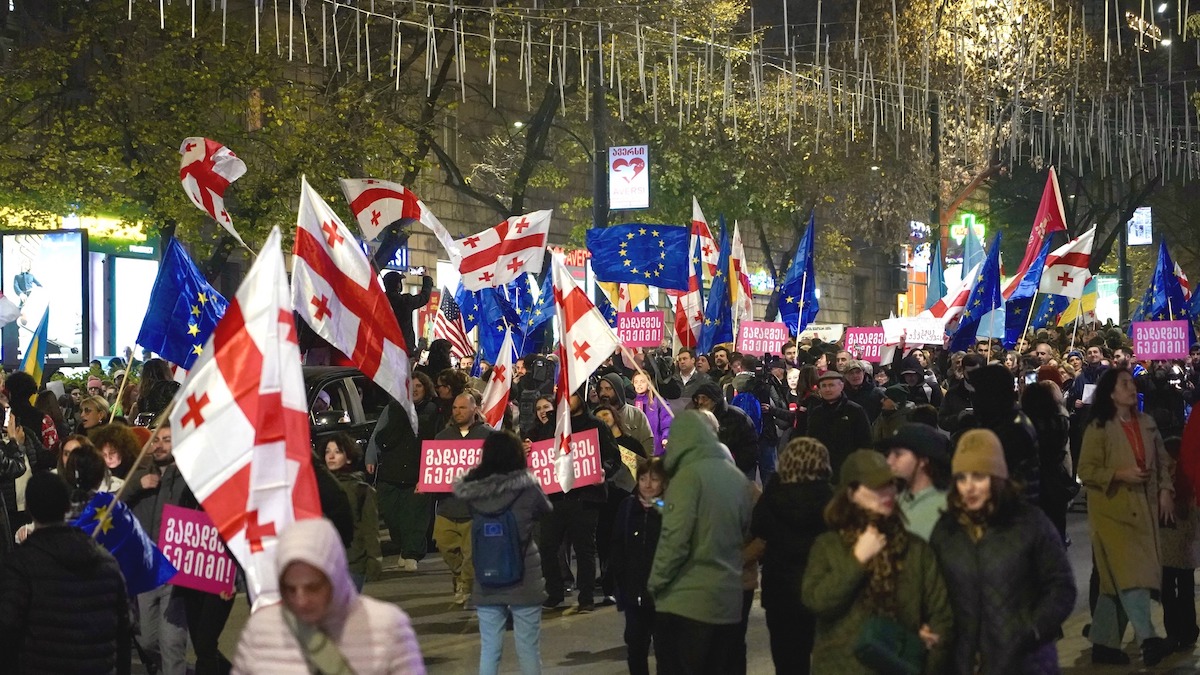
The human rights ombudsman drew attention to the requirement to notify the interior ministry ahead of holding rallies. He said that while such a provision exists in the constitution, it must not become a mandatory condition that rules out the possibility of spontaneous assemblies. According to Ioseliani, the Constitutional Court has already clarified that the requirement should not amount to a permit-based system.
Under the new legislative amendments, organisers are now required to notify the interior ministry five days in advance of any assembly or demonstration. The ministry also has the authority to propose an alternative location and time for a rally.
The amendments have also drawn criticism for introducing a blanket ban on wearing masks during protests. Ioseliani said such a ban at peaceful assemblies is disproportionate and fails to take into account specific circumstances, including medical, religious or other legitimate needs.
“If a protest moves beyond a peaceful form and turns violent, a mask has nothing to do with it,” he said. “We are talking about peaceful assemblies. In the context of a peaceful gathering, for example, I do not consider a ban on wearing medical masks, which we use very often, to be justified. The fact that someone may later decide to break the law, and that an investigative body wants to make its job easier at the expense of the public good, cannot be an argument,” the ombudsman said.

Ioseliani also addressed the issue of road blockades during protests, saying the constitutionally guaranteed freedom of expression gives citizens the right, under certain conditions, to block both pedestrian and traffic routes. He stressed, however, that legality depends on the specific context — including the number of participants, the location and the circumstances — and that it is impossible to define such criteria precisely.
Criticising the legislative changes, the public defender also pointed to tougher penalties, including higher fines and the introduction of administrative detention for offences that were not previously punished in this way. Repeat violations may now carry criminal liability. Ioseliani said the amendments violate the principles of necessity and proportionality.
The ombudsman said preparations for a constitutional challenge are nearing completion, with the claim expected to be filed by the end of this year or early next year.
“We will do everything possible to ensure the amendments comply with international standards and for the court to examine their proportionality,” he added.

Омбудсмен Грузии оспорит репрессивные законы