Transit geopolitics in the Caucasus: Is a corridor through Abkhazia possible? View from Tbilisi






Transit through Abkhazia: View from Tbilisi
Over the past few years, significant changes have begun in international trade across the South Caucasus as a result of the Second Karabakh War and the start of the Russia-Ukraine War.
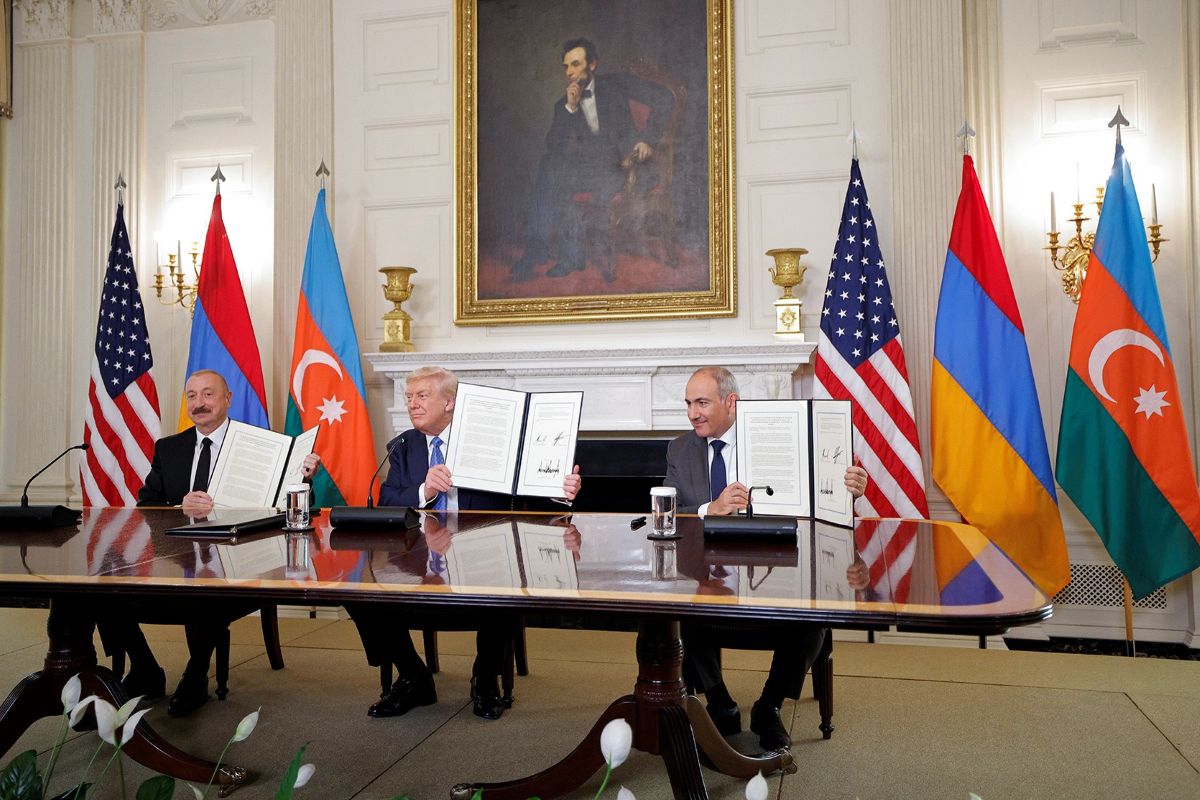
At an early stage is a U.S.-backed initiative, the [Trump Route for International Peace and Prosperity (TRIPP)]. It is a transit route from Azerbaijan to its Nakhchivan Autonomous Republic through Armenian territory, which is expected to become an important segment of the Middle Corridor.
Parallel to the war in Ukraine, Russia has increasingly utilized alternative routes, largely to circumvent sanctions.
In this context, there is a noticeable increase in railway transportation and the development of port infrastructure in Abkhazia, which is occupied by Russia.
The issue of restoring the transit corridor through Abkhazia simultaneously touches upon politics and economics. It is also crucially important from the perspective of peace policy and confidence-building.
At the same time, when discussing this matter, we must remember that, in addition to the aspects listed above, operating a transit corridor is a technical issue and requires the fulfillment of logistical tasks.
In debating this subject, numerous questions arise:
- What is the state of the railway and road infrastructure In Abkhazia?
- What political obstacles does the decision to restore the corridor face?
- And why is the restoration of this corridor important for Georgia?
- Can this corridor address the country’s economic and political interests and contribute positively to conflict resolution and the confidence-building process in occupied Abkhazia?
We sought comments from transport corridor experts and conflict and policy researchers on the prospects for a possible transit corridor through Abkhazia.
Trade corridors passing through the South Caucasus
Researcher Mamuka Komakhia notes that transport corridors currently operate through Georgia, which, on one hand, connect Asian markets with European markets via Central Asia and the South Caucasus, and on the other, connect Russia with Armenia.
The first corridor, also referred to as the Middle Corridor, is of global significance, and interest in it is growing. Following the war in Ukraine and the sanctions imposed on Russia, the importance of the Middle Corridor increased.
This corridor connects China and Central Asia to Turkey and Western markets via the Caspian Sea, Azerbaijan, and Georgia. Interest in the Middle Corridor is mutual, and it is believed that it will retain its significance even after the war in Ukraine concludes.

Western strategic interests became clearly defined in 2025:
- In April, the first EU – Central Asia summit was held,
- And in November, US President Trump hosted the leaders of the five Central Asian countries at the White House.
The main focus of these meetings was on the import of Central Asian energy resources and rare minerals to the West.
The West (Europe and the US) considers transit routes bypassing Russia to be safer.
The United States is also actively involved in the South Caucasus. They support the so-called Trump Route (TRIPP). This is a section of the Middle Corridor aimed at supplying Central Asian cargo and energy resources to the West, bypassing Georgia.
The peace negotiations between Armenia and Azerbaijan following the Second Karabakh War make this process realistic.
Notably, the peace agreement between them and the presentation of the TRIPP initiative occurred simultaneously in Washington DC.
Russian interests in Abkhazia’s transport infrastructure
Against the backdrop of the war in Ukraine, Russian cargo turnover is increasing in Abkhazia, currently passing through the Ochamchire port to Turkey and other countries.
Mamuka Komakhia believes that the restoration of the railway corridor through Abkhazia, given its scale, may carry more of a political than economic significance for Russia.
Furthermore, it is difficult to determine how seriously preparations for launching this corridor are underway. Regarding the railway, infrastructure has been repaired on the Psou-Ochamchire section, and Russian cargo trains movement have been intensified in Abkhazia since 2023.
However, no repair work or statements about restoring railway transit across the entire Abkhazia are evident.
The only suspicious issue is the construction of a terminal in Gali, near the Enguri bridge.
The researcher notes that low-intensity cargo turnover using the Enguri road bridge is already taking place today.
It cannot be said that this cargo turnover is of such volume that it necessitates the construction of a terminal. Nor is the local market large enough for this construction to be a response to local economic demands.
No statements from the Russian or Georgian authorities are heard on this topic. Therefore, the terminal built in Gali simultaneously raises suspicions while also failing to serve as conclusive proof that preparations for restoring transit traffic are underway.
The rehabilitation of the Abkhazian railway section or the construction of the terminal in Gali does not necessarily have to be viewed in conjunction with Georgia.
Russia might be using the Abkhazian railway and the Ochamchire port separately to receive sanctioned cargo or, conversely, to export its own products abroad, bypassing sanctions, and connecting this transport route to the rest of Georgia may not be part of their plans at all.
After the Northern Corridor was closed, and Novorossiysk—Russia’s main port center in the Black Sea—became a military target for Ukrainians, it became necessary to preserve the export infrastructure of the North-Western Caucasus region and part of the cargo turnover via the Abkhazian railway and the Ochamchire port.
Mamuka Komakhia notes that the restoration of transit traffic through the territory of Abkhazia can only be discussed if it becomes part of a deliberate peace policy and if Tbilisi’s interests are protected.
Logistical flaws of the Abkhazian transport corridor
The increase in railway transportation by Russia through Abkhazia in recent years is striking. According to the Transport Corridor Research Center,
- The volume of cargo transported on the Abkhazian railway section has approached one million tons over the last six years,
- And the number of loaded wagons from Russia to Abkhazia reaches 14,000 units annually.
A significant increase has been observed since 2022. Furthermore, a container terminal was commissioned at the Ochamchire port at the beginning of 2025, which is connected to the main railway line and can store 1,200 containers.
Based on these and other changes, the Transport Corridor Research Center believes that Russia is establishing a stable transit corridor through Abkhazia.
According to Paata Tsagareishvili, director of the Transport Corridor Research Center, the restoration of the transport corridor through Abkhazia faces a number of technical, infrastructural, and legal barriers. Although the Russian side has restarted the Psou-Ochamchire railway section, the work carried out cannot be considered full rehabilitation.
Currently, train compositions move at a maximum speed of 25-35 km/h on this section, which is a low indicator for transport shipments. Heavy-duty railway traffic requires much higher speeds.
The reason for this is the superficial rehabilitation of the Psou-Ochamchire section: no serious repair or rehabilitation work has been conducted.
Furthermore, the Ochamchire-Zugdidi section shows serious technical flaws. Part of this section on Abkhazian territory has not been renovated, the rails are dismantled in many places, and the infrastructure is ruined.
Almost the same level of flaws exists on the Zugdidi-Enguri section, but here the main problem is the railway bridge, of which only the supports remain, while the railway tracks on the bridge or its approaches are either dismantled, damaged, or unusable.
The rehabilitation of this railway line requires financial resources and several years of work.
According to Paata Tsagareishvili, there are no signs of any discussions or negotiations on the financing of this project between the governments of Georgia and Russia, or with other donor institutions, let alone any signs of technical work commencing. He notes that if anything were happening, it would be difficult to conceal.

Besides the technical problems, there are direct legal and financial issues:
- Who should take responsibility for the wagons passing through Abkhazia, for cargo safety,
- And to which company and budget should fines in case of delay/disruption of transportation or transit fees be paid?
There are no signs of negotiations on these topics either.
Officially, Abkhazia is under Georgia’s jurisdiction, and consequently, the railway infrastructure passing through it belongs to the Georgian government.
The restoration of railway shipments requires adherence to international standards and agreements between recognized railway administrations.
The international railway system does not recognize Abkhazia as an independent entity, which is a significant legal and political barrier.
One of the main issues is also the cost-effectiveness of this railway traffic. According to the Transport Corridor Research Center, politically, Russia might be the most interested party in restoring transit movement through Abkhazia, and the Georgian side the least.
But from an economic and financial perspective, launching this transit corridor is not profitable even for Russia.
The demand for cargo turnover has not increased to the extent that the Lars checkpoint or the North-South Corridor cannot handle it. Furthermore, railway transit through Abkhazia naturally increases the load on the rest of the Georgian railway system, which itself requires significant rehabilitation and renewal.
At the same time, railway transit running through Abkhazia naturally increases the load on the rest of Georgia’s railway system, which currently requires substantial rehabilitation and modernization.
In this context, the modernization project for the main Tbilisi–Makhinjauri railway line has been underway since 2011.
In October 2024, the Director General of Georgian Railway, Lasha Abashidze, announced at the Silk Road Forum that the infrastructure works for the modernization of the Khashuri–Kharagauli–Zestafoni section had been completed and that trains were already operating on it in a test mode.
However, this project targets the railway line heading toward Batumi, not Zugdidi.
Moreover, there are still no signs of any negotiations or technical work taking place on the Zugdidi–Enguri segment.
Peace potential and political barriers of the transit corridor
Political analyst Paata Zakareishvili believes that the restoration of transport traffic through Abkhazia has for years carried the meaning of confidence-building and normalization of Georgian-Abkhaz relations.
This significance has not been lost today, and the restoration of transit cargo traffic will positively influence the improvement of these relations.
Furthermore, such a process serves the economic interests of the population residing in Abkhazia, both Georgians and Abkhaz.
He recalls that the topic of restoring transport traffic through Abkhazia is not new, and the previous Georgian government also wanted to push this issue forward. Today, in the context of the war in Ukraine, sanctions against Russia, and the launch of the TRIPP, the peace component has retreated.

Moreover, this was facilitated by the circumstance that the current Georgian government refused a peace policy and transferred full political responsibility for both occupied regions to the Russian side.
Paata Zakareishvili believes that when discussing the Abkhazian transport corridor, railway and road issues should be distinguished.
Regarding the railway, Zakareishvili sees no economic benefit in the project and questions how worthwhile it is for Russia to transport goods through the Abkhazian railway to Iran or other markets.
Utilizing the Azerbaijani railway is more profitable.
Furthermore, the state of the infrastructure indicates that no behind-the-scenes talks are currently taking place between the Georgian and Russian sides in this direction.
The railway in Abkhazia is restored on the Psou-Ochamchire section, while Gali-Enguri, as well as the Zugdidi-Enguri section, is damaged.
Rehabilitation work is required, and first and foremost, the restoration of the railway bridge over the Enguri. If anything were happening in this direction, it would be difficult to conceal the rehabilitation work, and the wider public would be aware of it, notes Paata Zakareishvili.
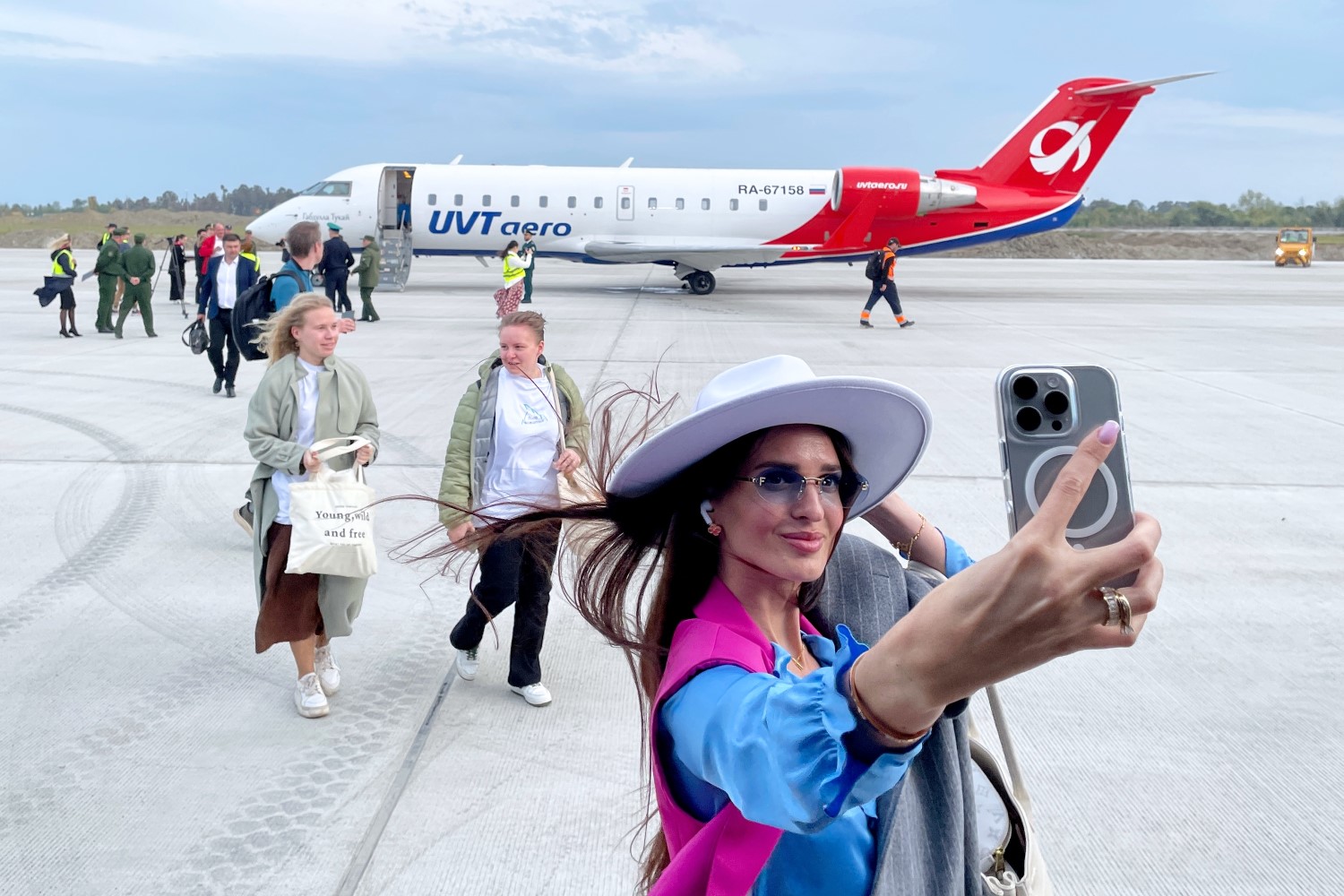
The situation is quite different regarding road traffic. He believes that the rehabilitation of the Sukhumi airport and the construction of the terminal in Gali near the Enguri bridge are interconnected economic issues.
The construction of a terminal of this size is not dictated by local economic necessity and demand.
Paata Zakareishvili assumes that a hidden bilateral dialogue may concern the restoration of road traffic, as this process faces fewer technical barriers: the access roads to the Enguri bridge are operational and rehabilitated on both sides, and the bridge itself functions today. Active cargo traffic is blocked only by political motivations.
In his opinion, by opening the road transport corridor,
Russia may receive Turkish cargo by land, via Enguri, and then transport it using the Sukhumi airport towards the Urals or other eastern regions.
Another argument for why this route might be realistically considered is that even after the war in Ukraine ends, sanctions on Russia will not be swiftly lifted. This process may take years, and Russia will still need to maintain a grey transit route through Abkhazia.
Political dimension of the issue
The activation of the transport corridor through Abkhazia faces political barriers along with economic ones.
Political analyst Ivliane Khaindrava believes that one of the main obstacles is related to the issue of customs placement. In 2011, an agreement was reached between the Russian and Georgian governments to restore transit traffic through Abkhazia and the Tskhinvali region.
A private Swiss company, SGS, was to monitor the cargo (essentially performing a kind of customs function) on both sides of the border. The agreement ultimately did not come into force, partly because the geographical locations where the aforementioned company was to place the relevant infrastructure could not be determined.
Tbilisi opposed any form of customs/border control from the Sokhumi side, viewing it as a not-so-indirect recognition of Abkhazia’s agency.
This major legal and political barrier was not overcome, and transit movement was not restored. The customs problem remains unresolved and insurmountable today, Khaindrava believes.
Furthermore, Khaindrava also deems the economic profitability of the project to restore the Abkhazian railway to be dubious.
He says that the current cargo turnover demands between Georgia-Russia and Russia-Armenia are met by the Lars checkpoint.
In response to increased demands, both states are currently expanding the Lars checkpoint itself and building a new highway within Georgian territory.
Simultaneously, TRIPP is beginning to operate, and cargo traffic between Armenia and Azerbaijan is being restored.
The analyst believes that the restoration of transit traffic through Abkhazia could happen if Turkey becomes interested.
But there are barriers even in this regard: the current cargo turnover between the two states is fully addressed by maritime and road routes, and the less-than-ideal relations between Ankara and Moscow suggest that cargo turnover growth between the two sides will not increase in the near future.
Both analysts primarily view the restoration of the transit corridor as a political process.
Paata Zakareishvili suggests that the Georgian government is strong enough today to make and execute a political decision of such gravity. It might face protests and opposition in Georgian society, but this protest would not effectively hinder the process.
Ivliane Khaindrava, in turn, believes that the publicly stated goal of the Georgian Dream party before the 2024 parliamentary elections – to gain a constitutional majority – might be connected precisely to the necessity of making strategic decisions regarding conflict resolution.
However, he is skeptical of the idea of informal contacts between Tbilisi and Moscow concerning the conflict regions.
The legal and customs issues remain unresolved, which could be a source of fundamental disagreement for both the Georgian and Abkhazian sides.
At this stage, there is not only no agreement on these issues, but also no discussion.
Analysts unequivocally note that transit trade today still possesses great potential for confidence-building and conflict resolution.
Although the restoration of transit traffic currently has more of a political purpose, its peace-building potential has not vanished, and transit would contribute to strengthening ties and restoring trust between the Georgian and Abkhazian societies.
However, it is crucial that the activation of the transit corridor is not solely a part of Russian policy, but occurs with consideration for the activity and interests of the Georgian side.
The process will have a positive impact on the peace direction only if it is part of concluded agreements and a pre-meditated policy.
The terminology, place names and views expressed in this article are those of the author and do not necessarily reflect the editorial position of this website.