Azerbaijan’s pro-government media lash out at Georgia over 'deteriorating treatment' of Azerbaijani truckers






Azerbaijan criticises Georgia
The pro-government Azerbaijani outlet Caliber published an article titled “Georgia Has Heard the Steps of Zangezur.” The piece, written by Samir Veliev, cites accounts from Azerbaijani truck drivers, who say their treatment by Georgian border guards and other officials has sharply worsened in recent times.
According to the author, drivers face rude behaviour and disregard for the law. They are reportedly held at the border for days or even weeks. Some drivers say they were mockingly told: “You’ll go when your Zangezur corridor opens.”
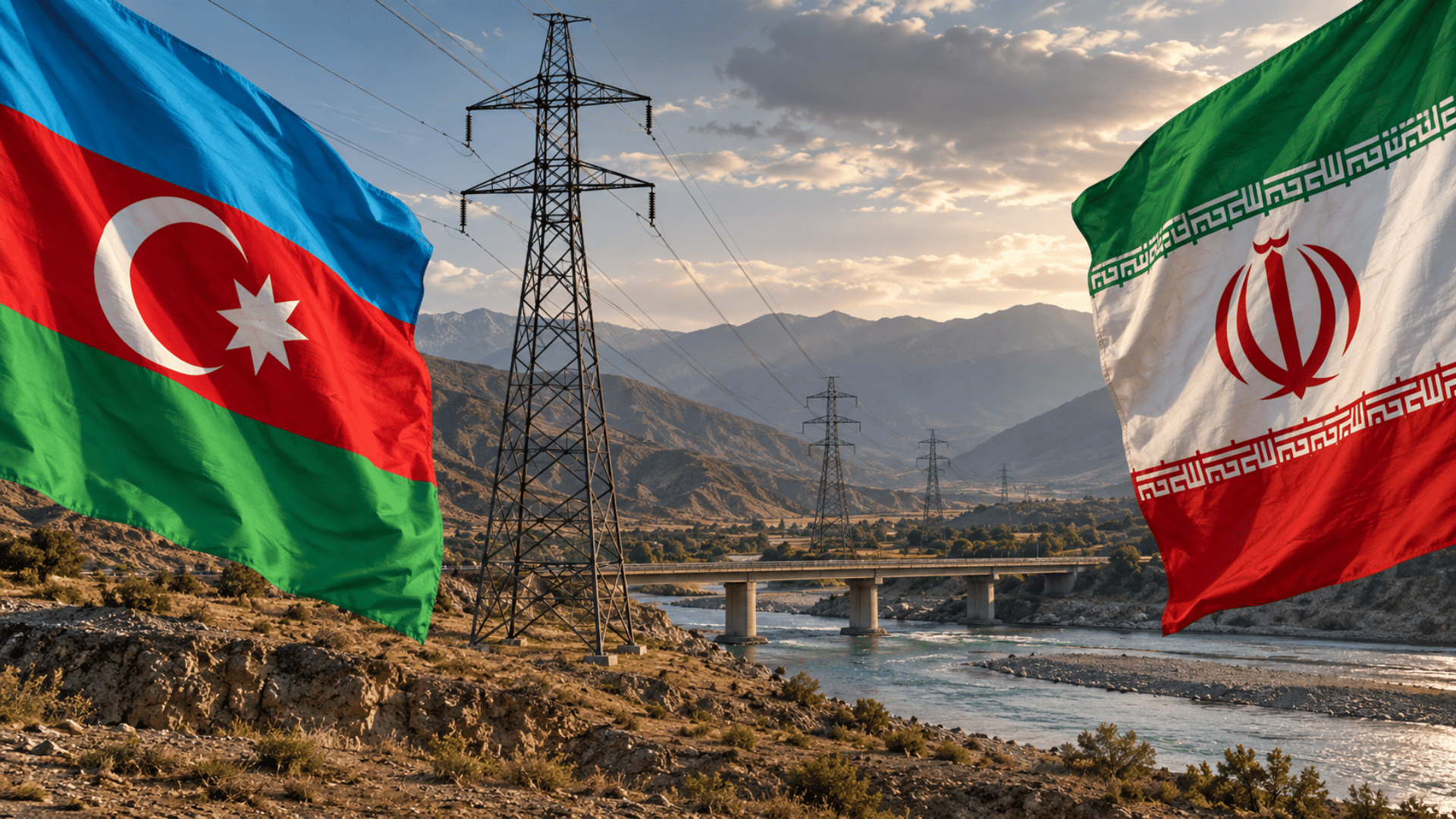
This refers to a proposed transit route intended to connect Azerbaijan with its Nakhchivan exclave through Armenian territory. The project has received active involvement from the United States, is known as the “Trump Route,” and is planned to become part of the international transit Middle Corridor.
The article suggests that the shift in Georgia’s attitude towards Azerbaijan may be linked to the influence of a “northern neighbour” (likely Russia) or “those representing Armenian interests within the Georgian government.”
What the article says
The situation inevitably raises a question: if such episodes happen regularly, there must be a reason beyond simple organisational chaos.
Initially, individual trucks were held up, then groups, and eventually entire batches. Drivers were unable to move and could not understand why a route that had functioned smoothly for years had turned into a zone of uncertainty, marked by continuous barriers.
Moreover, there were no official or even reasonable explanations — only hints, ironic smiles, and comments tinged with irritation.
Azerbaijani drivers were told: “You’ll go through Zangezur when your Zangezur corridor is ready.” These words were not spoken as a joke but as poorly veiled annoyance.
Here lies the first and likely the main reason behind what is happening.
In Tbilisi, it is clear that the region’s logistical reality is changing, and the Zangezur route is no longer a distant prospect. It is actively being built, becoming part of new infrastructure that will inevitably alter the existing balance.
After decades of Georgia’s monopoly over regional logistics, even the possibility of an alternative route is felt acutely in Tbilisi.
The paradox is that the Zangezur corridor could strengthen the economies of all countries in the region, including Georgia itself. It expands the network rather than replacing it. Yet this logic does not always prevail, and where calculations should dominate, emotional jealousy sometimes takes over.
This factor becomes particularly evident when Georgian officials tell drivers to “go through Zangezur,” ask about its opening, and do so in a tone far from neutral or professional.
There also appears to be another layer of reasons:
Georgia has always had figures connected to the Armenian community — by origin, biography, or political sympathies.
They do not determine the country’s overall course, but they are present in the system sufficiently to influence sensitive areas, including attitudes toward Azerbaijan. This is particularly the case now, as developments in Armenia itself are causing discontent among some Armenian circles outside the country.
For them, a rising Azerbaijan is an unwelcome reality, and any developments beyond familiar patterns provoke irritation.
Within the Georgian bureaucracy, such attitudes may not manifest as direct decisions but rather through the creation of conditions that appear purely technical.
There is also a third motive increasingly mentioned by experts.
Georgia’s relations with its northern neighbour (Russia — JAMnews) in recent years have evolved in such a way that Moscow’s influence could be reflected in certain practical decisions.
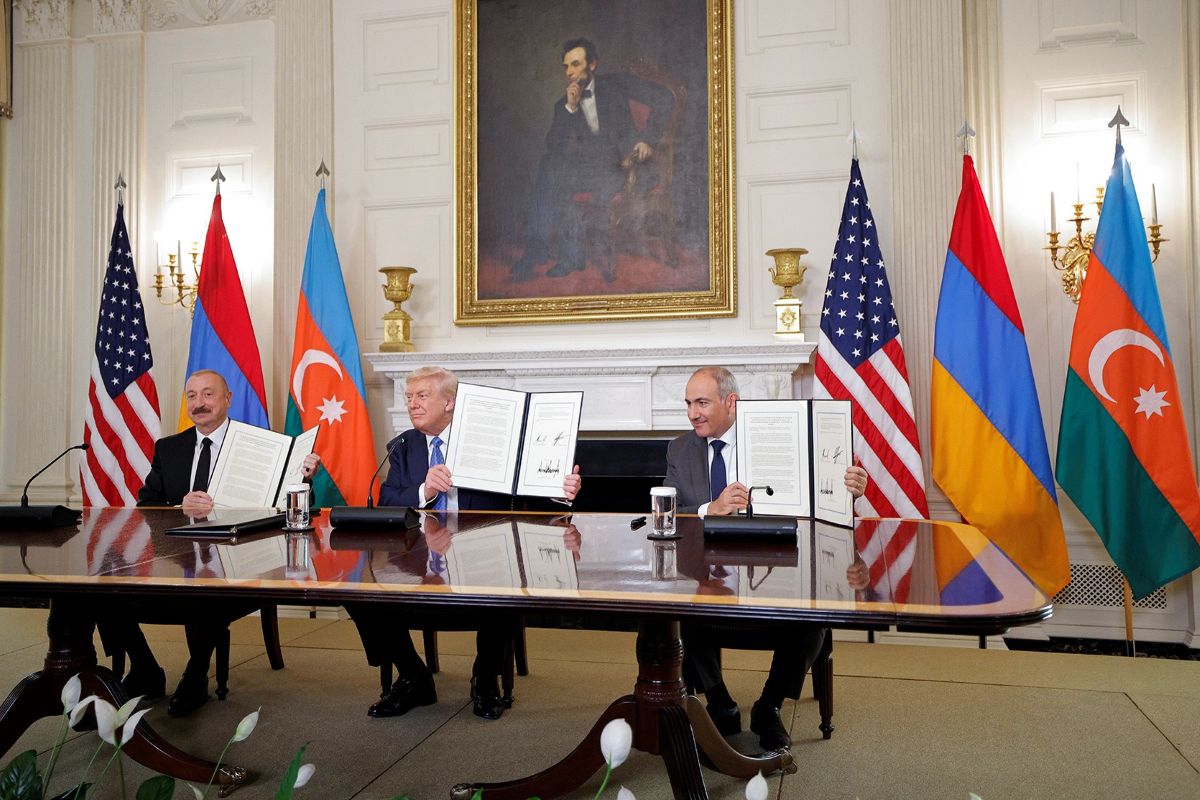
Analysts suggest that irritation may have been caused by the fact that agreements on the Zangezur corridor were reached in Washington, and that the project is advancing without the involvement of those accustomed to treating such processes as within their sphere of control.
Against this backdrop, it is conceivable that specific groups oriented toward the interests of one northern country might exploit any convenient pretext to create obstacles for Azerbaijani drivers passing through Georgia.
This is not a definitive claim or conclusion, but such a scenario is increasingly cited by experts closely monitoring regional dynamics. In the current political configuration, even a slight hint of such influence no longer seems abstract.

Amid all these developments, Azerbaijan’s stance has remained calm and consistent. For many years, Georgia has been regarded — and continues to be regarded — by Baku as a partner with whom relations are built on trust, mutual assistance, and openness. Azerbaijan has never refused support to Georgia, including during particularly difficult periods.
For this reason, the current situation involving Azerbaijani truck drivers has naturally caused confusion and concern in Azerbaijani society.
A country benefiting from stable cooperation is expected to show at least minimal respect for the rights of Azerbaijani citizens who are carrying out their work and supporting trade flows that benefit not only Azerbaijan but Georgia as well.
Azerbaijan’s position remains unchanged. The country equally remembers both acts of goodwill and instances of injustice. Injustice against the country and its citizens never goes unanswered.
This has been repeatedly demonstrated in various situations — whether the AZAL plane tragedy, the killings of Azerbaijanis in Yekaterinburg, or decisions by the Biden administration that Baku reasonably considered unfair. In all these cases — and many others — Azerbaijan’s response has been consistent and unequivocal.
Against this backdrop, creating artificial obstacles for Azerbaijani truck drivers cannot be seen as an isolated incident.
The region is entering a phase where old transit patterns are no longer guaranteed, and the Zangezur route is shifting from a political debate into emerging infrastructure.
Georgia’s long-standing transit monopoly is no longer unquestioned. Azerbaijan is strengthening its role as both a military and economic hub in the South Caucasus.
Any actions that undermine confidence in the Georgian route primarily harm Georgia itself, which for many years relied on transit as a strategic advantage.
Azerbaijan, meanwhile, makes it clear that the dignity of its citizens and the security of their rights are not subjects for compromise.
At such moments, another factor must also be considered.
A large Azerbaijani community lives in Georgia, for whom relations between the two countries are not abstract diplomacy but part of everyday life. Any sign of injustice or disrespect is felt particularly sharply by this community.
For Baku, attention to these concerns has always been a serious priority, and this approach remains consistent. Azerbaijan has never left its citizens and compatriots without support — regardless of where they live.
This is neither a warning nor a hint. It is part of the political reality that everyone involved in these developments will have to acknowledge.
Azerbaijan criticises Georgia