'We had only seconds': what we know about landslide in Georgia’s village of Kursebi






Landslide in Kursebi, Georgia
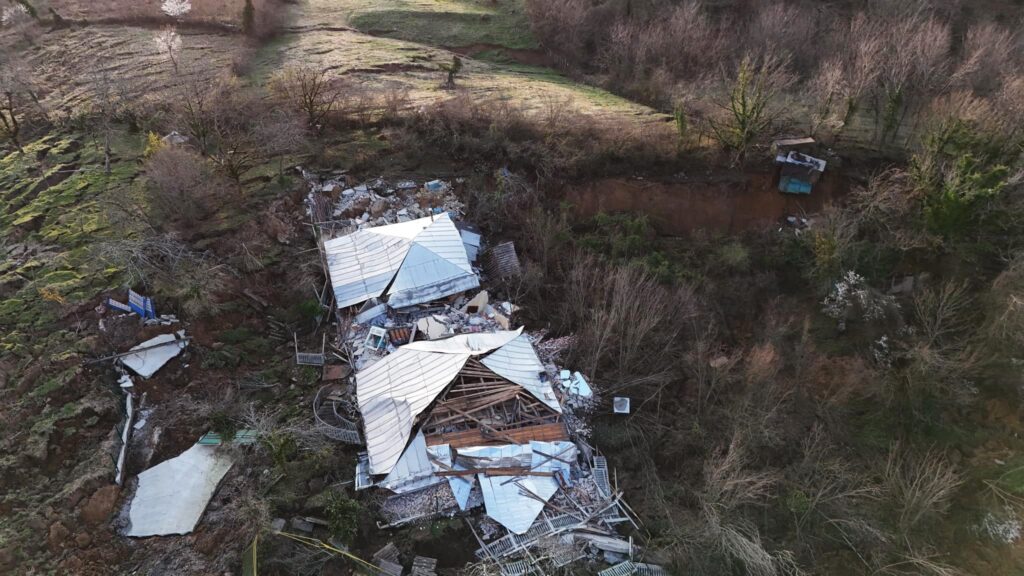
In the village of Kursebi in western Georgia’s Imereti region, a landslide struck at dawn on 12 March, at around 04:00. A mass of earth that came down from the mountain levelled part of the village.
No one was injured in the disaster. People escaped by a miracle. They woke each other up and ran out of their homes into the night, taking only what they managed to put on in haste. Some fled in their pyjamas.
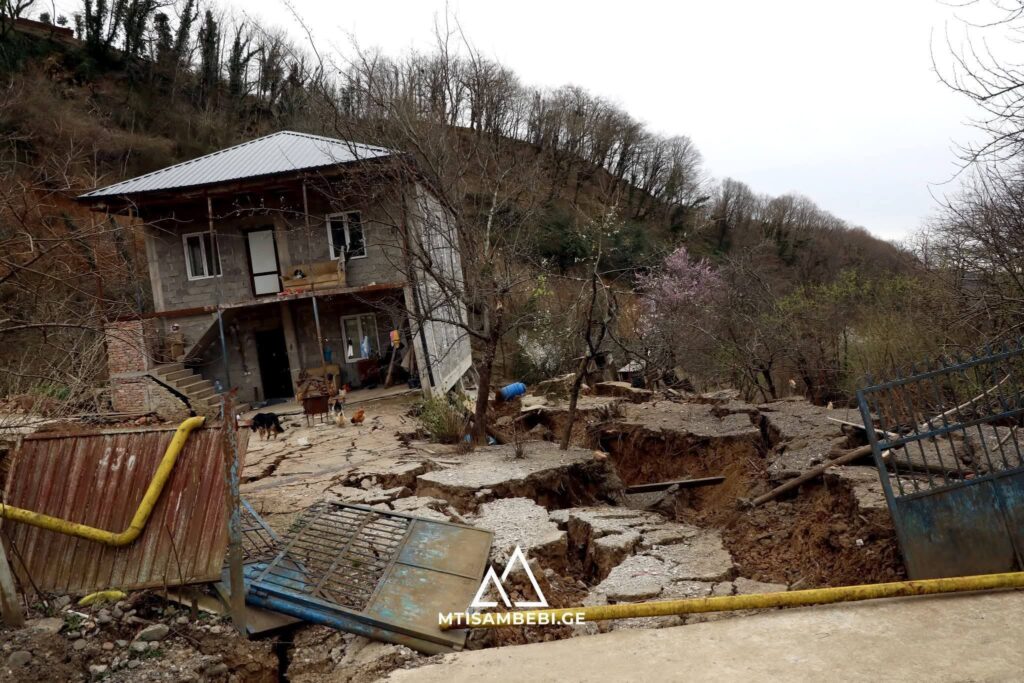
They did not even manage to save their pets or poultry — there was simply no time. People had only minutes to escape from the mass of earth moving down the mountain.
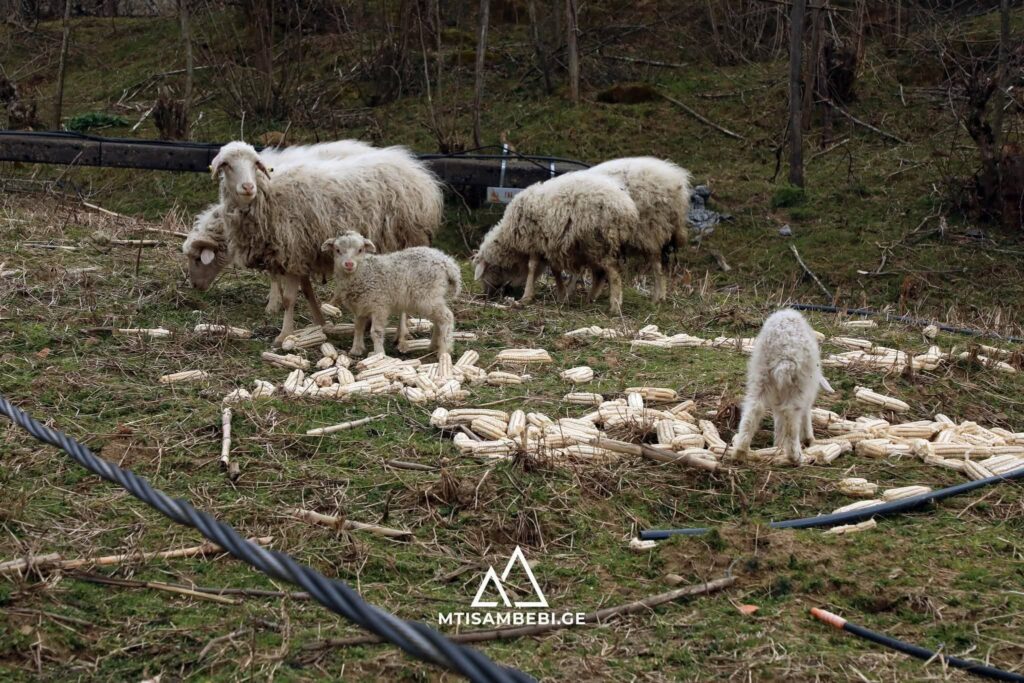
Some managed only to open the doors of livestock sheds. Later, rescuers went through the village and released tied dogs and other animals.
According to the latest data, more than ten houses were destroyed in Kursebi. Authorities evacuated 45 families. They were placed in hotels in Tkibuli and Kutaisi.
Authorities do not allow anyone into the village now — police have blocked the road. Local residents use drones to try to see what remains after the devastating landslide.
In this article, we bring together everything known — and unknown — about the landslide in Kursebi.
What happened: brief overview
Kursebi is a village in the Tkibuli municipality. It lies on the banks of the Tskaltsitela river at an altitude of about 350–400 metres above sea level. It is around a 15–20 minute drive from Kutaisi. About 800 families live in Kursebi.
The Tskaltsitela river divides the village into two parts. The landslide began in the area along the left bank and in the upper part of the village, in Zenubani. The main epicentre was in the Gogolashvili area. The mass of earth moved from there, first hitting the Alpaidze area and then the Berodze area.
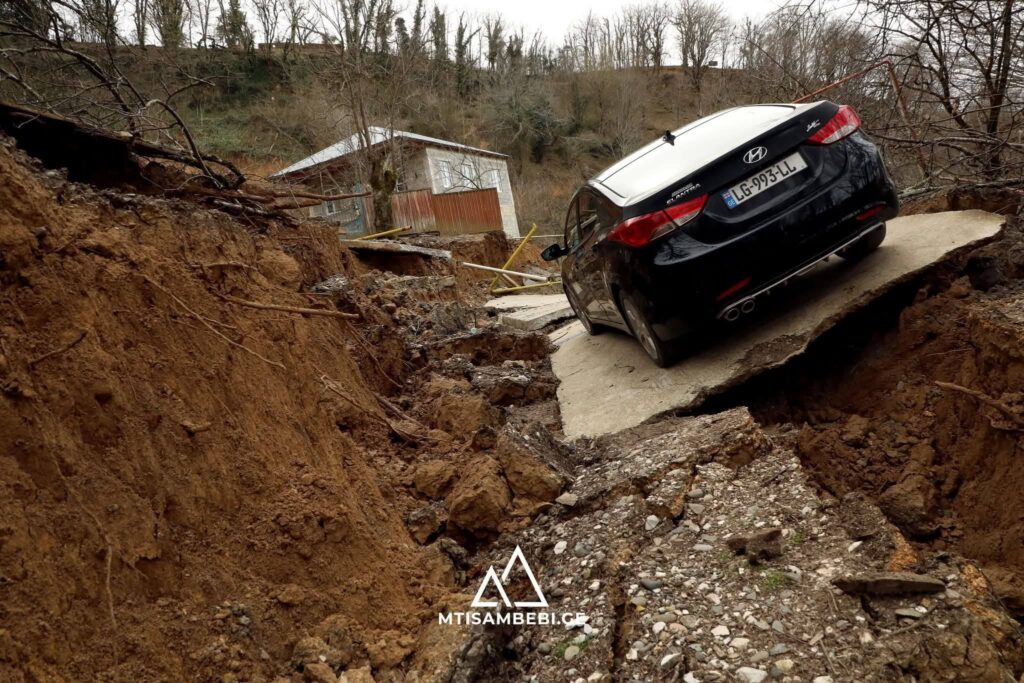
More than ten homes were completely destroyed in this zone. The landslide buried them under earth — in some cases, even the roofs are no longer visible. Dozens of residential and storage buildings collapsed.
The landslide also affected part of the village cemetery. It destroyed some graves completely. A section of the Kutaisi–Tkibuli–Ambrolauri road also collapsed.
According to the latest data, the landslide affected an area of up to 60 hectares.
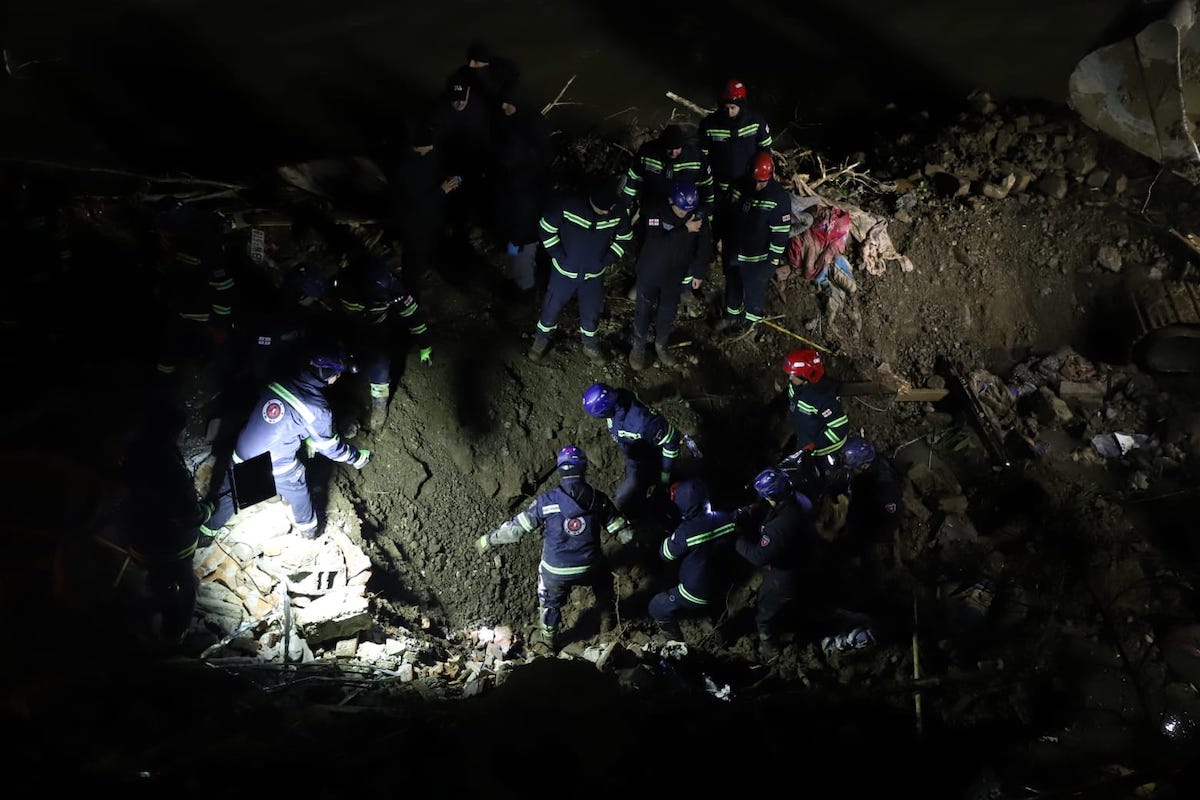
“We had only minutes to run out of the house”: how people learned about the landslide
Khatia Berodze lived in an area that the disaster almost completely destroyed. Her home, where a large family lived — her brothers and sisters, her mother, and Khatia herself with a small child — did not survive.
“My father died recently, and I am temporarily living with my mother. On the morning of 12 March, at around 05:30, my mother woke me with inhuman screams — she shouted: ‘Wake up.’ I am still struggling with my father’s death, so I thought someone else had died.”
Khatia’s mother told her that a landslide was approaching.
“I will never forget the sounds of that night: roaring, rumbling, the cracking of earth. It was night, there was no electricity. There was nothing around us, just darkness, and we could not find batteries. We ran out in our pyjamas.”
The only thing Khatia managed to do was go back inside and dress her child.
“I remembered where I had put the clothes and found them with one movement of my hand.”
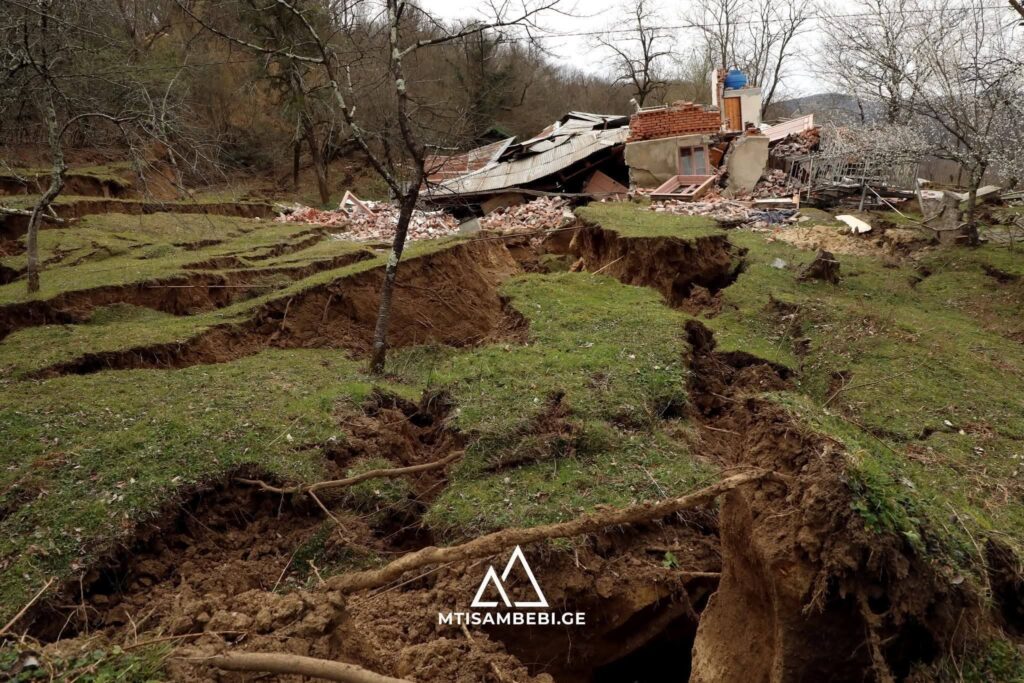
They ran to their cars. On the way, her mother kept shouting, this time trying to wake the neighbours.
Khatia found a jacket in the car that she had left there the day before. She had no other warm clothes with her.
A few years ago, Khatia worked as the mayor’s representative in Kursebi. She knows the area well, so she managed to work out where the landslide could come from and where they should run. She realised the safest place would be the right bank of the river, near the village school.
“We ran there and waited for dawn to see what was happening. We did not expect such масштабы. When it got light and we saw such a huge mass of earth collapsing, we were in shock,” Khatia told JAMnews.
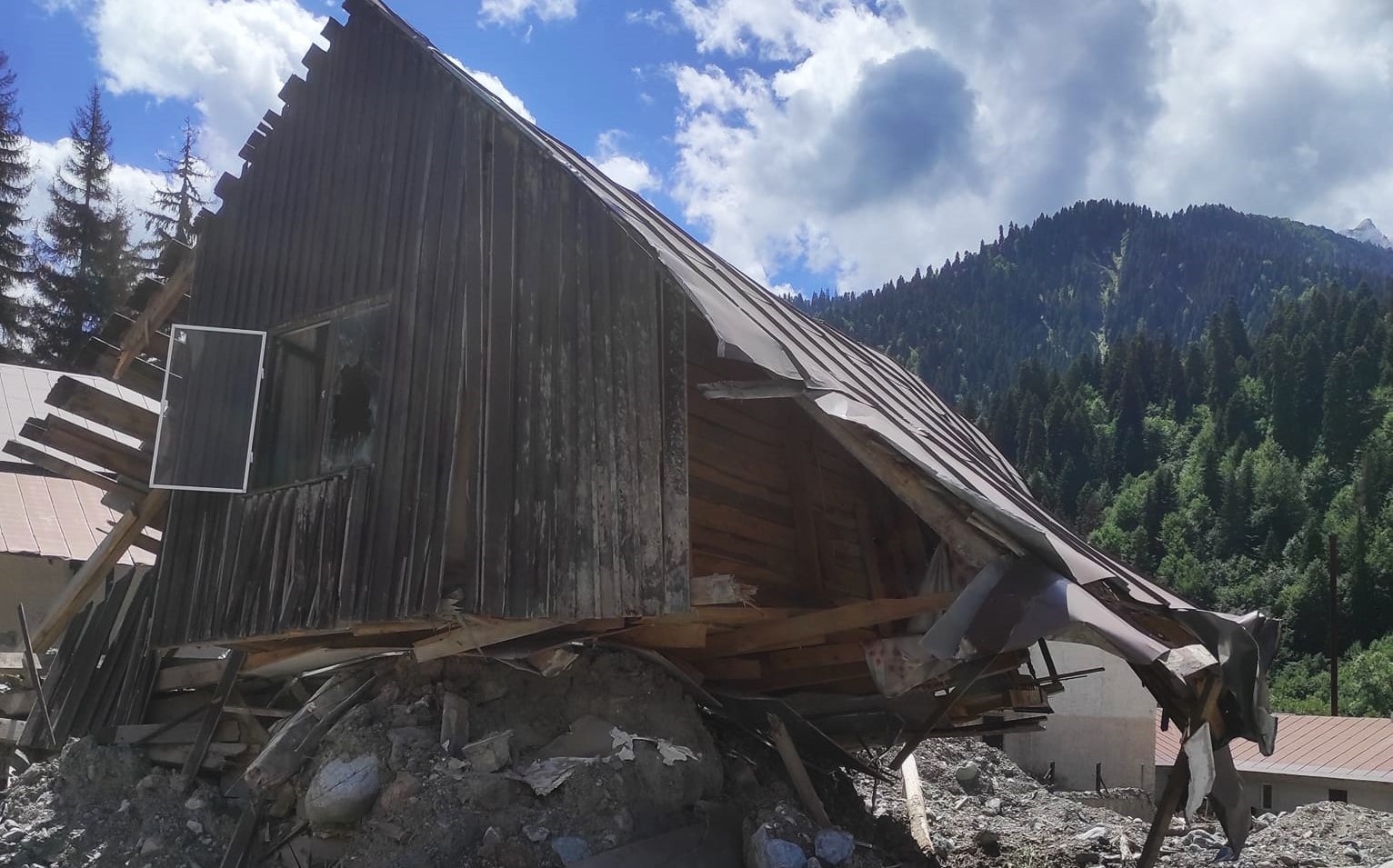
Residents of the village of Kursebi narrowly escaped the disaster. One of the first homes hit by the landslide belonged to 94-year-old Tamaz Kvirikashvili. His wooden house, which stood on wooden stilts, collapsed to one side. Tamaz called out to his neighbour: “Koba, I think my house is collapsing, help me.”
“Koba says that when he was on his way to Tamaz’s house, the landslide had already come down. He could reach it only by taking a longer route through the mud,” Khatia says.
Koba then began waking the neighbours. He first alerted the Alfaidze family, whose house soon collapsed. When they stepped outside, the mass of earth was already approaching their home, carrying their cars away.
Soon, everyone began calling out to one another and waking their neighbours, until rescuers arrived in the village. That is how residents managed to escape.
“I was two when my father died. I only knew him as an image on a grave. Now I have lost even that”
Mariam Gogolashvili’s house stood at the epicentre of the disaster. Her mother was at home that night. Neighbours woke her up.
“The house survived, and that is a miracle,” Mariam says. “All the other houses around it were destroyed. But that does not mean we can live there again. We do not know anything yet — we are waiting for the geologists’ conclusion.”
Mariam’s mother is now in Kutaisi.
“My mother is in shock. Imagine, she lives alone — I was only two when my father died. She raised me and my sister on her own. She put everything into this house. We even took out a loan to renovate it,” Mariam says.
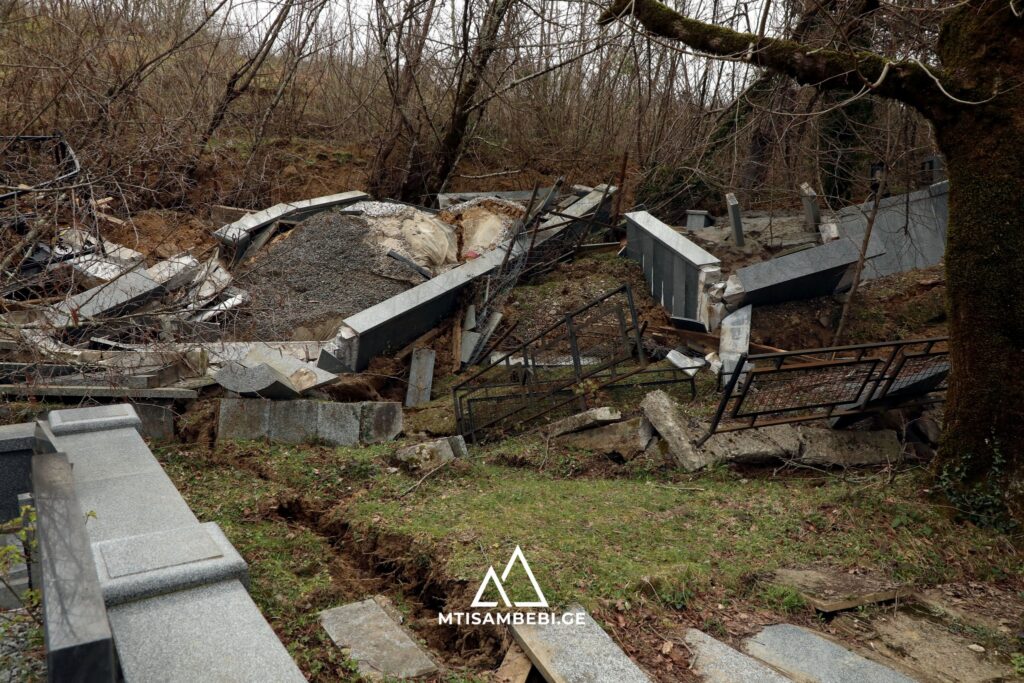
The landslide affected not only homes but also the village cemetery.
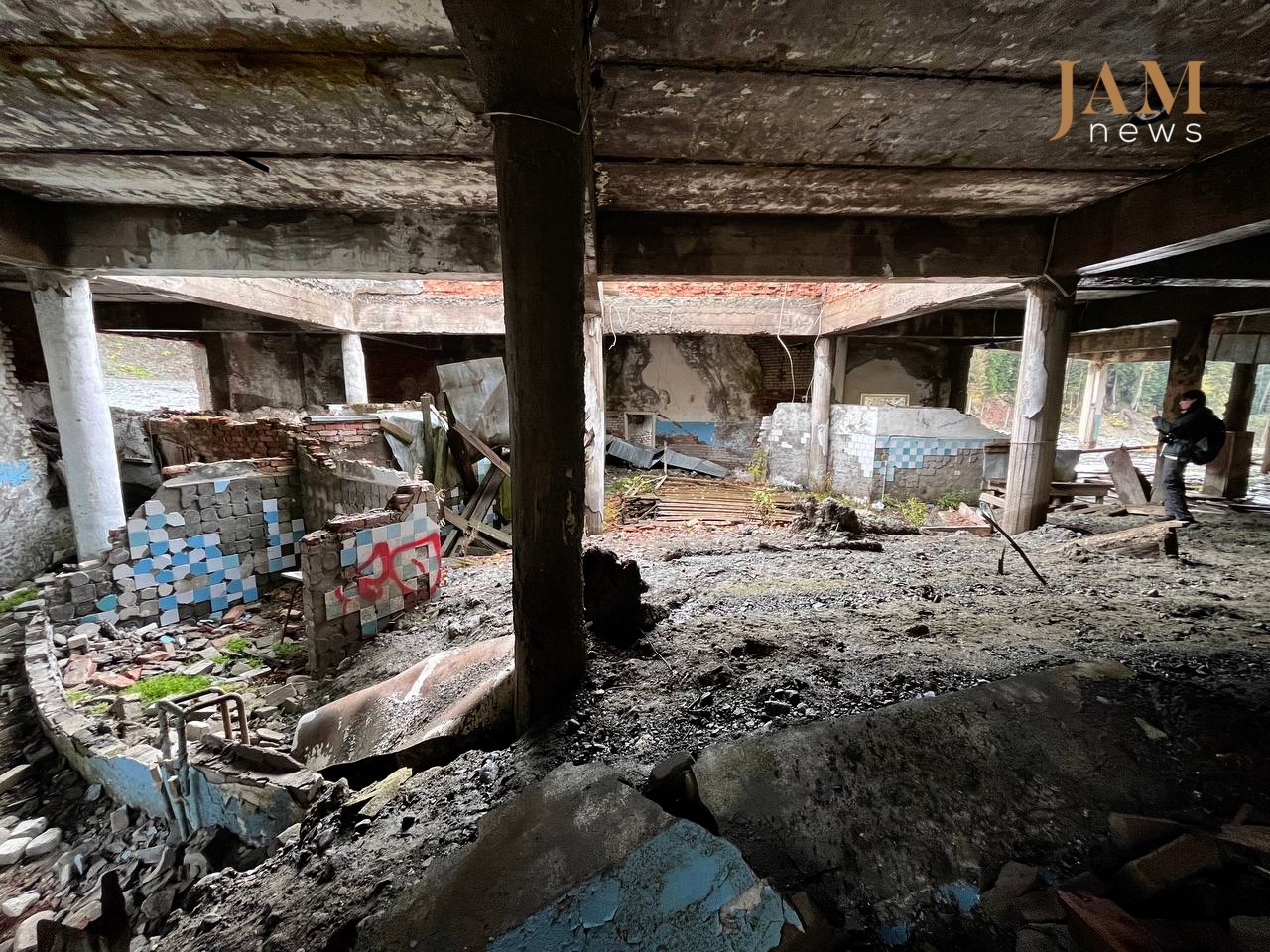
Photos taken by local residents with drones, and later by the outlet Mtis Ambebi, show that many graves collapsed, cracked and piled on top of one another.
“I only knew my father as an image on a grave, and now I have lost even that. The grave is destroyed, and five others lie on top of it. We also do not know if we will be able to move him anywhere.”
What caused the landslide?
Local residents have their own theories about what triggered the disaster in Kursebi. Some believe the cause lies in the mines and quarries that operated in the village for many years. They suggest that water accumulated there, eroded the rock and led to the collapse.
Kakhi Berodze says the mines operated in the village decades ago, during the communist period.
“I know from my grandfather and father that these were experimental mines where they tried to extract coal. They sealed them decades ago. These mines were also located in a completely different area, far from the epicentre of the disaster. So I do not think this version is plausible,” he says.
Another theory points to quarries, or stone pits. This, too, dates back many years. Two types of quarries remain in the village: open and closed. A closed quarry means workers first dug a pit and then extracted stone from it.
“They closed these quarries quite soon, probably because the stone ran out. I can say with confidence that for the past 25–30 years there has been no drilling, blasting or tunnelling in the village,” Kakhi says.
Like all residents of Kursebi, Kakhi Berodze is now waiting for geologists’ conclusions to understand the true cause of the disaster.
Kursebi is a landslide-prone area. Geologists knew this.
Large-scale landslides had not occurred in Kursebi before, but experts were aware that the village lay in a risk zone.
A 2024 bulletin by the Geological Department of the National Environmental Agency says that, in terms of the timing and activation of geological processes, the Imereti region is one of the most complex in Georgia.
The report notes that in 2023 rainfall in Imereti exceeded the average by two to three times. If levels remained high in 2024, a sharp activation of landslide processes should have been expected.
In 2023, specialists surveyed 38 settlements in Tkibuli, including Kursebi. The bulletin warned of landslide and rockfall risks in the village.
“Periodically active landslides, medium-risk zone,” experts wrote in their assessment.
According to the National Environmental Agency, geologists in recent years examined the homes of 25 families and two road sections in Kursebi. Authorities resettled five families.
This winter in Kursebi was harsh, with heavy precipitation. Wet, heavy snow lay on the ground for a long time, and rain continued for weeks.
“It is now clear that there was a landslide risk in the village. People should have known about it. At least anyone who had succeeded in recent years would have taken this into account or chosen another area. I do not think anyone would want to create such a huge risk for their children or grandchildren,” Kakhi Berodze says.
What does the National Environmental Agency say now?
Specialists from the National Environmental Agency are now monitoring the situation in Kursebi. On 14 March, the agency said processes in the upper part of the landslide body had entered a stabilisation phase. At the same time, movement continued in the lower part, on the left slope of the Tskaltsitela river, near the Kutaisi–Tkibuli–Ambrolauri road.
According to the latest update on 15 March, “the landslide body is entering a stabilisation phase”.
However, these general statements leave many questions unanswered.
It remains unclear what “stabilisation” means. Does it mean the landslide will not reactivate? What caused the disaster? How much earth moved down the mountain? Will the village be safe to live in again? Do other areas that escaped this time face similar risks?
Local residents ask the same questions in comments on the agency’s page.
The agency says geologists are studying the situation. They promise to provide answers once they complete their assessment.
What support is the state offering to those affected?
Many other questions remain unanswered as the investigation continues.
What will happen to people whose life’s work and property were destroyed in an instant? Will they be able to return to the village and recover what remains? What should they do about their pets, now wandering through the разрушенное village? Cars are also stuck — some damaged, others intact. People cannot remove them on their own. Will authorities bring in helicopters?
For now, based on available information and past experience, affected families will move into rented housing on a temporary basis. They may also find accommodation themselves, but the rent will be capped.
“I asked what budget I should look for. They told me the amount would be calculated within 1,000 lari, depending on the number of people in the family. They have not worked it all out yet,” Mariam Berodze wrote on social media.
Mariam was among the first to share information about the disaster in Kursebi. She used a drone to film the aftermath and called for help. Her mother lived in the village.
Mariam says her thoughts are in turmoil.
“As soon as I start to think and process reality, I stop myself so I do not feel overwhelmed by a sense of loss and emptiness.”
Everyone interviewed for this article says the same: people will have to live in rented homes for about six to 12 months. Once the landslide stops, authorities will begin assessing damage and property losses. They will then decide what compensation to offer.
Past experience suggests compensation will be limited. In Imereti, in the villages of Khemagali and Gverki in Kharagauli municipality, where a destructive landslide occurred, people received between 30,000 and 50,000 lari.
At current prices in Georgia, this is not enough to buy suitable housing, especially for large families.
Kursebi is a close-knit village with hardworking residents. Khatia Berodze says there has been almost no migration from the area.
“In my neighbourhood, houses were worth up to half a million lari. My godfather moved here 15 years ago and invested everything he earned into his home. Many people worked tirelessly to build proper housing.”
Finding temporary rental housing is also difficult.
“Many people have pets, and it is hard to live with them in apartment buildings. What should they do now? Does the state have any policy on this? We do not know,” Mariam Gogolashvili says.
People remain in shock and uncertainty. They do not know what status they will receive — whether they will be recognised as disaster victims or eco-migrants. They do not know how their property will be assessed or what criteria will apply.
One thing is clear: authorities have already marked zones in the village. Those whose homes fall into the red zone will not be able to return for the next six months, even to retrieve belongings.
“When a three-storey house into which someone poured their whole life is swallowed by the earth, it is very hard to come out of that shock. And now add chaos and uncertainty,” Mariam Gogolashvili says.
Landslide in Kursebi, Georgia