“This is not 'кamit'” - Georgian security services officially refute BBC claims of chemical poisoning of protesters






Kamit chemical weapon use in Georgia
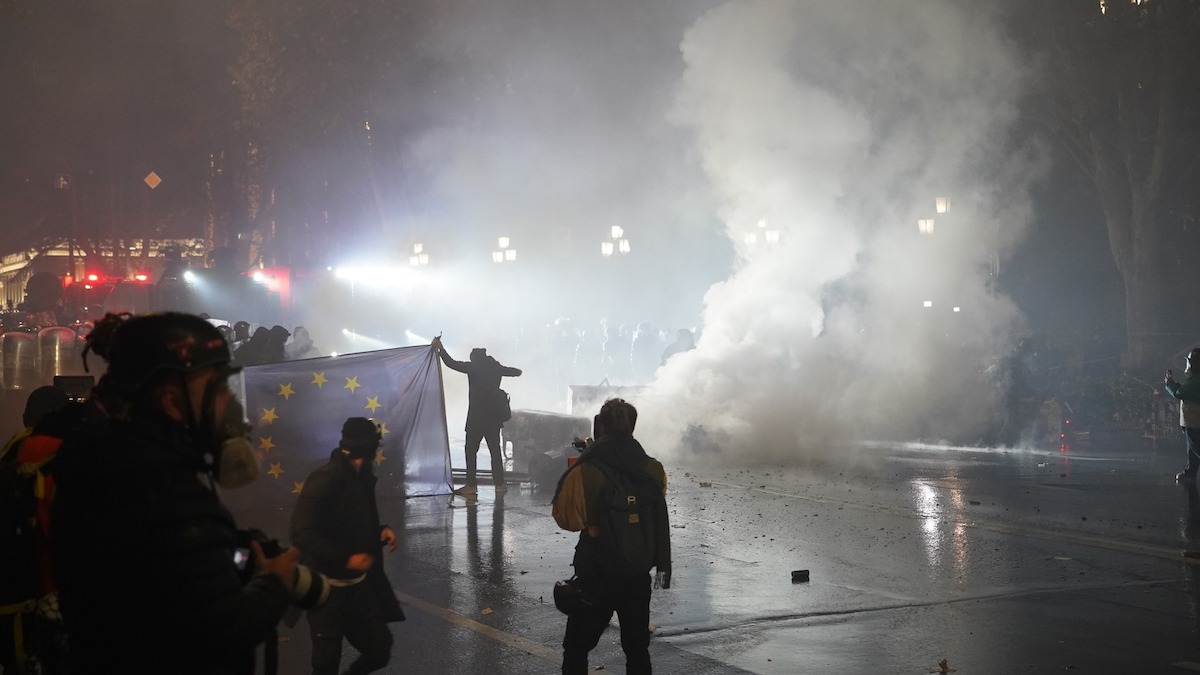
The State Security Service of Georgia announced that it has completed its investigation into the claims made by the British outlet BBC and firmly rejected its version that the Georgian authorities could have used the World War I-era chemical “Kamit” to suppress anti-government protests in late 2024 by adding it to water cannons.
Lasha Magradze, first deputy head of the State Security Service, said at a briefing on December 6:
A chemical substance was added to the water, but it was not “Kamit” – it was “chlorobenzalmalononitrile,” which is not a banned substance.
What the investigation examined and detailed findings
“The investigation established that in the first days of December 2024, specifically from December 4 to 5, the substance ‘chlorobenzylidene malononitrile’ was used to disperse mass unrest, with a solvent of ‘propylene glycol.’ Neither of these substances is classified as prohibited,” Magradze said.
The State Security Service reported that, as part of the criminal case opened following the BBC publication, documentation from the Customs Department and the Revenue Service was seized and examined.
Magradze emphasized that the Ministry of Internal Affairs never acquired “kamit,” as mentioned in the BBC report. Chlorobenzylidene malononitrile was purchased from an Israeli company in 2007 (before the Georgian Dream party came to power, during Mikheil Saakashvili’s presidency).
During transport, this substance was assigned the international shipping code UN3439, and the accompanying solvent received the transport code UN1710.
These codes are recorded in the customs documentation and are precisely what the BBC referenced in its report, Magradze said.
The investigation also seized 25 chemical samples from the Ministry of Internal Affairs Special Operations Department database. These were chemically tested at the Levan Samkharauli National Forensics Bureau.
A 17.5-kilogram barrel containing the substance was also examined. The barrel had a detailed label specifying the supplier organization, the substance name, and the international transport code: chlorobenzylidene malononitrile, UN3439.
The investigation further found that substances with the UN3439 transport code were repeatedly imported into the country by organizations other than the Ministry of Internal Affairs, including Aversi Rational, GPS, Rustavi Azot, and others.
Over the past 20 years, dozens of types of civil, industrial, and medical cargo with UN3439 were imported into Georgia 507 times, and with UN1710 99 times.
The investigation obtained precise import dates for all these substances, a State Security Service representative said.
Investigation into “assistance by a foreign organization in hostile activities” continues
Lasha Magradze emphasized that the State Security Service has only completed the investigation into which chemical substance was used in water cannons to disperse anti-government protests.
However, the investigation under Article 319 of the Criminal Code, “assistance by a foreign organization in hostile activities,” is ongoing.
The SSG reported that, in the criminal case opened following the BBC publication, 93 people were questioned: current and former Ministry of Internal Affairs employees, doctors, experts, BBC respondents, NGO representatives, and others.
“During the interrogations, all BBC respondents categorically denied ever saying anything about the use of the poisonous chemical ‘kamit’ in Georgia,” Magradze said.
He highlighted the following comparison:
- The use of the substance bromobenzyl cyanide, known as “kamit,” leads to severe, and in many cases even fatal, consequences. This is why it was banned in the civilized world in the 1930s.
- According to documents obtained from the Ministry of Health, in the days following November 28, 2024, when BBC claimed “ramit” was allegedly used, emergency teams brought 54 people to hospitals. Five were diagnosed with mild intoxication and were discharged the next day.
Magradze noted that the investigation was unable to question a key witness – former senior security official Lasha Shergelashvili, on whose information much of the BBC report was based.
Until 2022, Shergelashvili headed the armaments department of Georgia’s Special Operations Directorate. He is now wanted and, according to the investigation, is in Ukraine.
Magradze added that Shergelashvili is also being sought in connection with the “October 4 case”
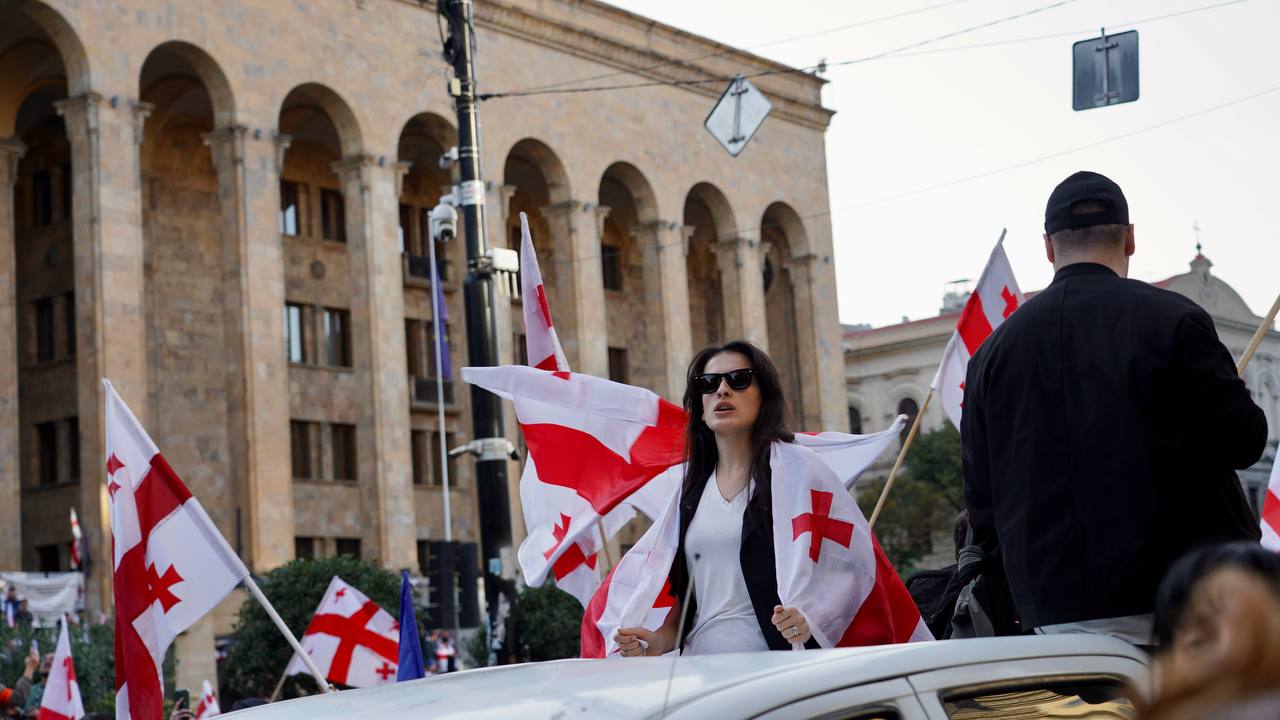
On October 4, 2025, local elections were held in Georgia. The opposition and a large part of society boycotted the elections, and on the same day, a massive anti-government protest took place on Rustaveli Avenue near Parliament.
That evening, a group of protesters attempted to storm the presidential palace. The incident was stopped by police and special forces; several people were injured and dozens were arrested. The investigation is ongoing at the time of this report.
“The investigation is actively pursuing the version that Ukrainian special forces contractor Lasha Shergelashvili, a few days before October 4, instructed Georgian citizen Beka Chulukhadze to acquire and hide ammunition, explosives, including TNT, and explosive devices,” said the deputy head of the SSG.
“The evidence obtained by the investigation provides grounds to conclude that the information presented in BBC publications about the use of the so-called chemical weapon ‘Kamit’ against protesters in Georgia is complete and deliberate disinformation.
It harms the interests of Georgia, and, unfortunately, citizens of the country are also involved in this story, whose actions, like those of the BBC report’s authors, are well-planned, organized, and propagandistic in nature, aimed at achieving specific hostile objectives against Georgia,” said a representative of the State Security Service.
39 OSCE countries issued a joint statement regarding the alleged chemical poisoning of protesters in Georgia.
“The absence of an investigation into widely reported excessive use of force against individuals exercising their rights to freedom of assembly and expression in Georgia demonstrates a shrinking civic space for dissent and creates a dangerous climate of impunity,” the statement reads.
The statement was signed by Albania, Andorra, Austria, Belgium, Bosnia and Herzegovina, Bulgaria, Canada, Croatia, Czech Republic, Estonia, Finland, France, Germany, Greece, Iceland, Ireland, Italy, Latvia, Liechtenstein, Lithuania, Luxembourg, Malta, Moldova, Montenegro, Netherlands, North Macedonia, Norway, Poland, Portugal, Romania, San Marino, Slovakia, Slovenia, Spain, Sweden, Switzerland, Ukraine, the United Kingdom, and Denmark.
News in Georgia