'Stigmatising refugees is unacceptable': Pashinyan refers to Karabakh Armenians as 'fleeing people'






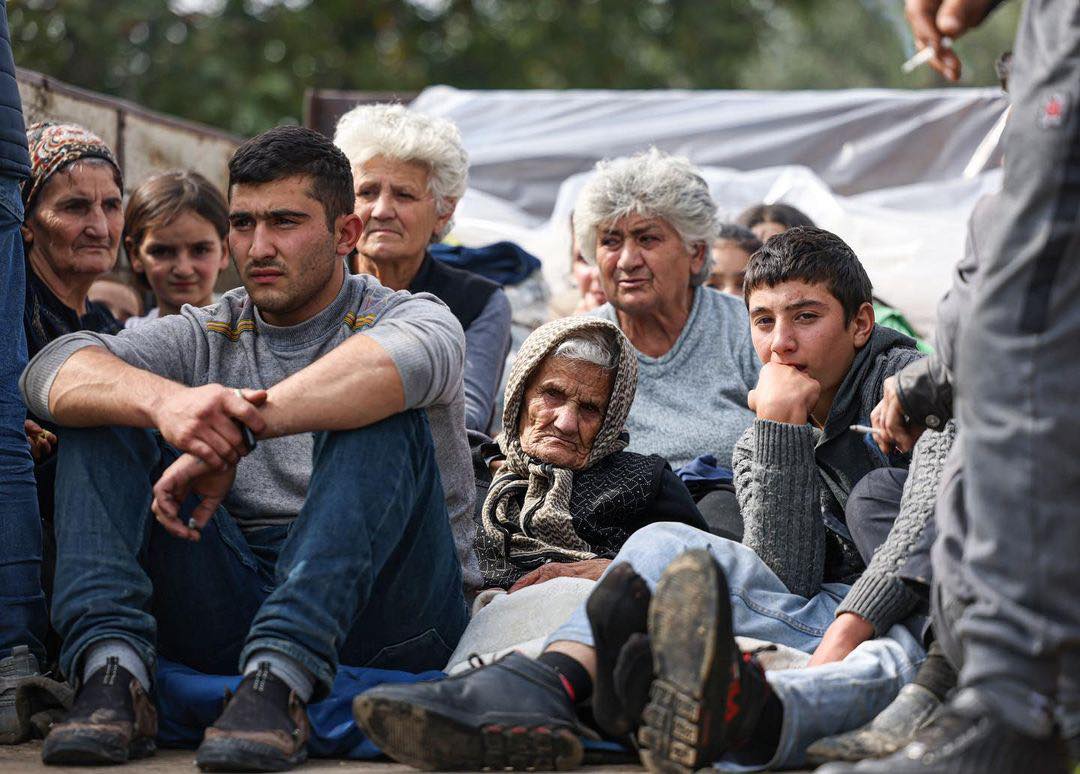
Pashinyan calls Karabakh Armenians “fugitives”
The incident, which took place in the metro and involved Prime Minister Nikol Pashinyan and a Karabakh Armenian woman with a child, has sparked debate among experts and the wider Armenian public. The exchange escalated into a heated argument, during which Pashinyan said: “Do not dare, you fleeing people, to claim that I surrendered Karabakh.”
Shortly afterwards, Human Rights Defender Anahit Manasyan called on senior officials to show sensitivity towards refugees and respect their rights. However, her statement did not mention the prime minister or the specific incident.
Some political analysts said the prime minister was legitimising negative rhetoric towards refugees and stigmatising them for political purposes.
Following the incident, Pashinyan publicly apologised to the woman twice and offered to meet her again. However, discussions on social media continued even after his apology. Political commentator Hakob Badalyan described the proposal for a new meeting as a political tactic.
“If the woman accepts the offer to meet, the propaganda machine will naturally start working in Pashinyan’s favour. If she declines, it will give the propaganda apparatus a ‘legitimate pretext’ for a new wave of attacks, claiming that Pashinyan apologised while the woman acted rudely,” he said.
Full details of the incident, the prime minister’s apology, the ombudsman’s statement, and reactions.
- ‘Changing Armenia’s constitution is our decision, not others’,’ Pashinyan says in briefing
- ‘This is not peace, but defeatism’: a dissenting view on Armenia’s security strategy
- Poll: Will Armenia’s ruling party win June election?
The argument began when Pashinyan offered to give the child a pin badge featuring a map of Armenia.
For several weeks, the prime minister and his team have been travelling to different regions at weekends, holding what they describe as an “intra-party campaign”. This Sunday, they took to the metro and spoke with residents of the capital.
In recent weeks, Pashinyan has been wearing a badge depicting the map of Armenia and handing out similar ones to passers-by. He offered one to the boy in the metro, but his mother replied:
“We are from Artsakh. We have a different map,” she said, referring to a version that includes the unrecognised Nagorno-Karabakh Republic.
The prime minister insisted: “Your son will live within the borders shown on this map.”
The woman objected: “You cannot forbid us from hoping to return to Artsakh.”
Pashinyan then raised his voice and responded:
“We spent billions earned by the citizens of Armenia so that you could remain there. Why did you not stay? […]
Do not speak so dismissively about this map. Next time, you fleeing people, do not dare to claim that I surrendered Karabakh.”
Pashinyan admitted he had ‘said something wrong’
The same day, Prime Minister Nikol Pashinyan issued an apology — twice.
“I admit that I said something wrong. I spoke in the wrong tone, and my facial expression was inappropriate. In some sense, I also expressed the wrong message. But this remains one of the most emotional issues for me. I apologise to everyone,” he said.
Later, Pashinyan commented on the incident in a post on his Facebook page, inviting Armine Mosiyan and her son to the government building. He said he was ready to apologise to her publicly, live on air.
“If visiting the government is not acceptable for her, I am ready to do the same in the metro at a time convenient for her — again live. I am also ready to meet at her place of residence or work.”
Ombudsman’s statement
“Communication with forcibly displaced persons and refugees, as well as discussions concerning their rights, must be conducted with due sensitivity, taking into account the vulnerability of this group,” the Human Rights Defender said.
Anahit Manasyan added that this is required by international legal standards. She called on “public officials, as well as all political and public figures” to demonstrate sensitivity towards displaced persons and refugees and issues related to their rights.
“It is necessary to ensure that public discourse does not trigger or exacerbate their vulnerability, but instead contributes to fostering and strengthening an atmosphere of solidarity, inclusiveness and mutual respect.”

Commentaries
Nikol Pashinyan was criticised not only for stigmatising Karabakh refugees. Public reaction was also triggered by the fact that he raised his voice at a mother in the presence of a minor. Political analysts also began discussing the possible impact of the incident on the outcome of the parliamentary elections scheduled for June.
Below are some of the views most widely discussed on social media.
Political analyst Tigran Grigoryan said:
“I believe that analysing such behaviour requires the involvement of an interdisciplinary group of professionals. For our part, we can note the following:
- As expected, the number of attacks on refugees at the highest level will sharply increase during the pre-election period.
- Such behaviour will significantly intensify hate rhetoric against refugees at the everyday level.
If the country’s prime minister legitimises and uses the most offensive language towards refugees for political purposes, why would his supporters not repeat it?”»

Human rights defender Zarui Hovhannisyan pointed to another aspect:
“When a woman’s voice is effectively drowned out by a man’s voice, aggressive gestures and accusations, this constitutes psychological pressure. When it comes from a public official who sets an example for thousands of people, it becomes an even more dangerous precedent. It is doubly unacceptable when a mother is shouted at in the presence of her child.
The child, who was simply sitting next to his mother, became a witness to aggressive behaviour by a representative of the authorities. This goes beyond a political or personal dispute and enters the sphere of children’s rights.
A safe environment for a child implies not only physical but also psychological protection. When a mother is shouted at in his presence, creating a tense and frightening situation, it violates the child’s fundamental right to protection from violence and degrading treatment.
As someone working in the field of women’s rights, I assess such behaviour as a case containing elements of gender-based psychological violence. At the same time, the presence of a child requires an assessment from the perspective of child protection.
Holding public office does not grant the right to shout, accuse or humiliate — especially those who have already suffered the severe consequences of war and forced displacement.”
Political analyst Robert Gevondyan said:
“The likelihood of the ruling party securing a constitutional majority (two-thirds) in the elections is крайне low. The most probable scenario is a victory for Civil Contract and the formation of a government, but with a narrow margin.
In essence, Pashinyan is signalling that the party will achieve a constitutional majority in an attempt to influence the political atmosphere and offset situations that have generated public backlash and negatively affected ratings. These primarily include the dismissal of the director of the Genocide Museum and the incident in the metro. In both cases, the problems could have been avoided if Pashinyan had restrained his emotions and resisted the urge to comment and engage in confrontation.
There is also worse news — there are still two and a half months until the elections. Both orchestrated provocations and similar spontaneous incidents are likely to increase, and there will be little opportunity to prevent them.
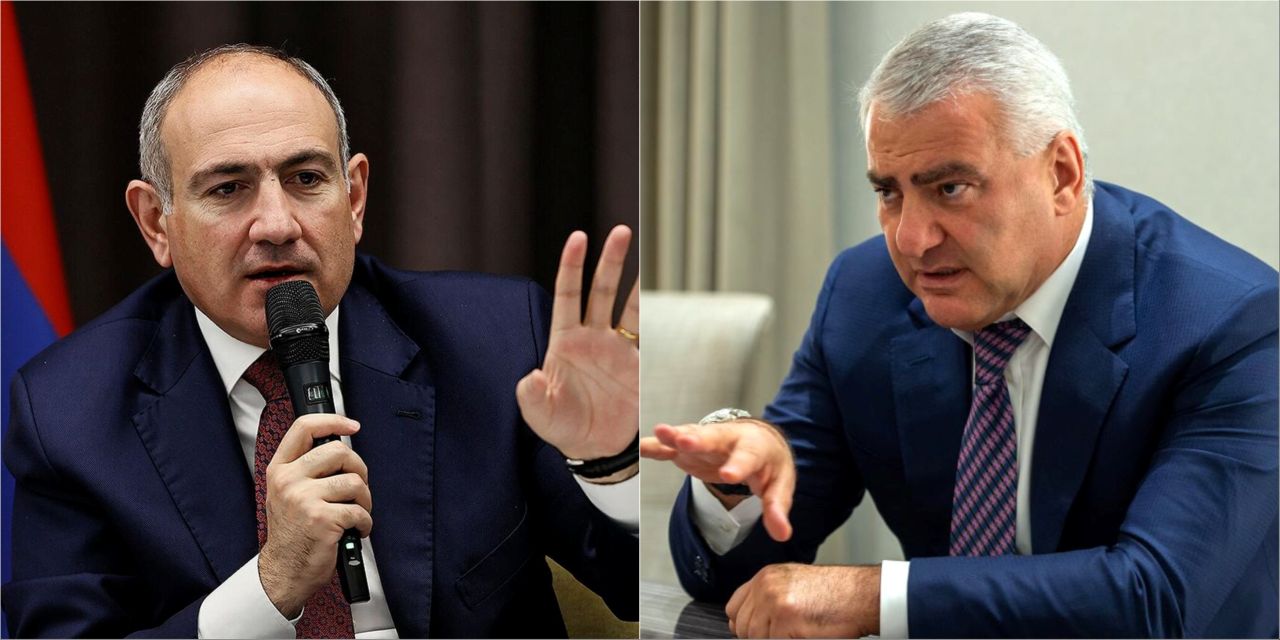
Therefore, if Pashinyan fails to control his emotions and remain silent in certain situations, he may not only fall short of securing a constitutional majority, but could even create an opening for Armenia to turn into a Russian “colony” under the Karapetyan–Kocharyan tandem,” he said, referring to Russian businessman Samvel Karapetyan and former president Robert Kocharyan.
“I think that, for the sake of the Republic of Armenia, it is sometimes better to remain silent.”
Pashinyan calls Karabakh Armenians “fugitives”