

Top stories in Azerbaijan, Armenia, and Georgia from 1-5 December, 2025
 Live
Live




-
Friday, December 5, Azerbaijan. The foreign minister said: “Armenia must remove the territorial claims against Azerbaijan from its Constitution, and this will make it possible to sign the initialed peace agreement”
-
Friday, December 5, Armenia. Archbishop Arshak Khachatryan has been arrested on suspicion of illegally selling narcotic substances in a public place
-
Friday, December 5, Georgia. Human Rights Watch: "Repressive laws effectively ban peaceful protests in Georgia"
-
Thursday, December 4, Armenia. Nikol Pashinyan: “The negotiation process on Karabakh was never about resolving the Karabakh issue - it was about keeping Armenia and Azerbaijan trapped"
-
Thursday, December 4, Georgia. In the French National Assembly, lawmakers are demanding that the government impose sanctions on Ivanishvili and his inner circle
-
Thursday, December 4, Azerbaijan. Another opposition figure, Gultekhin Hajibeyli, is being prepared for extradition from Turkey at Azerbaijan’s request
-
Wednesday, December 3, Azerbaijan. The most popular platform in Azerbaijan is Instagram
-
Wednesday, December 3, Armenia. Armenia–EU strategic partnership agenda has been signed
-
Wednesday, December 3, Georgia. A scandal is developing around a BBC investigation into the possible use of chemical agents to disperse protests in Tbilisi
-
Tuesday, December 2, Armenia. Head of the Echmiadzin Chancellery: “There is no reason for the Catholicos to abdicate the throne"
-
Tuesday, December 2, Azerbaijan. Opposition leaders have been charged with attempting to seize power and are being prosecuted as part of the Ramiz Mehtiyev case
-
Tuesday, December 2, Georgia. Chemical agents used against protesters — Georgian Dream calls the BBC investigation false
-
Monday, December 1, Azerbaijan. Interrogations of opposition figures in the case of former presidential chief of staff Ramiz Mehdiyev
-
Monday, December 1, Georgia. One of the opposition leaders attempted to set fire to a courthouse in Tbilisi
-
Monday, December 1, Armenia. The liturgy as a new incident in the confrontation between Nikol Pashinyan and the church leaders
-
Top stories in Azerbaijan, Armenia, and Georgia from 17-21 November, 2025

-
Friday, December 5, Azerbaijan. The foreign minister said: “Armenia must remove the territorial claims against Azerbaijan from its Constitution, and this will make it possible to sign the initialed peace agreement”
● The UK’s Minister of State for Defence, Vernon Coaker, is visiting Baku to strengthen defence cooperation between the two countries, the British Embassy reported. It noted that this is the first visit by a UK defence minister to Azerbaijan since 2022. Coaker held bilateral meetings with President Ilham Aliyev, the ministers of defence and defence industry, and attended a graduation ceremony for a training course led by British and Czech instructors. According to the embassy, the visit supports the intention announced in August to elevate bilateral relations to a strategic partnership. President Ilham Aliyev said that “a new chapter has opened in Azerbaijan–UK cooperation in the defence industry.”
In March, the UK appointed its first resident military attaché to Azerbaijan. In October, London lifted its arms embargo on both Azerbaijan and Armenia following the dissolution of OSCE Minsk Group mechanisms. That same month, the two countries signed an ambitious programme of bilateral defence cooperation in London for 2025.
● The Parliamentary Assembly of the Council of Europe expressed deep concern over the arrest of Ali Karimli, head of the opposition Popular Front Party, who is accused of attempting to seize power and forcibly change the constitutional order. “The space for political dissent in Azerbaijan is shrinking. The European Court of Human Rights has twice ruled in favour of Karimli, finding violations of his right to vote and freedom of movement. I urge the Azerbaijani authorities to immediately review the charges against him and ensure that any prosecution complies fully with the country’s obligations under the European Convention on Human Rights,” said Azadeh Righan, PACE’s rapporteur on political prisoners.
Azerbaijan’s voting rights in PACE have been suspended since 2024 due to the country’s failure to meet human rights commitments. In response, Azerbaijani authorities suspended cooperation with the organisation. Baku later blacklisted the lawmakers who supported the decision, banning them from entering the country. Officials have stated several times that cooperation could resume once the delegation’s mandate is restored.
● Amnesty International said that the arrest of the opposition leader “signals a further consolidation of authoritarian rule and an intention to expand politically motivated arrests targeting opposition members, academics, journalists and activists […] If the authorities cannot provide sufficient evidence of the alleged crime, they must release Ali Karimli.”
● “Armenia must remove from its Constitution the territorial claims against Azerbaijan. Only then can we sign and later ratify the initialed bilateral agreement, ensuring lasting peace,” Azerbaijani Foreign Minister Jeyhun Bayramov said at the 32nd OSCE Ministerial Council in Vienna. Azerbaijani media noted that many participants in the session highlighted the peace process between Azerbaijan and Armenia as one of the year’s most important developments.
● Jeyhun Bayramov added that the timely implementation of the “Trump Route” project is of primary importance for the South Caucasus. The project would provide unobstructed transport links between mainland Azerbaijan and the Nakhchivan Autonomous Republic through Armenian territory. This multimodal route would include a railway, a highway, and other infrastructure. Reopening regional communications, he said, would not only support lasting peace between Armenia and Azerbaijan but also bring much broader benefits.
● The Foreign Minister also met OSCE Secretary General Feridun Sinirlioğlu on the sidelines of the Ministerial Council. They discussed the peace process between Azerbaijan and Armenia. Both sides stressed the importance of fully applying international law—especially the principles of sovereignty and the inviolability of internationally recognised borders—at a time when European security is facing serious challenges. The press release added that they underlined the importance of dismantling the OSCE Minsk Process and its related structures, which Azerbaijan considers remnants of Armenia’s period of occupation.
● The Foreign Minister held a series of meetings on the sidelines of the OSCE Ministerial Council in Vienna, including discussions with NATO Deputy Secretary General Radmila Šekerinska and the foreign ministers of Norway, the Netherlands, Romania, Canada, France, Ireland, and Georgia.
● Jeyhun Bayramov also met with the EU High Representative for Foreign Affairs and Security Policy, European Commission Vice President Kaja Kallas. The press release says both sides expressed satisfaction with the growing pace of high-level contacts and discussed expanding cooperation in energy security, transport, communications, and trade.
● Iran’s Foreign Minister Abbas Araghchi will visit Azerbaijan next week.
● Lawyers delivered their closing statements at the latest court hearing for former leaders of the former unrecognised “Nagorno-Karabakh Republic (NKR).” They are charged with war crimes, terrorism, attempts to overthrow the government, and other serious offences. According to state agency AZERTAC, the defence attorneys for Davit Ishkhanyan (NKR “parliament speaker”), Levon Mnatsakanyan (NKR “defence minister”), Bako Sahakyan and Arayik Harutyunyan (NKR “presidents”), as well as Levon Balayan, Davit Allahverdyan, Erik Kazaryan, Garik Martirosyan, and Melikset Pashayan, all requested acquittal.
Bako Sahakyan’s lawyer said: “This man is not a criminal, but a living witness of a tragic era.”
Arayik Harutyunyan’s lawyer asked the court to consider the circumstances of the missile strikes on Ganja during the 44-day war in 2020, which are part of the indictment. He argued: “The army of the self-proclaimed regime was subordinated to Armenia’s armed forces. The decisions to strike Ganja and other cities were issued by Armenia’s leadership from Armenian territory, since the long-range missiles were located there.”
At the previous hearing, prosecutors requested life sentences for Harutyunyan, Mnatsakanyan, Ishkhanyan, former “NKR army deputy commander” Davit Manukyan, and former “NKR foreign minister” Davit Babayan. For the remaining defendants, prosecutors requested 16 to 20 years in prison. They said that nearly a year of hearings had confirmed the charges through evidence, witness and victim testimony, and expert reports.
The trial will continue on December 11.
● “The Armenian Church and the Armenian diaspora are conducting destructive propaganda aimed at undermining efforts to establish peace between Azerbaijan and Armenia,” said Allahshukur Pashazade, Chairman of the Caucasus Muslims Board, during a meeting with Mark Schneier, President of the Foundation for Ethnic Understanding (USA), in Baku. Pashazade spoke about large-scale reconstruction efforts currently underway in territories liberated from occupation as part of the “Great Return” programme and stressed that all religious sites there – mosques, churches, temples – are being restored.
-
Friday, December 5, Armenia. Archbishop Arshak Khachatryan has been arrested on suspicion of illegally selling narcotic substances in a public place
● Archbishop Arshak Khachatryan has been arrested on suspicion of illegally distributing narcotic substances in a public place as part of a group acting in collusion. The Investigative Committee confirmed the information. According to lawyer Arsen Babayan, the archbishop is accused of allegedly planting drugs in the bag of one of the participants of a 2018 protest against the Catholicos.
● “What happened to the archbishop is not a legal action but a political retaliation — a crude provocation meant to send a clear message: ‘The Church must remain silent and obedient, and anyone who refuses will be crushed.’” This was stated by the All-Armenian Council for the Preservation of the Armenian Church.
● On the sidelines of the OSCE ministerial conference in Vienna, Foreign Minister Ararat Mirzoyan met with Germany’s Federal Minister of Foreign Affairs Johann Wadephul. They discussed preparations for upcoming high-level visits.
● Ararat Mirzoyan also met in Vienna with his Georgian counterpart Maka Bochorishvili. They exchanged views on regional cooperation initiatives, including trilateral formats involving Azerbaijan.
● The International Monetary Fund has approved a credit line of about $175 million for Armenia. According to the Central Bank of Armenia, the goal is to ensure continuity of reforms, maintain macroeconomic stability, and provide protection against external risks.
● Russian Foreign Ministry spokesperson Maria Zakharova called the Armenian government’s publication of documents from the Karabakh negotiation process unethical. “Yerevan ignored basic ethical norms by disclosing working materials of the OSCE Minsk Group co-chairs and, even more so, correspondence between heads of state without proper agreement from the parties involved,” she said.
● Former president Robert Kocharyan (known as a pro-Russian politician) told supporters: “If we do our work properly, the ruling Civil Contract party will have no chance of being re-elected. All current polls show that they cannot secure the necessary number of votes in the 2026 parliamentary elections, so we must act decisively.”
● Major Thomas Shorland Ball has been appointed the United Kingdom’s first resident defence attaché in Armenia, the British Embassy announced. “This historic step reflects the growing strength of the partnership between the UK and Armenia and will help further deepen cooperation in defence and security,” the statement said.
● The government, led by the prime minister, discussed the strategic tourism development program for 2026–2030. The plan includes attracting investment, developing infrastructure, bringing globally known brands into the market, increasing Armenia’s international appeal, and improving service quality. The program expects annual tourist numbers to reach 3 million, up from 2.2 million recorded in 2024.
● Prime Minister Nikol Pashinyan: “We are very close to eradicating extreme poverty in Armenia.”
● Armenia and the UAE have recognized each other’s driver’s licenses.
-
Friday, December 5, Georgia. Human Rights Watch: "Repressive laws effectively ban peaceful protests in Georgia"
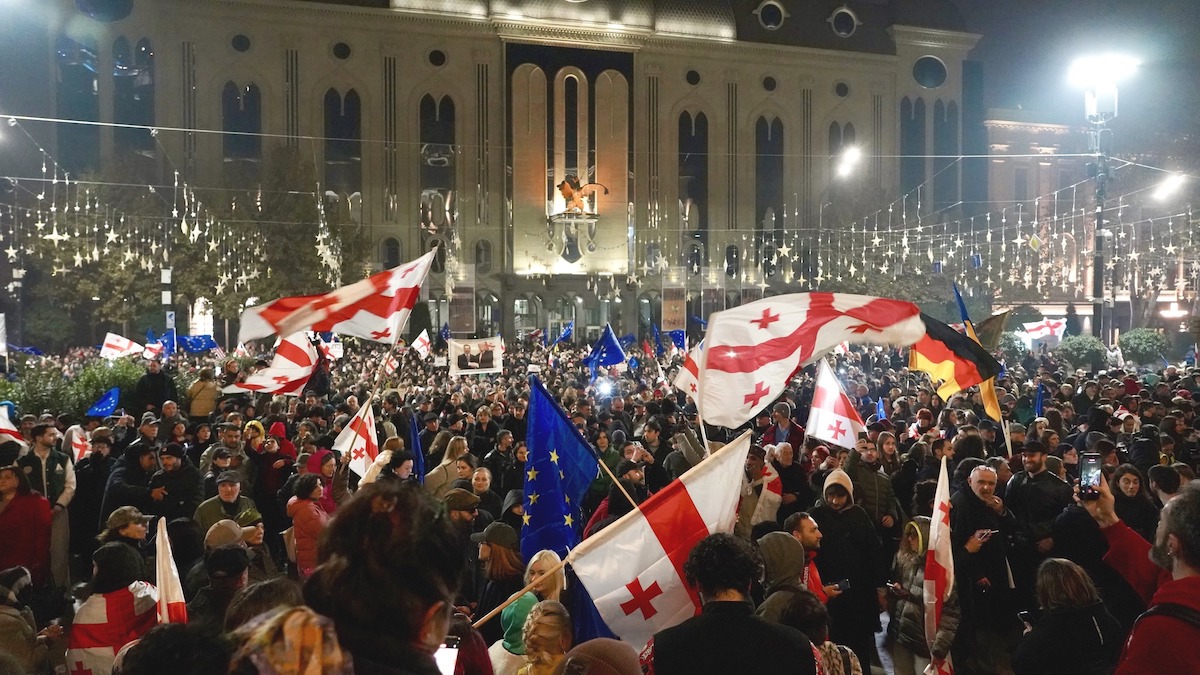
● On Saturday, December 6, at 19:00, democratic political parties and civil society groups will hold a march from the Philharmonic Hall to Parliament. They are calling on Western partners to launch an international investigation into the use of chemical substances during the dispersal of protests in Tbilisi — an issue highlighted in a BBC investigation, read more here
● “I want to reiterate that the Ministry of Internal Affairs did not purchase, did not use, and could not have used the chemical substance ‘kamit’,” Deputy Interior Minister Aleksandre Darakhvelidze said. He added: “The public will soon be informed about which substances were used by the police during the protests in Tbilisi, and it will be proven that none of the substances used differ from those employed by European or American police forces in similar situations.” Darakhvelidze stressed that “the data presented in the BBC report are merely the journalist’s assumptions and are not based on any concrete evidence.”
● Repressive laws effectively ban peaceful protests in Georgia, Human Rights Watch said. The authors of the report note that these mechanisms — along with violence and harsh financial penalties — represent “excessive and disproportionate restrictions that endanger the freedom to protest.”
● Levan Makhashvili, chair of the parliamentary committee on European integration from the ruling Georgian Dream party, sharply criticized a resolution by the French National Assembly’s European Affairs Committee. The resolution called for sanctions against members of the Georgian government and personally against Bidzina Ivanishvili, the oligarch and founder of Georgian Dream. “They should better take control of their own country and take care of their president, budget, and population,” Makhashvili said.
● The Foreign Minister from the ruling Georgian Dream party, Maka Bochorishvili, spoke of a “coordinated campaign against democratic institutions and processes in Georgia” during the OSCE Ministerial Council meeting in Vienna. She also said that there has been a rise in cases of “international organizations and institutions being misused for such purposes.” “Meanwhile, protecting and strengthening the resilience of Georgia’s democratic institutions is especially important in the context of Russia’s war against Ukraine and is essential for security and prosperity across Europe,” Bochorishvili stated.
● All students at public universities in Georgia will study completely free of charge starting next year. But the news is not as good for students at private universities. Those who are already enrolled will continue receiving their current grants until they finish their studies. However, students who enroll next year will no longer receive any government support.
This was announced by Minister of Education Givi Mikanadze.● The Prosecutor’s Office has charged two individuals with armed robbery in connection with a group burglary at the country house of businessman Gela Barkalaia. According to the Interior Ministry, on December 2 the suspects entered his home in the Mtskheta district and, using violence and threats dangerous to health, demanded money and valuables. The accused face 8 to 12 years in prison.
● Apti Alaudinov, commander of the Chechen special unit “Akhmat” and deputy head of the Russian Defense Ministry’s Main Directorate for Military-Political Work, gave an interview to a representative of the Georgian diaspora, Nikoloz Mjavandadze. He claimed that Georgia is closely tied to Russia, incorrectly stated that Georgia joined Russia in 1640, and argued that “Georgians should have sided with Russia in the war in Ukraine.”
-
Thursday, December 4, Armenia. Nikol Pashinyan: “The negotiation process on Karabakh was never about resolving the Karabakh issue - it was about keeping Armenia and Azerbaijan trapped"
● Armenian Foreign Minister Ararat Mirzoyan, speaking at the opening of the Eastern Partnership Civil Society Forum Summit in Brussels, said that the South Caucasus has seen rapid and positive changes over the past two years. “The South Caucasus used to be a region defined by uncertainty and insecurity. We used to speak of peace as a distant goal. The European perspective inspired us, but seemed unattainable given the security challenges we faced. And now we are not discussing the possibility of peace — we are talking about peace that has already taken hold. We are talking about European integration not as a desire, but as a matter of law,” he said, referring to the recently approved bill in Armenia’s parliament launching the process of joining the EU.
● EU Commissioner for Enlargement and Neighborhood Policy Marta Kos called Turkey a key partner for ensuring stability in the South Caucasus, the Mediterranean, and the Black Sea region. “Foreign Minister Hakan Fidan and I are continuing our positive agenda for advancing EU–Turkey relations. We are stepping up our efforts to support a peace agreement between Armenia and Azerbaijan,” she said.
● Prime Minister Nikol Pashinyan told parliament: “The negotiations on Karabakh were never about resolving the Karabakh issue — they were about keeping Armenia and Azerbaijan trapped. Nothing more. The goal of the Karabakh negotiation process was never to solve the problem. It is very important to acknowledge this. Speaking as Armenia’s prime minister, the aim was to ensure that Armenia had no chance of being an independent state.”
The Armenian government has published documents that were discussed during more than 30 years of negotiations on the Karabakh conflict. The government website describes the documents as “key” and “illustrative” of the content of the talks. Armenian experts familiar with the history of the conflict say most of these documents had been made public years ago, so it is inaccurate to present them as recently “declassified.” Some analysts argue that the provided documents are incomplete and do not allow for a full understanding of the negotiation process. Read more here
● Nikol Pashinyan said the main goal for 2026 is for the people to vote for peace in the upcoming parliamentary elections. “I have no doubt this will happen, because this is not peace for someone else — it is peace for every person, for their children, their families, their grandchildren,” he said.
● Armenia’s Civil Aviation Committee told Armenpress that the country has already done the necessary work to be removed from the EU’s aviation “blacklist,” and the deficiencies have been corrected. A day earlier, EU Commissioner Marta Kos said the issue was purely technical and unrelated to political relations. “We simply want to be assured that everything is in order from a safety standpoint,” she said.
● Tensions persist between the government and the leadership of the Armenian Apostolic Church. Opposition MPs asked what the prime minister is trying to achieve, suggesting that Nikol Pashinyan may want a church leader who follows his instructions.
Pashinyan replied: “I don’t need a Catholicos who answers to me. I need a Catholicos who does not answer to a senior lieutenant of a foreign intelligence service and does not report daily to a lieutenant of a foreign intelligence service.” He did not name the country he was referring to, but it is widely assumed he meant Russia, given Moscow’s visible support for Catholicos Garegin II.● The VAT exemption for individuals and companies importing electric vehicles will be extended for another year, Economy Minister Gevorg Papoyan announced. “In 2026 we will exempt from VAT electric cars manufactured in 2024, 2025, and 2026,” he said.
● Armenian media report that Turkish journalist Tugçe Yılmaz has been charged with “insulting the Turkish nation, the Republic of Turkey, state bodies and institutions” over an article titled “Armenian Youth of Turkey Speak: 109 Years of Mourning.” She is an editor at the newspaper Bianet, which published her interviews with young Armenians in Turkey. Yılmaz confirmed that charges were filed because she addressed the Armenian Genocide in her article.
● Starting 1 January 2026, the mandatory health insurance law will come into force. The Ministry of Health expects a 30% increase in hospital visits. Minister Anahit Avanesyan has called on hospitals to reassess the effective use of beds and rooms.
● The Ministry of Education, Science, Culture and Sport is launching pilot driving courses for students in their final year of high school.
-
Thursday, December 4, Georgia. In the French National Assembly, lawmakers are demanding that the government impose sanctions on Ivanishvili and his inner circle
● The European Affairs Committee of the French National Assembly has adopted a resolution on Georgia, unanimously supported in the first reading. The document addresses democratic backsliding in Georgia, including politically motivated arrests, and calls on the Georgian Dream government to reconsider repressive legislation. It also recommends that the French government review the circumstances under which Bidzina Ivanishvili — a French citizen and founder of the ruling Georgian Dream party — was awarded the Legion of Honour, and consider revoking the award “in view of his actions that contradict the values of the Republic.”
The resolution further urges the French government, in coordination with EU partners, to support the introduction of targeted individual sanctions against those named in the European Parliament’s resolution of 13 February 2025, including Bidzina Ivanishvili and his entourage, “in line with the European Parliament’s call and consistent with sanctions already imposed by the United States.” In addition, the resolution calls on the French government to demand the immediate release of all political prisoners, “especially opposition leaders and peaceful young people punished for their democratic activism.”
● According to The Hill, U.S. Senate Majority Leader John Thune has refused to include the MEGOBARI sanctions bill—targeting individuals involved in undermining democracy in Georgia—in the National Defense Authorization Act (NDAA). The NDAA is an annual law that sets U.S. national security policy and military spending. The Hill’s sources say Thune has blocked the MEGOBARI initiative for the second time in the past three months.
● Georgian Dream Prime Minister Irakli Kobakhidze claims that water cannons used to disperse protests in 2024 may have contained “non-prohibited” substances coded as 3439, but denies using the World War I–era chemical agent “camite,” as reported by the BBC. “Reports of ‘camite’ use are lies,” Kobakhidze reiterated.
● “There is no evidence of any link between the Georgian authorities and the Russian government,” said Georgian Dream–backed President Mikheil Kavelashvili. “The whole world wants to stop Russia. But how can we regain our territories if our relations with Russia are aggressive? Is there another way to restore our territories? We are not a NATO member; NATO refused to accept us. We are also not a member of the European Union. Our policy is based on pragmatic, balanced, and realistic approaches guided by our national interests,” Kavelashvili stated.
● Georgian Dream Foreign Minister Maka Bochorishvili met with OSCE Secretary General Feridun Sinirlioğlu. According to the press release, they discussed regional political developments and security issues. Bochorishvili said Georgia highly values regular dialogue and cooperation with the OSCE: “We express concern over the occupation [of Georgian territories by Russia – JAMnews]. The OSCE is involved in the Geneva International Discussions,” she noted.
● Georgia’s Ministry of Finance Investigative Service has detained an employee of the Gori Municipal Development Agency and the Protected Landscapes Directorate on charges of bribery. The suspect allegedly took bribes while abusing official powers.
● In Zugdidi, underage students at a public school forced a fellow student to undress and bullied him, Formula TV reported. The head of the Zugdidi resource center confirmed the incident and said that law enforcement authorities had been notified. He added that the minors involved and their parents have been questioned.
-
Thursday, December 4, Azerbaijan. Another opposition figure, Gultekhin Hajibeyli, is being prepared for extradition from Turkey at Azerbaijan’s request
● Gultekhin Hajibeyli, a member of the opposition National Council (pictured below), wrote on Facebook that she was forcibly taken to a migration center in Istanbul and is being prepared for extradition to Azerbaijan. A court in Baku has issued an arrest warrant for her in connection with the case of Ramiz Mehdiyev, the former influential “grey cardinal” of Azerbaijani politics. For decades, he headed the Presidential Administration (beginning with Heydar Aliyev). He is now under arrest on charges of attempting to seize power and treason. Several opposition figures have already been arrested in Baku in this case, including Ali Karimli, chairman of the Azerbaijani Popular Front Party, and his adviser Mamed Ibrahimli. Both have been charged with attempting to seize power by force.
Hajibeyli writes that she has submitted an urgent application to the European Court of Human Rights. “I came to visit my son, who is studying in Turkey, on September 25, and the three-month period of my stay in Turkey has not yet expired. Besides, I have a two-year residence permit in Turkey,” she wrote, calling on the Turkish government “to refrain from making an unlawful decision under pressure from the Azerbaijani authorities.” More on the opposition arrests here.● “The arrest of Ali Karimli is part of the ongoing and intensifying political repression in Azerbaijan and a violation of human rights, especially freedom of expression,” former U.S. ambassador to Azerbaijan Richard Kozlarich told Radio Free Europe/Radio Liberty. He stressed that the process is also directed against Azerbaijanis living abroad. “The reason is clear: to completely silence all voices critical of Ilham Aliyev’s regime. The indifferent attitude of the U.S. and European governments toward human rights has given the regime the confidence to take further steps. These are sad times for the people of Azerbaijan,” Kozlarich said.
● In Kazakhstan, the investigation into the crash of an Azerbaijani passenger plane near Aktau on December 25, 2024 — after it came under Russian air-defense missile fire over Grozny, Chechnya (JAMnews) — is nearing completion, according to Kazakhstan’s Deputy Prime Minister Kanat Bozumbayev. “We hope the investigation will be completed next year,” he said. The crash killed 38 people, and 29 survived.
● In Baku, 12 people have been arrested on suspicion of organizing the illegal sale and rental of social housing — apartments built by the state housing agency. According to the Interior Ministry, an illegal scheme for selling social housing through social networks and online platforms has been uncovered.
● Another landmine explosion occurred in Agdere, in territories retaken after the Second Karabakh War. According to the Interior Ministry, a local resident born in 1970 sustained a severe injury to his right leg when an anti-personnel mine exploded while he was grazing livestock. His condition is described as serious.
● Husniya Mammadova, adviser to Azerbaijan’s Permanent Mission to the UN, presented a report on reconstruction and development efforts in territories liberated from occupation. “Over the past five years, more than $13.5 billion has been allocated for these purposes. More than 50,000 people have already returned to their homes, live, work, and receive education in these regions. Consistent work in this direction will remain a priority in the coming years,” she said.
● A delegation led by Prosecutor General Kamran Aliyev paid an official visit to Washington. Meetings were held with senior officials from the U.S. Attorney General’s Office, the FBI, the Department of Justice, and the State Department.
● Iraq’s Minister of Communications and co-chair of the Iraq–Azerbaijan Joint Commission, Hayyam Al-Yasiri, has arrived in Azerbaijan on an official visit to discuss the implementation of bilateral agreements and memoranda of understanding. Today, Baku will host a meeting of the intergovernmental commission on economic, scientific-technical, and cultural cooperation between Azerbaijan and Iraq. The Iraqi Communications Ministry stated that Baghdad seeks to deepen its strategic partnership with Azerbaijan.
● In the Turkish city of Izmir, the joint military exercises Doğu Akdeniz-2025 (“Eastern Mediterranean-2025”) were held with the participation of Azerbaijan, Turkey, the United States, and Pakistan. Military personnel from nineteen countries took part as observers.
● Tourist arrivals to Azerbaijan from Central Asian countries increased by 22.2% over the past year; from Middle Eastern countries by 9%; and from European countries by 6%. Among Eastern European countries, the largest number of tourists came from Ukraine, and among Western European states — from the United Kingdom.

-
Wednesday, December 3, Azerbaijan. The most popular platform in Azerbaijan is Instagram
● A preliminary court hearing in the “MeydanTV case” has been scheduled for 12 December. As part of this case, 12 journalists have been held in pre-trial detention for a year. Azerbaijan’s Service for Radio Liberty reported, citing lawyers, that the case materials were transferred to the court several days ago. All the journalists are charged with smuggling, illegal entrepreneurship, money laundering, tax evasion, and other offenses. These charges carry sentences of up to 12 years in prison. The journalists deny all accusations, saying they are being punished for exposing corruption among state officials, including the president.
Since November 2023, more than 30 journalists and civil activists have been arrested in Azerbaijan on smuggling charges. Many of them are employees of the popular outlets AbzasMedia and ToplumTV. Seven journalists charged in the “AbzasMedia case” have already been sentenced to 7–9 years. The trial in the “ToplumTV case” is ongoing. None of the journalists accept the charges, insisting they were arrested on political orders and punished for their professional work.
● UAE companies are expanding investment in Azerbaijan’s renewable-energy projects, while SOCAR and ADNOC deepen cooperation in the oil and gas sector, Economy Minister Mikayil Jabbarov said. A joint $1 billion investment fund is a key tool.
● Jabbarov also reported that bilateral trade reached about $2.2 billion in 2024. UAE airlines operate around 28 weekly flights to Azerbaijan, and Azerbaijani airlines operate 14. In 2024, 48,888 UAE citizens visited Azerbaijan, while 115,189 Azerbaijanis visited the UAE.
● Energy Minister Parviz Shahbazov and the EU’s ambassador to Azerbaijan, Marianna Küünjunčić, discussed prospects for exporting green energy and expanding the Southern Gas Corridor.
● Normalizing Armenia’s relations with both Azerbaijan and Turkey remains a key EU priority, EU foreign-policy chief Kaja Kallas said after talks with Armenian FM Ararat Mirzoyan. She stressed the importance of border crossings, transport links and energy infrastructure, and said the EU is ready to support the process with stronger measures.
● Armenia has published 13 documents from decades of negotiations on the Karabakh conflict, including OSCE Minsk Group proposals from 2016 and 2019, the Madrid and Kazan principles, and Russia’s proposals. PM Nikol Pashinyan previously pledged to release all key documents by the end of 2025.
● In Yekaterinburg, Russian police detained the newly appointed head of the local Azerbaijani diaspora, Vidadi Mustafayev, on fraud charges involving land sales. His predecessor, Shahin Shikhlinski, was arrested in August on suspicion of murder and assault; his son was detained in July. These events follow harsh police raids targeting ethnic Azerbaijanis in late June, during which more than 50 were detained and two killed. The backdrop is heightened tension between Baku and Moscow after Russian air defenses shot down an Azerbaijani passenger plane over Grozny in December 2024. Azerbaijan demanded apologies, compensation and accountability. Presidential aide Hikmet Hajiyev said on 30 November that the issue is now settled and relations are back to normal.
● Estonian companies are eager to work in Azerbaijan, Foreign Minister Margus Tsahkna wrote on X after speaking with Azerbaijani FM Jeyhun Bayramov. Estonia has officially decided to open an embassy in Azerbaijan in 2026 — a move Baku says will strengthen bilateral ties.
● Azerbaijan’s Finance Ministry is reintroducing partial income-tax relief to support private and non-oil sectors. The rate will be cut by 50% — from an average of 14% to 7%. In 2026, workers earning up to 2,500 manats (about $1,500) will pay only 3%. By 2029, the government aims for non-oil revenue to make up 70% of the consolidated budget.
● Statcounter’s latest data on social-media market share in Azerbaijan:
Instagram – 46.23%
YouTube – 31.04%
Facebook – 10.68%
Pinterest – 5.7%
X – 4.46%● The trial of Ruben Vardanyan, former state minister of the former unrecognized “Nagorno-Karabakh Republic,” continued. He is accused of torture, mercenarism, war crimes, terrorism and other offences. The state news agency reported that testimony was heard from wounded individuals and witnesses to deaths during military operations when Vardanyan was in office. The next hearing is set for 5 December.
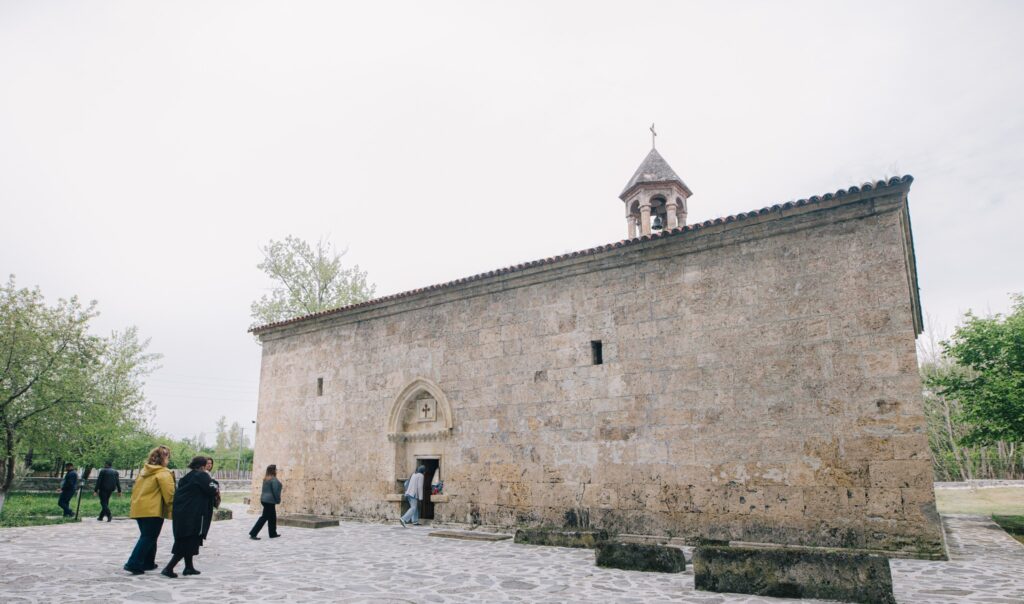
The Udi Church of Jotari in Gabala, Azerbaijan. Photo by JAMnews.
-
Wednesday, December 3, Armenia. Armenia–EU strategic partnership agenda has been signed
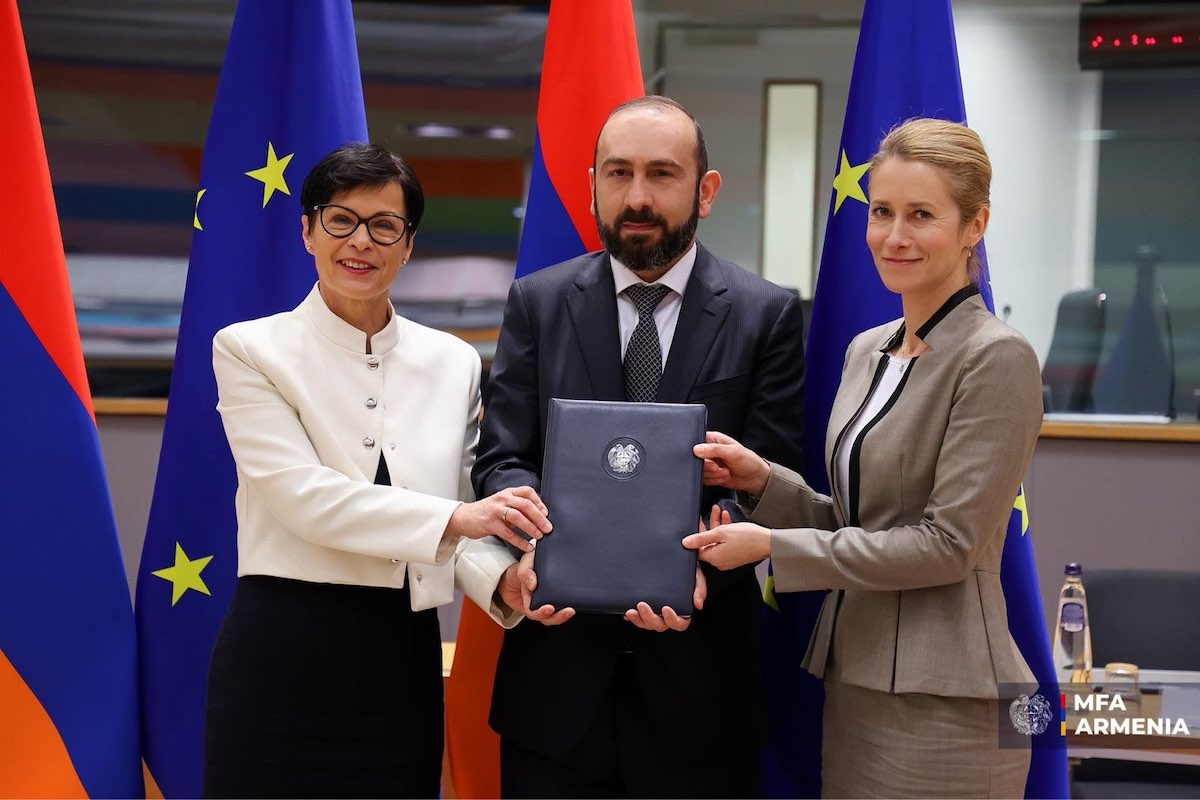
● A document titled “Armenia–EU Strategic Partnership Agenda” has been signed. “Armenia–EU partnership is entering a new and more ambitious phase, which implies a shared vision and shared responsibility aimed at consistently achieving concrete results for our citizens,” Foreign Minister Ararat Mirzoyan said. Read more here
● Armenia will receive €5 million from the EU to combat disinformation ahead of elections. “Democracy is always under threat, and we must support the media to prevent pressure. This new direction is very important,” EU Commissioner for Enlargement Marta Kos said at a briefing following the 6th Armenia–EU Partnership Council meeting.
● The process of visa liberalization for Armenian citizens traveling to EU countries has begun, Foreign Minister Ararat Mirzoyan announced at the briefing after the 6th Armenia–EU Partnership Council meeting.
● The ban on flights of Armenia-registered aircraft within EU airspace remains in force due to technical, not political, reasons.
This was stated at a meeting with Armenian journalists in Brussels by EU Commissioner for Enlargement Marta Kos, according to Radio Liberty.● The government has published documents on the Karabakh settlement process. A total of 13 files were uploaded to the official government website. These include the document discussed in Kazan in 2011, proposals submitted by mediators in 2019, and a letter from former President Serzh Sargsyan addressed to Russian President Vladimir Putin in August 2016.
● Experts note that none of the documents related to the U.S. Key West negotiations (April 2001), which are considered the most extensive and wide-format period of peace talks, were included among the published files. “We are asking for the publication of the Key West documents so that there is no room for manipulation,” said journalist and Karabakh-conflict expert Tatul Hakobyan.
● The head of former president Robert Kocharyan’s office also emphasized the absence of Key West documents. “They presented a certain text that was never officially discussed and was published in 2008 in Prime Minister Pashinyan’s newspaper Haykakan Zhamanak. If he had published everything concerning Key West, the myth of the Meghri ‘handover’ (the Armenian town on the border with Azerbaijan) would have been dispelled immediately,” said Bagrat Mikoyan.
● “The ruling party kept its word and published the documents; now it reminds the former presidents that they are invited to a debate,” said Deputy Speaker of the Armenian Parliament Ruben Rubinyan. “The smartest of the former presidents – Levon Ter-Petrosyan, who is slightly more intellectual than Serzh Sargsyan and especially Robert Kocharyan – came up with a brilliant idea and said: publish the negotiation documents. Well then, dear three presidents, the negotiation documents have been made public. Now you must either come to a debate with Pashinyan, or remain silent forever and disgrace yourselves. Although it will be disgraceful either way. The choice is yours – we are waiting,” Rubinyan said.
● Armenia’s ambassador to the U.S., Narek Mkrtchyan, met with U.S. President Donald Trump’s advisers Alexander Taits, Kim Rulli, and Hugo Dant. A bilateral agreement was reached to continue work on deepening Armenia–U.S. economic cooperation.
● Defense Minister Suren Papikyan met with Egypt’s Minister of Military Production Mohammed Salah al-Din Mustafa to discuss issues of military-technical cooperation.
● A fake WhatsApp account was created in the name of the Speaker of Armenia’s Parliament. Messages are being sent from it to his acquaintances, said Alen Simonyan himself. “It is obvious that the messages were written in Russian and translated into Armenian. I ask you to ignore these messages, not to click on the links sent, and not to provide personal information,” Simonyan wrote.
● The basic health-insurance payment in Armenia will be set at 10,800 drams per month (about $30), Health Minister Anahit Avanesyan announced. The compensation will cover about 30% of the most in-demand medical services and will apply to certain types of medications.
-
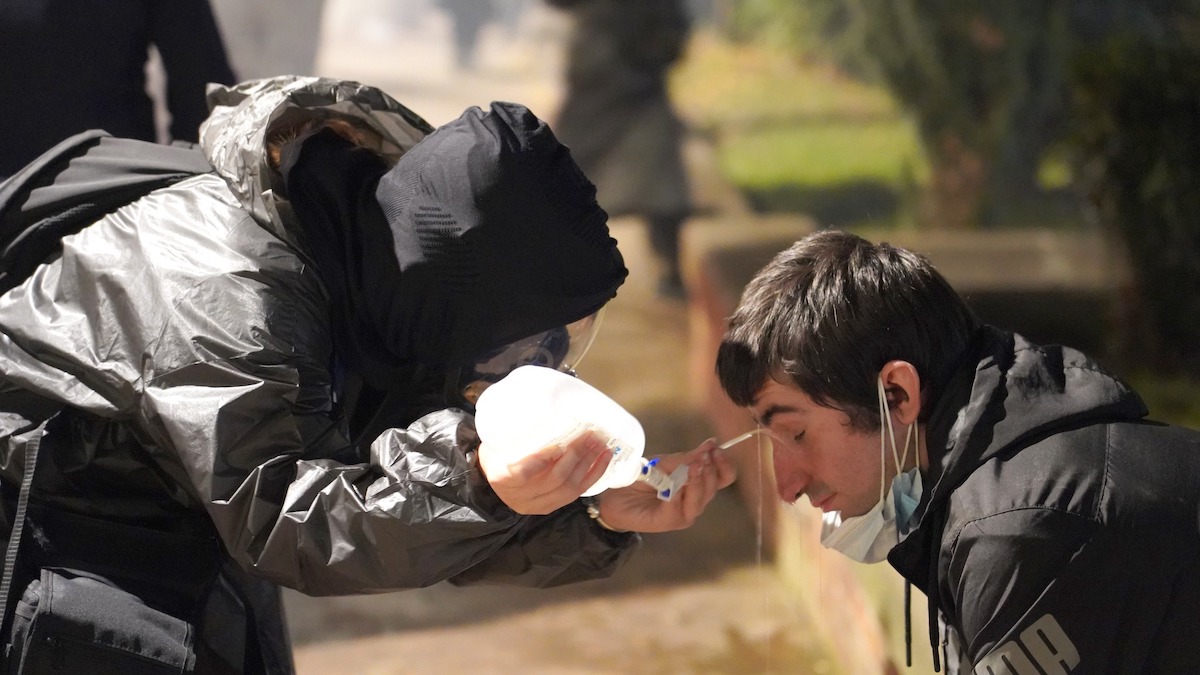
Wednesday, December 3, Georgia. A scandal is developing around a BBC investigation into the possible use of chemical agents to disperse protests in Tbilisi
● Italian Senator Marco Lombardo: “A BBC journalistic investigation confirms that chemical weapons were used against peaceful civilians in Georgia during a protest. For over a year, we have been stating that the ‘Georgian Dream’ party has established an illiberal regime that systematically uses violence and imprisonment as a tool of repression against journalists and political opponents. Now, a serious accusation has been added to these violations: the use of chemical weapons, which is a human rights violation. The Italian government must immediately summon the Georgian ambassador and demand all necessary explanations regarding the current situation involving mass human rights violations in Georgia. Today, being a citizen of Georgia means defending European values of freedom and the rule of law. We are Georgia. We are Europe.”
● Doctors Konstantin and Davit Chakhunashvili were summoned for questioning by the State Security Service in connection with the BBC investigation on the authorities’ use of chemical agents during protest dispersals. They were the experts who confirmed this information to the BBC. After the questioning, Konstantin Chakhunashvili told journalists that the questions mostly concerned his scientific work. He believes that the special services want to frame the case in such a way as to suggest that the information reported by the BBC is based on his research. Chakhunashvili claims that “this is simultaneously an attempt to intimidate him and an attempt to discredit the BBC.” Here is more on the investigation.
● Other respondents who spoke with the BBC during the investigation have also been summoned for questioning by the State Security Service. This includes Zviad Maisashvili, who was brutally beaten on the head by a special forces officer during protests last year. This incident was recorded on video and widely circulated in media and social media. Maisashvili was recognized as a victim only eight months after the incident, but none of the officers who beat him have been identified or punished.
● The Young Lawyers’ Association of Georgia (GYLA) reported that two of its employees, including the head of the human rights program, were summoned for questioning by the State Security Service in connection with the BBC investigation. “These interrogations raise suspicions that the aim of the special services’ investigation is not to establish the truth but to pressure individuals and organizations that report systemic human rights violations.”
● Non-governmental organizations are demanding that the ‘Georgian Dream’ reveal what chemical substances the police used against peaceful protesters. In a joint statement, the NGOs said that in the coming days they will appeal to relevant international organizations and institutions to send expert teams with the necessary competence and qualifications to fully uncover the scheme.
● Minister of Internal Affairs Gela Geladze called the BBC investigation materials “absurd and false.” He also refuted the statement by former Minister of Internal Affairs Vakhtang Gomelauri that the substance mentioned in the BBC investigation film was purchased under the previous government (during Saakashvili’s presidency) in 2009–2010. Geladze claims that he personally reviewed all documentation and procurement records, and “states with full responsibility that the Ministry of Internal Affairs of Georgia has never purchased the substance called ‘Kamit’.”
● The BBC, which the ‘Georgian Dream’ government threatened with a lawsuit after publishing the investigative film, responded that it stands by the quality of its journalistic work and thanks the brave respondents who participated in the investigation. It also emphasized that the investigation is based on evidence from multiple sources and that the report “fully serves the public interest.” More here.
● The Speaker of the Parliament of ‘Georgian Dream,’ Shalva Papuashvili, reacted to the arrest in Belgium of former EU High Representative for Foreign Affairs and Security Federica Mogherini, now Rector of the College of Europe. “The internal structures of the EU cannot ensure the absence of corruption within European institutions, and it is even clearer that the hidden funding of NGOs in Georgia is fertile ground for corruption. This is not the first corruption scandal in the European Commission and other EU institutions; corruption there is common. In Europe, there is a tendency toward opacity and secrecy to avoid making evidence public, such as how funds in Georgia are distributed in a biased manner,” said Papuashvili.
● The Russian General Prosecutor’s Office announced that Giorgi Baramidze, a member of the Georgian opposition ‘National Movement,’ will be tried in absentia in the so-called Donetsk People’s Republic for participating in combat against Russia on the side of Ukraine in 2022.
-
Tuesday, December 2, Armenia. Head of the Echmiadzin Chancellery: “There is no reason for the Catholicos to abdicate the throne"
● Archbishop Arshak Khachatryan, head of the Mother See of Etchmiadzin’s chancery, held a press conference saying he sees no grounds for the Catholicos of All Armenians to abdicate. Prime Minister Nikol Pashinyan has demanded the Catholicos step down, accusing him of violating celibacy. Khachatryan himself came under scrutiny after a video circulating on social media allegedly showed him in an intimate relationship with his uncle’s wife. More here.
● A criminal case has been opened against Grigori Khachaturov, former commander of Armenia’s 3rd Army Corps and son of former Chief of the General Staff Yuri Khachaturov. He is accused of bribery and abuse of office during wartime, resulting in a person’s death. Khachaturov has been declared wanted. Earlier, he was charged with “laundering large-scale real estate purchased through illegal means and using his official position.”
Grigori Khachaturov was dismissed as corps commander in July 2021. Before that, he supported the General Staff’s demand for Prime Minister Nikol Pashinyan and his government to resign. His father was also charged in a case concerning the overthrow of the constitutional order, in which former Armenian President Robert Kocharyan was the main defendant.
● A delegation led by National Assembly Speaker Alen Simonyan is holding meetings during an official visit to Greece.
● Defense Minister Suren Papikyan is visiting Egypt, where he met with his counterpart Abdel Majid Sakr to discuss defense cooperation.
● Armenia has launched an online platform for buying and selling cars — car.mia.gov.am — allowing transactions to be completed from home within minutes. License plates and registration documents can be delivered by mail. Interior Minister Arpine Sargsyan said the platform will eventually support all vehicle-related services, including viewing and paying fines, obtaining insurance, and more.
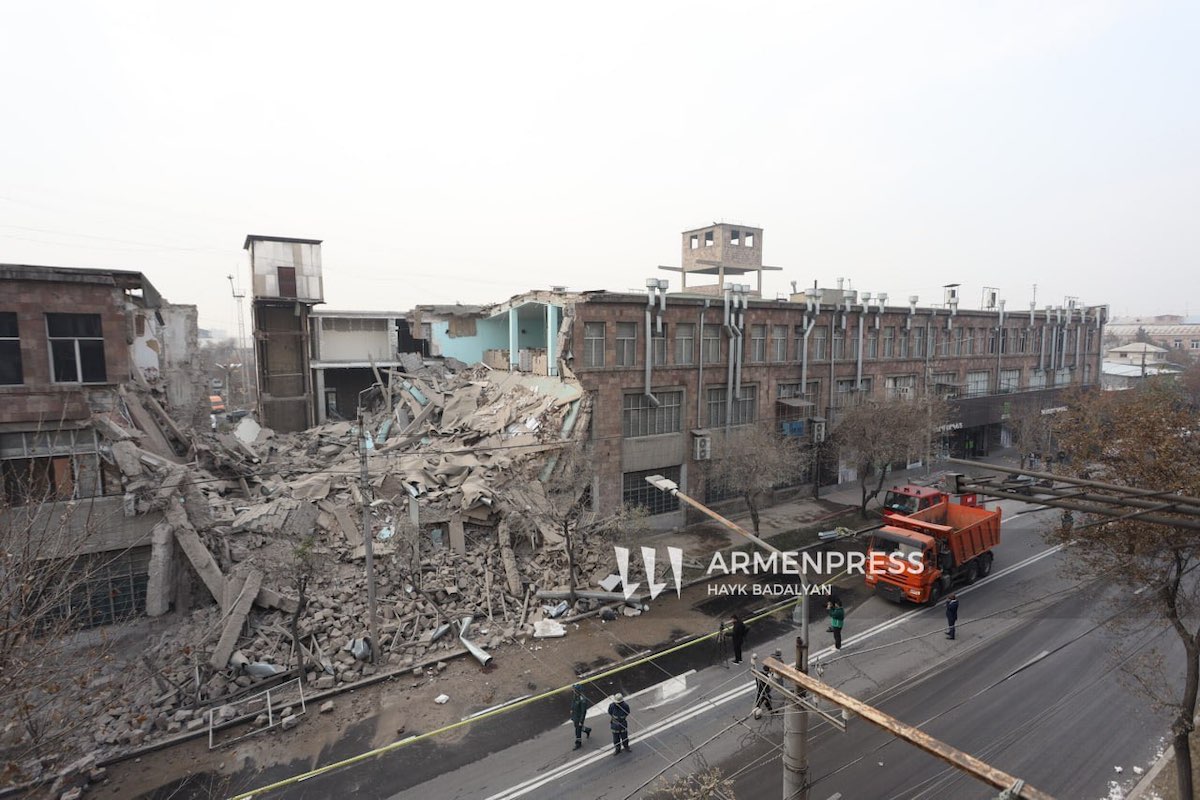
● Part of the former piano factory building in Yerevan collapsed, injuring one person (pictured below).
● Russia has increased pork exports to Armenia, supplying 26% more in the first ten months of this year compared with the same period last year.
● Armenia has received a 32 million dram (about $85,000) grant from the Asia Cultural Heritage Alliance.
● Yerevan City Hall organized 55 excursions for elderly residents as part of a special program, with around 1,100 participants from all 12 administrative districts of the capital.
-
Tuesday, December 2, Azerbaijan. Opposition leaders have been charged with attempting to seize power and are being prosecuted as part of the Ramiz Mehtiyev case
● Deputy Minister for Emergency Situations Teymur Mehtiyev has been dismissed. He is the son of Ramiz Mehtiyev, the former “grey cardinal” of Azerbaijani politics, who is under arrest and accused of attempting to seize power, treason, and laundering illegally obtained assets. Several opposition figures have been arrested in the same case, including Ali Karimli, chairman of the Popular Front Party of Azerbaijan, and his advisor Mamed Ibrahimli. Both face similar charges: actions aimed at violently seizing power and forcibly changing the constitutional order. More here.
● Pro-government media are publishing what they claim are details of “suspicious dealings” involving Ramiz Mehtiyev and Ali Karimli, allegedly “scripted in Russia.” They argue that “it all began in 2012–2013,” citing the following points:
In 2012, Mehtiyev’s close associate Abbas Abbasov created the “Union of Azerbaijani Organizations of Russia,” widely known as the “Union of Billionaires.”
Russian oligarch Rustam Ibragimbekov, owner of IBRUS, joined the Union’s coordinating council together with Abbasov.
Ibragimbekov later formed the “National Council of Azerbaijan” together with Ali Karimli and other opposition figures: Jamil Hasanli and Gultekin Hajibeyli. This opposition structure was funded by the “Union of Billionaires.”
Karimli turned his Popular Front Party into an instrument of the National Council.
Money from the “Union of Billionaires” allegedly reached Karimli, with part of it offered to individuals involved in unrest.
Karimli’s regular protests reportedly stopped immediately after Ramiz Mehtiyev left his post as head of the presidential administration in 2019.
During a search of Ali Karimli’s home, materials were allegedly found showing contacts with the “Union of Billionaires,” including an early draft of a secret letter from Ramiz Mehtiyev to Moscow requesting support, among other documents.
Gultekin Hajibeyli reportedly received two modern apartments in Baku as gifts during this period, in a new building constructed by NLT, whose owner is Ramiz Mehtiyev’s son-in-law and whose legal representative is his nephew. One apartment was registered in the name of Hajibeyli’s father, the other in the name of her sister.
● Azerbaijan’s Center for the Analysis of International Relations has accused the Netherlands Institute of International Relations Clingendael of “distorting reality” in its political report “Armenia and Azerbaijan: Peace or Pause?”. According to Azerbaijani analysts, the report uses terminology that misrepresents processes in the region, and its interpretation of normalization talks does not fully reflect the sides’ official positions. The Center plans to prepare a detailed clarification document and says it is ready for open and professional dialogue with Clingendael and other research institutes.
● Baku has received answers from Moscow regarding the Azerbaijani passenger aircraft shot down by Russian air defense systems over Grozny in December 2024. Hikmet Hajiyev, assistant to the President of Azerbaijan, told EU Today in Brussels that although there was “initial misunderstanding and emotion” after the incident, Azerbaijan’s concerns were discussed during a subsequent meeting between the Azerbaijani and Russian leaders in Dushanbe. “Azerbaijan expected official apologies, a full investigation, accountability, and compensation. We have now turned this page and will continue normal, good-neighborly relations,” Hajiyev said.
● Hajiyev also said Azerbaijan is ready to deepen cooperation with the EU on energy security, but European financial institutions “must heed President Ilham Aliyev’s calls for greater flexibility on gas infrastructure if the EU wants to maintain and expand imports.” EU Today notes that the EU imported around 11.7 bcm of Azerbaijani gas in 2024 via the Southern Gas Corridor, compared with 8 bcm in 2021. The 2022 agreement envisions increasing volumes to at least 16 bcm by 2027, depending on infrastructure and contracts.
● Hajiyev highlighted Azerbaijan’s renewable energy potential, estimated at about 135 GW on land and 157 GW in the Caspian Sea. “Europe needs new partners—outsource it to us,” he said.
● Hajiyev stated that “for Azerbaijan, the war and conflict with Armenia are over. We must strengthen peace. It will bring prosperity and development to the region. Armenia, as East-West and North-South links expand, can transform from a country stuck in a dead end into a transit state.”
● The OSCE announced it has fully closed the Minsk Process and all related structures. The Minsk Group had facilitated negotiations on the Karabakh conflict since the early 1990s under the co-chairmanship of the US, France, and Russia. The process was annulled following a joint request by Armenia and Azerbaijan.
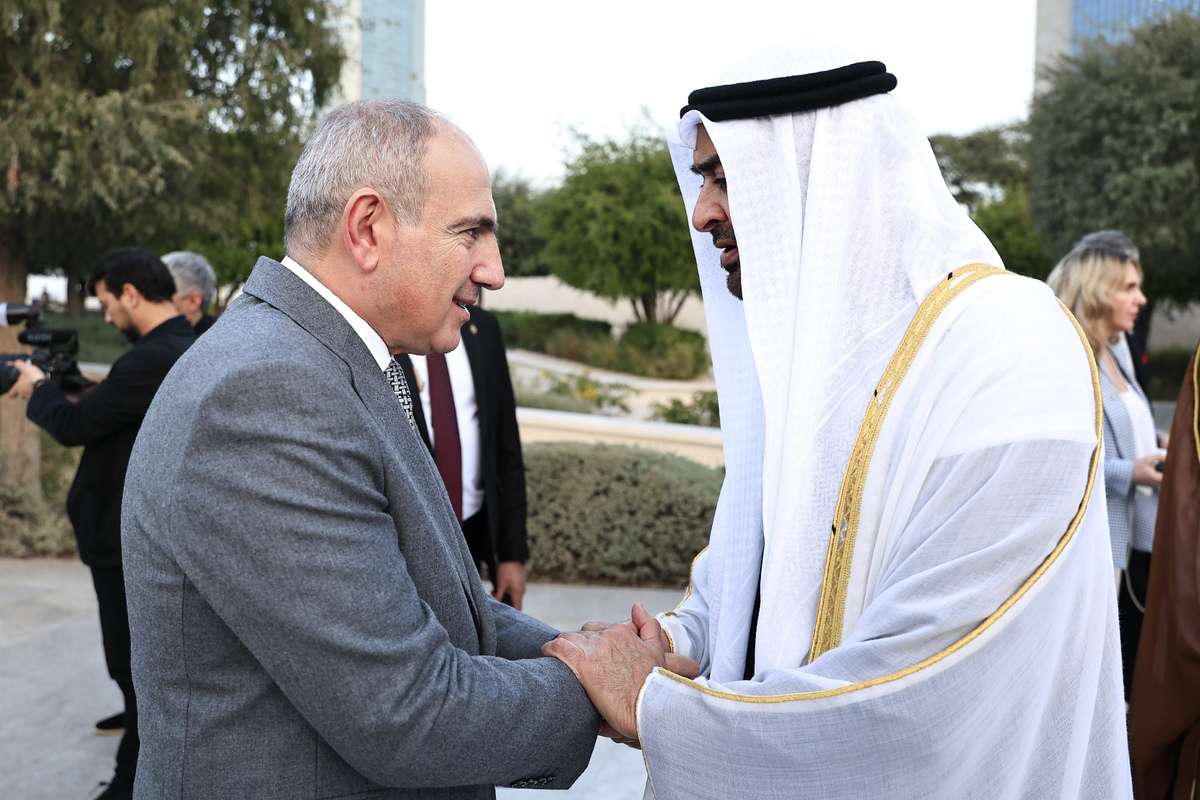
● Azerbaijan and the UAE have agreed to establish subcommittees in five sectors following the first meeting of the bilateral strategic partnership committee in Abu Dhabi: diplomacy, economic cooperation, defense, humanitarian ties, and energy cooperation. The next meeting will take place in Baku.
● The trial continues for Ruben Vardanyan, the former state minister of the former unrecognized “Nagorno-Karabakh Republic” and a citizen of Armenia, who is in pretrial detention. He is accused of torture, mercenarism, war crimes, terrorism, and other offenses. According to state agency Azertac, the court heard testimony from those wounded and from witnesses to deaths during military actions carried out by Armenian forces during the period when Vardanyan oversaw the unrecognized entity. The next hearing is scheduled for December 2.
● Long-standing restrictions on importing breeding livestock from Georgia into Azerbaijan have been lifted. Monitoring confirmed no risk of infectious disease spread, and Tbilisi guaranteed the necessary level of epizootic control.
-
Tuesday, December 2, Georgia. Chemical agents used against protesters — Georgian Dream calls the BBC investigation false
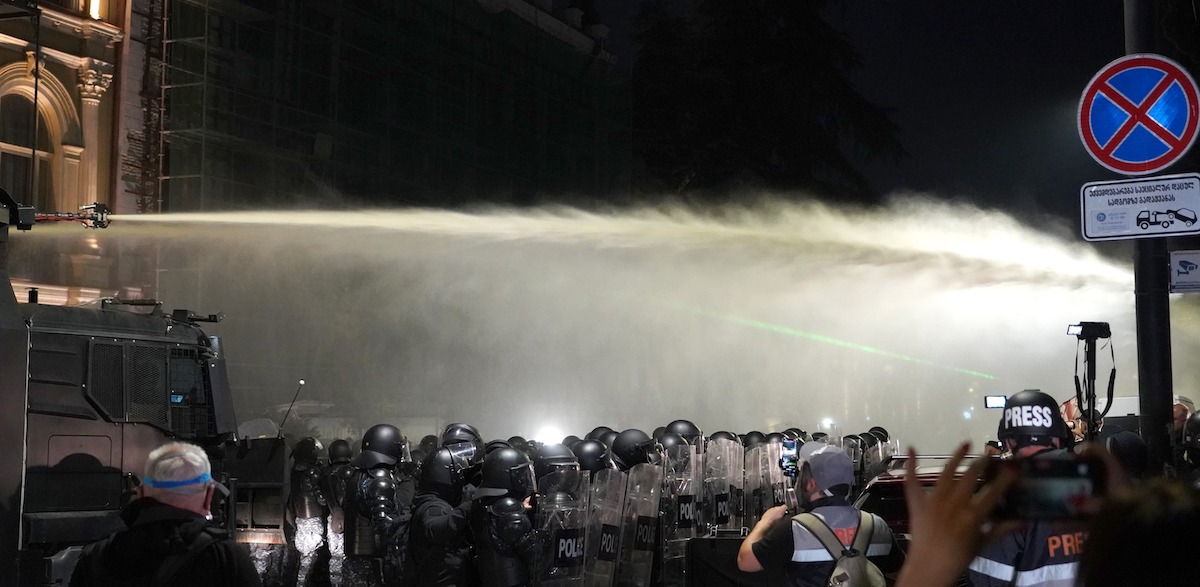
● The BBC has published an extensive investigation claiming that, based on collected evidence, the Georgian authorities may have used a World War I–era chemical agent to disperse last year’s pro-European protests. According to the BBC, its investigation relied on informants within Georgian police special units. Journalists also interviewed chemical weapons experts, doctors, and victims. Read more here
● The Georgian Dream government is launching legal action against the BBC in an international court. In its statement, the government says it will use all legal means to hold the outlet accountable for spreading “dirty, false accusations.” The State Security Service has opened an investigation into the BBC’s claims under Articles 333 and 319, which include abuse of power and assisting a foreign organization in hostile activities.
● Magnitsky Act author Bill Browder called the alleged use of chemical agents by Georgian Dream a “new level of immorality.” “Question: did they come up with this themselves, or did their bosses in Russia teach them?” he wrote on X.
● The Alliance of Liberals and Democrats for Europe expressed outrage over the BBC’s findings, saying Georgian Dream may have used a WWI-era chemical agent against protesters in 2024. “This is a shocking violation of fundamental rights. We support our member parties and the opposition in their demand for an independent international investigation and call on our partners to restrict supplies of equipment that can be used against citizens… We stand with the courageous people of Georgia in their year-long protest for a democratic, European future.”
● Former Interior Minister Vakhtang Gomelauri responded to the BBC report on the pro-government TV channel Imedi, saying that “the substances named were purchased and used by the Interior Ministry only until 2012”—that is, before Georgian Dream came to power, during the presidency of Mikheil Saakashvili. “I can responsibly say that the United National Movement has found evidence against itself,” Gomelauri said.
● Opposition parties Akhali, Girchi – More Freedom, Droa, European Georgia, Freedom Square, Strategy Builder, and The Federalists called the findings a “gross violation of international norms.” They urged respected international bodies to launch an independent investigation to identify those responsible and prevent further use of such substances. They also called on international partners to consider temporary restrictions on equipment that could be used against civilians.
● EU External Affairs and Security Policy spokesperson Anita Hipper stated: “Media reports have emerged about the use of chemical agents against demonstrators in Georgia. If confirmed, this would be unacceptable. We expect a swift, transparent, and credible investigation.”
● Tbilisi Mayor Kakha Kaladze thanked the Hungarian authorities for supporting the Georgian government. “I would like to thank Prime Minister Viktor Orbán for the truth he speaks. Tbilisi is asking the same questions as Budapest: How do we balance change with historical heritage? This question must be raised first and foremost in a political context so we can jointly protect our identity,” Kaladze said at a conference in Budapest on European urban development.
● Prominent opposition figure Aleko Elisashvili, a member of the Lelo–Strong Georgia coalition, has been placed in pre-trial detention on terrorism charges. Prosecutors accuse him of attempting to burn the Tbilisi City Court administration building and injuring court marshals. Elisashvili told the court he admits the act itself but not the terrorism charge, saying he acted as a form of protest.
● Tetritskaro District Court judge Vladimir Khuchua has suspended several administrative cases and appealed to Georgia’s Constitutional Court. According to Interpressnews, he is challenging 2025 amendments to the Administrative Offenses Code that mandate administrative arrest for unpaid fines and automatic suspension of driving and other licenses for 3–5 years for possession of small amounts of cannabis or marijuana. Khuchua argues that these amendments pose a threat to constitutional human rights.
-
Monday, December 1, Azerbaijan. Interrogations of opposition figures in the case of former presidential chief of staff Ramiz Mehdiyev
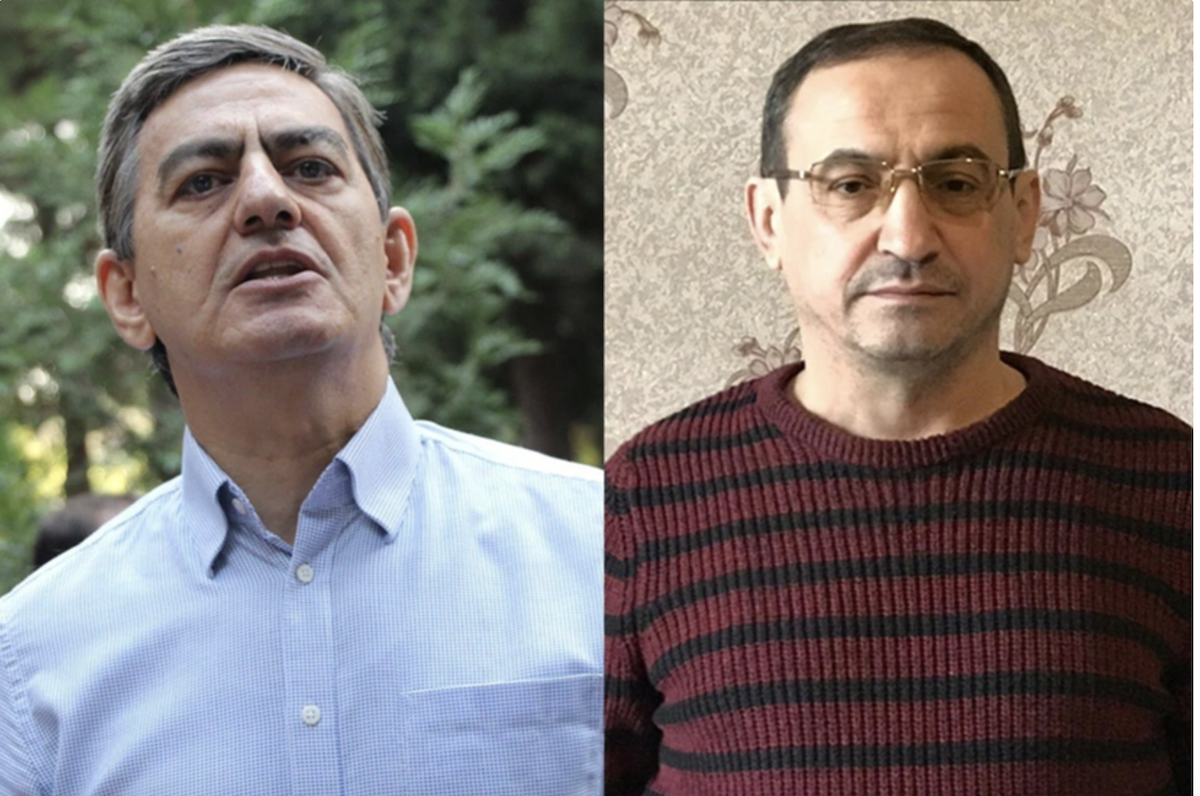
● Interrogations of opposition figures continue in the case of Ramiz Mehdiyev — the once-powerful former chief of staff to Azerbaijan’s president, long viewed as the “grey cardinal” of Azerbaijani politics, now accused of attempting to seize power. The State Security Service (SSS) interrogated Ali Karimli, chairman of the Azerbaijan Popular Front Party (APFP), and his adviser Mammad Ibrahim as suspects (pictured). The SSS reported that searches of their homes uncovered materials allegedly linking them to the case, including an early, unpublished draft of a letter written by Mehdiyev and other documents.
Shortly after, Jamil Hasanli — chair of the National Council of Democratic Forces and a former MP — was summoned for questioning. For now, he is listed as a witness and was released after giving testimony. Earlier, Hasanli wrote on social media that he had planned to fly to Dubai with his wife “for a family event related to their daughter,” but learned at the airport that he was banned from leaving the country.
According to local media, Gultekin Hajibeyli — also a member of the National Council — has been detained in Turkey in connection with the case. She is reportedly being held at a migration center in Istanbul and will be deported to Azerbaijan. Media previously reported that Hajibeyli had fled Azerbaijan. More on the Mehdiyev case is available here.
● Journalists arrested in the “Meydan TV case” say they were physically assaulted by Jamil Huseynov, described as the head of the convoy service of the Baku Court of Appeal. Journalists Aytaj Tapdig (Ahmadova) and Aysel Umudova made the allegations. There has been no official response.
Arrests in the “Meydan TV case” began in December 2024. Eleven people in total have been detained. They were initially charged with conspiracy to commit smuggling, but the charges were toughened in August this year. The journalists strongly deny wrongdoing and say the prosecutions are retaliation for government criticism.
● The first consular consultations between the foreign ministries of Azerbaijan and Poland have taken place. The sides discussed prospects for new bilateral agreements and possibilities for digitalizing consular services.
● Armenia and Turkey discussed the restoration and reopening of the Gyumri–Kars railway, during meetings between their special envoys for normalization. The talks were held at the Akhurik–Akyaka border checkpoint and in the city of Gyumri. Armenia’s foreign ministry said this was the second stage of technical discussions.
In September, Turkey’s special envoy Serdar Kılıç visited Armenia and met with Foreign Minister Ararat Mirzoyan. At the “Margara” border checkpoint, he was received by Armenia’s envoy for normalization Ruben Rubinyan.
● Lachin in Karabakh hosted the closing ceremony of this year’s CIS cultural capital program, marking the end of its status as the Commonwealth’s cultural capital.
● Customs officials prevented the illegal import of nearly 11 kg of gold. At Baku airport, officers found undeclared gold bars weighing 10,883.82 grams — valued at more than 2 million manats (around $1.3 million) — in the luggage of an Azerbaijani citizen arriving from Istanbul. A 0.6-gram (3-carat) diamond was also discovered. Authorities say the items were first taken from Dubai to Istanbul by one individual, then transported to Baku by another. An investigation has been opened.
-
Monday, December 1, Georgia. One of the opposition leaders attempted to set fire to a courthouse in Tbilisi
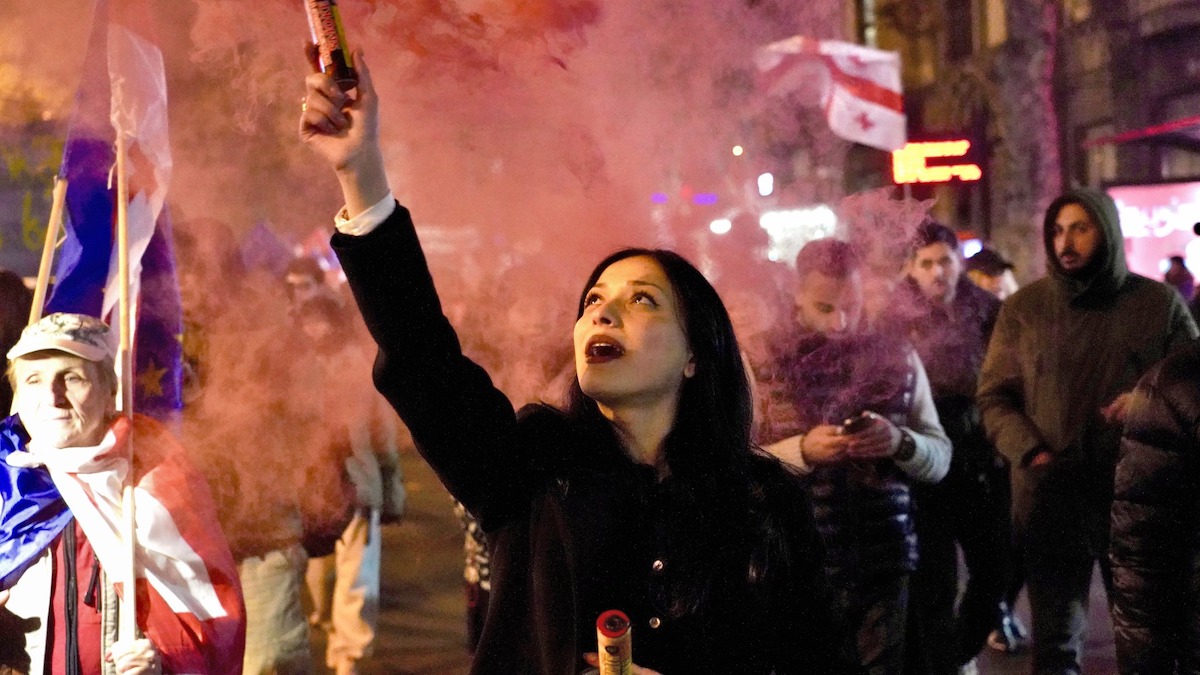
● Prosecutors have charged prominent opposition politician Aleko Elisashvili with attempting to carry out a terrorist attack at the Tbilisi City Court. Elisashvili, one of the leaders of the “Lelo – Strong Georgia” alliance, was arrested on 29 November. According to the Interior Ministry, he broke into the court’s administrative building, poured gasoline inside the premises, and attempted to set it on fire but was stopped in time. Both Elisashvili and a court security officer were injured during the scuffle. The ministry also said he was carrying a handgun, releasing CCTV footage as evidence. His lawyer told reporters that Elisashvili admits attempting to start a fire but insists it was an act of protest against an unfair judiciary and rejects the terrorism charge. More details here.
● The Azerbaijani pro-government outlet Caliber published a sharply critical article about Georgia, accusing Georgian border guards and officials of mistreating Azerbaijani truck drivers crossing the border. Drivers reported long, unjustified delays and abusive behavior. Several said officials mockingly told them to “wait until the Zangezur Corridor opens” — referring to the planned transit route connecting Azerbaijan with Nakhchivan via Armenia, also known as the “Trump Route,” intended as part of the Middle Corridor. The article suggests Georgia’s alleged shift in attitude may be influenced by its “northern neighbor” (apparently Russia) or by “those representing Armenia’s interests” in the Georgian government.
● Ukraine’s military intelligence claimed it had detected a Russian military communications terminal on Georgian territory. Georgia’s State Security Service dismissed the claim as false and said it had received no official communication on the matter from Ukraine’s Foreign Ministry.
● One person was killed and two were wounded in a shooting on Gamsakhurdia Street in Kutaisi. According to reports, an unidentified assailant entered the courtyard of a building, opened fire, and then fled the scene.
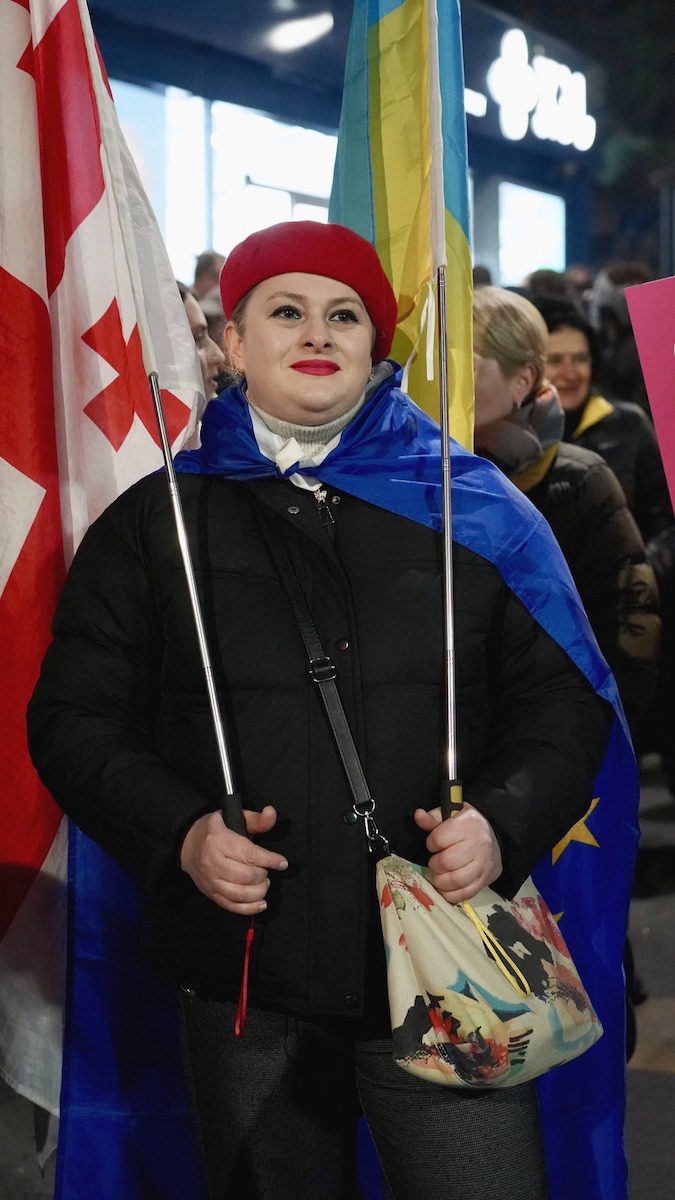
● Opposition activists have filed a lawsuit with Georgia’s Constitutional Court, arguing that fines and arrests for blocking roads and wearing masks — including medical masks — violate constitutional rights, including human dignity and freedom of assembly. Under the new laws, these actions are punishable by fines of up to 5,000 lari (about $1,800) and/or up to five days of administrative arrest. The lawsuit also argues that the legal terms “artificial road blockage” and “concealing one’s face” are vague and allow the authorities to interpret them too broadly.
● A group of activists ended their hunger strike outside the parliament building after a request from Archimandrite Dorote Kurasvhili. Their main demands include releasing political prisoners and holding new, fair parliamentary elections.
● Georgia’s National Environment Agency reported a significant increase in airborne particulate matter, attributed to desert dust spreading over the region. Air-quality monitoring continues through 18 automatic stations, and conditions are expected to improve soon.
-
Monday, December 1, Armenia. The liturgy as a new incident in the confrontation between Nikol Pashinyan and the church leaders
● A liturgy at the Church of Saint Sarkis, attended by Prime Minister Nikol Pashinyan, led to a new scandal. During the service, the name of Catholicos Garegin II was not mentioned, which caused open dissatisfaction among the faithful, who loudly chanted his name. Security personnel forcibly removed several people from the church. The Ministry of Internal Affairs explained the incident as “a security measure.”
Throughout this year, a conflict has been developing between the government — including Prime Minister Nikol Pashinyan personally — and church leaders. The Prime Minister accuses Garegin II of being illegitimate and calls for his resignation.
Local media also noted that the nephew of Russian dollar billionaire Samvel Karapetyan — who is under arrest and accused of calling for a coup — was present at the liturgy.
● Former Ombudsman Arman Tatoyan accused the Prime Minister of “demonstrating his loyalty to Azerbaijan.” He stated that, in his view, Pashinyan needs “a discredited, fragmented, and destroyed church that will submit to him; he needs the church to be distrusted and devoid of virtues and faith.”
● Defense Minister Suren Papikyan departed for a working visit to Egypt.
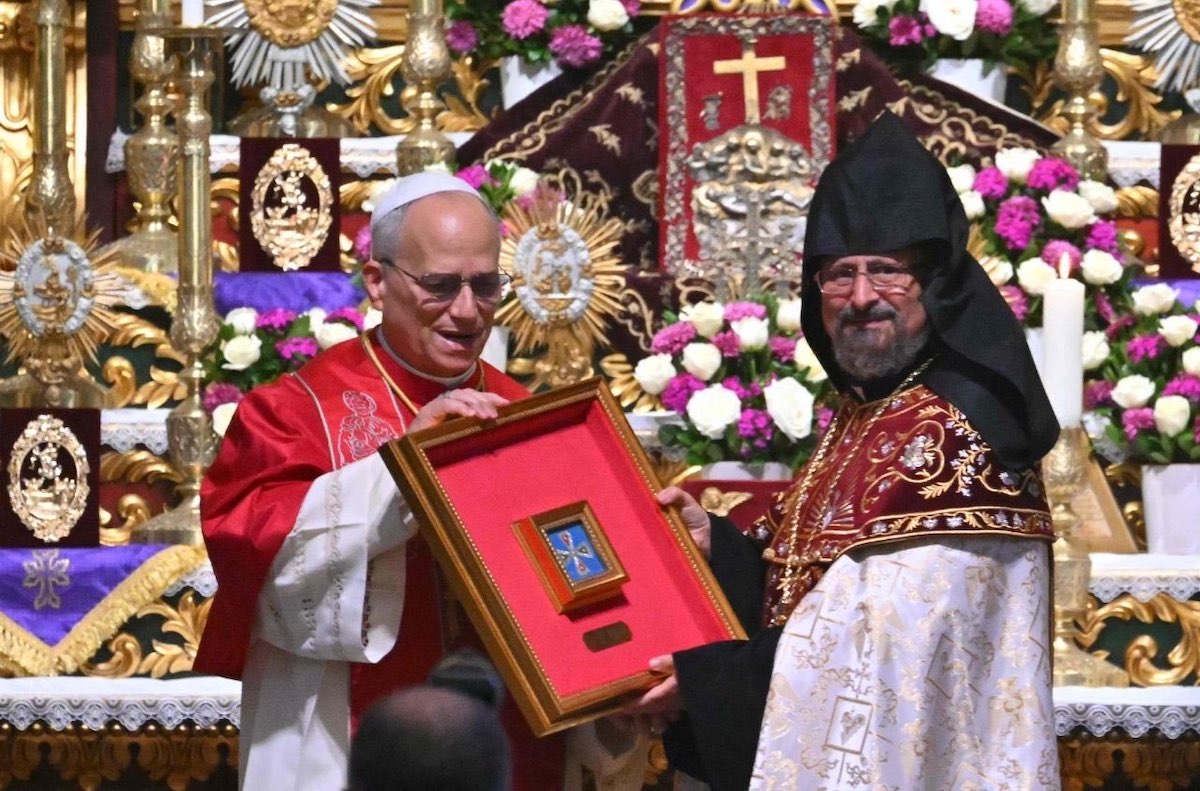
● On the fourth and final day of his apostolic trip to Turkey, Pope Leo XIV began the day with a prayer at the Armenian Apostolic Cathedral in Istanbul. In his address, the Pope greeted Catholicos Garegin II and the Armenian Apostolic community of Turkey, according to the Vatican press service. “Pope Leo XIV thanked the Lord for the courageous Christian witness of the Armenian people throughout history, often under tragic circumstances, and expressed gratitude for the growing fraternal bonds that unite the Armenian Apostolic Church and the Catholic Church,” the statement said.
● Media expert Samvel Martirosyan warns of widespread attacks targeting TikTok and Telegram users. They are sent compromising photos accompanied by abusive language, with demands for ransom. “Unfortunately, many pay. But then they will keep asking you for money, knowing they can get it from you. This has become part of the economy,” the expert reports.
-
Top stories in Azerbaijan, Armenia, and Georgia from 17-21 November, 2025