

Top stories in Azerbaijan, Armenia, and Georgia from 2-6 March, 2026
 Live
Live




-
Friday, 6 March, Azerbaijan. Iranian drone attack on Azerbaijan
-
Friday, 6 March, Armenia. Vice-speaker of parliament from the ruling party: “The parliamentary and extra-parliamentary opposition is the party of war”
-
Friday, 6 March, Georgia. Kaja Kallas: “The tightening of the grants law by the Georgian Dream party is extremely regrettable”
-
Thursday, 5 March, Armenia. Starlink has donated a new batch of 100 terminals to Armenia
-
Thursday, 5 March, Azerbaijan. Boston Consulting Group: By supplying gas through the Southern Gas Corridor, Azerbaijan plays an important role in Europe's energy security
-
Thursday, 5 March, Georgia. The parliament passed a package of legislative acts tightening control over foreign funding and political activities
-
Wednesday, 4 March, Azerbaijan. The EU and Azerbaijan have agreed to hold a high-level energy dialogue in Brussels this year
-
Wednesday, 4 March, Armenia. Nikol Pashinyan arrived in Georgia on a working visit
-
Wednesday, 4 March, Georgia. In 2025, the Council of Europe received 78% more alerts concerning Georgia than in the previous year
-
Tuesday, 3 March, Georgia. An alliance of nine opposition parties has been formed
-
Tuesday, 3 March, Armenia. Iran’s ambassador: “Weakening Iran — and God forbid its defeat — would also harm Armenia”
-
Tuesday, 3 March, Azerbaijan. Azerbaijan and Russia will soon take practical steps over the downing of the Azerbaijani passenger plane by Russian air defenses
-
Monday, 2 March, Azerbaijan. 192 people were evacuated from Iran to Azerbaijan
-
Monday, 2 March, Armenia. Opposition slams videos of Nikol Pashinyan eating pastries on a bus “during a global crisis"
-
Monday, 2 March, Georgia. Prime Minister Irakli Kobakhidze expressed solidarity with the President of the UAE
-
Top stories in Azerbaijan, Armenia, and Georgia from 23-27 February, 2026

-
Friday, 6 March, Azerbaijan. Iranian drone attack on Azerbaijan
● Drones launched from Iranian territory attacked sites in the Nakhchivan Autonomous Republic. One drone struck the terminal building of Nakhchivan International Airport, while the second fell near a school building in the village of Shekerabad. Four civilians were injured in the attack. Iran’s ambassador was summoned to the Foreign Ministry. Azerbaijan stated that it reserves the right to carry out a retaliatory strike.
● President Ilham Aliyev immediately convened a meeting of the Security Council after the attack, where he announced that all of the country’s armed forces had been placed on mobilization level one and are ready to conduct any operation. “The dishonorable people who committed this terrorist act will regret it. The Azerbaijani people must be sure that any evil force will face our ‘Iron Fist.’” The president also stressed: “Azerbaijan did not participate and will not participate in operations against Iran, neither before nor now. This is a firm position. We are not interested in conducting any operations against neighboring countries, and our policy does not allow it.”
● Ilham Aliyev: “Iran cowardly and treacherously struck Nakhchivan International Airport, the terminal building, a school, and other locations. Azerbaijan strongly condemns this disgusting terrorist act. Those who committed it must be brought to justice immediately. Iranian officials must provide explanations and apologize to the Azerbaijani side, and those responsible for this terrorist act must be held criminally liable.”
● Ilham Aliyev: “This is not the first time Iran has carried out terrorist acts against Azerbaijan and Azerbaijanis. Some time ago the Azerbaijani embassy in Tehran was subjected to a terrorist attack. The person who attacked the embassy acted on instructions from Iranian intelligence services. As a result, one citizen was killed and another was seriously wounded. Even then we had no doubt that the Iranian state was behind it. This is because the terrorist attack inside and around the embassy lasted about 40 minutes. During those 40 minutes not a single security service or police officer approached the embassy. It is clear that this terrorist act was ordered at the highest levels of Iran’s state structures in order to intimidate Azerbaijan and carry out dirty actions against it. […] Iran was forced to apologize and admit its guilt. For a long time they showed no interest in enforcing punishment and tried to save the criminal, but were forced to execute the terrorist in front of Azerbaijani representatives. This time the response will be the same.”
● President Ilham Aliyev: “Apart from other dirty factors, this is also an example of great ingratitude. As soon as events occurred in Iran, the foreign minister spoke with his counterpart on my instructions. I visited their embassy to express condolences and state my position. Apart from me, not a single head of state visited any Iranian embassy. To underestimate this, to diminish its significance, and to behave like low and ungrateful people does not bring honor to anyone.”
● President Ilham Aliyev: “Iran’s deputy foreign minister calls Baku and asks Azerbaijan to help evacuate Iranian embassy employees remaining in Lebanon, since they had no capability to do so. I immediately instructed that assistance be provided and that a plane be sent. They said they were ready to pay for everything. I said that was unnecessary — if we do not help now, in such a difficult time, when should we help? And in return they delivered such a dirty, vile and cowardly strike on Nakhchivan? This stain will never be erased from their ugly faces.”
● After the attack, the Cabinet of Ministers decided to suspend trailer traffic across the border with Iran.
● At the initiative of Iran’s foreign minister Seyed Abbas Araghchi, a phone conversation took place with Azerbaijan’s foreign minister Jeyhun Bayramov. “It was conveyed to the Iranian side that Azerbaijan expects an apology for the attack, prompt explanations following the results of the investigation, and the adoption of all necessary measures to prevent such incidents from recurring in the future,” the press release said. Iran’s foreign minister expressed concern over the attack, stated that Tehran had launched an investigation into the incident, and wished the injured civilians a speedy recovery.
● Countries around the world and international organizations sharply condemned the Iranian drone attacks on Azerbaijan and expressed support for official Baku. These include Turkey, the UAE, the United Kingdom, France, Germany, the Netherlands, Spain, Austria, Israel, Bulgaria, Georgia, Moldova, Saudi Arabia, Bahrain, Qatar, Albania, Estonia, Lithuania, Latvia, Montenegro, Uzbekistan, Kazakhstan, Kyrgyzstan, Pakistan and Syria. Special statements were made by EU foreign policy chief Kaja Kallas, UN Secretary-General spokesperson Stéphane Dujarric, the Secretary General of the Organization of Turkic States, the EU Ambassador to Azerbaijan, the UN representation in Azerbaijan, and the General Secretariat of the Organization of Islamic Cooperation. The Iranian drone strikes on Azerbaijani territory were described as a dangerous escalation, a gross violation of state sovereignty, and a direct threat to regional security and stability.
● Albania’s Prime Minister Edi Rama called on the international community to recognize Iran as a terrorist state.
“It is time for all states and institutions that believe in stability, a rules-based international order and peaceful coexistence not merely to distance themselves from this regime, which time and again exports violence and intimidation beyond its borders, but to reach agreement on what it truly is — a terrorist state,” Rama wrote on social media, adding that Albania firmly supports Azerbaijan, its leadership and its people.● The foreign ministers of Azerbaijan and Armenia held a phone conversation and exchanged views on the latest developments in the region. Jeyhun Bayramov informed his Armenian counterpart about the Iranian drone attacks on the Nakhchivan Autonomous Republic, which damaged civilian infrastructure and injured civilians. The ministers emphasized the importance of ensuring sustainable peace between Armenia and Azerbaijan and exchanged views on issues of mutual interest.
● The chiefs of the general staffs of Azerbaijan, Turkey and Hungary discussed regional security by phone. They emphasized that Iranian drone attacks on civilian infrastructure in Nakhchivan contradict international law.
● The Italian ambassador to Iran, seven mission staff members and two civilians were evacuated from Iran to Azerbaijan through the land border. On Thursday, more than 10 employees of the Bulgarian diplomatic mission and 18 representatives of the UN were also evacuated.
● In total, since February 28 — when fighting began in the Middle East — more than 1,500 citizens of 46 countries and over 300 Azerbaijani citizens have been evacuated from Iran through Azerbaijan.
#Iran carried out a drone strike on #Azerbaijan – targeting the international airport in the Nakhchivan Autonomous Republic. Local media report that the drone, launched from Iranian territory, hit the airport building and exploded. Several pro-government media outlets are… pic.twitter.com/uQL1TUn2Jv
— JAMnews (@JAMnewsCaucasus) March 5, 2026
-
Friday, 6 March, Armenia. Vice-speaker of parliament from the ruling party: “The parliamentary and extra-parliamentary opposition is the party of war”
● No gunfire or explosions have been recorded on the territory of Armenia, the Ministry of Defense reported, commenting on reports in Armenian media claiming that gunfire and explosions had allegedly been heard in the Armenian city of Kapan in the Syunik region near the border with Iran and Azerbaijan. “Certain circles are spreading articles with manipulative headlines in order to create tension in society,” the Defense Ministry said in a statement.
● Foreign Minister Ararat Mirzoyan held a phone conversation with his Azerbaijani counterpart Jeyhun Bayramov. Concern was expressed over the escalation of the situation in the region, and the importance of refraining from actions that could lead to further escalation of tensions was emphasized. The ministers also noted with satisfaction the importance of sustainable peace between Armenia and Azerbaijan.
● A meeting of the Security Council was held under the chairmanship of Prime Minister Nikol Pashinyan. The situation in the regional security sphere and the ensuring of the normal functioning of transport communications were discussed.
● The foreign ministers of Armenia and Bahrain discussed the situation in the Middle East in a phone conversation.
● “The parliamentary and extra-parliamentary opposition is the party of war,” said the vice-speaker of parliament from the ruling party Ruben Rubinyan. He included in this list the Armenia Alliance bloc, the Republican Party of Armenia, and the political initiative Wings of Unity, which the vice-speaker of the National Assembly considers affiliated with the Republican Party, as well as the parties Strong Armenia Party and Prosperous Armenia Party. Rubinyan said that he considers “Strong Armenia” to be affiliated with Russia and “Prosperous Armenia” with Belarus. “After 2020, Armenia would have lost its territorial integrity and would have been drawn into war five times if we had listened to you even once. And you continue to pursue the same line,” Rubinyan said.
● Armenian Iranologist Vardan Voskanyan advises Azerbaijan to pay attention to the fact that Iran’s Islamic Revolutionary Guard Corps, which is responsible for drones and missiles, has not denied the fact of the attack on the Azerbaijani autonomy of Nakhchivan.
● Archbishop Arshak Khachatryan has been released from the detention facility of the National Security Service of Armenia. He had been under arrest since December on charges of illegally selling narcotic substances in a public place. The court imposed administrative supervision and movement restrictions on him but did not impose a ban on public statements. Khachatryan thanked the Catholicos of All Armenians Garegin II, clergy, and media representatives for their support. “Places of detention are called correctional labor institutions. I am glad to say that I have remained uncorrected, my views and positions have not changed,” Khachatryan said.
● Defense Minister Suren Papikyan met with the ambassador of France, Olivier Decottignies. Prospects for the development of cooperation in the field of defense were discussed.
● Prime Minister Nikol Pashinyan answered a question at a briefing about how his statements that people connected with Russia or living there are “KGB agents” correspond with the fact that his brother is a Russian citizen. Pashinyan explained that his brother, like hundreds of thousands of Armenian citizens, moved to Russia in the second half of the 1990s and has lived there since then.
● There will be no shortage of goods in Armenia due to the situation around Iran, Nikol Pashinyan said. According to him, the authorities took timely measures to mitigate and minimize risks related to the worsening situation.
● Taxes on electric vehicles will be reduced in Armenia. The decision was adopted at a government meeting.
● As a result of a fight between high school students in a school in Yerevan, one of the students suffered a head injury and was taken to hospital. The school administration emphasized that everything happened during a break in the corridor and that teachers intervened in time.
● VIDEO: The chairman of the opposition party National Accord Party, Aram Harutyunyan, held a protest with pastries in Yerevan near the government building. The action is linked to widespread criticism in opposition circles of videos posted on social media showing Prime Minister Nikol Pashinyan eating pastries on a bus. The video was filmed as part of the election campaign launched by the ruling party. Pashinyan, together with the speaker of parliament, ministers, and members of parliament, has been traveling to various regions of the country and meeting with the public in preparation for the parliamentary elections on June 7. However, the opposition believes that events involving eating pastries are “unacceptable at a time of the largest global crisis.” Earlier, a member of the council of the Strong Armenia Party, Narek Karapetyan, stated in this regard that Armenia “needs a new prime minister more than ever.” Yesterday, Aram Harutyunyan placed a box of pastries at the entrance to the government building. However, he was soon detained by the police, and the box was confiscated. Police officers said that, first, it is not allowed to place boxes near the government building, and second, it was necessary to check its contents. The opposition in Armenia is widely considered to be pro-Russian.
-
Friday, 6 March, Georgia. Kaja Kallas: “The tightening of the grants law by the Georgian Dream party is extremely regrettable”
● The European Union’s High Representative for Foreign Affairs and Security Policy, Kaja Kallas, said that the tightening of the “Grants Law” by the party Georgian Dream is “extremely regrettable” and emphasized that the Georgian government is on the wrong path, one that will not lead the country to membership in the European Union. More details about the new package of legislative acts on control over foreign funding can be found here.
● An opposition alliance said that the “updated Grants Law serves to criminalize the illegal proclamation of the regime and is a repressive step.” The alliance stated that “the government fears non-recognition by the people more than anything else.”
● The prime minister from Georgian Dream, Irakli Kobakhidze, held a phone conversation with the president of Azerbaijan, Ilham Aliyev, and expressed solidarity with him over the Iranian drone attack on the Azerbaijani autonomy of Nakhchivan. A similar phone conversation was held between the Georgian foreign minister Maka Botchorishvili and her Azerbaijani counterpart. The Foreign Ministry issued a statement condemning the attack, but did not mention Iran.
● According to information from Abkhazia, about 30 drones, presumably Ukrainian, were detected in its airspace on March 4. Some of them were shot down, and debris fell in 11 settlements. According to the “secretary of the security council,” Raul Loria, it is currently impossible to determine their origin.
● The prosecutor’s office has charged two citizens with obstructing the professional activities of journalists from the outlet Publica. The case concerns an incident that occurred on September 8 near the election headquarters of Kakha Kaladze. The accused have not been detained.
● The chairman of the parliamentary committee on foreign affairs, Nikoloz Samkharadze, met with the deputy national security adviser of the United States, Andrew Baker. According to him, they discussed possibilities for improving Georgian-American relations and restoring the strategic partnership.
● A court ordered the state to pay compensation to 11 former residents of the Ninotsminda children’s boarding school in the Samtskhe-Javakheti region in the amount of 30,000 lari (approximately $11,000) for each. The boarding school was under the patronage of the Georgian Orthodox Church. Criminal cases concerning violence and abuse of residents were opened against it in 2016–2021. Children were punished by being deprived of sleep and food, forced to stand on their knees for hours, and those who misbehaved were made to wear torn clothes and walk barefoot. They were addressed with insults such as “cattle,” “street foundling,” and “abandoned by your mother.” There were also complaints about physical violence. It is reported that former residents of the shelter still need help from doctors and psychologists. The case has drawn the attention of the United Nations Human Rights Committee, which is demanding a public apology from the Patriarchate and the state, as well as a new independent investigation and accountability for those responsible.
● Fourteen citizens of Turkey were detained in Georgia as a result of a large-scale joint Georgian-Turkish police operation. All those detained were on a wanted list issued by Turkey on charges of serious and especially serious crimes. According to the Ministry of Internal Affairs of Georgia, they are accused of drug trafficking, theft, sexual acts against a minor, participation in a criminal organization, murder, and fraud. All detainees will be extradited to Turkey.
-
Thursday, 5 March, Armenia. Starlink has donated a new batch of 100 terminals to Armenia
● 110 Armenian citizens have returned home on flights organized due to the escalation in Iran and the start of military operations. However, not everyone can afford tickets for private flights, with prices reportedly starting at $1,200. Foreign Minister Ararat Mirzoyan said the government covers travel costs from the UAE to Muscat, while the rest is handled by a private airline. “The plane cannot use normal routes because airspace is closed and must take a longer path from Muscat to Yerevan. That means a two- or three-times longer route, which increases costs,” Mirzoyan explained.
● Many political and public figures in Armenia have been visiting the Iranian embassy in Yerevan to sign a book of condolences opened there, local media report.
● Russia is grateful to the authorities of Azerbaijan, Armenia and Turkmenistan for helping ensure the smooth departure of Russian citizens from Iran through land borders, Russian Foreign Ministry spokeswoman Maria Zakharova said. She also advised Russians to “leave Iran as soon as possible.”
● Reports on X claiming that Armenian Prime Minister Nikol Pashinyan owns property in Dubai that was allegedly damaged by an Iranian missile strike are “completely fabricated,” his spokesperson Nazeli Baghdasaryan said. The posts falsely cited Al Jazeera and Euronews, she added. “Nikol Pashinyan has no property in the UAE, and any claims to the contrary, including supposed comments from me, are untrue,” Baghdasaryan said.
● “Georgia is one of the most favorite destinations for Armenian tourists,” Prime Minister Nikol Pashinyan said at a press conference in Tbilisi following his working visit and the 15th session of the Armenia-Georgia intergovernmental commission on economic cooperation. He thanked Georgian Prime Minister Irakli Kobakhidze for his personal support for the peace process. “Economic ties between Armenia and Azerbaijan are being established with Georgia’s assistance. This deserves the highest appreciation from our side,” Pashinyan said. Kobakhidze said Tbilisi highly values the signing of a historic agreement between Armenia and Azerbaijan and stands ready to continue supporting peacebuilding and stability.
● “The Trump Route” is not an obstacle to Georgian transit, Nikol Pashinyan said in response to a remark by ruling party MP Shirak Torosyan, who noted that many in Georgia view the project as a serious threat to Georgian transit, which could supposedly become peripheral. The “Trump Route,” or TRIPP, is a transit corridor that will run from Azerbaijan to its autonomous region of Nakhchivan through the territory of Armenia and then onward to Turkey. According to the prime minister, the situation should be viewed more broadly, specifically in the context of transporting goods from China to the European Union through the South Caucasus. “We are talking about goods worth trillions of dollars, and even 20 railway and road links through the countries of the South Caucasus would not be able to handle such a flow,” he said. Armenia, Georgia and Azerbaijan should view regional communications as a shared opportunity, Nikol Pashinyan stated.
● There has been a significant increase in domestic crimes, murders and suicides in Armenia, an opposition lawmaker from the Dashnaktsutyun party said during government question time in parliament. She also said that over the past four months four cases of brutal beatings among minors by their peers have been recorded. Prime Minister Nikol Pashinyan acknowledged that the problem exists and is being discussed within the government. However, he then sharply criticized Dashnaktsutyun. “This party exists in Armenia, where people are admitted by swearing an oath on a weapon. Shooting their own members is a common occurrence for them. You should first be concerned about that, not about problems in schools. One of the political responsibilities is to ensure that such parties do not exist in Armenia. This is not the main, but an important part of the strategy to combat crime,” Pashinyan said.
● The opposition Republican Party announced the start of political dialogue and consultations ahead of the parliamentary elections on June 7. “We are open to all forces ready to jointly form a transitional government, reach agreement on a new single candidate for prime minister who will be able to restore democratic values and stop the current non-independent foreign policy. The future of Armenia cannot remain dependent on a regime that tramples on its own history and faith, leaves its sons in foreign captivity, undermines the country’s security and fears the will of its own people,” the statement said. Most of the opposition in Armenia has a reputation for being pro-Russian.
● The Republican Party’s idea of impeaching Nikol Pashinyan was “dead from the start” because the ruling party holds an absolute majority in parliament, said Hayk Konjoryan, head of the ruling faction.
● A new batch of 100 terminals has been donated to the government of Armenia as a result of cooperation between the American company Starlink and the Ministry of High-Tech Industry. The terminals have already arrived in Armenia and will be installed in schools. Minister Mkhitar Hayrapetyan wrote about this on Facebook. “Together with the Ministry of Education, we are starting the installation of the equipment in those schools where it is most needed to ensure fast and stable access to the internet. Our goal is clear — every student, even in the most remote community, should have equal access to modern educational tools and digital platforms,” the minister said.
● There have been new cases of incursions into Armenia’s sovereign territory, but the authorities are hiding them from the public, Arman Tatoyan, head of the opposition initiative Wings of Unity, said at a press conference. According to Tatoyan, an Azerbaijani military post has been set up in the Vardenis area on Armenian territory. Satellite images show the position did not exist before July 31, 2025, he said. The post reportedly includes firing points for heavy weapons such as grenade launchers and mortars, as well as rifle positions with separate communications. Tatoyan said the position lies 4 km from the Sotk gold mine, putting it directly within range. The nearby village of Kut in the Vardenis region is also under threat, while Armenian pastures, farmland and hayfields are located about 2 km away. A local road is just 200 meters from the post. “This position poses a serious threat to our servicemen as well — they are under direct fire,” Tatoyan said, adding that the site is heavily fortified and even equipped with solar panels. The authorities have not yet commented on the claim.
● Armenia’s minimum pension has increased more than 3.5 times over the past 7–8 years, from 16,000 drams (about $43) to 56,120 drams (about $150), Economy Minister Gevorg Papoyan said. The ruling Civil Contract party has been in power since 2018.
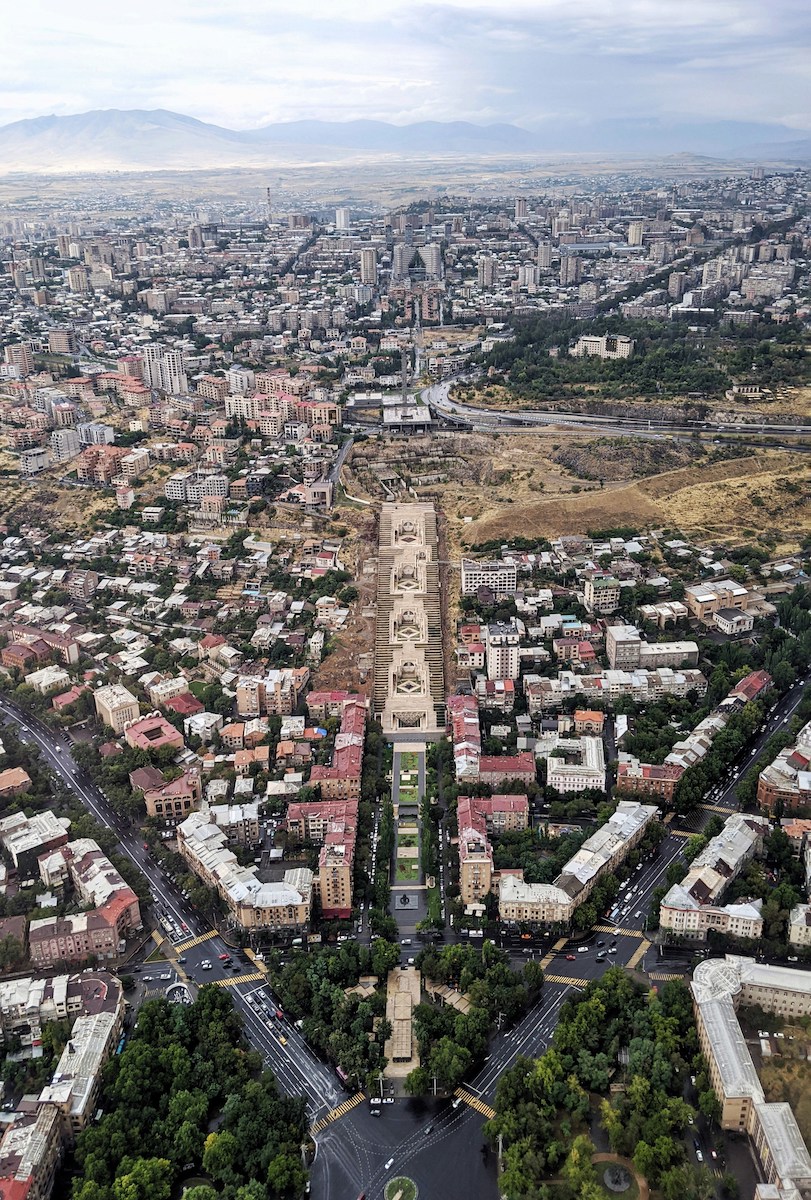
Photo Alexandr Hovhannisyan
-
Thursday, 5 March, Azerbaijan. Boston Consulting Group: By supplying gas through the Southern Gas Corridor, Azerbaijan plays an important role in Europe's energy security
● By supplying gas through the Southern Gas Corridor, Azerbaijan can play an important role in strengthening Europe’s energy security, as the EU requires additional volumes of pipeline gas. This was stated to the pro-government publication Report by Marco Tonegutti, Managing Director and Senior Partner at Boston Consulting Group. “The problem is that this demand is not supported by a reliable supply structure. About 90% of the consumed gas is imported. Almost 45% comes from liquefied natural gas, mainly supplied from the US and Qatar. The US is a reliable source but is affected by Asian demand and price volatility. Qatar is actively expanding capacity but is largely focused on Asian markets.
To attract investment, key conditions are necessary […] including that projects must be not only industrially but also financially attractive. International oil and gas companies, national companies, and infrastructure funds must be confident in the stability of the financial environment and the return on their investments. And all of this requires serious political coordination, both at the regional level and in cooperation with the European Union and neighboring countries, including Kazakhstan, Turkmenistan, Georgia, Turkey, etc.,” said Tonegutti.
In 2025, Azerbaijan’s share of gas supplies to the EU was 4%. Supplies from Russia, according to EU plans, are expected to be reduced to zero by 2027.
● The first international seminar on the feasibility study of the first phase of the “Central Asia–Azerbaijan Green Energy Corridor” project (Trans-Caspian Green Energy Corridor) was held in Baku. This part of the work is jointly financed by the Asian Development Bank and the Asian Infrastructure Investment Bank under the Memorandum of Understanding signed in April 2025. The corridor will connect the Caspian and Black Sea regions and provide transmission of clean renewable energy from Central Asia to European markets. Deputy Minister of Energy Orkhan Zeynalov stated that “in addition to the countries already participating in the project, other states in the region have also shown interest in the initiative.”
● The prosecutor requested eight years of imprisonment for social worker Zamin Zaki, who was arrested in connection with a criminal case involving local and international non-governmental organizations. Charges include legalization of property obtained by criminal means, abuse of office, and fraud. The case materials mention the non-registration of grant funds received to protect the rights of people from various social groups. Zaki denies guilt, stating that he was being punished for his public activity. The court hearing has been postponed until March 11, as his lawyer requested time to prepare a defense. In her statement, she emphasized that it is absurd to present a grant as property obtained by criminal means. “Non-registration of a grant can, at best, be considered an administrative offense,” said the lawyer.
Arrests in the “NGO case” began in March of last year. More than 15 civil society activists and employees of local and international organizations are listed as defendants.
● Minister of Digital Development and Transport Rashad Nabiyev discussed possibilities for cooperation in the transport sector with the United Kingdom during a meeting in London with the CEO of the British state export finance agency (UK Export Finance).
● President Ilham Aliyev visited the Embassy of Iran, expressed condolences over the death of Supreme Leader Ayatollah Ali Khamenei and many civilians, and left a note in the condolence book.
● More than 1,400 foreign nationals from 40 countries and over 300 Azerbaijani citizens were evacuated from Iran through the Azerbaijani land border due to military operations launched by the US and Israel on February 28.
● Azerbaijan evacuated over 200 of its citizens on a special flight from Jeddah (Saudi Arabia) after their scheduled flights were canceled due to the situation in the Middle East. Evacuation flights to Baku and from other locations in the Middle East are planned in the coming days.
-
Thursday, 5 March, Georgia. The parliament passed a package of legislative acts tightening control over foreign funding and political activities
● Parliament has adopted in the third reading a package of legislative acts that significantly tightens control over foreign funding and political activity. The amendments expand the definition of the term “grant,” including in it almost any financial or non-financial assistance that could influence the country’s politics, require government approval before a grant is issued, and предусматривают long prison terms for violations. Many independent experts believe that this strengthens repressive state control over the political and civic space. More details here.
● Member of the German Bundestag Robin Wagener called the legislative changes adopted in Georgia “a direct attack on democratic civil society and the opposition.” He said the new laws will exclude civil society organizations from political life.
● The Supreme Court did not accept the cassation appeal of Mzia Amaglobeli. The founder of the popular independent outlets Netgazeti and Batumelebi was sentenced to two years for slapping a police officer who had insulted her during a protest. The lawsuit sought to overturn the appellate court’s verdict and asked for the journalist to be acquitted. The prosecutor, in turn, asked for a harsher punishment.
● According to sources of the publication Middle East Eye, Iran may strike the Baku–Tbilisi–Ceyhan oil pipeline. The target of the attack could be the territory of Azerbaijan. On March 4, NATO shot down an Iranian missile heading toward Turkish airspace.
● Clergy in mosques in Georgia declared mourning after the death of Iran’s Supreme Leader Ayatollah Ali Khamenei as a result of a US-Israeli strike. Khamenei has been declared a “martyr.” According to local media, a prayer and sermon about the “martyrdom of Ayatollah Ali Khamenei” took place at the Imam Ali mosque in Marneuli (Kvemo Kartli region).
● Parliament Speaker Shalva Papuashvili made new critical statements about the United Kingdom in connection with sanctions announced by London against two pro-government Georgian television channels. “What ties do we have with the United Kingdom, other than that 100 years ago there was a British army here that left, and its legacy was used by the 11th Russian army, annexing Georgia? Being in a sphere of special interests? None. The only explanation for their actions is that certain forces are trying to use British structures against Georgia. These forces understand that British sanctions have a certain power, they allow a person to disappear from the financial system.”
● Former director of the pro-government TV company Rustavi 2, Vako Avaliani, received a salary of more than 39,000 lari (about $15,000) per month. He owns several apartments and land plots in Georgia — in Tbilisi, Dusheti and Batumi — and a house in Italy worth 185,000 euros, investigative journalists report.
● Georgia will not boycott the opening ceremony of the 14th Winter Paralympic Games in Verona, Italy, on March 6 and will take part in it. Eleven countries have announced a boycott: Ukraine, Canada, Croatia, the Czech Republic, Estonia, Finland, Germany, Latvia, Lithuania, the Netherlands, and Poland. This is because the International Paralympic Committee allowed Russian and Belarusian para-athletes to use state symbols — the flag and the anthem.
Photo by Nika Tchokhonelidze
-
Wednesday, 4 March, Azerbaijan. The EU and Azerbaijan have agreed to hold a high-level energy dialogue in Brussels this year
● Since the start of the U.S. and Israeli military operation against Iran, more than 1,000 people – including citizens of Azerbaijan and 30 foreign countries – have been evacuated through Azerbaijan’s border.
● The foreign ministers of Azerbaijan and Latvia discussed by phone the military escalation in the Middle East and rising regional tensions. They noted that further escalation could pose security risks across a wider geographic area and stressed the importance of diplomatic mechanisms and dialogue to resolve conflicts.
● The 12th ministerial meeting of the Southern Gas Corridor Advisory Council and the 4th ministerial meeting of the Green Energy Advisory Council have concluded in Baku.
● President Ilham Aliyev, speaking at the meeting, said the strategic partnership with the United States is turning Azerbaijan’s energy plans into reality. He noted that the U.S.–Azerbaijan Strategic Partnership Charter covers areas including artificial intelligence, energy and connectivity. Aliyev said Azerbaijan has invested and continues to invest in hydropower plants on territories reclaimed from Armenian occupation. Currently, hydropower plants with a capacity of 307 megawatts are connected to the system, with plans to nearly double capacity within two to three years, providing additional potential and cheaper energy.
● Aliyev also said Azerbaijan’s contribution to energy security extends beyond its borders and the Southern Gas Corridor. Azerbaijan recently acquired one of the largest power plants in Turkey, with a capacity of 870 megawatts, and signed a contract in February with Serbia to build a 500-megawatt power plant there. Two oil refineries in Italy with a total capacity of 10 million tons have been acquired. Azerbaijan also owns a 12-million-ton refinery on Turkey’s Aegean coast. Soon, Azerbaijan’s total refining capacity in the Mediterranean and Aegean regions will reach 22 million tons. Azerbaijan supplies gas to 12 countries, with the number of countries where it reaches end consumers rising to 16 — the highest globally by that measure, he said.
● Aliyev said full-scale development of the Absheron field is expected in two to three years, tripling gas production there. Deep gas production at the Azeri-Chirag-Gunashli field is expected to begin this year, along with the second phase of gas production at the Umid field.
● Opportunities for Azerbaijan–EU partnership and investment in renewable energy, electricity grids and energy efficiency were discussed during a roundtable titled “Investing in Green Connectivity” held in Baku as part of the ministerial meeting. Participants included Azerbaijan’s deputy energy ministers and senior officials from the European Commission’s Directorate-General for Energy.
● The European Commission has included the Black Sea Energy submarine cable in the list of Projects of Mutual Interest of the European Union. The decision now requires confirmation by the European Parliament and the Council of the EU. This status would allow the project to seek potential EU funding under the Connecting Europe Facility, said Cristina Lobillo Borrero, Director for International Relations at the Commission’s energy department. She said the project would strengthen energy interconnectivity between Europe and the South Caucasus and could be integrated with the green energy corridor linking the Caspian region to Europe.
● Lobillo Borrero said the capacity of the Trans Adriatic Pipeline (TAP) increased by 12% at the start of 2026, enabling an additional 1.2 billion cubic meters of gas per year to be supplied to the EU. Following Russia’s war in Ukraine and its use of energy supplies as leverage, this increase has contributed to supply diversification. The EU will remain a reliable buyer of Azerbaijani gas in the foreseeable future, she said, describing the partnership as strategic rather than transactional.
● The EU and Azerbaijan have agreed to hold a high-level energy dialogue in Brussels this year, EU Energy Commissioner Dan Jørgensen said at a press conference after the ministerial meeting. Azerbaijan will be represented at ministerial level.
● Jørgensen said Azerbaijani gas is extremely important for Europe after the EU decided to end imports of Russian energy. In 2022, 45% of gas consumed in Europe was imported from Russia. That figure has now dropped to around 10%, but “even 10% is still too much,” he said, adding that the EU does not want to import “a single molecule” of Russian energy and has legislated a gradual phase-out. There is potential to purchase even more Azerbaijani gas in the future, he said.
● Azerbaijan serves as an energy bridge connecting two continents, said Sule Topcu Kilic, Head of Energy Eurasia at the European Bank for Reconstruction and Development (EBRD), during the ministerial meeting. She said Azerbaijan provides transport and digital connectivity with Georgia, Turkey, Romania, Hungary, Bulgaria, Uzbekistan and Kazakhstan — all countries where the EBRD operates.
● The European Union is urging Azerbaijan and Armenia to resolve humanitarian issues, including the fate of missing persons, EU foreign affairs spokesperson Anita Hipper said.
● Russian Prosecutor General Pyotr Gorodov is visiting Azerbaijan and met with Prosecutor General Kamran Aliyev.
● A lawyer was denied access to imprisoned opposition figure Tofig Yagublu, who was sentenced to nine years in prison. Yagublu is a member of the National Council and the Musavat party. His daughter, Nigar Hazi, told the Azerbaijani service of Radio Free Europe/Radio Liberty that the refusal was unlawful and aimed at preventing the family from receiving updates. She said Yagublu has been on a hunger strike since Feb. 21 in protest against his arrest and solitary confinement, and the family is concerned about his health. The outlet said it was unable to obtain official comment. Read more here
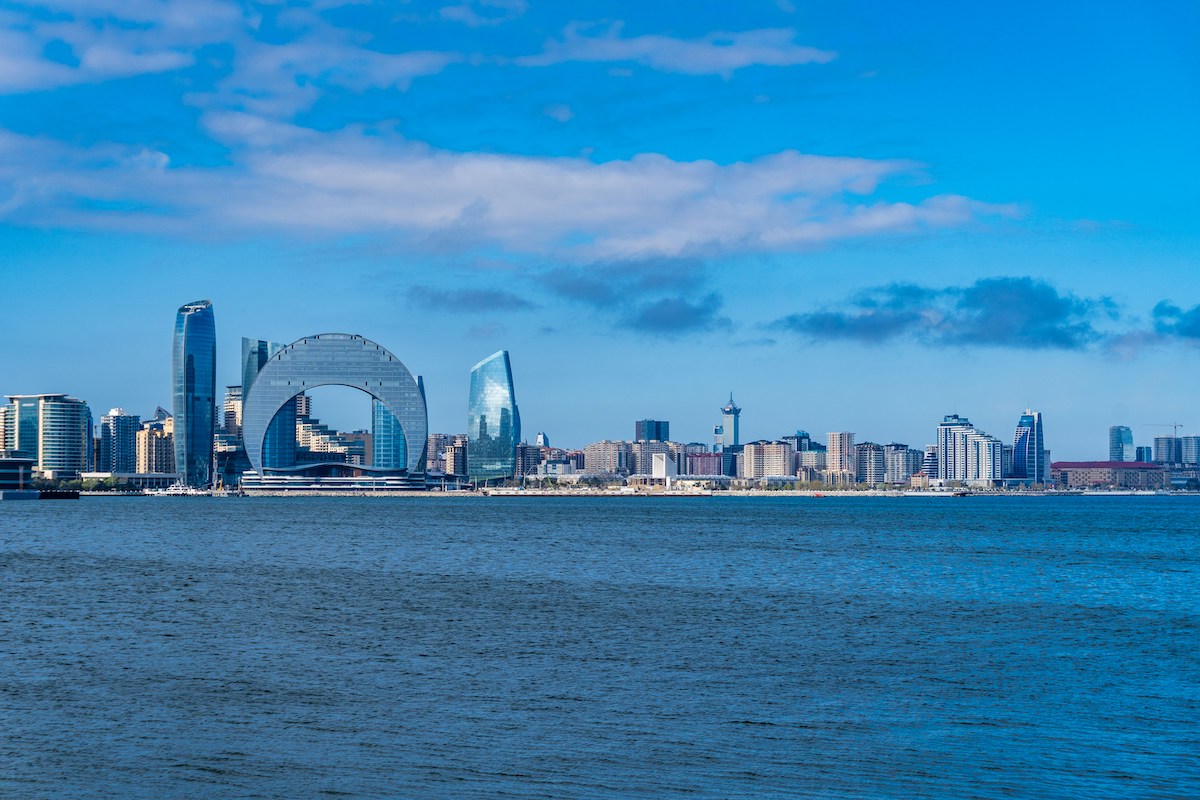
Baku, view from the Caspian Sea. Photo by Zulfugar Karimov.
-
Wednesday, 4 March, Armenia. Nikol Pashinyan arrived in Georgia on a working visit
● Prime Minister Nikol Pashinyan arrived in Georgia on a working visit. He was welcomed at the airport by Foreign Minister Maka Bochorishvili. The 15th session of the Armenia–Georgia Intergovernmental Commission on Economic Cooperation will take place today. A one-on-one meeting between Armenian Prime Minister Nikol Pashinyan and Georgian Prime Minister Irakli Kobakhidze is also scheduled.
● In the evening, Nikol Pashinyan played drums in a pub with Georgian musicians during an informal meeting with Prime Minister Irakli Kobakhidze. Pashinyan posted a video on social media, writing: “It was an honor for me to play with Georgian friends for Georgian friends.”
● Foreign Minister Ararat Mirzoyan held phone calls with the foreign ministers of Kuwait and Oman. He expressed concern over attacks on civilian infrastructure and casualties among the civilian population. The importance of a swift peaceful resolution and efforts in that direction was emphasized. Mirzoyan thanked them for assistance in facilitating the return of Armenian citizens from Oman and the UAE to Armenia and expressed Yerevan’s readiness to assist, if necessary, with the relocation of Omani citizens.
● Ararat Mirzoyan also held a phone conversation with EU High Representative for Foreign Affairs and Security Policy Kaja Kallas. They discussed the situation in the Middle East. Mirzoyan noted public support in Armenia for further strengthening peace with Azerbaijan. Upcoming events, visits, and the advancement of the Armenia–EU agenda were also discussed.
● The quality of life of people considered poor has declined over the past five years due to inflation, said Tadevos Avetisyan, an MP from the opposition “Armenia” bloc. He stated that the main reasons are the deepening of unfair wage distribution and declining inclusiveness.
● For the first time, Armenia has been included in the list of countries detaining journalists, according to the annual report by the Council of Europe and its partner organization, the Platform for the Safety of Journalists. This followed the arrest of podcasters Vazgen Saghatelyan and Narek Samsonyan.
● Vice Speaker of Parliament Ruben Rubinyan sharply criticized former President Levon Ter-Petrosyan after Ter-Petrosyan supported the nomination of detained Russian dollar billionaire Samvel Karapetyan for prime minister. Karapetyan is accused of calling for the overthrow of state power in Armenia. “Ter-Petrosyan has experienced a very painful and shameful fall, and I would not wish anyone to end their political career at the feet of certain oligarchs. That is the sad part of this story. The amusing part is that their candidate for prime minister (Levon Zurabyan) is so insignificant that their leader preferred to support someone else. Moreover, Karapetyan will not even be able to run for prime minister due to non-compliance with Armenian legislation,” Rubinyan said.
● Elmira Karapetyan won silver at the European Shooting Championship.
The first day of #Armenian Prime Minister Nikol #Pashinyan’s visit to #Georgia ended on this note. Pashinyan, who has been honing his drumming skills for quite some time, performed at one of the pubs in Tbilisi. “It was an honor for me to play with Georgian friends for Georgian… pic.twitter.com/2t7jSIDn8g
— JAMnews (@JAMnewsCaucasus) March 3, 2026
-
Wednesday, 4 March, Georgia. In 2025, the Council of Europe received 78% more alerts concerning Georgia than in the previous year
● According to a report by the Council of Europe’s Platform for the Safety of Journalists, 32 alerts concerning Georgia were registered in 2025 — a 78% increase compared to the previous year. The document discusses institutional repression and pressure on the media. Special attention is given to the case of Mzia Amaglobeli, founder of the popular outlets Netgazeti and Batumelebi, who was sentenced to two years in prison for slapping a police officer who allegedly insulted her during a protest. More details here.
● Armenian Prime Minister Nikol Pashinyan is on a working visit to Georgia. He was welcomed at the airport by Foreign Minister Maka Bochorishvili. A one-on-one meeting with Prime Minister Irakli Kobakhidze and the 15th session of the Georgia–Armenia Intergovernmental Commission on Economic Cooperation are scheduled. Bochorishvili will also meet with Armenian Foreign Minister Ararat Mirzoyan.
● Amendments have been introduced to the new strict regulations on first-grade school admissions. Following strong public backlash, authorities allowed for an expanded age category. In the 2026–2027 academic year, children who turn six by December 31 will be permitted, on a one-time basis, to enroll in first grade. The previous cutoff date had been September 15.
● Chair of the Parliamentary Foreign Relations Committee Nikoloz Samkharadze, currently visiting the United States, met with U.S. Assistant Secretary of State for European and Eurasian Affairs Brendan Hanrahan. According to him, they discussed Georgia’s security challenges, regional developments, transit routes including the “Middle Corridor” and the “Trump Route,” as well as prospects for a new strategic partnership agreement between Georgia and the United States.
● First Vice Speaker of Parliament Gia Volski described the announcement of an opposition alliance as “internal theater” and claimed its goal is to “destroy the country.” He said all opposition leaders in the alliance are linked to the United National Movement and its founder, former President Mikheil Saakashvili, who is currently imprisoned. More on the alliance here.
● A group of Georgian businessmen organized and funded private charter flights that brought 122 Georgian citizens home from Oman.
● In Greece, a Georgian citizen was detained on suspicion of espionage at a U.S. naval base on the island of Crete, Reuters reported citing sources.
● An Iranian citizen attempted to smuggle 125 liters of liquid containing the narcotic substance methamphetamine into Georgia. He was arrested while crossing the border from Armenia; the drug was found in a makeshift auxiliary fuel tank of a trailer engaged in international transport. He faces between 20 years and life imprisonment.
● From July 1, 2026, a decree restricting the breeding of certain dog breeds “to regulate overpopulation” will come into force. The list includes: American Pit Bull Terrier, Fila Brasileiro, Staffordshire Terrier, Dogo Argentino, Tosa Inu, Cane Corso, Staffordshire Bull Terrier, as well as Husky and Malamute. Oversight will be carried out by the National Food Agency and municipalities.
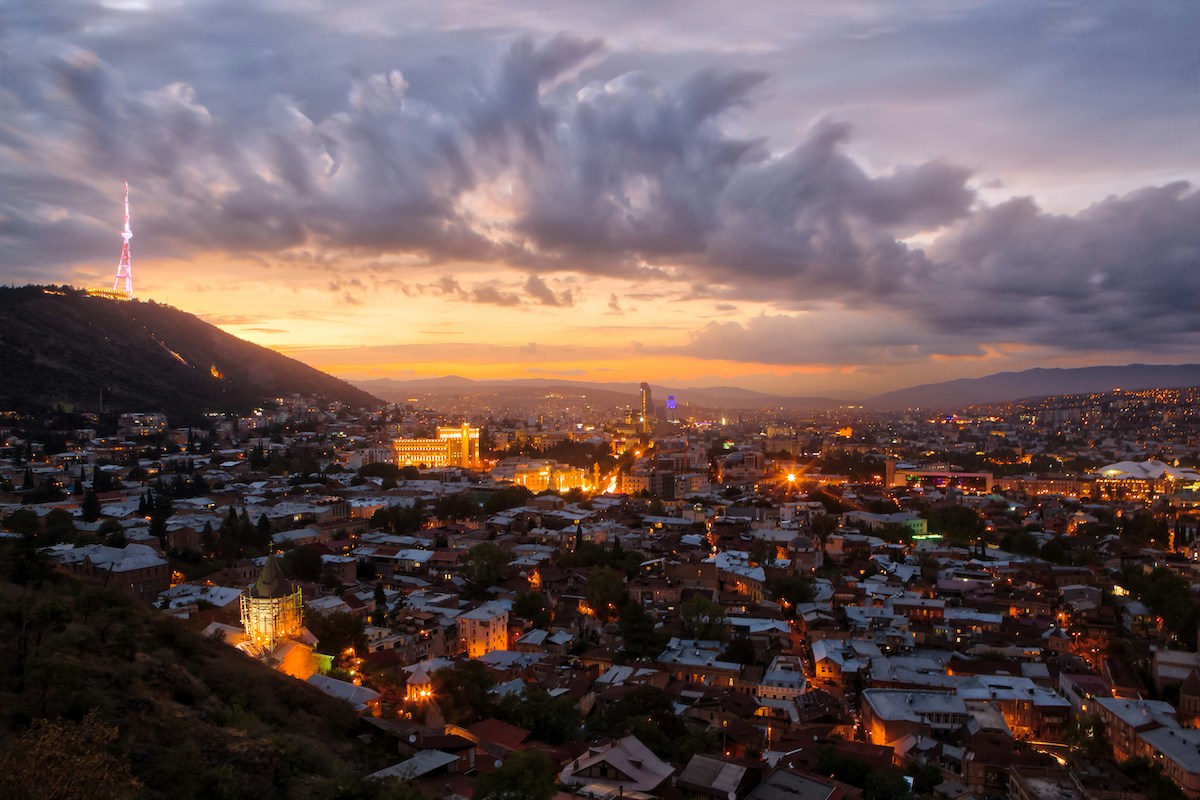
Tbilisi, photo by Jaanus Jagomägi
-
Tuesday, 3 March, Georgia. An alliance of nine opposition parties has been formed
● The government of Georgia expressed condolences to the peoples of Iran and Israel, and also declared its “full solidarity with the Arab countries of the Persian Gulf.”
● The leader of the Akhali party, Nika Gvaramia (pictured), announced the creation of an opposition alliance bringing together nine parties. According to him, the opposition agreed on a unified direction and joint actions while maintaining their individual political identities. “We are creating not a consultative format, but unity for a common victory,” Gvaramia said.
● Members of the alliance issued a joint statement saying: “We will free Georgia from the authoritarian regime of Bidzina Ivanishvili, restore the country’s Euro-Atlantic course, and ensure democratic governance, national security, and the well-being of the Georgian people.” The principles of the alliance were outlined as: unity without uniformity, a democratic alternative, and political and public consensus. The statement added: “We seek to achieve broad political and public agreement through active public participation in order to defeat the Ivanishvili regime through free and fair elections and form a democratic coalition government that will carry out the necessary reforms.”
● The creation of the alliance was criticized by the opposition party For Georgia. MP Giorgi Sharashidze said the nine parties are effectively “representatives of the United National Movement, both formally and in their radical DNA.” The United National Movement is the party of imprisoned former president Mikheil Saakashvili and was Georgia’s ruling party from 2004 to 2012. Sharashidze stressed that “they are unacceptable to much of society, and this alliance is a red line for the party of former Prime Minister Giorgi Gakharia.”
● Georgia’s fifth president, Salome Zourabichvili, supported the creation of the opposition alliance. “Democratic forces in Georgia are ready to take initiative and act to save the country, ensure regime change, and achieve a peaceful transformation,” she said.
● Former UK Prime Minister Boris Johnson said in an interview with Independence Avenue Media that the United Kingdom had decided to impose sanctions on pro-government Georgian TV channels Imedi and PostTV after a thorough review, stating that the channels spread disinformation and undermine democratic values.
● A delegation from the ruling Georgian Dream party will participate in the “Alliance of Sovereign Nations” forum in Washington, D.C. on March 4–5. According to the forum’s website, political, business and academic leaders from around the world are taking part, many of whom are affiliated with right-wing radical parties. The chair of the parliamentary foreign affairs committee, Nikoloz Samkharadze, said the main task of the Georgian delegation is to “revitalize Georgian-American relations, restore the strategic partnership, and give it more substantive content.”
● The Foreign Ministry announced special flights for Georgian citizens who found themselves in a difficult situation due to developments in the Middle East and the closure of airspace in several countries, and who wish to return home.
● The Tbilisi City Hall press service confirmed that Mayor Kakha Kaladze is currently unable to leave Abu Dhabi, where he had been celebrating his birthday with his wife.

-
Tuesday, 3 March, Armenia. Iran’s ambassador: “Weakening Iran — and God forbid its defeat — would also harm Armenia”
● Prime Minister Nikol Pashinyan sent a telegram of condolences to Iranian President Masoud Pezeshkian over the casualties among Iran’s leadership and citizens. “We will always remember the personal role of the Supreme Leader of the Islamic Revolution, Ali Khamenei, in the development of Armenia–Iran relations,” the telegram said.
● The foreign ministers of Armenia and Iran held a phone conversation. Ararat Mirzoyan expressed condolences over the deaths of Iran’s Supreme Leader and Iranian citizens, stated Armenia’s readiness to provide any necessary humanitarian assistance, and voiced hope that the situation would be resolved diplomatically. Abbas Araghchi said: “We are in the midst of a full-scale war. In response to aggression, Iran has struck Israel and U.S. bases in the region. We are ready and will avenge the blood of our leader.”
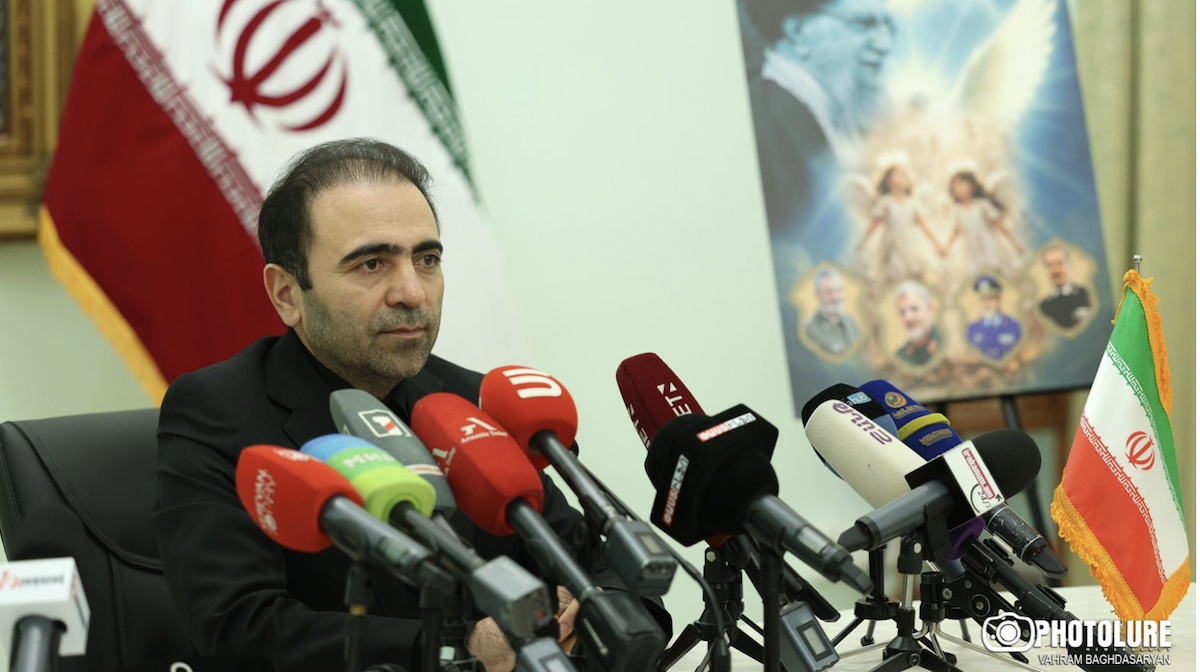
● Iran’s Ambassador Khalil Shirgholami (pictured) said at a press conference that “weakening Iran — and God forbid its defeat — would also harm Armenia.” He added that certain historical ambitions toward Armenia are well known, and that Iran sincerely wishes Armenia to be a strong state. “Peace and security in our region benefit everyone. We hope that peace in the South Caucasus, despite historical disagreements, will be preserved and serve all countries,” Shirgholami said.
● A strategic document on comprehensive cooperation between Iran and Armenia is currently under development, Khalil Shirgholami stated.
● Ararat Mirzoyan also held a phone conversation with EU Commissioner for Enlargement Marta Kos. They discussed the situation in the Middle East, the agenda of upcoming high-level events, and mutual visits by Armenian and EU representatives.
● Armenian embassies and consular offices in Middle Eastern countries are operating around the clock, providing assistance to citizens affected by canceled or delayed transit flights. At present, there is no information about Armenian citizens among the victims, Foreign Ministry spokesperson Ani Badalyan said.
● A Fly One Armenia aircraft departed from Yerevan to Oman to evacuate Armenian citizens.
● Speaking at an event marking Armenia’s Diplomat’s Day, Nikol Pashinyan addressed the country’s security conditions. He said that due to a somewhat distorted perception of reality, security had long been understood primarily in military terms. Over time, however, it became clear that the more security is associated solely with the army, the more fragile it appears. Conversely, the greater the emphasis on “soft” factors, the more this indicates a reliable level of security.
● At the same event, Ararat Mirzoyan stated that diplomacy is one of the key components of Armenia’s sovereignty, territorial integrity, and security architecture. “Our first line of defense is a balanced foreign policy, which, amid turbulent seas, has enabled us to steer our state ship safely toward calmer waters. With the same awareness, we are now working to bring that ship to its next logical destination — the further institutionalization of peace and the creation around us of an environment of tolerance, cooperation, and open borders.”
● A delegation led by First Deputy Defense Minister and Chief of the General Staff Edward Asryan visited NATO’s Allied Joint Force Command in Brunssum. Asryan held a personal meeting with Commander Ingo Gerhartz, followed by expanded-format talks. Discussions focused on Armenia–NATO partnership and regional security issues. NATO
● Armenia’s first president, Levon Ter-Petrosyan, voiced support for detained Russian dollar billionaire Samvel Karapetyan, who is accused of calling for the overthrow of Armenia’s constitutional order. His party, “Strong Armenia,” recently nominated him as its candidate for prime minister in the event of victory in the June 7 parliamentary elections. Ter-Petrosyan said Karapetyan could unite a strong government of professional economists and technocrats focused on strengthening the country and improving social conditions. He added that Karapetyan would uphold Armenia’s international agreements and that the state’s “anti-constitutional and treacherous campaign against the Church” would automatically end, restoring unity among Armenians.
● “The Catholicos of All Armenians is in constant contact with Armenian communities in all countries affected by the hostilities following the outbreak of war in Iran,” the Chancellery of Mother See of Holy Etchmiadzin said in a statement.
-
Tuesday, 3 March, Azerbaijan. Azerbaijan and Russia will soon take practical steps over the downing of the Azerbaijani passenger plane by Russian air defenses
● More than 600 people have been evacuated from Iran to Azerbaijan by land since the start of the U.S. and Israeli military operation against Iran on February 28. Over 150 of them are Azerbaijani citizens, while the rest are nationals of 20 foreign countries. Most countries in the region have closed their airspace.
● Officials from Serbia, Kazakhstan and Russia thanked Azerbaijan for assisting in the evacuation of their citizens and members of diplomatic missions from Iran.
● Azerbaijan’s foreign minister held phone discussions with his counterparts from Jordan, Kuwait, Bahrain, Turkey and Kazakhstan, as well as with EU foreign policy chief Kaja Kallas, regarding tensions in the Middle East. The importance of resolving differences through dialogue in accordance with international law was emphasized. Azerbaijan’s significant role in evacuating foreign nationals from Iran, including citizens of EU member states, was also noted.
● Azerbaijan and Russia will soon take practical steps to address the consequences of the crash of an Azerbaijani passenger aircraft that was shot down by Russian air defense missiles on December 25, 2024. This was discussed during a meeting in Baku between President Ilham Aliyev and Russian Deputy Prime Minister Alexei Overchuk.
In late December, Moscow unexpectedly announced the termination of the criminal investigation into the case. Of the 67 people on board, 38 were killed. Azerbaijan is demanding that Russia acknowledge responsibility, apologize, and pay compensation.● Today, Baku will host a ministerial meeting of the Southern Gas Corridor Advisory Council and a ministerial meeting within the framework of the Green Energy Advisory Council. The meetings will be co-chaired by EU Energy Commissioner Dan Jørgensen. Ministers, deputy ministers and other senior representatives from 27 countries, including EU member states, 11 international financial institutions and organizations, and 49 energy companies are expected to participate. Such meetings have been held since 2015.
● Ahead of the meeting, the European Commission stated that Azerbaijan plays an important role in the EU’s efforts to diversify energy sources and reduce dependence on Russian energy resources. The office of the EU Energy Commissioner noted that further deepening cooperation remains key to achieving shared goals in energy security, competitiveness and decarbonization.
● Ahead of the meeting, the energy ministers of Azerbaijan and Moldova discussed cooperation in natural gas production during talks in Baku. Moldovan minister Dorin Junghietu invited Azerbaijani companies to participate in a new tender for the construction of wind farms in Moldova.
● The United Kingdom has appointed Duncan Norman as its new ambassador to Azerbaijan. He will replace Fergus Auld and assume his duties in May. Duncan Norman served as Deputy Head of Mission in Armenia from 1998 to 2000 and as UK Ambassador to Albania from 2016 to 2021.
● On March 6, Moldova’s Deputy Prime Minister Mihai Popșoi will pay a working visit to Baku at the invitation of Azerbaijani Foreign Minister Jeyhun Bayramov.
● Energy Minister Parviz Shahbazov discussed with Martina Oppizzi, Vice President of TotalEnergies, prospects for the full-scale development of the Absheron gas-condensate field and cooperation on a wind power plant construction project.
● On March 2, another court hearing took place in the “Toplum TV case,” in which 10 people have been arrested. They were initially charged with smuggling, and the charges were later aggravated. All deny the accusations and say they were detained for publishing criticism of the authorities. According to the Azerbaijani service of Radio Free Europe/Radio Liberty, Akif Gurbanov, chairman of the Third Republic Platform and head of the Institute for Democratic Initiatives, protested during the hearing. He claimed court transcripts had been falsified, with any mention of President Ilham Aliyev removed, as well as phrases such as “rule of the presidential family” and “dictatorship.” The judge dismissed the complaint, saying it was unrelated to the substance of the criminal case.
During the hearing, detained journalist Farid Ismayilov said he did not wish to participate due to health problems and the difficulty of being transported from the detention facility to the courthouse. “Most importantly, I expect nothing from this court. What is the point of suffering in vain?” he said. His request was also denied.
The next hearing is scheduled for March 16.● Journalist Natig Javadli, arrested in the “Meydan TV case,” published an open letter calling for the release of Azerbaijani activist Bakhtiyar (Bahruz) Samadov, who was sentenced to 15 years on charges of treason and contacts with Armenian intelligence services. Javadli wrote that if Azerbaijan and Armenia are moving toward a final peace agreement, and if those accused of separatism and terrorism against Azerbaijan are being extradited to Armenia, then there is no reason to keep Samadov in prison. “If Azerbaijan and Armenia have agreed to begin negotiations on trade relations and contacts between civil society representatives, then keeping Bahruz Samadov in prison is a bitter joke,” he wrote.
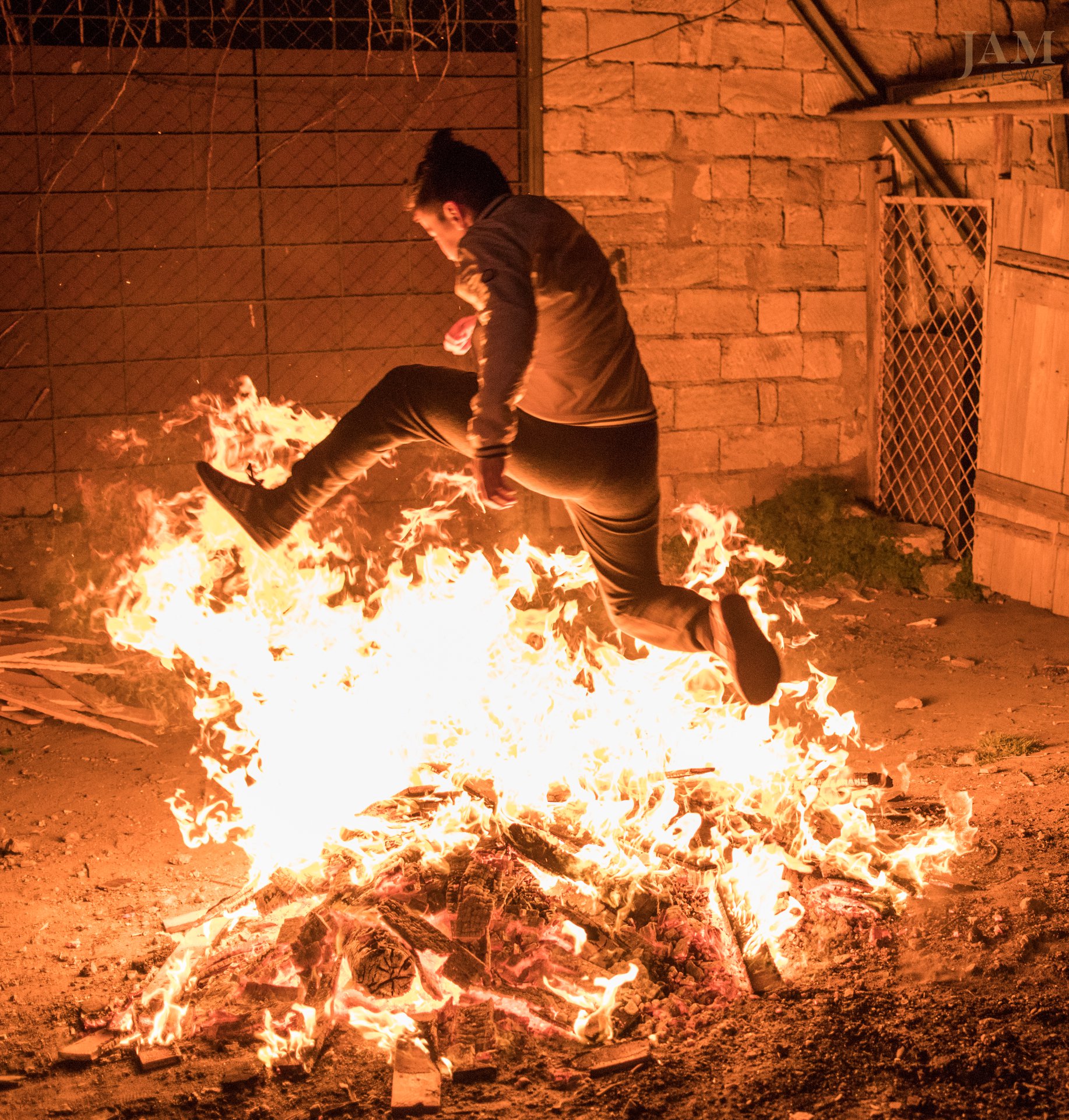
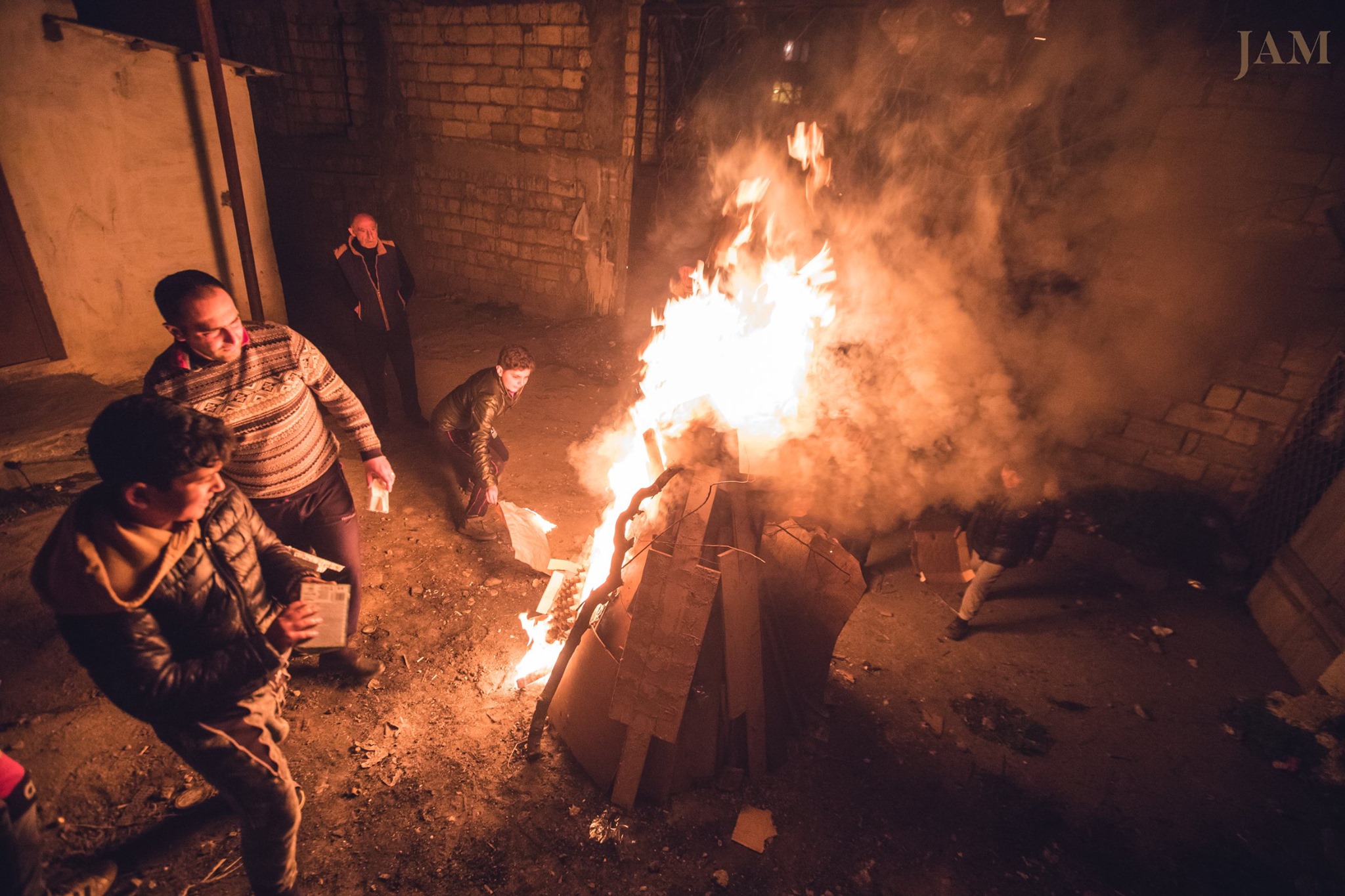
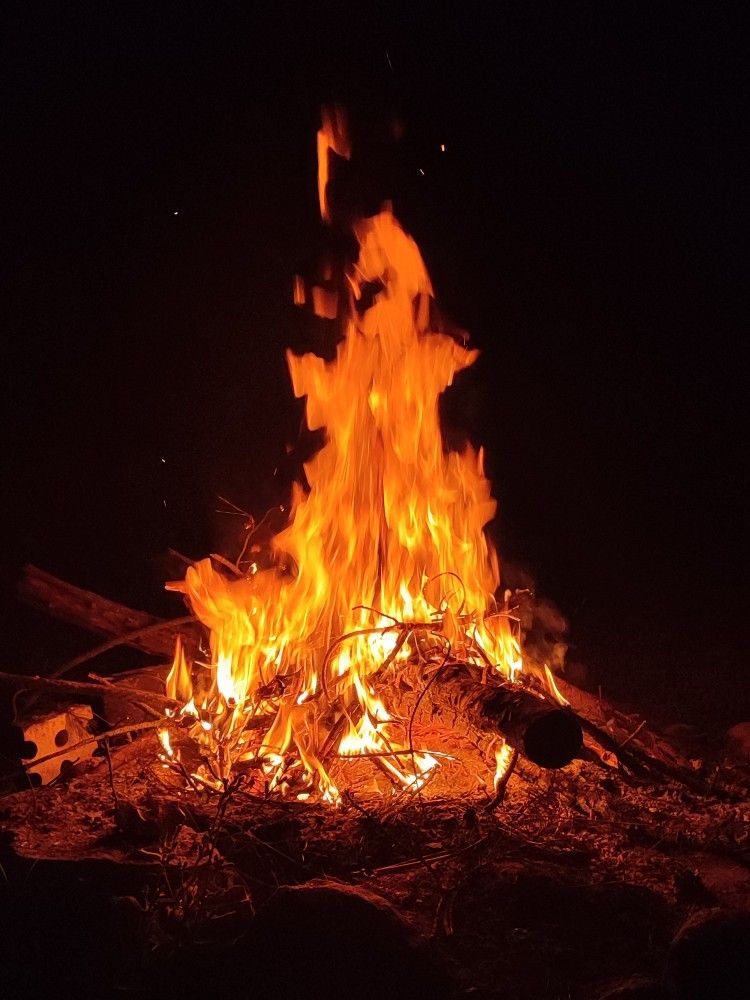
● Today Azerbaijan marks the second Tuesday ahead of the Novruz holiday — “Od Charshanbasi” (“Fire Tuesday”). On this day, people traditionally light bonfires and jump over them. According to popular belief, this ritual helps rid a person of misfortune. The previous Tuesday was “Su Charshanbasi” (“Water Tuesday”).
-
Monday, 2 March, Azerbaijan. 192 people were evacuated from Iran to Azerbaijan
● 192 people were evacuated from Iran to Azerbaijan by land between 8:00 a.m. on February 28 and 10:00 p.m. on March 1. Of them, 82 are Azerbaijani citizens, while the rest are citizens of 19 foreign countries. Since the start of the U.S. and Israeli military operation in Iran on February 28, most countries in the region have closed their airspace.
● The Ambassador of Jordan to Iran thanked Azerbaijan for assisting in the evacuation of the Jordanian diplomatic delegation from Iran.
● The Russian Embassy expressed gratitude for assistance in evacuating Russian citizens from Iran. According to the statement, about 500 Russians are already on the lists to leave via Azerbaijan.
● During the escalation in the Middle East, one Azerbaijani citizen was injured. He is receiving assistance, and his condition is described as stable, the Foreign Ministry press service reported.
● President Ilham Aliyev sent a letter of condolences to Iranian President Masoud Pezeshkian over the death of Supreme Leader Ayatollah Ali Khamenei. “We wish the friendly and brotherly Iranian people peace, stability, and prosperity,” the letter said. Khamenei was killed the day before along with members of his family as a result of U.S. and Israeli missile strikes.
● Azerbaijan’s Foreign Minister Jeyhun Bayramov held phone talks with the foreign ministers of Canada, Spain, Iraq, the United Arab Emirates, and Oman. Deep concern was expressed over the military escalation in the region. The importance of intensifying diplomatic efforts to restore negotiations and the need to protect civilians and infrastructure were emphasized. The possibility of using Azerbaijan’s land border, if necessary, for evacuating Canadian and Spanish citizens from Iran was also discussed, as was done during last June’s military escalation.
● Jeyhun Bayramov also spoke by phone with Iran’s Foreign Minister Seyyed Abbas Araghchi and conveyed condolences over the deaths of Ali Khamenei and civilians. It was emphasized that Azerbaijan’s territory cannot be used by any country against neighboring friendly Iran.
● Meydan TV journalist Nurlan Libre (Gahramanli), who is in pretrial detention, sent a letter to the Prosecutor General describing harsh detention conditions and pressure allegedly exerted on him. Libre has been on a hunger strike for nearly 40 days in protest and claims he was placed in solitary confinement for refusing to end it. “I was not taken to a medical center despite my requests. There are no sanitary conditions in the cell. I have been deprived of phone calls and visits,” the journalist said. Nurlan Libre was arrested in February 2025 in a criminal case against Meydan TV, under which 12 journalists are currently in custody. They are charged with smuggling by prior conspiracy and other serious offenses. The journalists deny the charges and say they are being punished for their critical reporting about the authorities.
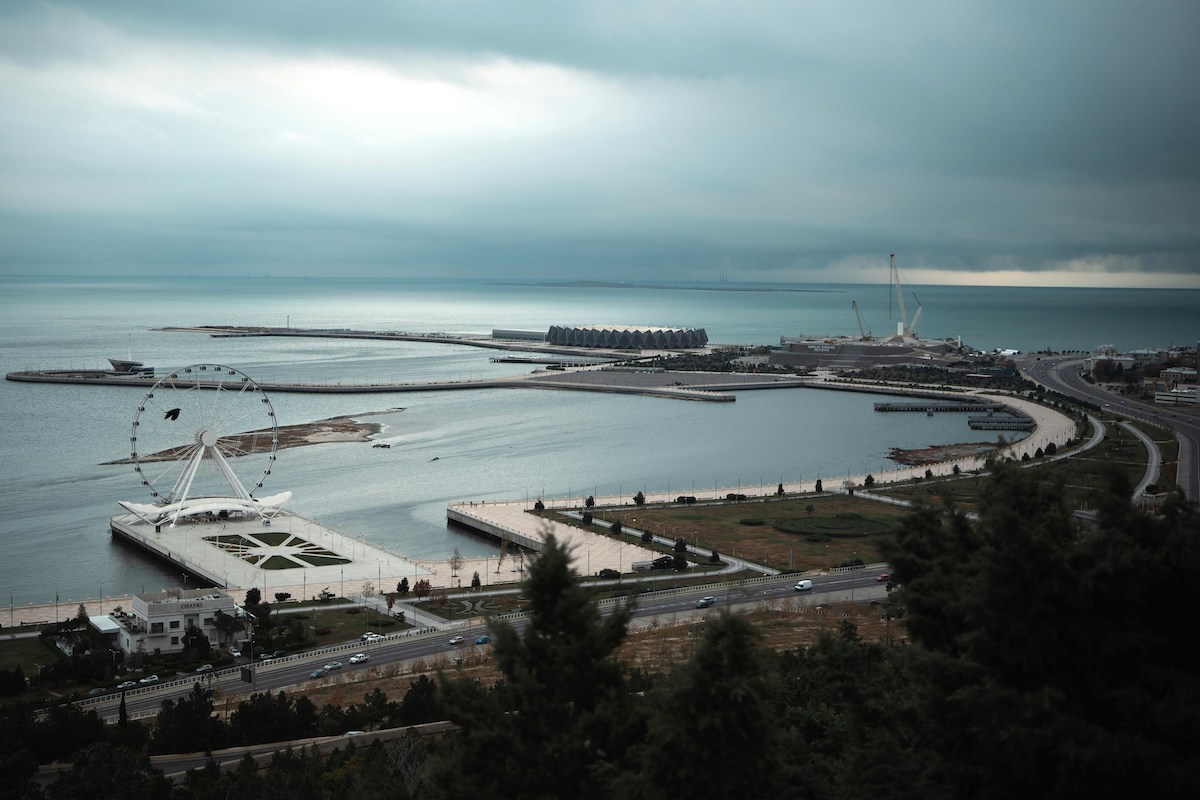
Baku, on the shore of the Caspian Sea. Photo by Nurlan Isazade
-
Monday, 2 March, Armenia. Opposition slams videos of Nikol Pashinyan eating pastries on a bus “during a global crisis"
● A Security Council meeting was held in connection with the U.S. and Israeli military operation in Iran, chaired by Prime Minister Nikol Pashinyan and attended by President Vahagn Khachaturyan, Parliament Speaker Alen Simonyan, and other officials. Participants expressed condolences over the casualties and stressed the need for a swift establishment of peace.
● The Foreign Ministry is working on the possible evacuation of Armenian citizens from Iran by air to Armenia via Oman. It was stated that, where possible, support will also be provided for transportation from the UAE to Muscat to organize flights.
● Amid the military escalation in the Middle East, the Office of the High Commissioner for Diaspora Affairs has opened a hotline to provide necessary assistance to compatriots in the region. Hotline numbers: 077 998123, 010 589155.
● The opposition criticized videos posted on social media showing Prime Minister Nikol Pashinyan eating pastries on a bus. “At a moment of the largest global crisis, such leadership is dangerous for Armenia. More than ever, Armenia needs a new prime minister,” said Narek Karapetyan, a member of the council of the “Strong Armenia” party. The pastry video, as well as another showing corn, was filmed as part of an internal party pre-election campaign. Pashinyan, together with the parliament speaker, ministers, and MPs, has begun trips to various regions of the country. Armenia’s opposition largely has a reputation for being pro-Russian.
● Deputy Speaker of the National Assembly Ruben Rubinyan responded to the criticism, saying: “It is hard to imagine better publicity than the fact that our country is not at war but eating pastries. During World War I we did not eat pies — we fought; during World War II and in the 1990s as well. Now we can finally eat pies because we are establishing peace,” Rubinyan explained.
● Iran expert Emma Begijanyan said that “weakening Iran is a major threat for Armenia, since the strategic interests of the two countries largely coincide.” “Azerbaijan and Turkey have territorial claims against both Iran and Armenia. During the 44-day war (the second Karabakh war in autumn 2020 — JAMnews), Iran limited itself to statements, whereas it should have provided more practical support to Nagorno-Karabakh. Possibly, cooperation with Armenia should have gone beyond diplomatic formalities. Nevertheless, the essence remains the same: a threat to Iran is also a threat to Armenia,” Begijanyan said in an interview with Hraparak.
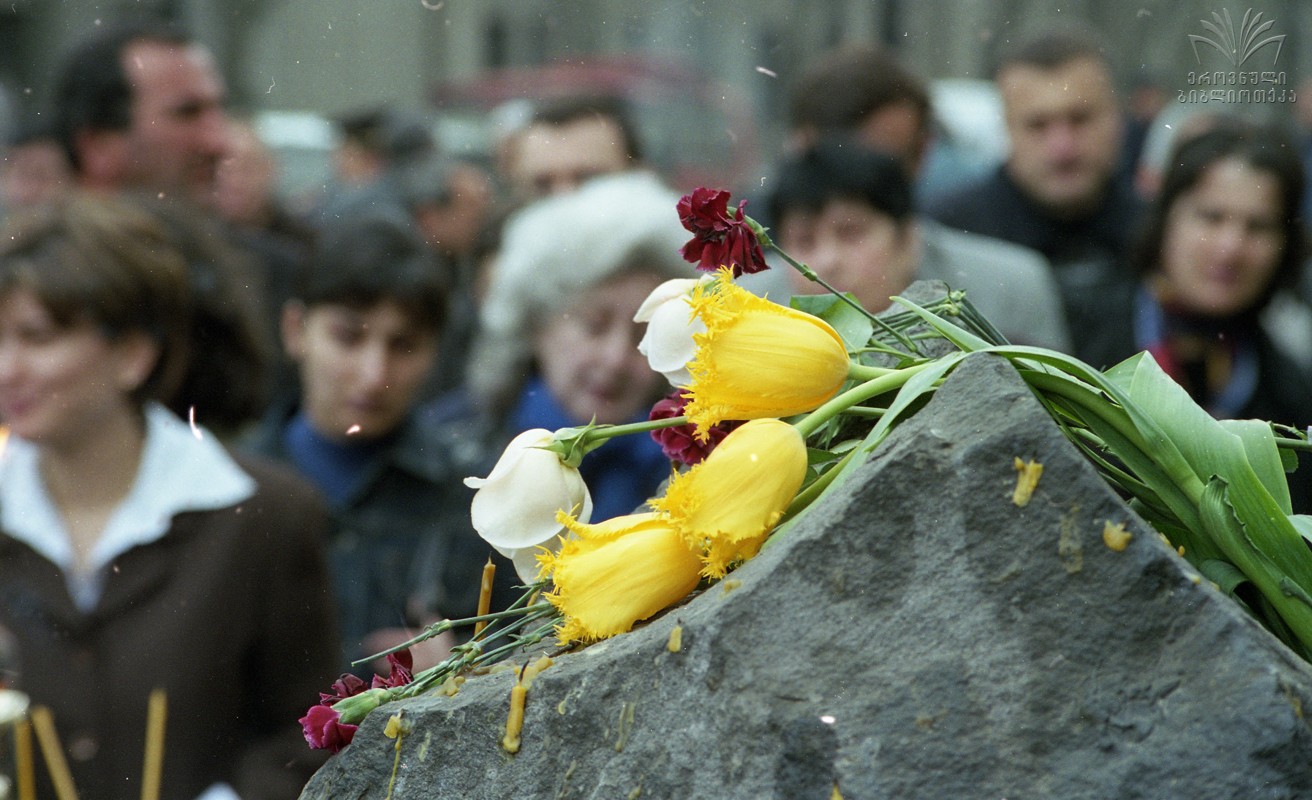
● In Yerevan, people commemorated fellow citizens killed during the dispersal of protests against the presidential election results on the night of March 1–2, 2008. Firearms were used; 10 people were killed — two police officers and eight civilians — and hundreds were injured.
● Armenian citizens will be able to enter Russia only with passports, including diplomatic ones; other documents will no longer be accepted, TASS reports.
-
Monday, 2 March, Georgia. Prime Minister Irakli Kobakhidze expressed solidarity with the President of the UAE
● The Foreign Ministry issued a statement expressing deep concern over the situation in the Middle East and emphasized the “importance of diplomatic efforts to de-escalate and ensure stability in the region.”
● Prime Minister Irakli Kobakhidze held a phone call with the President of the United Arab Emirates, expressing solidarity and hope for lasting peace. Kobakhidze wrote on social media that Tbilisi highly values the “special friendly relations between Georgia and the UAE.”
● More than 20 flights to Middle Eastern destinations — including Tel Aviv, Sharjah, Dubai, Doha, Abu Dhabi, and Kuwait City — were canceled from the international airports of Tbilisi and Batumi.
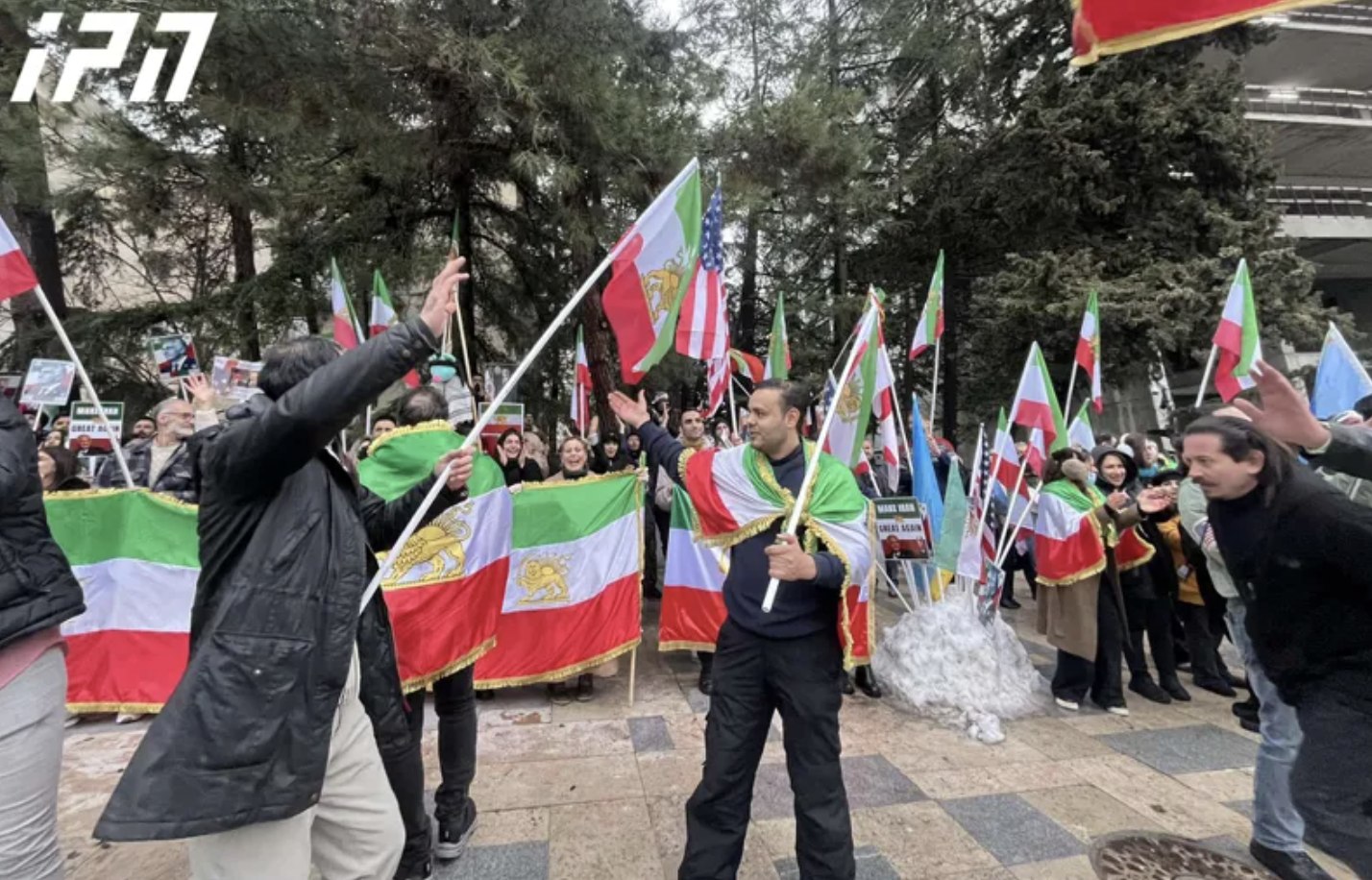
● A rally took place near the Embassy of Iran in Tbilisi. Participants carried Iranian and U.S. flags and celebrated the U.S. and Israeli attack on Iran (pictured). “We are happy — thank you Trump, thank you Benjamin Netanyahu,” they said.
● Amendments to the law “On Labor Migration” have come into force, significantly restricting employment opportunities for foreigners in Georgia. They must now obtain special permits from the state employment agency. Work authorization may be issued for a specific position and employer for up to one year. Violations will result in fines for both workers and employers, including financial penalties for self-employed foreigners.
● According to the Interior Ministry, a tourism company director was detained in Batumi on charges of large-scale fraud. He allegedly misappropriated 218,427 lari (about $82,000) paid by citizens for overseas tours that never took place. He faces up to 9 years in prison.
● Heavy rains caused landslides in Tbilisi districts of Vake, Saburtalo, Gldani, and Isani. Several trees fell.
-
Top stories in Azerbaijan, Armenia, and Georgia from 23-27 February, 2026