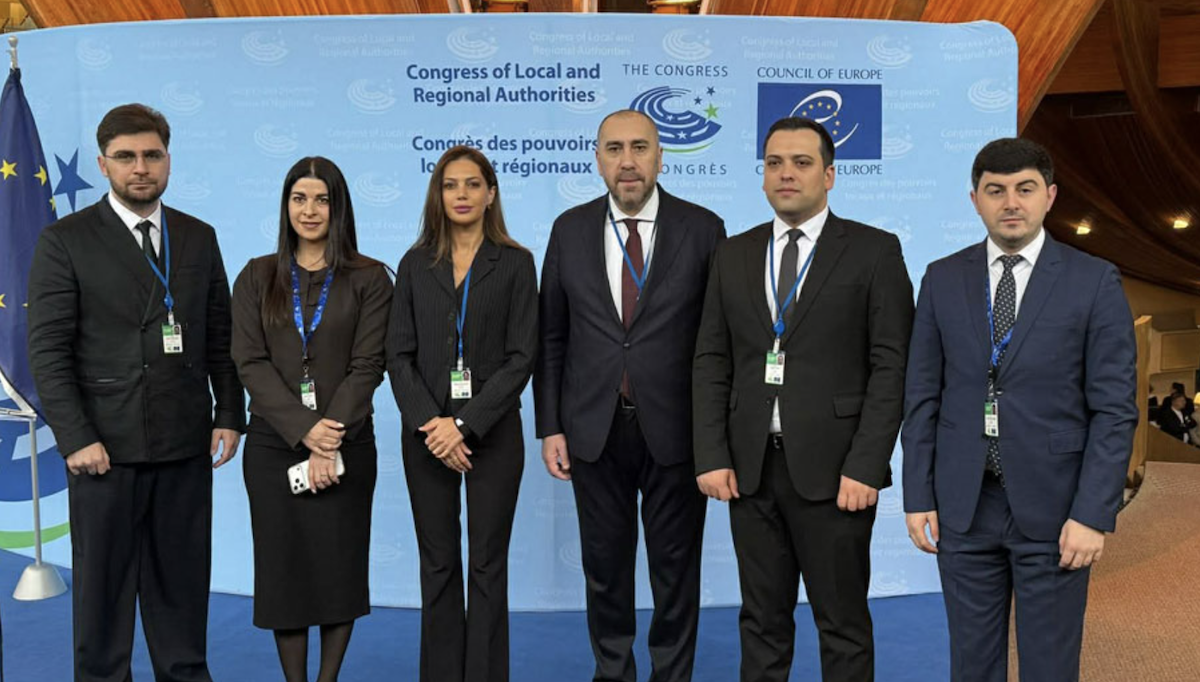
'New stage of Armenia–EU cooperation': Brussels signs strategic partnership agreement






Armenia–EU: strategic partnership
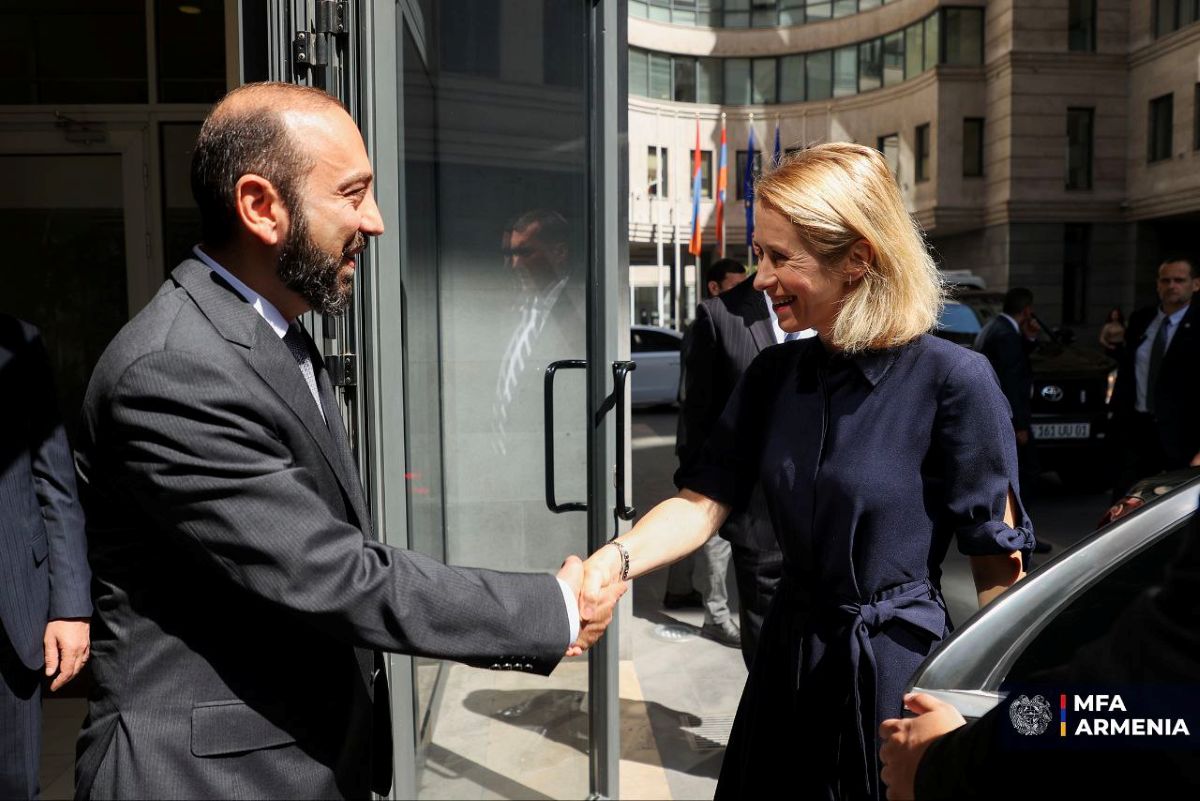
Armenia and the European Union approved a new cooperation agenda at the level of a strategic partnership. They signed the document in Brussels after the sixth meeting of the Armenia–EU Partnership Council. Armenian foreign minister Ararat Mirzoyan and EU high representative for foreign affairs and security policy Kaja Kallas signed it.
The document — which both sides describe as a “new agenda” — runs to more than 70 pages. It outlines their political commitments.
“We have adopted a new, strategic agenda for the Armenia–EU partnership. It complements the Comprehensive and Enhanced Partnership Agreement and moves our relations to a strategic level. The Armenia–EU partnership is entering a new, more ambitious phase,” Ararat Mirzoyan said at the press conference after the signing.
He added that a strategic partnership with the European Union is not “the limit of Armenia’s ambitions”. He also noted that parliament has already approved a bill to launch the accession process. The first Armenia–EU summit will take place in May next year.
Kaja Kallas underlined that the new agenda covers several areas. These include the economy, security and defence, visa liberalisation and other fields.
She said the European Union will allocate €15 million to strengthen Armenia’s resilience. The funding will support several initiatives. These include training for sappers, providing equipment, and countering hybrid attacks and disinformation campaigns carried out by Russia and its allies.
“You are not alone in facing these challenges. We stand ready to support you actively,” Kallas said.
“Yerevan and Brussels announced the start of work on a new partnership agenda in early 2024, saying it would set more ambitious priorities across all areas of cooperation. Armenia’s foreign minister, Ararat Mirzoyan, said in June that the negotiations had been completed and stressed that the new document would allow the country to deepen its cooperation with the EU even further.”
- Armenian parliament backs agreement defining Yerevan’s role in EU crisis-management missions
- EU Commissioner Marta Kos: ‘Report on Georgia is worst ever prepared for candidate country’
- EU investments in Armenia to reach €2.5 billion: meeting in Brussels
What is known about the new agenda: details
On the eve of her visit, the EU’s Commissioner for Neighbourhood and Enlargement, Marta Kos, spoke to Armenian journalists. She noted that the new strategic partnership agenda will serve as “a plan of action, a roadmap for what the sides can still achieve.”
According to her, the agenda is built around three key areas:
- • cooperation on defence and security
- • sectoral cooperation, including economic diversification and investment
- • steps towards visa liberalisation
Speaking about deeper cooperation on defence and security, Kos stressed that it will go beyond traditional measures. This strand will now include efforts to counter disinformation, manipulation and external interference in the information space.
She said the European Union will support Armenia in tackling possible hybrid threats and cyberattacks ahead of the 2026 parliamentary elections. She cited Moldova as an example where “Russia attempted to interfere in parliamentary elections through active disinformation campaigns.”
“The European Union is ready to allocate €12 million to help Armenia effectively counter such hybrid attacks,” she said.
Kos added that financial support will be directed not only to the Armenian government but also to civil society and the media, whose role she described as crucial in responding to hybrid threats.
She also addressed several other issues of importance to Armenia in her meeting with journalists. Here are her comments on those topics.
Visa liberalisation
“This process could take years. Visa liberalisation is not just about allowing travel. We need to be confident that Armenia can control its borders and exchange data and documents effectively.”
Support for Armenia under the ‘Caucasus Power System’ project
“These are €500 million in investments to connect your [Armenian] power system with Georgia’s. We are also already working on establishing an Armenia–Turkey power network. Why? So that you become less dependent on the energy sources you currently receive from Russia.”
Removal of Armenian airlines from the EU blacklist
“This is a technical process. It has nothing to do with political relations. We just want to ensure that, from a safety perspective, everything is in order.”
Peace between Armenia and Azerbaijan
“This is much more than just peace between the two countries. It is about peace in the region. That’s why I am very positive,” she said, emphasising the role of Turkey in achieving a final peace agreement.
Discussion on Interconnectedness and the TRIPP and “Crossroads of Peace” Projects
The Armenian Ministry of Foreign Affairs reported that the agenda of talks between Mirzoyan and Kallas covered not only deepening Armenia–EU partnership but also regional issues, including EU support for “interconnectedness.”
At a press conference, the Armenian foreign minister said discussions had explored broader opportunities for regional integration, as well as the implementation of the Trump Route project (TRIPP).
“Additional steps, such as opening the Armenia–Turkey border and implementing major infrastructure projects, could significantly reshape the economic and political architecture of the entire region,” Mirzoyan said.
EU Commissioner for Neighbourhood and Enlargement Marta Kos emphasised Armenia’s central role in regional integration efforts:
“We can achieve a lot in the South Caucasus under the interconnectedness agenda. But this is only possible with peace between Armenia and Azerbaijan.”
According to Kos, TRIPP is just one part of the interconnectedness programme. Negotiations are underway to establish a four-party group including Armenia, Azerbaijan, Turkey, and the EU. She did not provide further details but added:
“The EU is here to help implement the peace agreement and support Armenia in carrying out the ‘Crossroads of Peace’ programme.”
“Crossroads of Peace” is an initiative aimed at unlocking the entire region, developed by the Armenian government.
The “Trump Route for International Peace and Prosperity” (TRIPP) is a road that would connect mainland Azerbaijan with its Nakhchivan exclave through Armenian territory.
‘Green Light Needed’: on the prospects of Armenia’s European integration
As many in Armenia are interested in the country’s potential EU membership, Armenian journalists asked the EU Commissioner for Enlargement about the bloc’s stance on the law recently adopted by the Armenian parliament to initiate the membership process.
“We view this decision as very encouraging. It expresses the will of the Armenian people. To start the process, Armenia must submit an application for candidate status, which has not yet happened. And, of course, member states must give the ‘green light,’” Marta Kos replied.
She added that even if this does not occur, “everything we are doing now can contribute to a European future, and it is not only about membership.”
Armenia–EU: strategic partnership