High demand for new housing in Armenia: what’s driving it and what to expect






High demand for new housing in Armenia
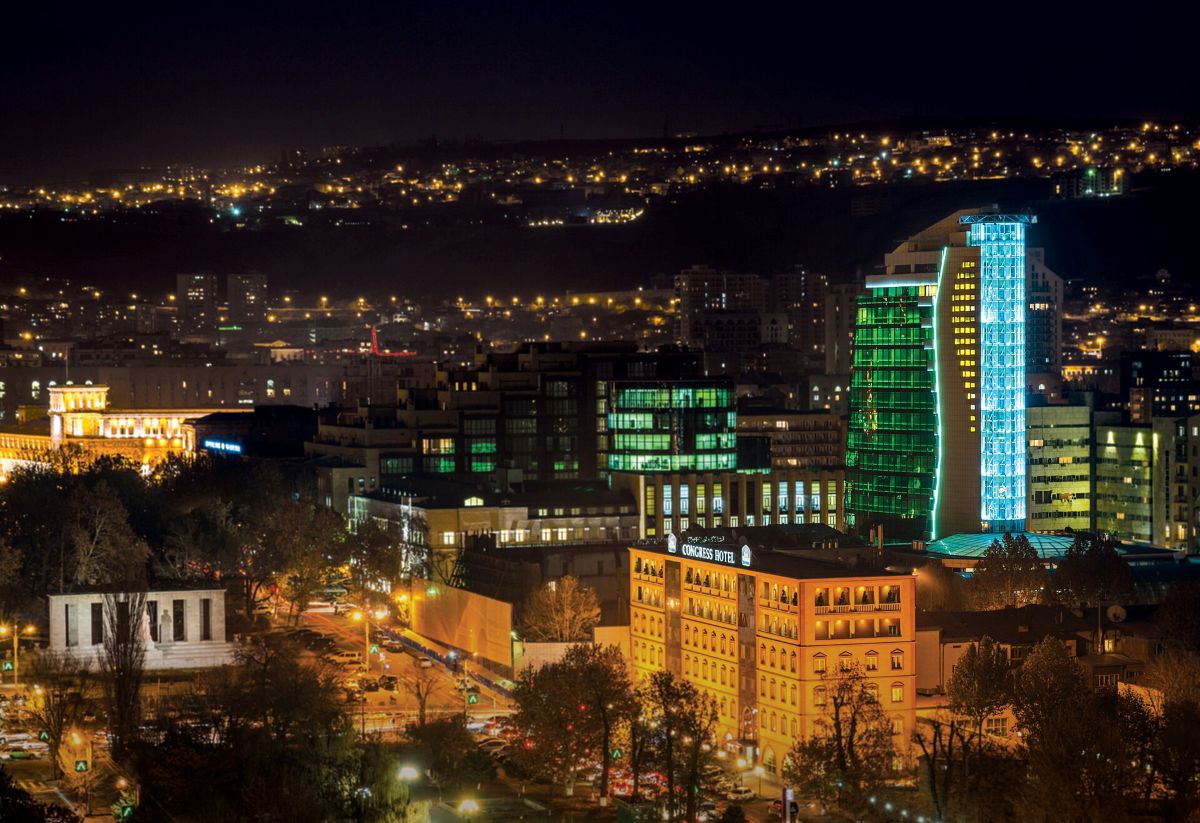
Construction of new housing is in full swing in Armenia, mainly in Yerevan and nearby settlements. Real estate agents explain this trend by strong demand from both local residents and foreign buyers. They also stress that many people have recently started to prefer newly built apartments. On the secondary market, residents often face problems such as outdated lifts or worn-out sewage systems.
However, property agents say new developments would not attract such high demand without a law that allows buyers to reclaim income tax on mortgage loans. The scheme applies only to the purchase of newly built housing. The state refunds income tax from a buyer’s salary. Buyers can then use this money to cover mortgage interest payments.
The law came into force in 2014. Authorities stopped applying it in Yerevan in 2025. However, developers who received construction permits before 2022 can still sell apartments under the income tax refund scheme.
Buyers can use this option only once. People with stable incomes and higher salaries tend to choose this way of purchasing housing.
Of course, the income tax refund places a significant financial burden on the state. However, the adoption of this law has driven an unprecedented construction boom in Yerevan and surrounding areas over the past five years. Construction has become the main driver of economic growth.
An analysis of listings on new housing websites shows that more than half of ready-to-move-in apartments have already sold. The figures vary by location, but they generally range between 40% and 70%.
People with more modest incomes tend to buy housing on the secondary market. Prices in this segment are significantly lower.
- ‘Armenia could become a small transit hub’: economist on developments around Iran
- Modernization of old buildings in Armenia: energy savings and modern design
- Benefits of solar energy in Armenia: three examples
Statistical data
According to the Cadastre Committee, more than 74,458 real estate transactions were registered in Yerevan in 2025. These included apartment buildings, private houses, land plots and commercial properties. This marks an 8% increase compared to 2024, when 68,914 transactions were recorded.
Around 21,000 transactions involved purchases of apartments in multi-unit residential buildings. Of these, 15,000, or 72%, took place in Yerevan.
After the capital, the highest number of new-build housing sales was recorded in the city of Abovyan, with 3,131 transactions.
More than half of all housing sale and purchase transactions in Yerevan involved apartments in new buildings. 89% of buyers purchased their apartments directly from developers.
What attracts buyers to new-build housing
Ashkhen Avalyan bought a new 50-square-metre apartment in Yerevan, taking advantage of the income tax refund scheme.
One square metre in the building cost 520,000 drams (about $1,390). She paid a 10% down payment.
“I carefully studied offers on the secondary market and chose this option. First, I would have had to pay a 30% down payment on the secondary market. In addition, homes priced under $80,000 required renovation and furnishing. This significantly increased the overall cost,” Ashkhen explains.
Buyers in new developments usually have to wait a long time before moving in. Most purchase apartments at an early stage of construction, while some buy slightly later. Construction often takes longer than planned, and people may only move in after one to three years. Many use this time to save money for renovation and furnishing.
“In the case of the income tax refund, payments remain relatively low in the first years. Later, interest decreases, but the principal payment increases. To be honest, when I bought a new-build apartment, I also expected to sell it later at a good price. The secondary market raises doubts in this respect. The old housing stock is problematic — lifts are outdated, and sewage systems are worn out. It will be difficult to sell such an apartment at a reasonable price,” Ashkhen says.

Both new and old housing remain in demand
Andranik Grigoryan is a real estate agent. He now offers clients new developments outside Yerevan as well. However, he says the Yerevan market still dominates:
“People are willing to pay 30–40% more to buy an apartment in the capital. Regional offers appeal more to local residents. Some new developments in Yerevan still qualify for the income tax refund. However, to be honest, they are not for those with low or middle incomes. A square metre in such apartments usually costs more than $3,000.”
According to Andranik, most buyers in this segment do not use the income tax refund:
“They often buy property in cash, without a mortgage. Our compatriots living abroad mainly purchase housing in this segment. They see it as an investment or a way to ensure financial stability. Conversations with them show that many plan to spend their old age here or live here for a few months each year.”
The agent believes Armenia offers the safest environment for the Armenian diaspora:
“Moreover, some compatriots living abroad are ready to move here to avoid problems they face in other countries. People often ask me who will buy so many apartments in new developments if domestic purchasing power remains low. The answer is diaspora Armenians. Some buy several apartments at once. Prices will not change sharply in the coming years, because the inflow of people from abroad continues. In addition, some buyers will purchase apartments to rent them out and secure stable income.”
Speaking about high prices in new developments, he points out that the secondary market still offers affordable options for buyers with limited means. This allows the secondary market to maintain stable sales, even without state support such as the income tax refund.
“Buyers in the primary and secondary markets are different. Those with savings prefer the secondary market, because they either want to move in immediately or rent the property out. In the case of new developments, moving in takes from one to three years,” Andranik Grigoryan explains.
In any case, Armenia is recording a construction boom. Last year, developers put 2,270,000 square metres of housing into operation. For comparison, the figure stood at 1,251,000 square metres in 2024
High demand for new housing in Armenia