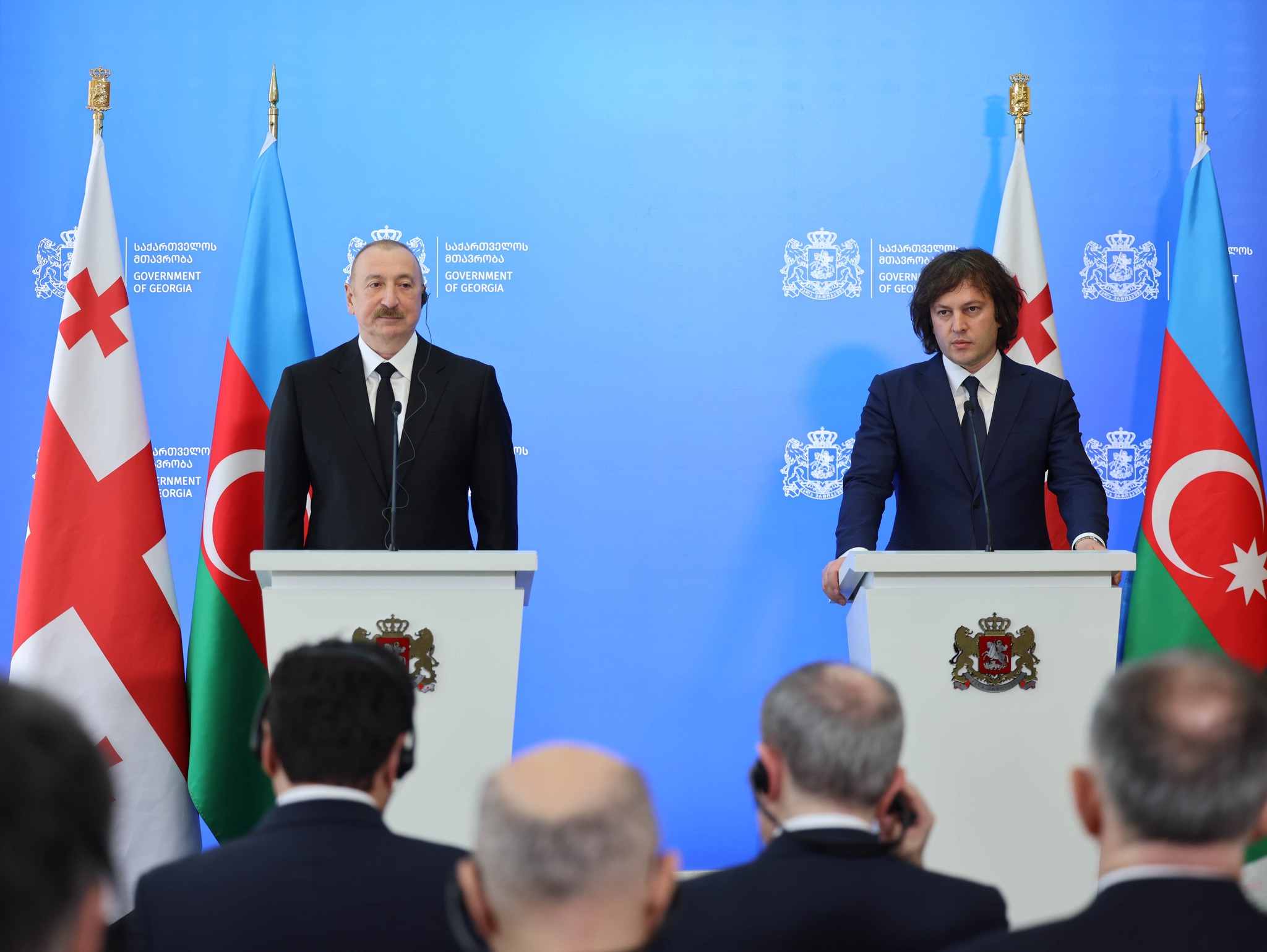
Georgia’s prime minister calls UK sanctions on Georgian TV channels 'shameful'






Kobakhidze on TV sanctions
Georgian Prime Minister Irakli Kobakhidze has described the United Kingdom’s decision to impose sanctions on pro-government Georgian television channels TV Imedi and POSTV as “unserious and shameful”. According to the prime minister, “nothing is valued anymore” in London — including media freedom.
Kobakhidze characterised the sanctions as an attack on press freedom, but added that they would have no practical effect. He said the Georgian government would take full responsibility for ensuring that the situation of any journalist at any television company does not worsen.
“Of course, all state and private companies must continue cooperating with TV Imedi and POSTV. Do not expect that the fundamental right to media freedom and entrepreneurship will be undermined in Georgia,” he said.
Kobakhidze also said the government would “take absolutely all measures to protect these broadcasters’ fundamental right to freedom of speech”.
“What Britain has tried to trample on, we will defend to the end,” Kobakhidze said.
Speaking to journalists, Kobakhidze said the UK’s decision reflected what he called the “tragic condition” of the European bureaucracy. According to him, a country historically regarded as a birthplace of human rights is now itself ignoring media freedom and other fundamental rights.
The prime minister also argued that before 2012 — prior to the current ruling Georgian Dream party coming to power — Georgia had a “complete monopoly” in the media sector, while since 2012 media freedom has been ensured by the state.
Commenting on Kobakhidze’s remarks, economist Roman Gotsiridze said TV Imedi could not be saved through what he described as “artificial respiration”. He noted that the broadcaster already has multimillion debts.
“The government’s call for state and private companies to continue cooperating with these channels effectively means maintaining these two pro-Russian broadcasters with public money — that is, taxpayers’ money,” he said.
The economist also said he believes European and US sanctions could follow the British measures.
On 24 February, the United Kingdom imposed sanctions on Georgian broadcasters TV Imedi and POSTV under its Russia sanctions regime.
According to the UK government, the channels regularly promoted narratives portraying the Ukrainian authorities and president as illegitimate, describing Ukraine as a “Western puppet”, and claiming that Kyiv and its Western partners were attempting to destabilise Georgia.
Asset freezes, a ban on trust services and director disqualifications will be applied to TV Imedi and POSTV.
This means:
- Any bank accounts, property or assets held by the broadcasters within UK jurisdiction will be frozen. Banks connected to the United Kingdom — including branches operating in other countries — are required to stop servicing these companies.
- A ban on the provision of trust services (the management of assets through trustees or funds). This prevents the concealment of company ownership through British jurisdictions. Shareholders will not be able to transfer shares into trusts in order to avoid confiscation or asset freezes.
- An official prohibition on specific individuals holding senior management positions. This bans not only British citizens from managing these companies, but also prevents sanctioned directors themselves from occupying similar roles in any businesses connected to UK law. Violating this restriction constitutes a criminal offence.
Kobakhidze on TV sanctions