Council of Europe anti-torture committee report on police violence at protests in Georgia






Report on violence at protests in Georgia
The Council of Europe’s Committee for the Prevention of Torture has published a report on Georgia, saying its delegation was “concerned by allegations of ill-treatment” of people detained during protests in Tbilisi on 29 November 2024.
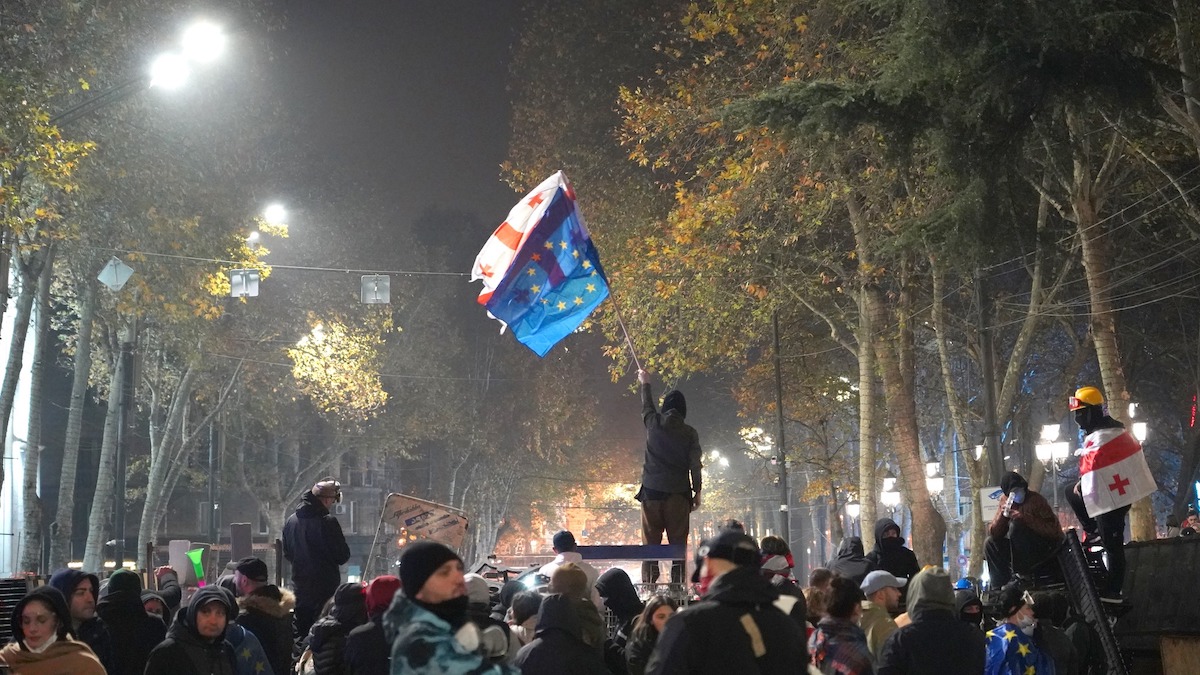
The report is based on the committee’s visits to Georgia in November 2024 and January 2025. The delegation examined conditions in pre-trial detention centres, prisons, and psychiatric clinics, but paid particular attention to the treatment of detainees during the pro-European protests that began on 28 November 2024.
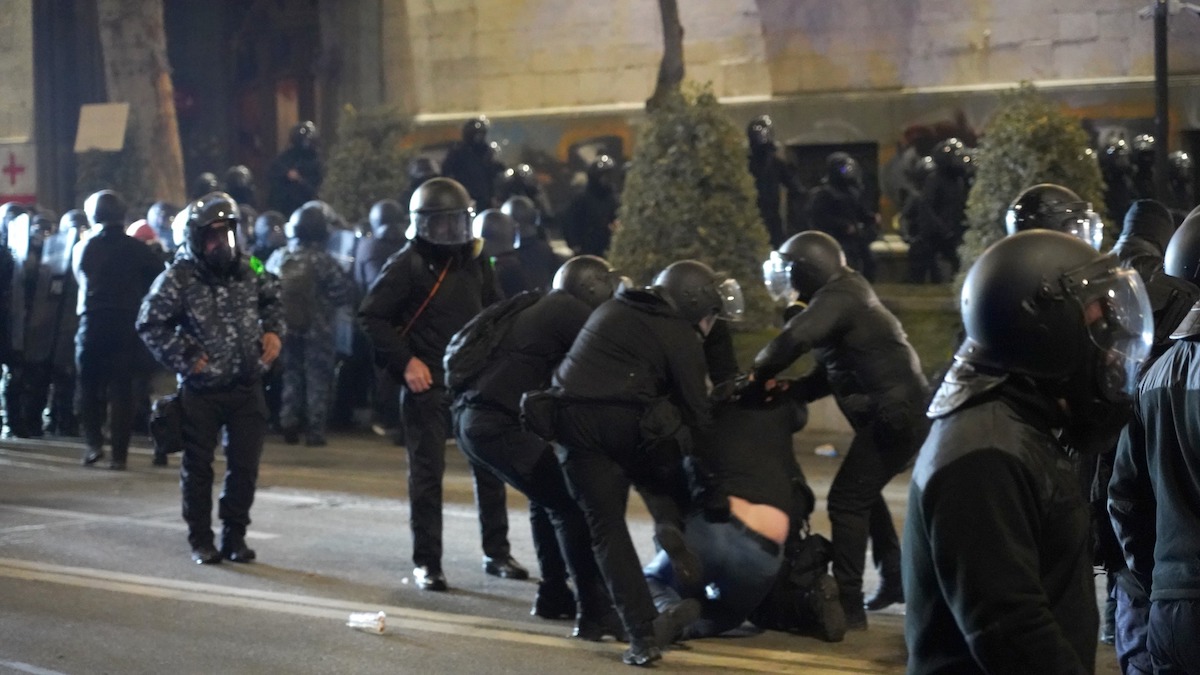
“The committee received numerous allegations of ill-treatment”
According to the report, testimonies from people detained during the 29 November protests in Tbilisi present a consistent picture: demonstrators were detained by police officers in masks and helmets, sometimes from special operations units, who had no visible identification.
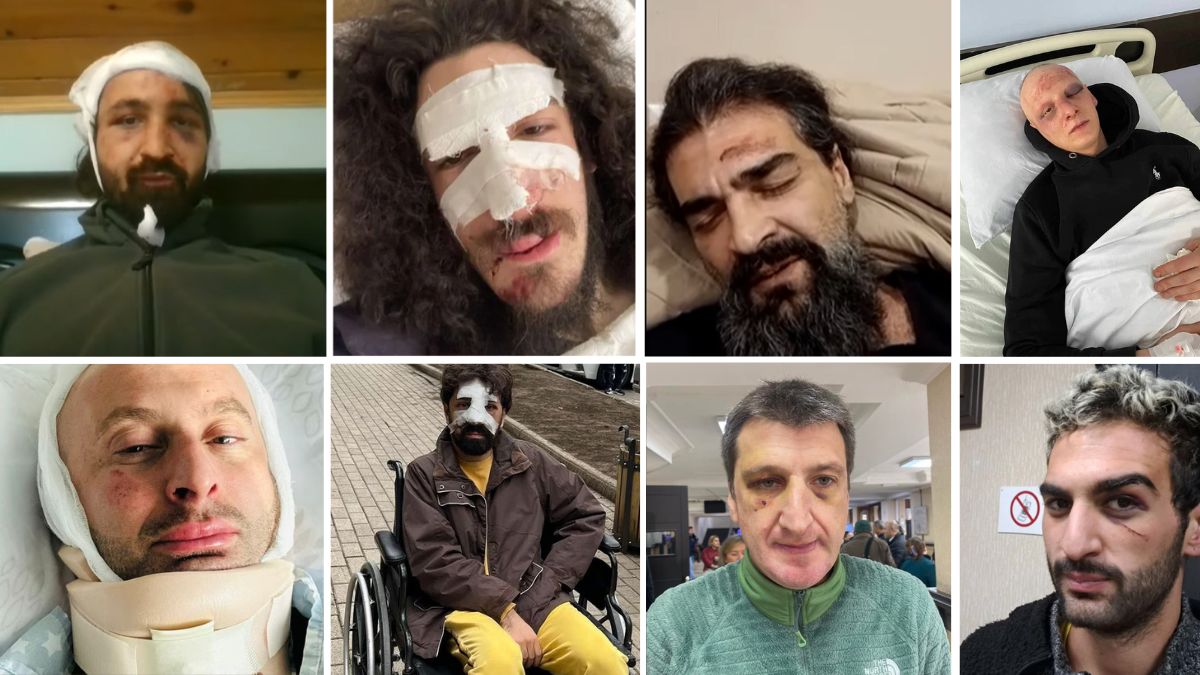
During the arrests, the report says, detainees were punched and kicked, including to the head and face. They were also insulted and threatened, including with rape. The violence usually stopped once masked officers handed the detainees over to patrol or regular police officers.
It noted that the injuries — both those directly observed and documented by the delegation and those recorded by doctors working in temporary detention centres — were fully consistent with the detainees’ accounts.
The Committee for the Prevention of Torture concluded there were no grounds for the use of force against people who were already in custody and under police control.
Committee recommendations
The committee urged the Georgian authorities to ensure that police use only strictly necessary and proportionate force during arrests. The report also stresses the need for officers policing protests to wear clear identification, such as personal numbers on their helmets or uniforms.
It also discusses what it describes as the “excessive and unprofessional” use of water cannon and tear gas. The committee recommended that the authorities pay particular attention to training police in crowd control methods, especially officers from special operations units.
The committee joined the Georgian Public Defender’s Office in calling for effective and independent investigations into all allegations of violence, and noted that during the reporting period no police officers had been charged with excessive use of force or ill-treatment.
Dimitri H. case: ‘Medical evidence consistent with the allegations’
The report also examines a separate case from 22 November 2024, unrelated to the protests. It concerns a man identified as Dimitri H., who said that during police questioning he was slapped and punched and kicked in an attempt to obtain information, and was threatened with rape using a baton.
The Committee for the Prevention of Torture delegation recorded medical evidence consistent with the victim’s account. Although in March 2025 the Georgian authorities provided the committee with information on investigative steps taken, including interviews, forensic examinations, and the review of video footage, the letter did not contain any conclusions or information on possible outcomes. The committee continues to call for the full disclosure of the investigation’s results.
Abolition of independent investigative body “a step in the opposite direction”
The report expresses particular concern over the abolition of the Special Investigation Service and the transfer of its functions to the прокуратура. The Committee for the Prevention of Torture recalled that the creation of an independent body to investigate alleged ill-treatment by law enforcement officers has for many years been a recommendation of both the committee and the European Union, given that the effectiveness of such investigations when handled by the prosecution service is often questioned.
The committee asked the Georgian authorities to explain how abolishing an independent body would improve the effectiveness of investigations.
The report also notes that, during meetings with senior officials from Georgia’s Interior Ministry, the delegation was told that any disciplinary proceedings against police officers — in the context of alleged ill-treatment of detainees — conducted by the ministry’s General Inspectorate would be automatically suspended once a criminal investigation was opened against the officer, and would resume only after the criminal process was completed.
In addition, the Interior Ministry had no mechanism to automatically suspend from duty — or even reassign to a post without direct public contact — an officer who was under criminal or disciplinary investigation for alleged abuses against detainees.
The Committee for the Prevention of Torture said such a system did not provide proper prevention of potential violations or an effective response to them, and recommended amendments to the relevant legislation.
Context
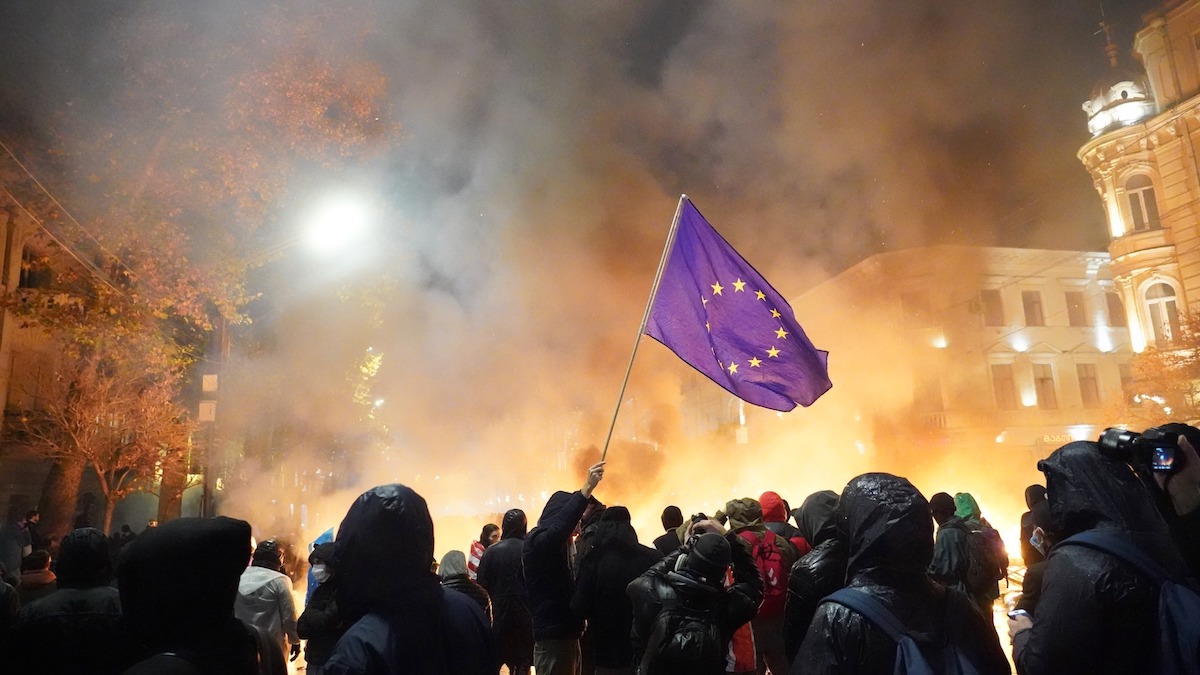
The pro-European protests that began in Georgia in November 2024 sparked broad public and political debate. International observers and local human rights organisations have repeatedly raised concerns about the use of excessive force by law enforcement and possible violations of detainees’ rights.
The Committee for the Prevention of Torture’s report adds international weight to the discussion. The committee is an independent monitoring mechanism of the Council of Europe that regularly assesses detention standards and the treatment of detainees in the law enforcement systems of member states. Its findings are not legally binding, but they carry significant political and reputational pressure.
Report on violence at protests in Georgia