'Your own husband could be human trafficker': tackling human trafficking in Armenia


Every life matters: how people and animals save each other in Armenia
Over the past four years, Armenia has recorded 109 cases of human trafficking. Reports by international organisations show that Armenia is making efforts to prevent human trafficking. However, the government has scaled back its anti-trafficking efforts in the legal sphere.
We tell personal stories, present figures and facts about the scale of human trafficking in Armenia, and examine programmes that support victims.
- ‘Only now do I understand what happened to me’: human trafficking cases in Armenia
- Armenia redefines concept of masculinity
- Armenian police see rise in domestic violence reports: Data and analysis
Married to the enemy?
“My husband would drive me to different addresses in his car. He would wait in the car until I finished work and came out. He would take all the money from me right there in the car, then drive me to the next address,” Anna (not her real name, at her request) recalls.
Anna describes providing sexual services as her work. She says her husband had never been particularly keen on working. After they married, he decided to use his wife’s previous experience in the sex trade to support the family. The situation did not change even after they had a child.
Family life became hell not only for Anna but also for their child.
“I worked day and night. I had no right to complain or refuse. And it wasn’t just sexual exploitation. I also faced physical, psychological and economic abuse. I lived in constant fear and anxiety. He could beat me or insult me in front of other people, then show me affection, try to win me over and say that we were a family. But the very next day, he would take me to other men again. Sometimes I wouldn’t see my child for several days. Different women I didn’t know would look after them,” Anna says.
Years of exploitation, extreme physical and mental exhaustion, beatings and emotional suffering – but above all, anxiety about her child – drove Anna to flee her husband and report him to the police.
Anna says she found the decision difficult:
“The police force is made up mostly of men. I found it difficult to tell them all the details of what had happened to me – the abuse and the sexual services I had to provide. It felt as though I was going through it all over again. I was overwhelmed by shame, but I knew I had no other choice.”
The police offered to take her to a shelter for victims of human trafficking. Anna agreed, and she still lives there.

Shelter residents and those who do not “save” them
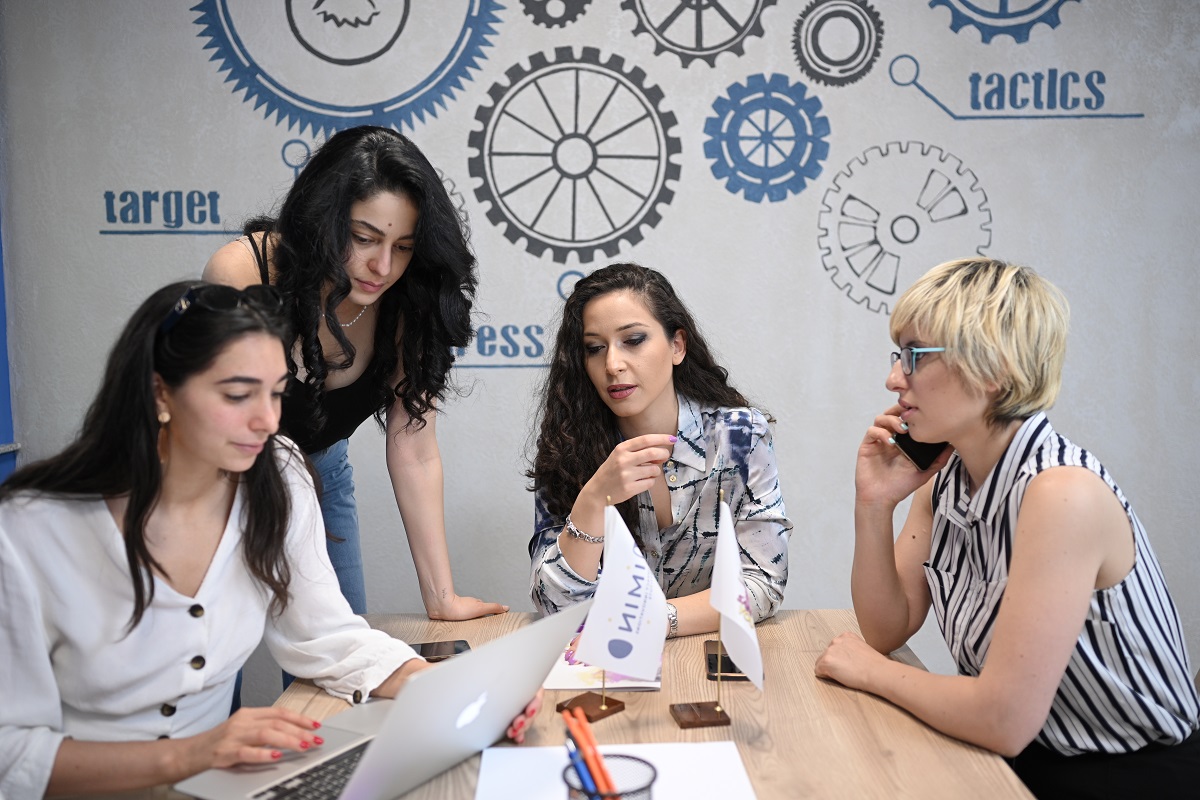
The NGO Sexual Violence Crisis Centre provides victims of human trafficking with shelter and support in dealing with the problems they face. In 2025, the government fully covered the shelter’s operating costs. It also signed its first three-year contract with the centre, allowing it to continue its work on a full scale.
Over the years, social worker Mané Chobanyan has witnessed many tragic stories while working with victims:
“The hardest part of social work is accepting that you are not a saviour. One of its principles is that you must not make decisions on behalf of the people you support. As a professional, I can only guide them and show them the options available. I can never influence their decisions. Of course, this can be very difficult at times. You can never be sure that months or even a year of work will not go to waste – that someone leaving the shelter will not return to the same path, trust an abuser or trafficker again, and end up in the same situation.”
Even so, she has no regrets about the effort she puts into helping these people change their lives.
Mané says an atmosphere of fear and intimidation sometimes forces people to remain in situations where traffickers exploit them. This happens most often to victims of labour exploitation. Given their vulnerable position, the prospect of losing their jobs frightens them more than anything else.
“When we work with people who have experienced sexual exploitation, we mainly try to show them that they can change their circumstances and find another job. In cases of labour exploitation, our priority is to inform people about their rights,” she explains.
With financial support from the Ministry of Labour and Social Affairs, the Sexual Violence Crisis Centre provides more than just shelter. It also offers psychological and medical care, legal advice and other assistance. Mané says many shelter residents have told her that they would have tried to escape their situations sooner if they had known about the support programmes available.
Anyone who finds themselves in a situation that resembles human trafficking or exploitation can contact the NGO Sexual Violence Crisis Centre for help on +374 77 991280.
US State Department and GRETA say government efforts remain insufficient
The US State Department publishes an annual report on human trafficking worldwide. The Council of Europe’s Group of Experts on Action against Trafficking in Human Beings (GRETA) also publishes a report every four years.
Both reports say that the Armenian government does not fully meet the minimum standards for combating human trafficking, although it has made considerable efforts in this area.
The US State Department welcomed the government’s decision to draw up a new national action plan for 2026–2028, although the authorities have yet to adopt it. However, the report considers the country’s efforts in the legal sphere insufficient.
Articles 188 and 189 of Armenia’s Criminal Code criminalise both sexual and labour trafficking. They provide for prison sentences of five to eight years if the victim is an adult, and seven to 10 years if the victim is a child. However, the US State Department cites statistics that point to shortcomings in the enforcement of these penalties:
“In 2025, law enforcement authorities investigated 29 human trafficking cases: 15 involving sex trafficking, 13 involving labour trafficking, and one in which the type of trafficking remained unspecified. The authorities continued investigating 11 cases from previous years. Prosecutors brought charges against eight suspected traffickers: seven for sex trafficking and one for labour trafficking. In 2025, a court convicted two people of sex trafficking. One person convicted of human trafficking received a 16-year prison sentence, while the other died before the court issued its verdict.”
Reviewing the previous four years, GRETA notes that 90 people received official victim status between 2022 and 2025.
Twenty-two of them were children. Women accounted for most identified victims, except in 2025. Armenian citizens made up 84% of all victims. Most experienced trafficking within Armenia, while a smaller proportion faced exploitation in Russia.
“According to official police statistics, the number of criminal cases opened in connection with human trafficking offences increased during the reporting period: eight in 2022, 19 in 2023, 36 in 2024 and 27 in 2025. Most investigations concerned labour exploitation. Several cases involved the sexual exploitation of children, forced begging or domestic servitude. Between 2022 and 2025, courts issued a total of 11 convictions in human trafficking cases: six for labour exploitation and five for sexual exploitation,” the Council of Europe report says.
As in previous years, GRETA again points out that Armenia still fails to ensure victims of human trafficking receive compensation. To date, no victim has received compensation through criminal proceedings. The government provides one-off financial assistance to no more than seven victims a year.
The government’s efforts – sufficient and insufficient
In 2024, Armenia identified 25 victims of human trafficking. In 2025, that figure rose to 59. Of these, 16 experienced sexual exploitation and 43 forced labour. Eighteen were women, 27 were men, seven were boys and seven were girls. For the first time in four years, the government identified 14 foreign nationals among the victims.
In the first nine months of 2026, authorities recognised 19 people as victims of human trafficking. Fifteen were women and four were men. Three victims were children, one of whom had mental health problems. Two children experienced sexual exploitation, while traffickers subjected the third to labour exploitation. Among adult victims, nine cases involved sexual exploitation and the rest involved labour exploitation. The foreign victims came from Russia, Tajikistan and Turkmenistan.
“Armenia plans and implements strategic programmes and provides services to combat human trafficking, prioritising the safety and protection of victims. In other words, access to these services does not depend on or remain limited by the progress of law enforcement investigations. This means the state supports both victims and potential victims according to their needs,” says Armine Alaverdyan, head of the Gender Policy Department at the Ministry of Labour and Social Affairs.
In 2026, as in the previous year, the government allocated around 32 million drams ($88,000) from the state budget to combat human trafficking.
The funding covers the following services for victims and potential victims of human trafficking:
- accommodation;
- material assistance, including clothing, food and essential items;
- issuing or restoring necessary documents;
- medical assistance and services;
- psychological support;
- counselling;
- legal assistance;
- care, including in specialised institutions;
- interpretation services;
- access to basic education;
- access to secondary or primary vocational education;
- employment assistance;
- arrangements for safe return;
- one-off financial assistance of 250,000 drams ($694).
According to Armine Alaverdyan, as the number of human trafficking cases rises, so does the need for additional shelter places.
People can stay in the shelter for up to a year, but staff can extend their stay if necessary.
“The state provides support with considerable flexibility. We once had a case in which a person repeatedly broke the shelter’s rules, eventually left, but then asked to return a week later. Naturally, we let them back in. Sometimes, after receiving an initial consultation, a person decides not to accept other forms of support. In cases of sexual exploitation, medical services naturally become more important. This year, only one person received the one-off financial assistance.”
He was rescued
S., a foreign national, came to Armenia on the recommendation of friends. He quickly found a job, unaware of what awaited him in the months ahead.
According to Mané Chobanyan, a social worker at the Sexual Violence Crisis Centre, what happened to S. was like something out of a horror film.
“He did not speak a single word of Armenian. He found himself in a foreign country where people took away all his documents, restricted his freedom of movement, forced him to work and then refused to pay him for his labour. When S. arrived at the shelter, it became clear that our priority was to provide him with a safe environment and help him reclaim his labour rights.”
S. spent more than a year at the shelter. During that time, he taught himself to read and write in Armenian and introduced other residents to his country’s cuisine. Mané says that, despite everything he had been through, S. never lost his faith in people or his will to live. Today, with the help of the shelter staff, he has found a job in administration.
The crisis centre’s social worker says his story is not just one of personal triumph, but also “an example of targeted and effective support that can change a person’s life.”
Combating human trafficking in Armenia: personal stories