Chinese vice-president's first visit to Georgia: Key messages and assessments


Chinese vice-president’s visit to Georgia
Chinese Vice-President Han Zheng paid an official visit to Georgia from 6 to 8 November. He met the country’s senior leadership, attended a meeting of the Georgian-Chinese business community and took part in an official dinner.
It was the first visit to Georgia by a Chinese official of such high rank.
In their statements, Georgian government representatives emphasised the particular political significance of a visit by such a senior Chinese official.
According to official statements, key topics discussed during talks between the Georgian and Chinese delegations included trade, investment, transport corridors, the Anaklia port project and political cooperation between the two countries.
- ‘Georgia can be a partner of the US — or remain in the shadow of Russia and China’: interview with James Carafano
- Opinion: ‘China gets more from Georgia than Georgia gets from China’
- White House: China is using Georgia to circumvent US tariffs
The main message of the visit was that Tbilisi and Beijing were seeking to further deepen their relations. No new agreements were announced.
According to statements made during the visit, Tbilisi intends to expand economic cooperation with China, attract investment and strengthen Georgia’s role as a transit hub. For Beijing, Georgia is of interest as a key link in the Middle Corridor, a route connecting China and Europe.
Visit at a glance
Chinese Vice-President Han Zheng arrived in Georgia on 6 November. He was welcomed at Tbilisi International Airport by Georgian Deputy Prime Minister and Foreign Minister Maka Bochorishvili.
During his visit, Han Zheng met Georgian President Mikheil Kavelashvili and Prime Minister Irakli Kobakhidze. The meetings included both one-on-one talks and discussions between the wider delegations.
The Chinese vice-president also met representatives of the Georgian and Chinese business communities at an event organised by the Georgian Chamber of Commerce and Industry.
The visit concluded on 8 November. Han Zheng was seen off at Tbilisi International Airport by Irakli Kobakhidze and Maka Bochorishvili.
“I proposed holding a global summit in Tbilisi in 2027” – Kavelashvili
Georgian President Mikheil Kavelashvili received Chinese Vice-President Han Zheng at the Presidential Palace.
According to the president’s official website, the main topic of the meeting was the development of the strategic partnership between Georgia and China. The two sides discussed trade and economic cooperation, Chinese investment, cooperation in education and science, as well as student exchange programmes.
They also discussed Georgia’s transit potential and the development of the Middle Corridor, with particular attention paid to expanding transport and logistics infrastructure. Plans to hold the sixth Belt and Road Forum in Tbilisi were also considered.
Mikheil Kavelashvili presented the Chinese delegation with Georgia’s initiative to hold a global summit in Tbilisi in 2027 dedicated to promoting peace and healthy lifestyles.
“I presented the Chinese side with my initiative to hold a global summit in Tbilisi in 2027 dedicated to promoting peace and healthy lifestyles. I expressed hope that China would participate in this important international event,” the president’s administration said in an official statement.
“Special relations based on shared values” – Kobakhidze
Georgian Prime Minister Irakli Kobakhidze placed particular emphasis on economic cooperation.
He noted that trade between the two countries was growing year on year and that China had become Georgia’s largest investor this year.
The prime minister highlighted Georgia’s advantageous geographical location and its role in the transit corridor connecting Europe and Asia.
He said Georgia was interested in deepening its partnership with China under the Belt and Road Initiative:
“For us, relations with China are of particular importance. In today’s world, China is the only peaceful superpower, fully focused on progress, modernisation, moving forward and development.”
The prime minister noted that Georgia and China enjoyed “special relations based on shared values”:
“Of course, this foundation of shared values provides us with a unique incentive to further develop bilateral relations.”
“Sincere, friendly and productive” – Han Zheng on visit
Han Zheng described his meetings with the Georgian side as “sincere, friendly and productive”.
He said that upgrading relations between the two countries to a comprehensive strategic partnership had opened up new opportunities for cooperation.
The Chinese vice-president placed particular emphasis on trade relations. He noted that trade between the two countries had grown steadily in recent years, with increasing volumes of Georgian agricultural products entering the Chinese market, while Chinese-made goods — particularly electric vehicles and other new-energy vehicles — were proving popular in Georgia.
Han Zheng said China was ready to purchase more Georgian products and support the further development of trade between the two countries.
He also stressed that China would support competitive Chinese companies in investing in Georgia and expanding their operations in the local market.
Anaklia port among topics discussed
The Middle Corridor and the Anaklia deepwater port were among the key economic issues discussed during the visit.
The Middle Corridor is a transport route connecting China and Europe via Central Asia and the South Caucasus. Goods travel from China to Kazakhstan, then across the Caspian Sea to Azerbaijan and Georgia, before continuing towards the Black Sea. The route allows goods to be transported between Europe and Asia while bypassing Russia.
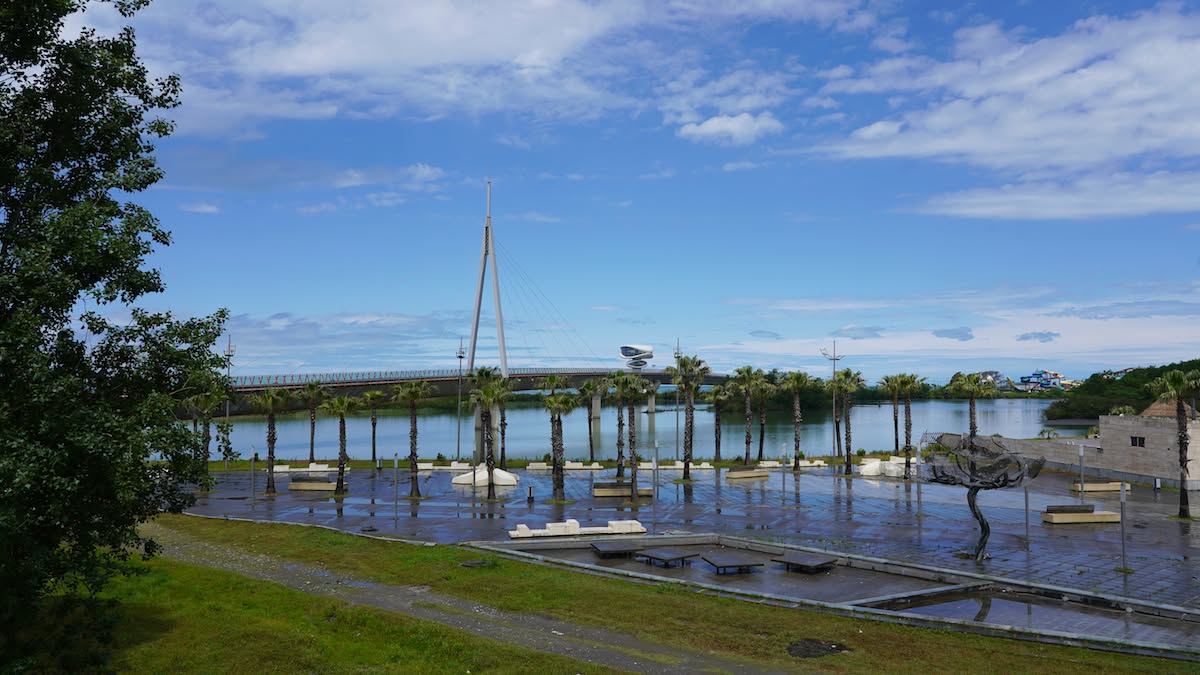
The importance of this corridor has grown since the start of Russia’s full-scale invasion of Ukraine and the introduction of sanctions against Russia. For China, it offers an opportunity to diversify trade links with Europe, while for Georgia, it presents a chance to strengthen its role as a transit hub and increase economic revenues.
At a meeting with business representatives, Georgian Deputy Economy Minister Mariam Kvrivishvili highlighted the key role of the Anaklia deepwater port in the development of the Middle Corridor:
“Particular importance is attached to the Anaklia deepwater port, which will serve as the Middle Corridor’s gateway to the Black Sea and play a crucial strategic role in trade between China, Central Asia and Europe.”
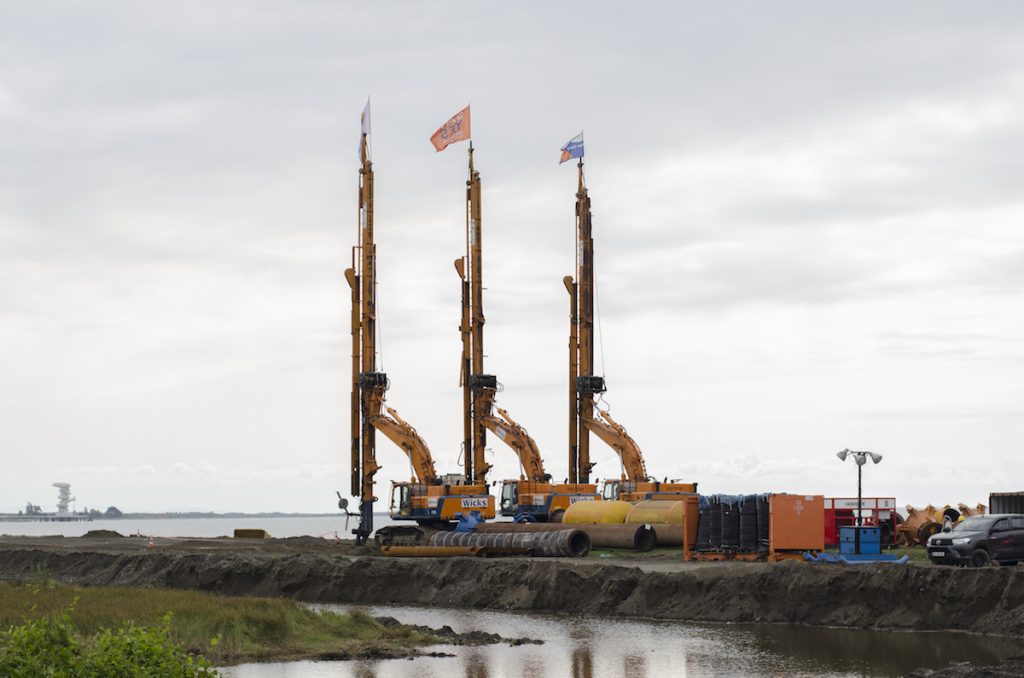
The Anaklia port project has faced delays for many years. In 2024, the Georgian government selected a Chinese-Singaporean consortium, which included Chinese state-owned enterprises, to build the port.
The decision raised questions about the role of Chinese companies and the potential risks associated with handing over strategic infrastructure to them. However, the negotiations eventually collapsed. Georgia is now developing the port independently, using the so-called “landlord model”.
Background: Georgia’s growing distance from the West and closer ties with China
Georgia’s deepening relations with China come at a time when ties between the Georgian government and its Western partners have deteriorated significantly.
In 2024, the United States suspended its strategic partnership with Georgia. The country’s EU accession process has also effectively been halted. Against this backdrop, strengthening ties with China has taken on particular significance for Georgia’s foreign policy.
In July 2023, China and Georgia announced the establishment of a strategic partnership. This year, a decision was made to upgrade relations to a “comprehensive strategic partnership”.
Cooperation with China is no longer limited to trade. It now encompasses investment, transport, tourism, education and political dialogue.

Statistics from recent years confirm China’s growing economic importance to Georgia.
During a Georgian-Chinese business meeting, Economy Minister Mariam Kvrivishvili described China as one of Georgia’s largest trading partners. She cited figures showing that bilateral trade reached $2.3bn between January and September 2026, an increase of 41% compared with the same period last year. This makes China Georgia’s second-largest trading partner after Turkey.
Kvrivishvili also noted that total Chinese investment in Georgia had exceeded $1bn since 2002. In the first two quarters of 2026, China became Georgia’s largest foreign investor, with investments totalling $236m.
The Chinese market is also becoming increasingly important for Georgia’s tourism sector. Between January and September 2026, Georgia welcomed 119,081 visitors from China, up 23.6% compared with the same period last year. This was the highest figure recorded in the past 15 years.
What does the visit mean? Expert assessment
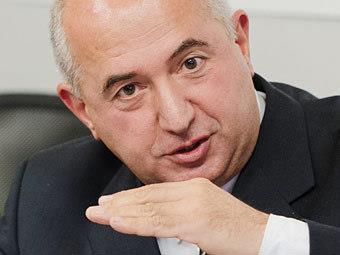
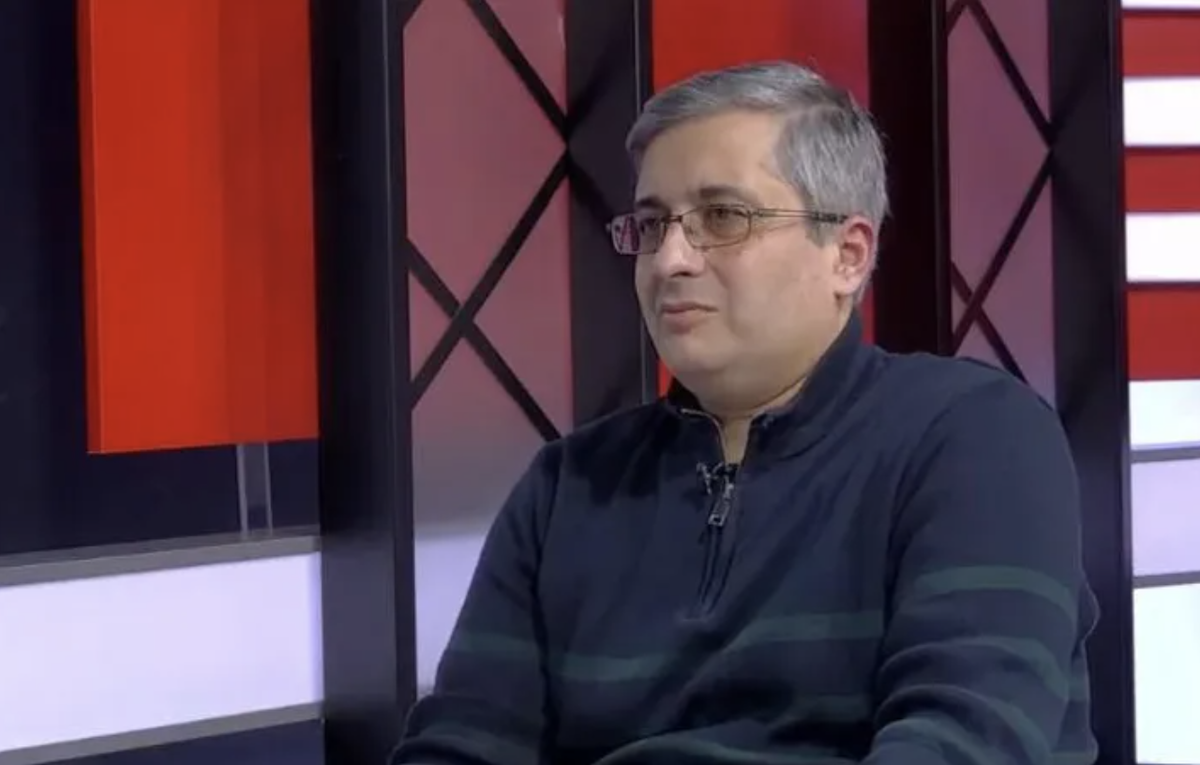
Paata Zakareishvili, an expert on conflicts and international relations, described Han Zheng’s visit to Georgia as primarily a geopolitical event in an interview with JAMnews.
In his view, Beijing is using the visit to highlight its growing presence and interests in the South Caucasus, including Georgia.
As for Georgia, the expert believes the visit holds primarily symbolic significance for the government:
“Against the backdrop of deteriorating relations with Western partners, the government can present the visit by a senior Chinese official as a sign of international support and recognition.”
The fact that Bidzina Ivanishvili himself did not meet the Chinese official further underscores the largely symbolic nature of the visit. According to Zakareishvili, this is noteworthy given that Ivanishvili has recently attended several publicly announced official meetings, including one with the Israeli ambassador just last week.
Zakareishvili does not rule out the possibility that the Chinese vice-president brought specific proposals to Tbilisi. He suggests that the Anaklia port could have been among the topics discussed, with Chinese companies potentially more interested in operating the port and managing its terminals than in constructing it.
However, the expert stressed that this was merely speculation and that he had no information to confirm it:
“If such proposals were indeed made, they will not remain secret. We will certainly find out about them in two or three months.”
Discussing political support from China, Zakareishvili stressed the need to distinguish between economic cooperation and political backing.
He explained that China’s approach to Georgia differs from that of the West or Russia. Beijing is not concerned with Georgia’s political orientation, prioritising pragmatic economic relations rather than which political or geopolitical bloc the country aligns itself with:
“China has made its position perfectly clear: ‘I do not interfere in your political affairs or your political orientation. Go wherever you want. I am only interested in pragmatic economic matters.'”
According to Zakareishvili, China lacks the historical, religious and cultural ties to the South Caucasus that Russia, Turkey and Iran have with the region. He therefore believes Beijing seeks to compete with these countries primarily in the economic sphere, without interfering in its partners’ political orientation.
However, he noted that this does not mean Georgia can expect the same level of Chinese support on international political issues as the development of economic cooperation might suggest.
As Zakareishvili explained, China’s interests are primarily pragmatic and economic.