All four German political foundations halt work in Georgia; ALDE calls for EU sanctions






German foundations close in Georgia
German Ambassador to Georgia Barbara Voss said all four German political foundations that had operated in the country for many years have been forced to close because of restrictions introduced by new legislation, including the Law on Grants.
According to the ambassador, worsening relations between Georgia and Germany have put years of cooperation at risk, including ties in education.
Against this backdrop, the European Liberal, Democrat and Reform Party (ALDE) sent a letter to EU High Representative for Foreign Affairs and Security Policy Kaja Kallas, calling on the European Union to respond with concrete action.
On 30 September, the Konrad Adenauer Foundation closed its office in Tbilisi. The Georgian office of the Friedrich Naumann Foundation, which had worked in the country for 20 years, followed. The Heinrich Böll Foundation and Friedrich Ebert Foundation have also closed their offices.
What the German ambassador said
Barbara Voss, who replaced Peter Fischer as Germany’s ambassador to Georgia in August 2026, said that years of cooperation between the two countries had been seriously damaged.
“All four of our political foundations, which have supported Georgia and its people for decades on their path towards European integration, have been forced to suspend their work following a decision by the Georgian government. Two of the four foundations were forced to close their offices just two days ago,” the ambassador said.
Voss also highlighted Ilia State University, which has long-standing academic ties with Germany and is, according to the ambassador, one of Georgia’s most internationally recognised universities.
She said the university is now at risk of closure.
“These developments are also worsening relations between Georgia and the EU. In the coming years, I personally, as ambassador, will work to preserve what can still be preserved,” Voss said.
The diplomat said Germany would continue to meet its commitments in certain areas, including support for civil society, environmental protection and conservation of natural resources.
The German ambassador also spoke about security cooperation between the two countries. She stressed that Berlin and Tbilisi share common interests and face common challenges in this area.
“Russia is trying to destabilise Europe and divide people through disinformation, threats, sabotage and aggression,” Voss said.
She said the Georgian population was well aware of the consequences of Russian military aggression. The ambassador noted that 20% of Georgia’s territory is occupied by Russia and said Moscow’s goal was not to maintain a balance of power but to establish dominance.
According to Voss, Germany continues to support Georgia’s sovereignty and territorial integrity, as well as its right to determine its own security policy.
“In this context, we will support cooperation with the Georgian Defence Forces within the NATO framework to further strengthen their defence capabilities against potential aggression and contribute to the security of the South Caucasus and Europe,” the German ambassador said.

“Enough! The Georgian Dream regime is silencing independent voices”
“Enough is enough! The Georgian Dream regime is squeezing out independent voices and pushing Georgia further away from Europe.
After more than 20 years in the country, Friedrich-Naumann-Stiftung für die Freiheit has been forced to close its Tbilisi office because it could no longer operate independently.
ALDE Party President Svenja Hahn and European Liberal Forum President Jan-Christoph Oetjen are calling on the EU to act.
Targeted sanctions against those responsible for repression and the systematic undermining of democracy. No more looking the other way. Our joint letter to Kaja Kallas and Marta Kos,” ALDE said in a social media post.
The letter says the Friedrich Naumann Foundation for Freedom was forced to close its Tbilisi office, which had operated in the country for more than two decades, after the Georgian authorities rejected its application for foreign funding.
“The Georgian authorities made it clear that the foundation’s activities would only be permitted if they were aligned with their priorities. Under these conditions, FNF concluded that it could no longer carry out its mission as an independent political foundation,” the letter says.
The letter describes this as “another clear example of the growing restrictions on independent civil society and the wider repression of protesters, opposition figures, journalists and independent voices.”

“These developments show how far the Georgian Dream government is moving away from the standards expected of an EU candidate country and send a worrying signal to all those with European aspirations.
What is happening in Georgia matters not only to its citizens, but also to the credibility of the EU’s enlargement policy and its commitment to democracy and fundamental rights,” the letter says.
The authors again called on the EU to “respond with targeted sanctions against those responsible for the repression and systematic undermining of democracy and fundamental freedoms in Georgia”.
“The EU must ensure that those defending democracy and fundamental freedoms are not left without support,” ALDE said.
“We are not concerned about unfair sanctions” – ruling party representative
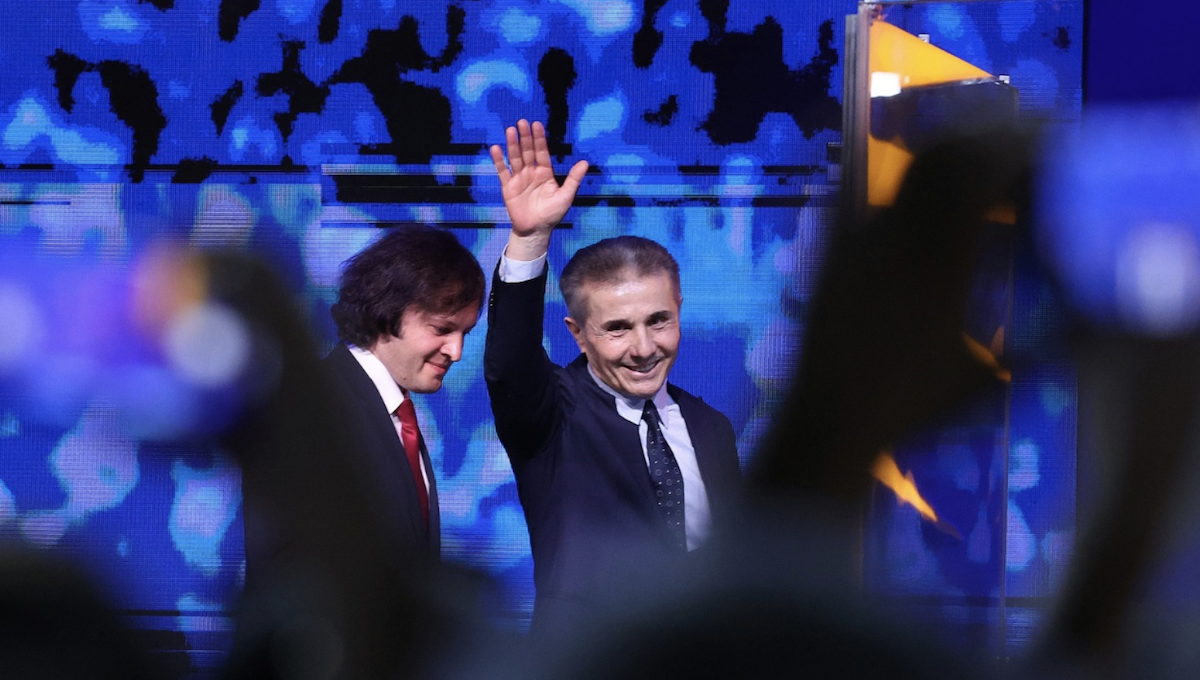
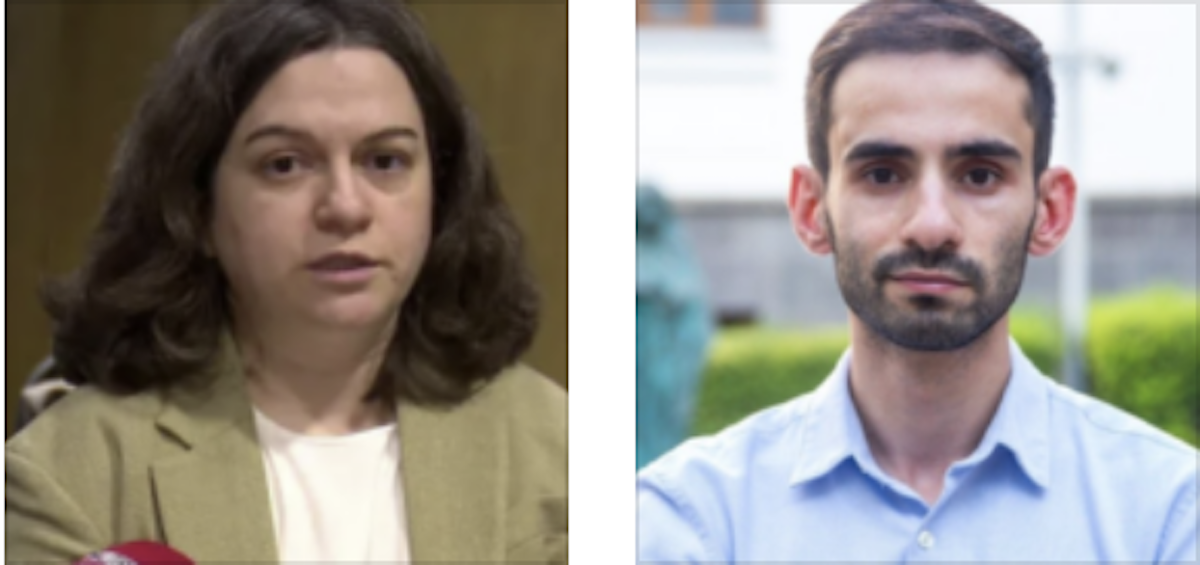
“We are not particularly concerned about their [the EU’s] incompetent and completely unfounded sanctions packages, introduced year after year or month after month,” parliamentary majority leader Irakli Kirtchkhalia said in response to ALDE’s call.
“We should not be surprised by such statements from ALDE or the EU’s political establishment. For years, our country has been subjected to direct and unfair attacks from them.
No package of sanctions can force us to abandon the course chosen at the request of our society. That course is peaceful development, progress and prosperity for every citizen and, above all, the peaceful reunification of our country,” Kirtchkhalia said.
News in Georgia