At the second Azerbaijan International Investment Forum in Baku, SOCAR and ExxonMobil signed a production-sharing agreement for the exploration and development of unconventional hydrocarbon resources in the Middle Kura Basin. A final investment decision was also made on the full-field development of the Absheron gas field.
What will ExxonMobil look for in the Middle Kura Basin?
The agreement provides for the exploration, development and production of unconventional hydrocarbon resources in the Middle Kura Basin. According to SOCAR, the companies will each hold a 50% stake in the project through their subsidiaries, with ExxonMobil acting as operator.
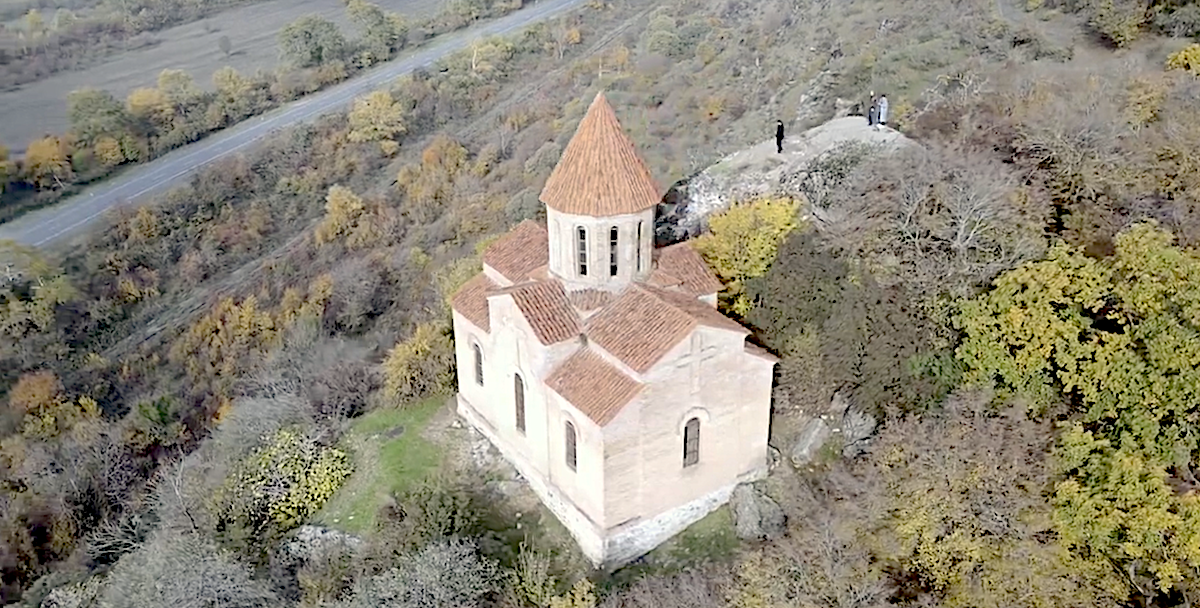
The project does not involve the development of an existing offshore field in the Caspian Sea, but rather the exploration of the oil and gas potential of an onshore basin. Bloomberg has linked the project to shale oil and gas production. It has also been reported that the project is awaiting parliamentary approval.
Aliyev said successful exploration “could lead to another oil and gas boom in Azerbaijan”.
Published information does not specify when commercial production could begin, targeted annual production levels, confirmed recoverable reserves or the project’s overall budget. The precise size and boundaries of the contract area have also not been disclosed.
For Azerbaijan, the significance of the agreement lies in bringing ExxonMobil’s technology and expertise in developing unconventional hydrocarbon resources into the search for new reserves. However, the basin’s resource potential and the commercial viability of development will have to be established before its possible economic impact can be assessed.
Absheron: annual gas production set to quadruple
SOCAR, TotalEnergies and XRG have taken a final investment decision on the full-field development of the Absheron gas and condensate field. According to TotalEnergies, which operates the project, the company holds a 35% stake. SOCAR also owns 35%, while XRG holds 30%.
Under the company’s plan, annual gas production will increase from 1.5bn to 6bn cubic metres, while daily condensate production will rise from 12,000 to 47,000 barrels. The new phase of development is expected to begin in 2029.
In his speech, Aliyev spoke of an additional 5bn cubic metres of gas within three to four years. However, the figures presented by the company imply an increase in annual production of 4.5bn cubic metres.
TotalEnergies says the gas produced will be supplied to the domestic market and Turkey.
GDP diversifying, but energy still dominates exports
Discussing the country’s future economic model, Aliyev said “oil and gas will retain a leading role in our economy”, adding that the revenues generated would be reinvested in the economy.
The president said the non-oil sector accounted for more than 70% of GDP, while, according to him, oil and gas still made up more than 90% of exports.
According to calculations by Marja based on State Customs Committee statistics, oil and gas products accounted for 71.22% of goods exports in January-August 2026.
Electricity, data centres and logistics
Aliyev linked the development of renewable energy to efforts to reduce domestic gas consumption and free up additional volumes for export. He also referred to the expansion of power transmission lines for electricity exports and projects to lay submarine cables across the Caspian and Black seas.
The president identified supplying electricity to data centres and artificial intelligence systems as a priority and said an Azerbaijan-Kazakhstan fibre-optic cable would become operational by the end of the year. Documents relating to the Oracle Alloy project were also exchanged at the forum. According to SOCAR, Caspian Mind AI will serve as the local operator.
In transport, the government aims to increase transit freight volumes from an expected 16m tonnes in 2026 to at least 25m tonnes by 2030. Discussing food and water security, Aliyev highlighted water shortages and the need to reduce dependence on food imports, while also calling for investment in agriculture.
What does the $10.8bn package actually represent?
According to the Economy Ministry, 23 documents covering projects worth a combined $10.8bn were signed at the forum. The ministry says these projects are planned for implementation.
However, the documents represent projects at different stages of development. A final investment decision has been taken on Absheron. The ExxonMobil agreement establishes the contractual framework for exploration and subsequent development. A framework agreement with Comstock provides for studying opportunities to liquefy US gas and sell it on international markets. A memorandum with Apollo concerns assessing potential investments, conducting due diligence and preparing final agreements.
Published information does not provide a full breakdown of the $10.8bn figure among individual projects, a financing timetable or details of how much has already been formalised as binding financial commitments. There is therefore no basis for treating the entire amount as a guaranteed inflow of foreign investment.
Aliyev described the government’s approach to investment policy as follows:
“All we have to do is create favourable conditions.”
The economic results of the forum will ultimately depend on the actual investment made in the announced projects, as well as growth in production and non-oil exports.