Council of Europe rights commissioner intervenes in Georgia FARA case






Council of Europe on FARA
According to the Georgian Young Lawyers’ Association (GYLA), Council of Europe Commissioner for Human Rights Michael O’Flaherty has intervened as a third party in a case before the European Court of Human Rights (ECHR) concerning Georgia‘s Foreign Agents Registration Act (FARA).
The commissioner submitted written observations to the court which, according to GYLA, go beyond an assessment of the law itself and also address legislative changes adopted in Georgia over the past two years.
O’Flaherty called on the ruling Georgian Dream party to ensure a free and safe working environment for the country’s civil society sector in line with its international obligations.
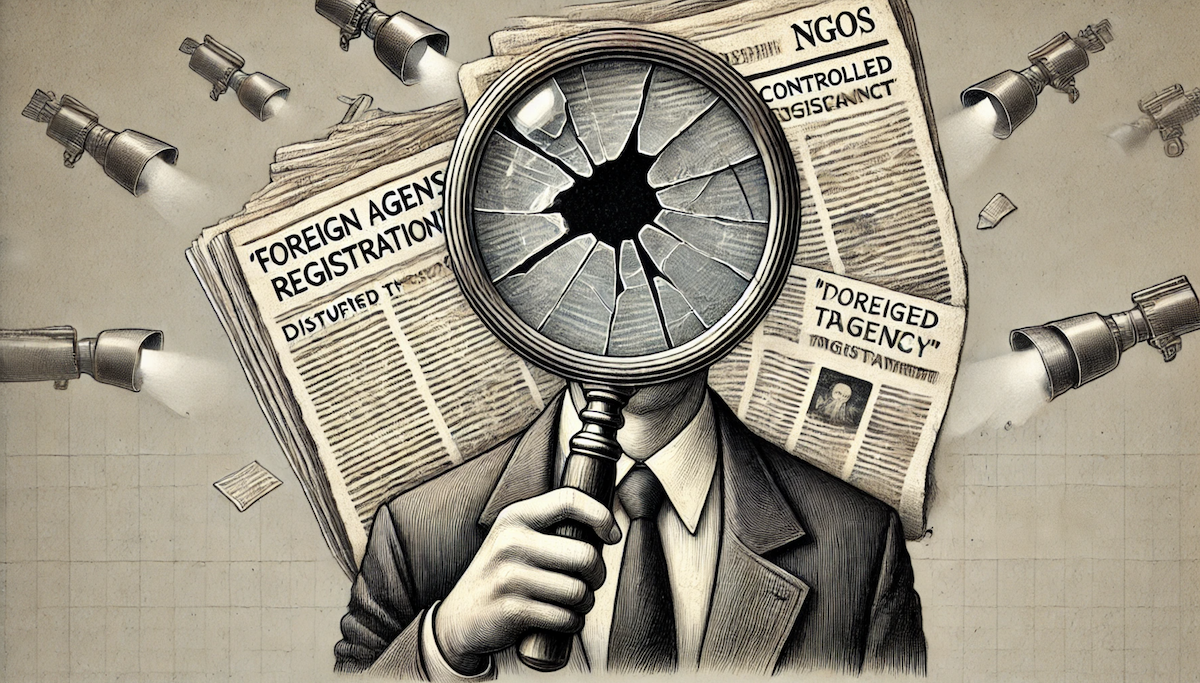
The FARA law adopted by Georgian Dream came into force on 31 May 2025. The authorities say it was modelled on the equivalent US law. However, Georgia’s version of FARA targets civil society organisations and media outlets and restricts their activities, including their ability to work with foreign foundations and organisations.
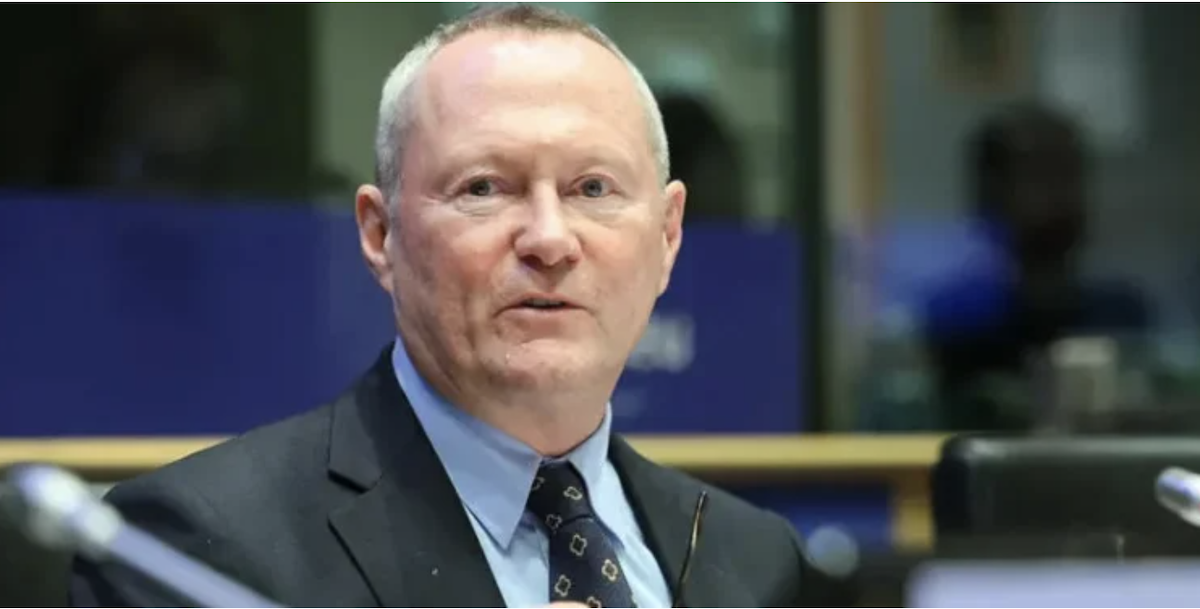
According to GYLA, Michael O’Flaherty considers the adoption of the law to be part of a broader set of restrictions targeting civil society, which are having a negative impact on media outlets and non-governmental organisations working on human rights, democracy and the rule of law.
In his assessment, the law’s provisions do not meet the requirements of legality, legitimacy, necessity and proportionality established by the European Convention on Human Rights in relation to freedom of expression and freedom of association. The commissioner also pointed to the principle of non-discrimination.
The commissioner said the law contains vague wording and defines the concept of “political activity” too broadly. He argued that this makes it difficult to distinguish between legitimate international cooperation and foreign interference, while leaving it unclear who exactly is subject to the law’s requirements.
The commissioner also noted that the law establishes a strict system of administrative oversight which, in his assessment, approaches the severity of Russia’s “foreign agent” legislation. Deliberate violations of the law can result in criminal liability, including imprisonment for up to five years.
He also argued that the term “agent” carries negative connotations in public perception, meaning that the law’s entry into force contributes to the stigmatisation of civil society. The commissioner also pointed to what he described as a campaign by the authorities to portray non-governmental organisations and human rights defenders as “enemies of the state”.
The commissioner said the law targets specific individuals and legal entities on the basis of their foreign funding, resulting in unequal treatment. On this basis, he suggested that the European Court of Human Rights may find that the law forms part of broader restrictions aimed at intimidating organisations critical of the authorities and discrediting civil society activists.
The commissioner does not consider the Foreign Agents Registration Act (FARA) in isolation, but assesses it alongside other legislative changes adopted in Georgia in recent years.
He noted that around a year before FARA came into force, the Law on Transparency of Foreign Influence took effect, requiring organisations and media outlets receiving foreign funding to register as “organisations pursuing the interests of a foreign power”.
The commissioner stressed that both laws are currently in force at the same time.
He also noted that on 1 April 2025, the Georgian parliament amended 14 different laws, including by abolishing mandatory participation by civil society organisations in public decision-making processes.
On the same day, amendments to the Law on Broadcasting prohibited “foreign powers” from directly or indirectly funding audiovisual broadcasters or purchasing services from them. The powers of the National Communications Commission were also expanded, including its authority to issue warnings, impose fines, and suspend or revoke licences.
The commissioner also pointed to a series of amendments to the Law on Grants. Under changes adopted on 16 April 2025, foreign donors are required to obtain permission from the Georgian government before issuing a grant, while accepting an unauthorised grant is punishable by a fine equivalent to twice the value of the grant.
On 12 June 2025, the definition of a grant was broadened to include technical assistance, including the transfer of technology, knowledge and expertise.
Amendments adopted on 4 March 2026 further expanded the definition to include any financial or material assistance that could be used to influence the authorities or society. Government approval was also made mandatory for grants to legal entities registered abroad whose activities are related to Georgia.
The same amendments to the Criminal Code and the Code of Administrative Offences introduced administrative liability for commercial entities engaging in “political activity”, with repeat offences subject to criminal liability.
Violations of the Law on Grants are punishable by up to six years in prison, while money laundering for the purposes of “political activity” carries a prison sentence of up to 12 years.
The commissioner also highlighted amendments to the Organic Law on Political Associations of Citizens. Under the new rules, people employed by organisations that receive more than 20% of their annual income from foreign sources are prohibited from belonging to a political party. The ban remains in force for eight years after their employment ends.
Amendments adopted on 26 June 2025 also changed the definition of defamation in the Law on Freedom of Speech and Expression and shifted the burden of proof from the claimant to the defendant. The commissioner assesses that this change could encourage self-censorship.
The commissioner pointed to legislative changes affecting protests and freedom of assembly. He said parliament adopted several laws within a short period and without proper consultation with civil society or the Public Defender, significantly restricting freedom of assembly.
The commissioner says that effectively supporting the role and activities of civil society organisations is vital to a healthy democracy. He says the rights to freedom of association and freedom of expression must be protected in both the law and practice of Council of Europe member states.
The commissioner also notes that the commitment to creating and maintaining a safe and enabling environment in which civil society organisations and human rights defenders can carry out their work without hindrance was reaffirmed in the Reykjavik Declaration adopted in May 2023.
In his assessment, recent legislative changes in Georgia run counter to these principles and pose a threat to democracy.
The commissioner calls on Georgian Dream to ensure a free and safe working environment for the country’s civil society sector in line with its international obligations.