Georgian PM: 'Opposition's current Russophobia is dictated by Global War Party'






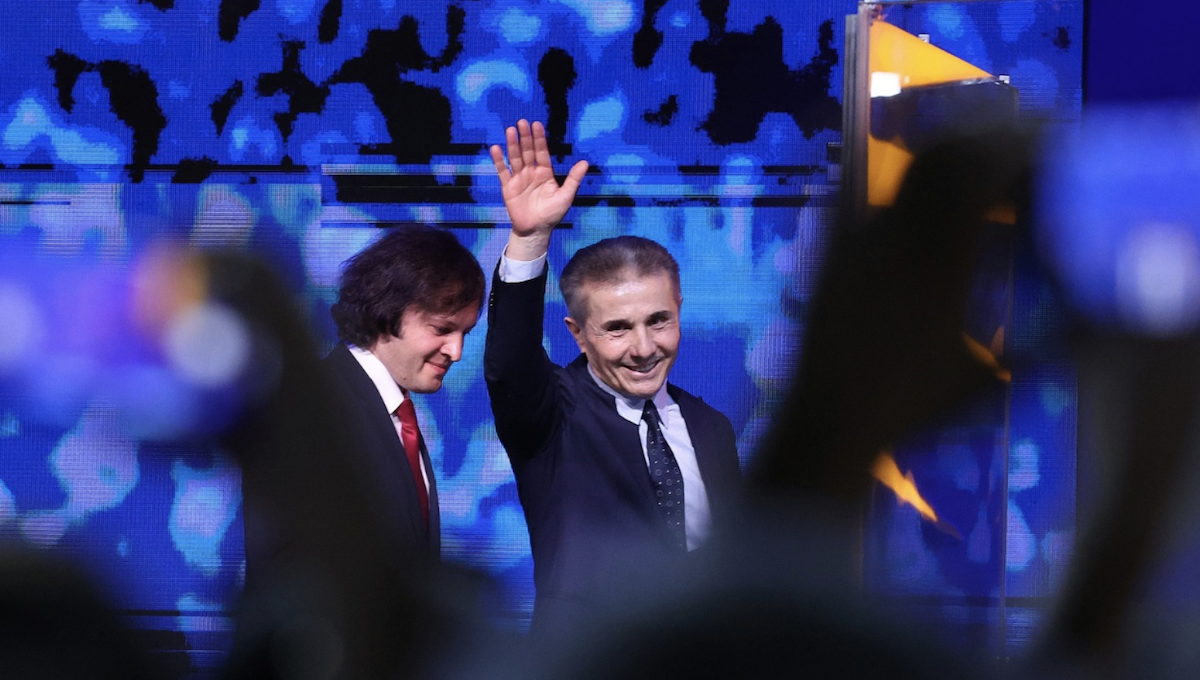
Georgian Prime Minister Irakli Kobakhidze has published a lengthy social media statement linking Russia’s full-scale invasion of Ukraine to Georgia‘s domestic politics and the country’s opposition.
According to Kobakhidze, the “Global War Party” needed the war in Ukraine in order to “fuel Russophobia among its agents around the world, including in Georgia, at the highest level.”
Kobakhidze writes that after the war in Ukraine began in 2022, the “opposition’s pseudo-liberal minority” in Georgia adopted a radical stance towards Russia. He argues that such attitudes had not existed even after the August 2008 war, despite the fact that Russia continued to occupy 20% of Georgia’s territory.
In his statement, the prime minister recalls the consequences of the 2008 war. He says Russia’s military aggression killed 412 people, injured 2,232 others and displaced about 30,000 people. More than 120 Georgian settlements also remained beyond the occupation line.
Kobakhidze argues that the United National Movement, which was in power at the time, did not pursue a hard-line policy towards Russia. Instead, he says, it encouraged Russian tourists and investors to come to Georgia, promoted cultural and economic ties, facilitated Russian investment in various sectors and later unilaterally abolished visa requirements for Russian citizens.
According to the prime minister, neither government officials nor their supporters protested against that policy at the time. In this context, Kobakhidze names several current opposition politicians and public figures, including Elene Khoshtaria and Zurab Japaridze, and claims they supported closer relations with Russia during that period.
According to the prime minister, the opposition, along with affiliated NGOs and activists, turned into an “externally controlled network of agents” and adopted a sharply anti-Russian stance only after Russia launched its full-scale invasion of Ukraine in 2022.
Kobakhidze argues that the Georgian opposition’s current “Russophobia” is not genuine but stems from “directives issued by external forces”. He says that if anyone were to develop a truly radical attitude towards Russia, it should have happened after the August 2008 war, not after Russia’s second invasion of Ukraine.
The prime minister concludes his statement by asking why this “network of agents” did not display the same attitude towards Russia after the 2008 war, but only after the war in Ukraine began. Kobakhidze says society “will easily find a logical explanation” for that question.
“I believe there is a question that must be asked and carefully considered by society. We all know that, both in the past and today, this network of agents in Georgia has acted on instructions from external forces, and that its homeland is not Georgia but the ‘deep state’.
Against that backdrop, it is worth asking why they were not instructed to promote Russophobia when there was the strongest possible reason to do so – after the August 2008 war – and why they have been instructed to do so now, when the victim of Russian aggression is not their formal homeland but another country, albeit a friendly one. I believe society will easily find a logical explanation for this contradiction,” Kobakhidze wrote.
Kobakhidze on Russophobia in Georgia