Armenia's new parliament holds first session as opposition, as expected, makes its presence felt






First session of Armenia’s ninth parliament
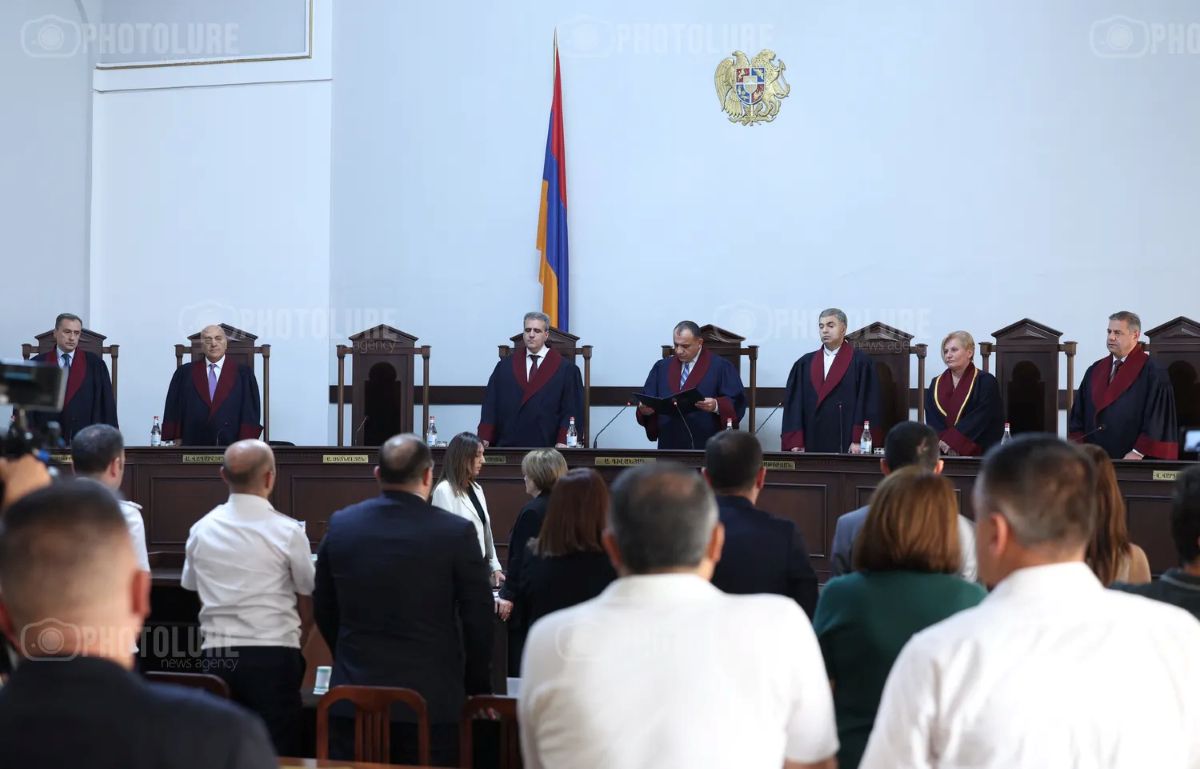
Armenia‘s newly elected parliament convened for the first time on 2 August. Three political forces won seats in the ninth National Assembly: the Civil Contract, Strong Armenia and Armenia factions. During the opening session, lawmakers managed only to appoint members of the Counting Commission. Heated exchanges between the ruling party and the opposition prevented them from addressing the rest of the agenda.
The opposition’s main grievance was the absence of the Catholicos from the opening session. The authorities did not invite him, and he did not bless the work of parliament. Opposition lawmakers described this as an unprecedented event in the history of independent Armenia.
Under the constitutional law governing the National Assembly’s rules of procedure, both the president and the Catholicos of All Armenians have the right to deliver opening remarks at parliament’s first session. This time, however, only President Vahagn Khachaturyan addressed lawmakers. Earlier, the Mother See of Holy Etchmiadzin said it had received no invitation for the Catholicos. When journalists asked Prime Minister Nikol Pashinyan about Garegin II’s participation, he replied: “I do not know such a Catholicos.”
The incident reflects the long-running dispute between the Armenian authorities and Catholicos of All Armenians Garegin II. More than two years ago, Prime Minister Pashinyan called for the Catholicos to step down. He initially argued that Garegin II could not lead the Armenian Apostolic Church because he had broken his vow of celibacy and fathered a daughter. Pashinyan later accused him of links with foreign intelligence services. The ruling Civil Contract party also included the removal of “the de facto head of the Church” in its election manifesto.
Lawmakers also fiercely debated the nomination of Ruben Rubinyan, the ruling party’s sole candidate for speaker of parliament.
Opposition MPs repeatedly referred to his research work at Istanbul Policy Center in Turkey in 2017–18. They asked whether he had interacted with local residents and even questioned what they looked like.
“Ask me directly whether I met representatives of the Turkish intelligence services in Turkey and whether they recruited me. Ask me: ‘Is that true?’ And I will answer: ‘No,'” Rubinyan said.
Parliament resumed its first session today. Lawmakers have already settled one of the main items on the agenda. In a secret ballot, they elected Ruben Rubinyan as speaker with 63 votes in favour and 28 against.
The opposition Armenia bloc boycotted the secret ballot. MPs from the second opposition force, the Strong Armenia faction, voted against Rubinyan’s nomination.
In the previous parliament, Rubinyan served as deputy speaker. Between 2022 and 2026, he also acted as Armenia’s special envoy for the normalisation of relations with Turkey. A few days ago, Rubinyan said he would be unable to continue in that role if parliament elected him speaker. The ruling party has not yet announced who will succeed him.
- ‘Moscow will only push Armenia out of Russian-led blocs’: Reaction to Russia’s foreign intelligence claim
- Armenia begins shift from Russia towards EU – but finish line remains distant
“Where is the Patriarch?” Opposition MPs visit him to receive his blessing
On the opening day of the session, opposition MPs began chanting, “Where is the Patriarch?” after the president’s address. During the oath-taking ceremony, they pointedly refused to stand or recite the oath. They said they were protesting the Catholicos’s absence. However, they signed the written text of the oath, allowing them to take office formally.
At the end of the first working day, MPs from both opposition factions visited the Catholicos’s residence.
The Mother See’s information service said Garegin II blessed the opposition lawmakers. He spoke of an “alarming situation and serious problems” facing the country. He also criticised what he described as the authorities’ “illegal and unconstitutional actions” against the Church.
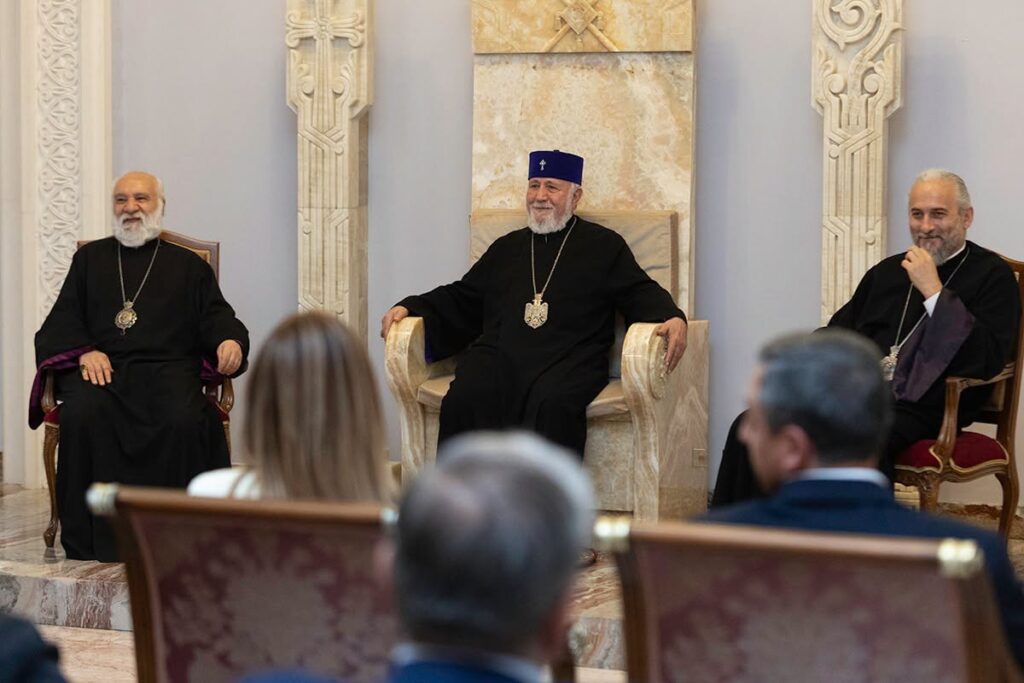
The Catholicos praised what he described as the opposition MPs’ “devotion and filial love for the Church”. He said their stance was especially important at a time when “the authorities continue their campaign of repression, while national benefactor Samvel Karapetyan remains under arrest for speaking out in defence of Holy Etchmiadzin”.
In June last year, Armenian authorities opened a criminal case against Russian businessman and billionaire Samvel Karapetyan. Prosecutors accused him of publicly calling for the seizure and usurpation of power. In an interview with local media, Karapetyan discussed the escalating conflict between the government and the Church. He said he supported the Church and added: “If Armenia’s political forces fail to resolve this situation, we will have to intervene in the campaign against the Church in our own way.” His supporters founded the Strong Armenia party after his arrest, and he has remained under house arrest since December last year.
105 MPs in the new parliament
The three political forces that entered the National Assembly secured the following number of seats:
- The ruling Civil Contract party – 64 seats
- The Strong Armenia faction – 29 seats
- The Armenia bloc – 12 seats
Strong Armenia leader and businessman Samvel Karapetyan did not enter parliament. During the election campaign, his allies confidently predicted victory and even said Karapetyan would become prime minister. However, he is ineligible to serve either as an MP or as prime minister. Under Armenia’s constitution, anyone holding citizenship of another country cannot hold either office. Karapetyan holds Armenian, Russian and Cypriot citizenship.
Former President Robert Kocharyan headed the electoral list of the Armenia bloc, making him its candidate for prime minister. However, Kocharyan declined to take up his parliamentary seat. His son, Levon Kocharyan, who also ran on the bloc’s list, accepted a mandate and has already joined parliament. He also served as an MP for the Armenia bloc in the previous legislature.
“I will do everything to ensure our children never experience war”
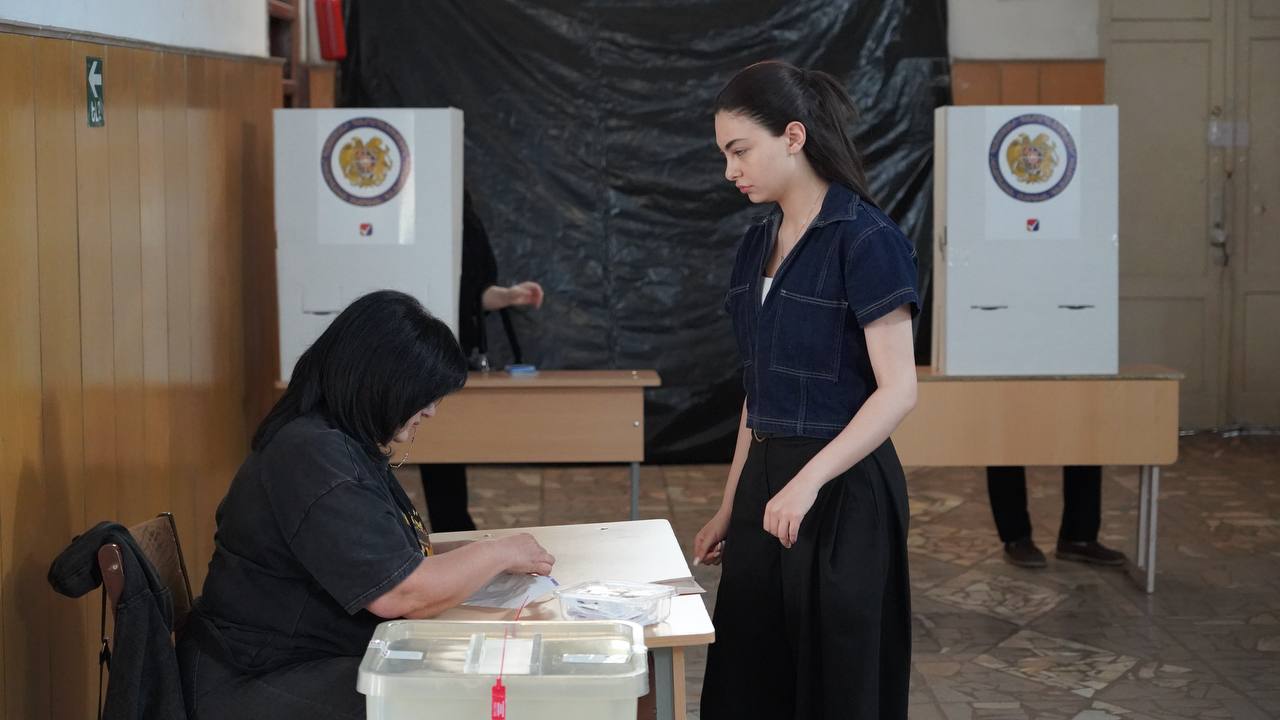
Rubinyan thanked the more than 700,000 voters who backed Civil Contract. He said they had given the ruling party “a mandate to continue Armenia’s democratic reforms and peace agenda”. According to Rubinyan, those voters had defended the country’s sovereignty and independence.
He said the time had come for Armenians to enjoy peaceful lives, have children and raise them without fear.
“My son, who is almost two years old, and children of his age have never experienced war. I will do everything to ensure that my children, your children and all our children never have to learn what war is,” he said.
Rubinyan also thanked those who voted for opposition parties out of conviction rather than in exchange for election bribes.
“It is time to change the political discourse,” Rubinyan says
Addressing opposition MPs, Rubinyan raised the issue of the tone of parliamentary debate. He said society, political circles and journalists had formed a common view of parliament in recent months. According to him, many now see the National Assembly as a place for pointless arguments, slander and insults.
“They say this parliament will be even worse than the previous one in that respect. It seems everyone expects exactly that from us. I want to propose that we break this curse together,” the speaker said.
He argued that the opposition factions had largely stayed away from the work of the previous, eighth convocation of parliament.
“All we saw here was political confrontation, shouting and radical speeches. It is time to change the narratives that have dominated Armenian politics over the past six years. I propose that we make this parliament a place for vigorous but respectful debate that never crosses the boundaries of decency.”
At the same time, he warned that if the opposition rejected his proposal and continued “down the well-trodden path”, the ruling party was ready to respond “in the toughest possible way”.
“Why did we take our seats?” Opposition MPs explain
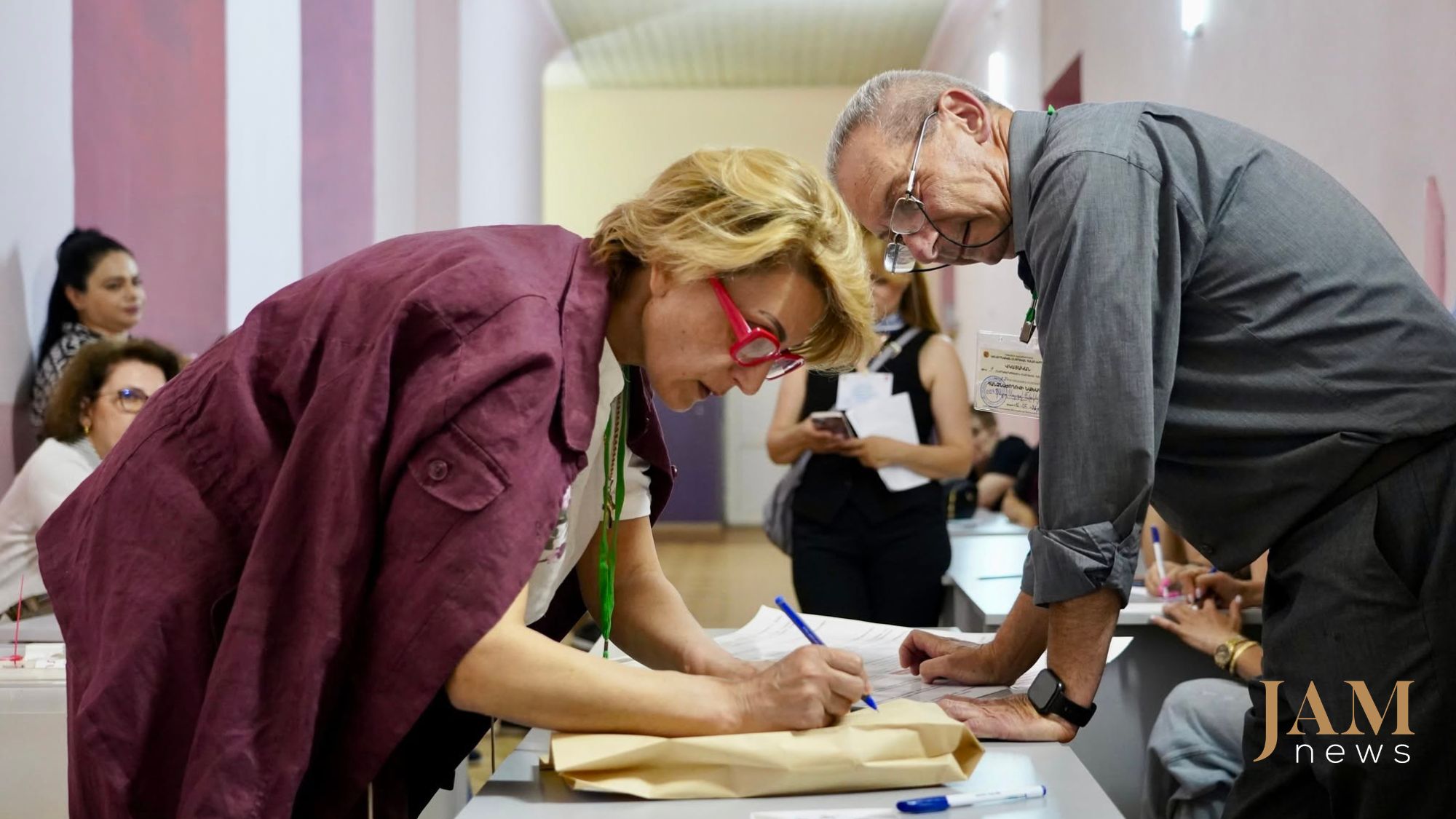
Ishkhan Saghatelyan, an MP from the Armenia faction, argued that neither the opposition nor the ruling party had truly won the election.
He again claimed that the authorities had used administrative resources during the campaign and imprisoned opposition figures.
“This parliament has a serious legitimacy problem. We are here to organise political struggle and advance national goals. We are here to raise the concerns of Armenia’s citizens, speak about the prisoners held in Baku and Armenia’s occupied territories, and, yes, defend the people of Artsakh’s right to a collective return.”
Hayk Farmanyan, an MP from the Strong Armenia faction, echoed that message.
“We accepted our mandates to remain true to our Armenian identity, to fight for our national values, and to defend our dignity, our identity and our Church.”
Comment
Political analyst Lilit Dallakyan shared her impressions of the new parliament’s opening session on social media:
“Well, I ‘congratulate’ the Armenian people on the start of work by a new, high-quality, substantive parliament that is supposedly ready to tackle Armenia’s complex challenges.
The daily exchange of ‘Your father is a murderer’ [directed at MP Levon Kocharyan, son of former President Robert Kocharyan] will now gain a new, equally substantive argument: ‘Your uncle is a Russian oligarch’ [directed at MP Narek Karapetyan, nephew of Strong Armenia leader Samvel Karapetyan]. That will, in turn, prompt the reply: ‘You are Turkish dictators’ [directed at the authorities].
The only positive aspect is that this season of the series is unlikely to interest anyone or distract people from the real problems that are rapidly emerging.
At a time of profound change across the world, Armenian society and every individual will have to look for solutions to their own problems. Ultimately, that will bring about the changes the country needs.”
First session of Armenia’s ninth parliament