‘Smear campaign’ in Russian media and Azerbaijani foreign minister’s Moscow visit: What’s changing?






Russia’s smear campaign against Azerbaijan
A new wave of anti-Azerbaijani content has emerged across Russia’s information space. State television channels, online media outlets and Telegram channels have been publishing material with strikingly similar messaging. Azerbaijan’s pro-government news agency Report describes it as a “coordinated smear campaign” and links it to President Ilham Aliyev’s speech at the Fourth Shusha Global Media Forum.
The agency’s rhetoric is particularly notable. Its coverage uses terms such as “war hawks”, “a racist, chauvinistic ideology with fascist tendencies”, “Ruscism”, and “nationalist and fascist circles”. This highly charged language targets specific groups within Russia, particularly supporters of the war in Ukraine and those promoting ideas of Russian superiority over other nations.
In recent years, the term “Ruscism” has become widely used in Ukrainian and broader Western discourse to describe what is characterised as a form of Russian fascism. By adopting this terminology, the agency frames the dispute not simply as a diplomatic disagreement but as an ideological confrontation.
At the same time, its assertion that the “previous methodology is completely outdated” suggests that some actors have failed to adapt to the region’s changing realities. Such uncompromising rhetoric could provoke an equally sharp response from Moscow and further deepen tensions between the two countries.
Foreign minister’s visit to Moscow
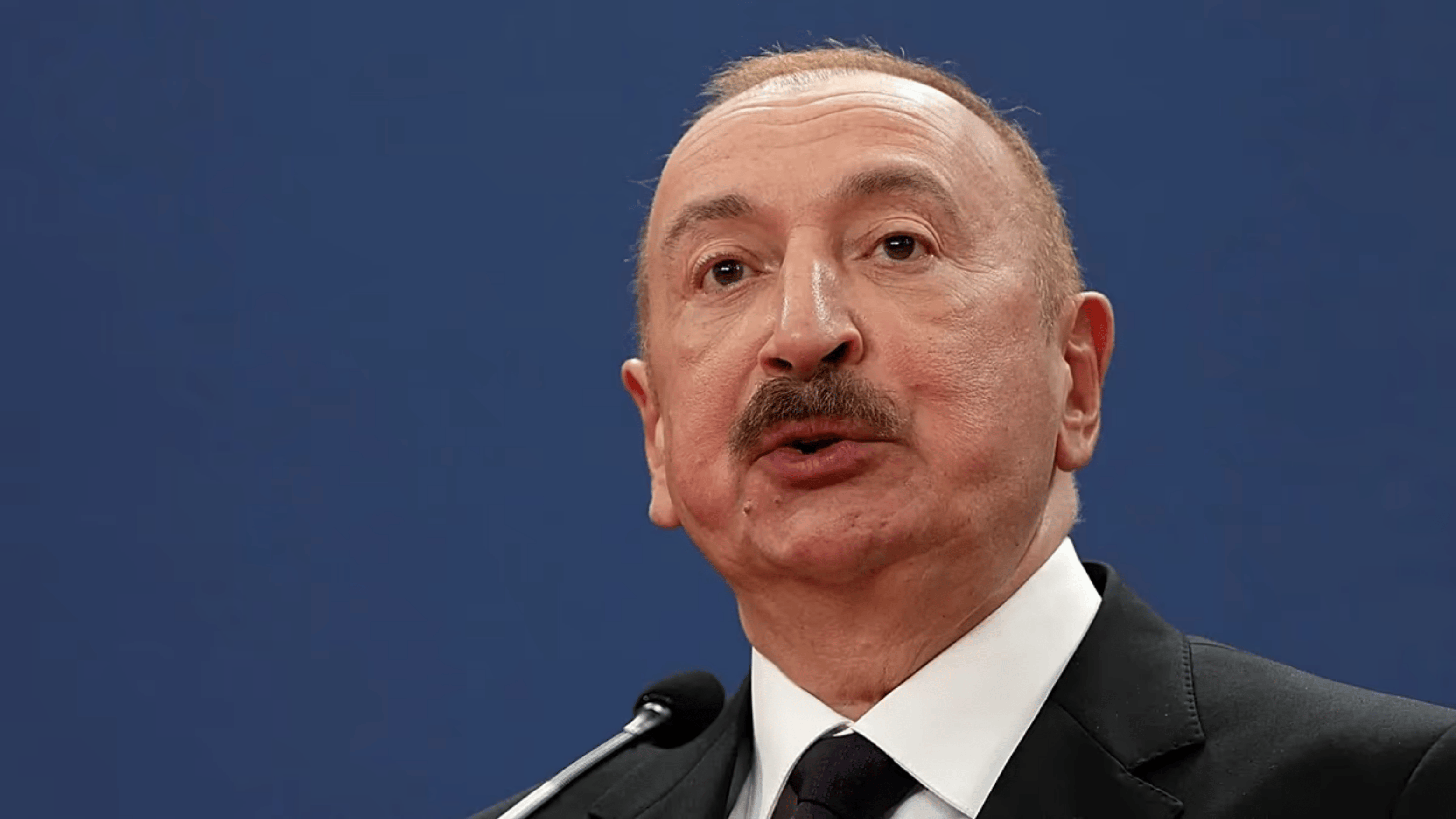
Against the backdrop of this media campaign, Azerbaijani Foreign Minister Jeyhun Bayramov’s visit to Moscow on 16–17 July has taken on added significance. On 15 July, Russian Foreign Ministry spokeswoman Maria Zakharova announced that Bayramov would hold talks with his Russian counterpart, Sergei Lavrov.
Baku’s decision to go ahead with the visit has been widely seen as a signal that it wants to keep dialogue alive. In other words, despite the increasingly sharp rhetoric on both sides, official channels of communication remain open.
On 17 July, Bayramov laid flowers at the Tomb of the Unknown Soldier in Moscow before holding one-on-one talks with Lavrov. According to a post on Zakharova’s official Telegram channel, the meeting took place behind closed doors.
Azerbaijani media reported that the ministers discussed a broad range of bilateral issues, including political, economic, trade, transport and humanitarian cooperation, as well as regional and international security.
The two sides also focused on the work of the intergovernmental commission on economic cooperation, the role of the Russian-Azerbaijani Business Council, the development of the International North–South Transport Corridor, and environmental issues affecting the Caspian Sea. They also discussed expanding cooperation in culture, education, humanitarian affairs and youth exchanges.
Addressing developments in the South Caucasus, Bayramov said the region’s new realities were based on the principles of international law, including sovereignty, territorial integrity and the inviolability of internationally recognised borders. At the end of the meeting, the two countries signed a consultation plan between their foreign ministries for 2026–2027.
Statements at the Shusha Global Media Forum
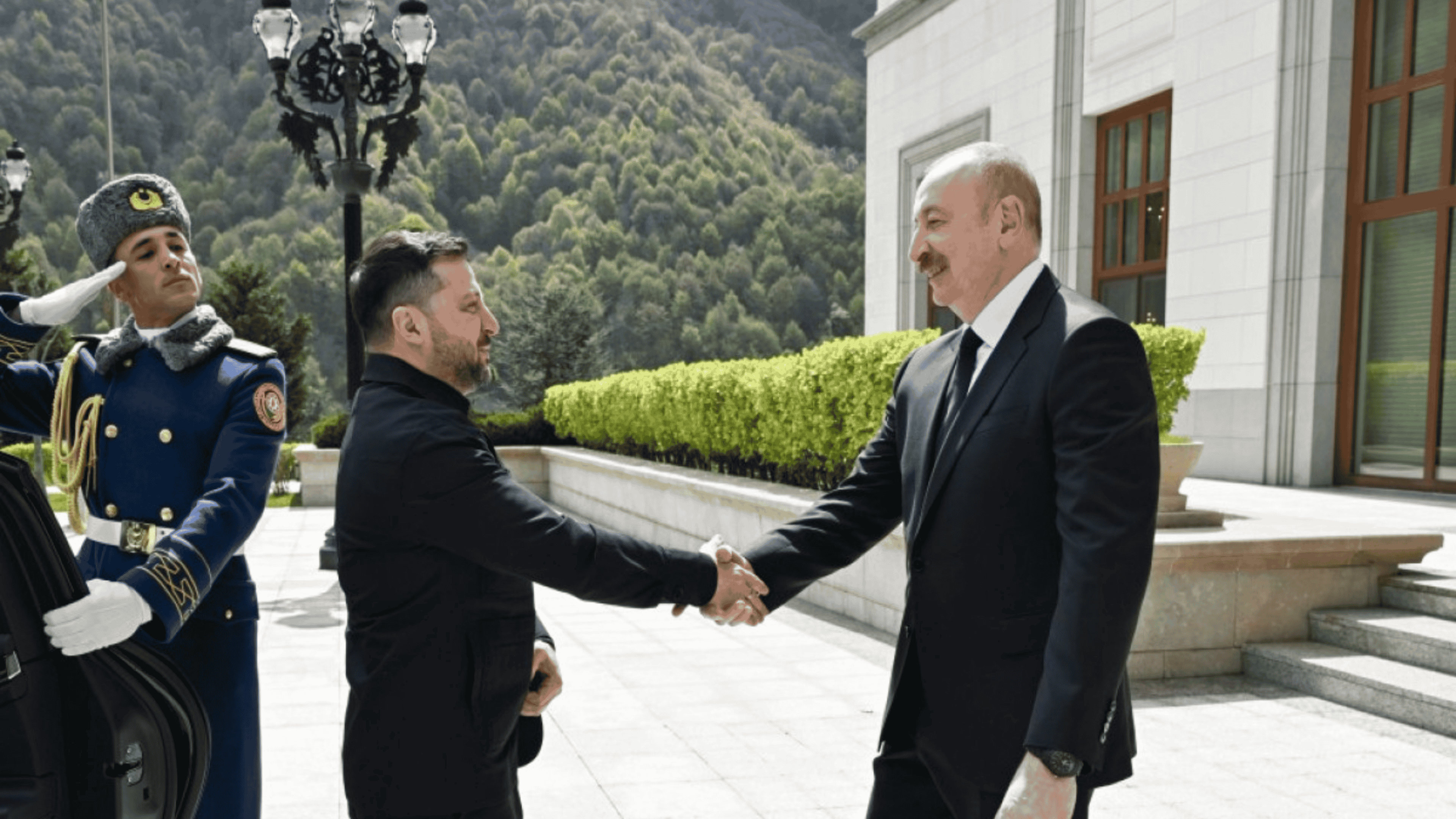
Much of the attention has focused on the Shusha Global Media Forum, held on 13–14 July. Responding to a question from a Ukrainian journalist, President Ilham Aliyev said Azerbaijan firmly supports Ukraine’s territorial integrity, considers occupation unacceptable, and calls for an immediate end to the war. While this position is consistent with Baku’s long-standing policy, it was voiced at a particularly sensitive moment for Russia.
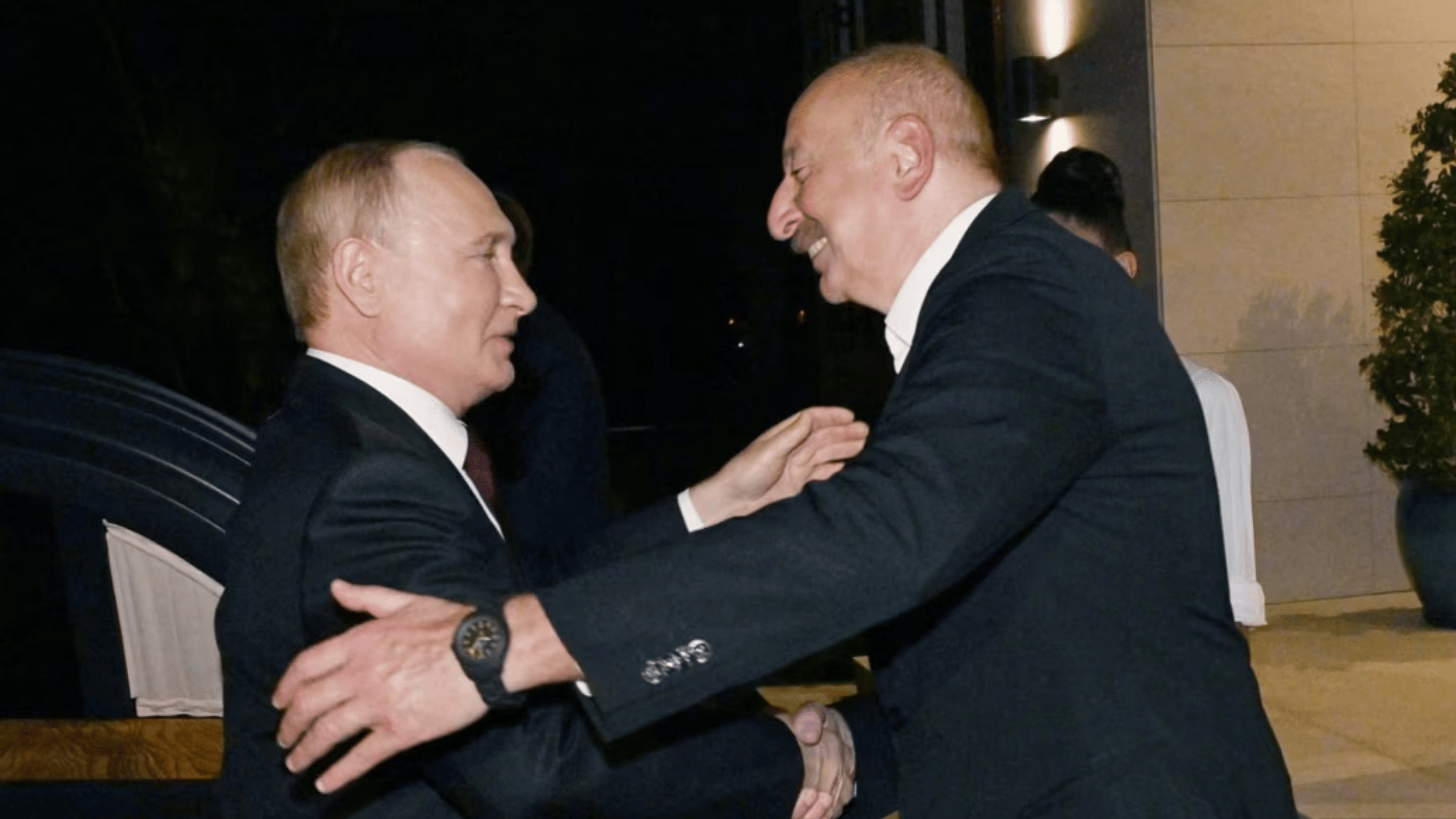
Aliyev struck a different tone when responding to a Russian journalist at the same forum. He said bilateral relations were improving, describing the trend as positive and noting that contacts between governments, ministries and presidential administrations had resumed. By saying that “the difficulties are behind us”, Aliyev signalled that he viewed the previous period of tensions as over.
His assertion that “the previous approaches to understanding and perceiving the South Caucasus are completely outdated” has been interpreted as a broader political message. It reflects the new balance of power that has emerged in the region since 2020, following Azerbaijan’s restoration of control over its internationally recognised territory, its growing role in regional transport and energy corridors, and the changing dynamics of its relations with Armenia. The underlying message is that the old approach to treating the South Caucasus as a sphere of influence no longer works.
The context behind the “smear campaign”
From an analytical perspective, Azerbaijan’s position on Ukraine is not the only factor behind the reported smear campaign. Some circles in Russia are increasingly concerned about Moscow’s declining influence in the South Caucasus. Media commentary suggests that Baku’s multi-vector foreign policy—maintaining ties with the West, Turkey, Central Asia and Russia simultaneously—conflicts with Moscow’s desire to preserve its dominant role in the region. In this context, coordinated media campaigns can serve as a tool of diplomatic pressure.
By combining a firm stance on Ukraine with a pragmatic approach towards Russia—reflected in Bayramov’s visit to Moscow and Aliyev’s remarks about improving bilateral ties—Baku is pursuing a classic balancing strategy. The message is aimed both at a domestic audience, by reaffirming support for sovereignty and international law, and at foreign partners, by signalling a willingness to maintain relations with Russia. Such a dual-track approach, however, carries risks, as both sides could begin to view Azerbaijan as an unreliable partner.
Aliyev’s remarks in Shusha can also be seen as a call to recognise the new realities across the post-Soviet space. The regional order that shaped the 1990s—and, to a large extent, even the 2010s—has changed. Azerbaijan increasingly presents itself as a middle regional power and expects that status to be acknowledged. If Russia fails to adapt to these changes, periodic crises in bilateral relations are likely to continue.
The outlook for relations between the two countries remains mixed. Official dialogue continues, but the information confrontation is intensifying. Bayramov’s visit may help ease tensions in the short term, yet the underlying structural issues—including competition for influence, ideological differences and the changing regional balance of power—remain unresolved. In these circumstances, both sides may achieve more by moving away from emotionally charged rhetoric and focusing instead on dialogue based on practical interests.
The limits of Azerbaijan’s balancing policy
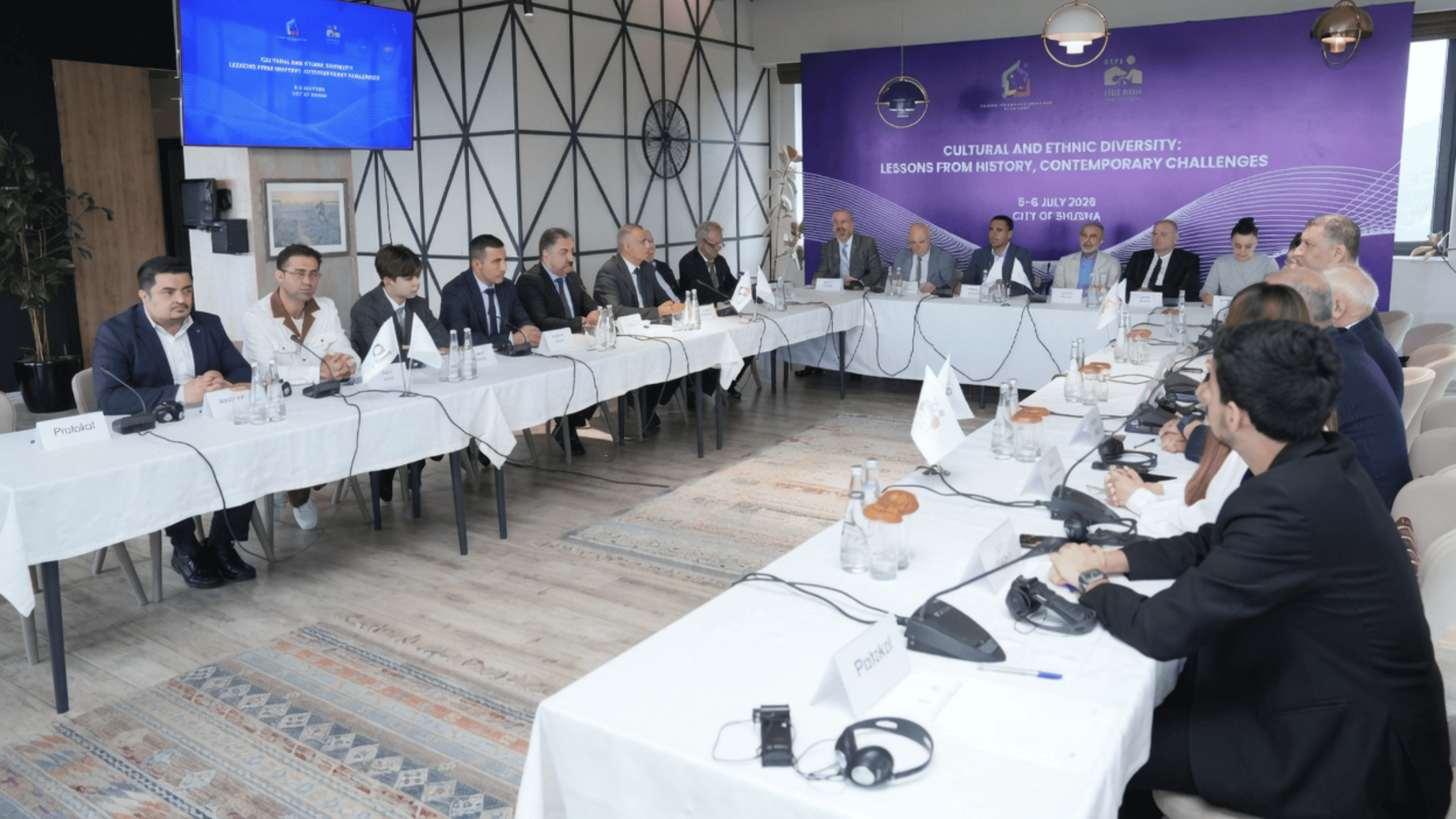
Another development is worth noting in this context. Just days before President Ilham Aliyev’s remarks at the Shusha Global Media Forum, the city hosted an international conference on 6 July titled Cultural and Ethnic Diversity: Lessons from History, Contemporary Challenges.
Participants criticised the discrimination faced by ethnic minorities in Russia, including Azerbaijanis, as well as the reported forced mobilisation of minorities for the war in Ukraine and manifestations of chauvinism. They also called for the recognition of the Circassian genocide. The conference’s messaging appears to foreshadow Aliyev’s subsequent remarks: only a few days later, he reaffirmed support for Ukraine’s territorial integrity while simultaneously stressing the normalisation of relations with Russia.
At the same time, Ukrainian media have periodically published critical reports and investigations into Azerbaijan’s position on the war. Taken together, the Shusha conference on discrimination and criticism from Ukrainian commentators help illuminate another dimension of Baku’s foreign policy. In his speech, Aliyev sought to reconcile continued engagement with Russia and support for Ukraine’s territorial integrity, avoiding a complete break with either side while keeping relations with both within carefully managed limits.
Balancing, however, rarely produces perfect equilibrium. At certain moments, closer alignment with one side inevitably becomes more visible than with the other. Despite tensions with Moscow, Azerbaijan continues to maintain relations with Russia while also demonstrating friendly ties with Ukraine. In practice, this has made the country one of the arenas for indirect competition between Moscow and Kyiv.
Baku is trying to keep its relationships with both sides within carefully defined boundaries without crossing either’s red lines. Both Russia and Ukraine appear to recognise this approach and have responded with their own warning signals. The information campaign of recent days, and the reactions that followed, may be another consequence of Azerbaijan’s balancing strategy.
Russia’s smear campaign against Azerbaijan