Young people in Eastern Europe and Central Asia want children but lack conditions - UNFPA study






UNFPA study on fertility
Young people in Eastern Europe and Central Asia are not turning away from family life or losing the desire to have children. On the contrary, marriage and parenthood remain among their most important life goals. But a new study by the United Nations Population Fund (UNFPA) shows that the gap between what young people want and what they are able to achieve is widening.
The regional findings, published ahead of World Population Day on 11 July as part of UNFPA’s Global Population Trends and Future Demographic Outlook study, challenge the widely held assumption that falling birth rates are the result of young people’s personal choices.
Instead, the study argues that the main obstacles are economic, social and institutional barriers that prevent young people from turning their plans into reality.
Georgia reflects the same trend. The study found that young Georgians remain optimistic about the future, although economic uncertainty continues to be one of their biggest concerns.
The survey was conducted in 2025 across 11 countries and territories in Eastern Europe and Central Asia: Azerbaijan, Bosnia and Herzegovina, Georgia, Kazakhstan, Kyrgyzstan, Moldova, North Macedonia, Serbia, Ukraine, Uzbekistan and Kosovo. More than 13,500 internet users aged 18 to 39 took part. The survey forms part of the United Nations Population Fund’s (UNFPA) Global Population Trends and Future Demographic Outlook study.
Young people remain optimistic about the future
According to the study, young people in Eastern Europe and Central Asia are more optimistic about their future than their peers in Western Europe and East Asia.
Although many in the region express concerns about economic crises, conflict and unemployment, around 65% said they viewed their future positively, compared with just 50% in the other regions surveyed.
The findings also show that family remains at the centre of young people’s values across the region. Some 79% of respondents said they wanted to get married, significantly higher than the 63% recorded elsewhere.
For 87% of respondents, the main reason for having children was the happiness and joy they bring. An overwhelming majority said they hoped to have two or more children.
In Georgia, the average desired family size was 2.6 children among women and three among men, exceeding the level needed for population replacement.

Many aged 35–39 have not achieved their family goals
One of the study’s key findings is that many people aged 35 to 39 said they had been unable to fulfil their plans for family life.
Among women in this age group, 22% have no children, although in almost every case this was not by choice. Some 95% of childless women said they had wanted to become mothers.
In Georgia, the study found a particularly strong belief that certain milestones should be reached before having children. Around 60% of respondents said they believed completing their education was essential before starting a family, while 58% said achieving career stability was equally important. Owning a home was also widely seen as a key prerequisite.

A wide gap between desired and actual family size
The study found a significant gap between young people’s aspirations and demographic reality.
On average, women reported having 1.25 fewer children than they would ideally like, while for men the gap was close to two children.
In Georgia, the findings suggest this gap is closely linked to gender roles.
Many Georgian women said they expect to shoulder most childcare responsibilities after the birth of a child. While men generally spoke of sharing parental duties equally, they were more likely to see their primary role as providing financial support for the family.
Women also said that financial independence was essential to avoid becoming economically dependent on a partner.
The study further found that negative attitudes towards mothers working full-time while their children are under the age of three remain widespread in Georgian society.
Financial insecurity is the biggest obstacle
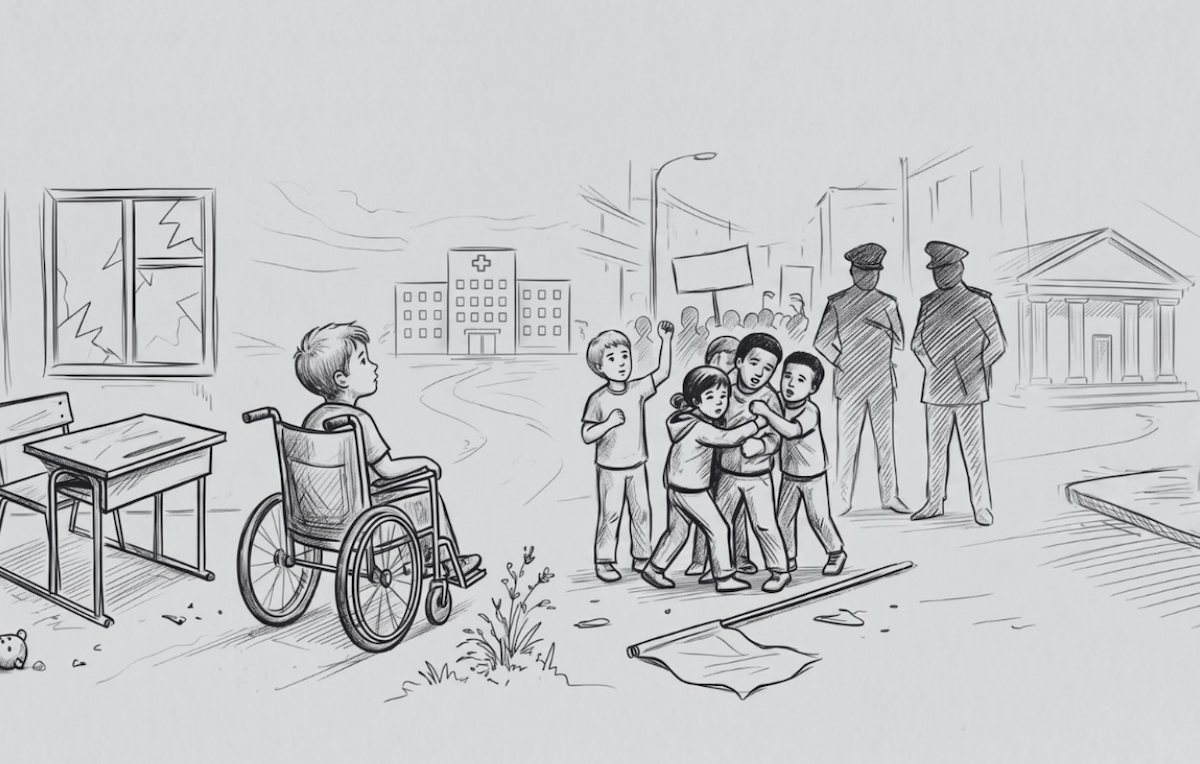
Financial insecurity emerged as one of the biggest barriers to starting a family.
Other major obstacles identified by respondents included:
- Lack of affordable housing;
- Health problems;
- Difficulty finding a suitable partner;
- Unequal sharing of childcare and household responsibilities.
The study found that young people see life following a clear sequence: first a stable job, then a home of their own, followed by a long-term partnership and, finally, having children.
If one stage cannot be achieved, the next is often postponed or abandoned altogether.

UNFPA: Boosting birth rates alone will not solve the problem
Florence Bauer, UNFPA’s Regional Director for Eastern Europe and Central Asia, said the findings show that young people are not turning away from family life — they simply lack the conditions needed to realise their reproductive aspirations.
She argued that attempts to address demographic decline through financial incentives or campaigns encouraging people to have children are unlikely to succeed if the underlying barriers remain unresolved, including unemployment, a lack of affordable housing, limited access to healthcare and the unequal sharing of family responsibilities.
According to Bauer, tackling these structural challenges should be the priority for governments seeking to help young people achieve their family plans.

UNFPA study on fertility