Imprisoned Azerbaijani activist: ‘It is time to repeal Section 907 and declare a broad amnesty for sake of peace’






Letter from an Azerbaijani activist in prison
The imprisoned Azerbaijani civic activist Bakhtiyar Hajiyev, in a letter sent to the JAMnews editorial office, writes that the issue of political prisoners in Azerbaijan has recently been raised more and more frequently in international organizations and reputable analytical think tanks.
He stressed that the unresolved nature of the problem hinders the development of bilateral relations, the peace agenda with Armenia and the repeal of Section 907 of the Freedom Support Act.
Section 907 of the “Freedom Support Act” was adopted in the United States in 1992, during the First Nagorno-Karabakh War, when Armenia occupied Nagorno-Karabakh and seven surrounding Azerbaijani districts. In response, Azerbaijan declared a blockade on Armenia. Against this backdrop, the U.S. Congress passed this amendment, which prohibited the provision of U.S. government aid to Azerbaijan.
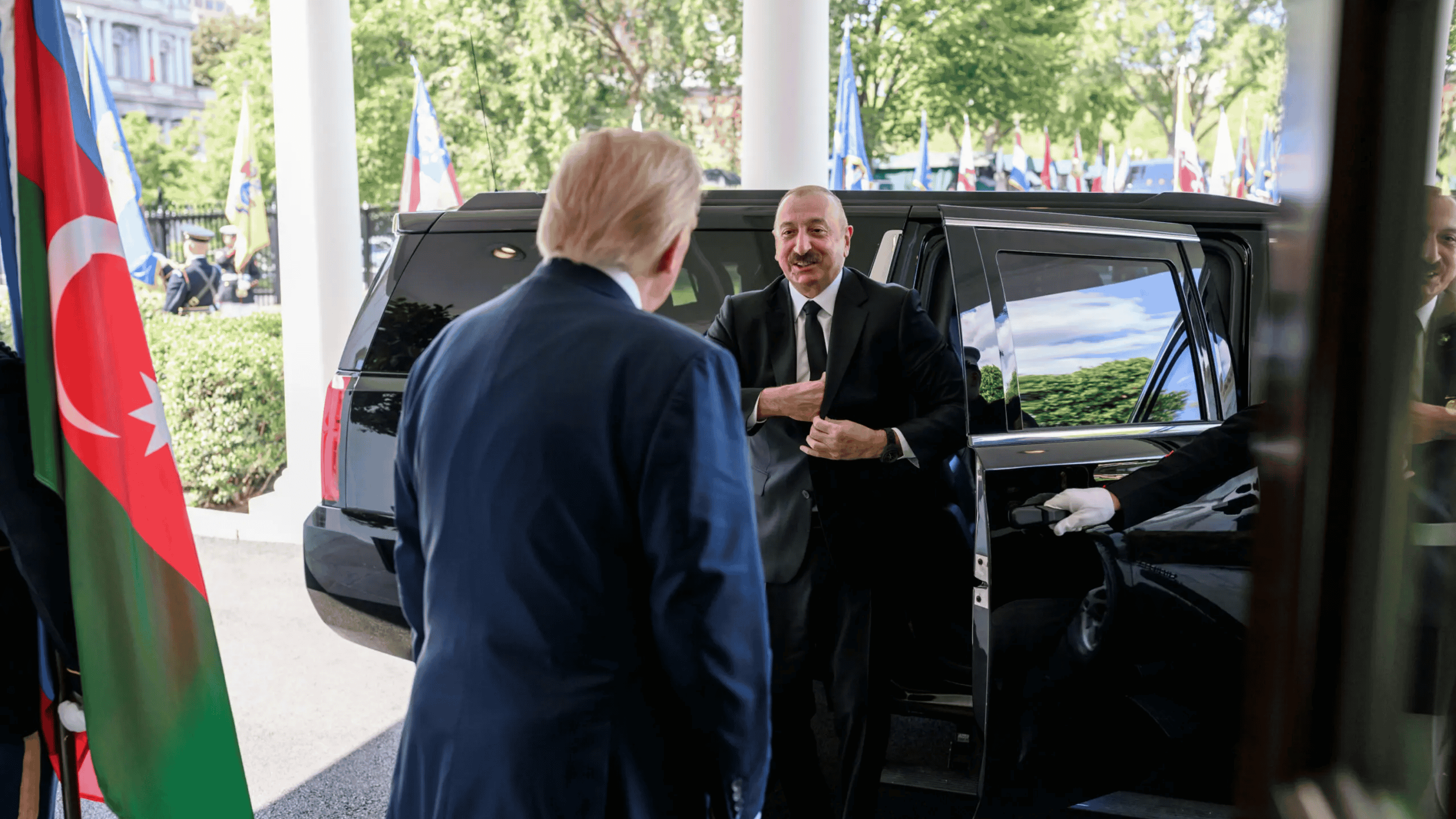
Over the years, various U.S. presidents have suspended the implementation of Section 907. However, the previous administration under President Joe Biden declined to do so. In August 2025, President Donald Trump again signed a document suspending the application of this amendment.
According to Hajiyev, Azerbaijani authorities try to justify the arrests of civil society leaders, activists, human rights defenders and journalists by portraying them as a threat to the government and an obstacle to the peace process.
The activist considers this approach unfounded and based on an imaginary threat. In his view, the real problems stem from consistent criticism by international organisations, deteriorating relations with foreign partners, growing domestic dissatisfaction and the authorities’ policy of self-isolation.
Hajiyev proposes treating political prisoners not as a threat, but as a resource and potential partners. He believes a decree introducing a broad amnesty would help preserve the peace agenda, reduce internal tensions and open the way to resolving issues such as the repeal of Section 907 of the Freedom Support Act.
The author places particular emphasis on the extradition to Armenia of several ethnic Armenian prisoners currently held in Azerbaijan. He argues that such a step, taken ahead of Armenia’s parliamentary elections on 7 June, could make an important contribution to Nikol Pashinyan’s chances of victory and advance the peace process.
Who is Bakhtiyar Hajiyev?
Bakhtiyar Hajiyev is a well-known Azerbaijani civic activist, former youth movement participant and political prisoner.
He ran as an independent candidate in parliamentary elections in 2010 and 2020. Hajiyev also co-founded the youth movement Positive Change.
Between 2011 and 2012, he served a two-year prison sentence on charges of evading military service. International organisations described the case as politically motivated.
Authorities arrested Bakhtiyar Hajiyev again in December 2022. Prosecutors charged him under Articles 221.2.2 and 289.1 of the Criminal Code. The charges concern hooliganism involving resistance to a person maintaining public order and contempt of court.
On 16 June 2023, investigators brought additional charges against the activist. Most of them relate to financial issues, particularly the alleged misuse of grant funds.
Prosecutors also charged him under Articles 192 (illegal entrepreneurship), 193-1 (money laundering), 206 (smuggling) and 320 (use of forged documents) of the Criminal Code.
Bakhtiyar Hajiyev rejects all charges against him. He denies any guilt and says authorities arrested him on orders from above and punished him for criticising Interior Minister Vilayat Eyvazov.
International human rights organisations, including Amnesty International and Freedom Now, recognise him as a political prisoner and demand his release.
Hajiyev frequently speaks out on civil society issues and has repeatedly faced repression.
Full text of the letter:
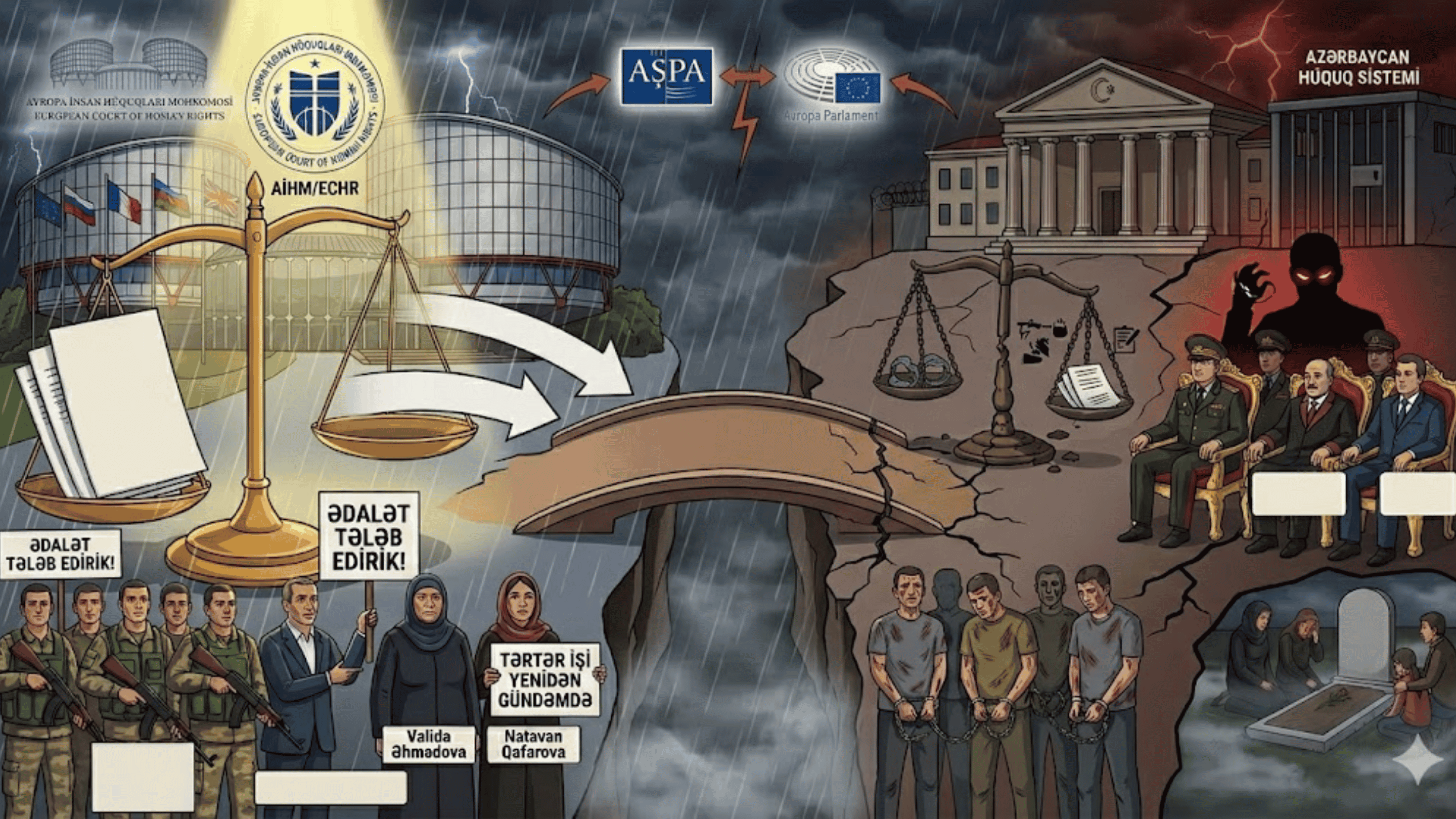
“In recent times, various organisations and leading analytical centres have increasingly raised the issue of political prisoners in Azerbaijan. They note that the unresolved nature of this problem hinders the development of bilateral relations, the advancement of the peace agenda and the repeal of Section 907 of the Freedom Support Act.
The Azerbaijani authorities try to justify the arrests of civil society leaders, activists, human rights defenders and journalists by portraying them as a threat to their own power and as a potential obstacle to the peace agenda with Armenia.
At the same time, claims that political prisoners threaten the authorities or obstruct the peace process do not correspond to reality and rely on an imaginary threat. The real problems stem from consistent criticism by international organisations, deteriorating relations, growing domestic dissatisfaction and the authorities’ policy of self-isolation.
Given this, the authorities should fundamentally reconsider their approach to political prisoners. They should treat people known in civil society for their experience, knowledge, skills and international connections, as well as their ability to influence public opinion, not as a threat or a bargaining tool in relations with the West, but as a resource and potential partners.
I am convinced that many political prisoners possess the ability to make a positive contribution to improving relations with the European Union, the Parliamentary Assembly of the Council of Europe and the United States, as well as to advancing initiatives aimed at repealing Section 907 and promoting the peace agenda with Armenia.”

“It is obvious that the Azerbaijani authorities do not intend to keep political prisoners behind bars for life or for extended periods. At the same time, one can assume that, at a certain stage — for example after Armenia and Azerbaijan sign a peace agreement — the authorities may extradite ethnic Armenian detainees mentioned in statements and reports by international organisations to Armenia.
For the signing of a peace treaty, victory for Nikol Pashinyan’s party in Armenia’s parliamentary elections on 7 June is important.
Given the tense nature of the election campaign in Armenia and the high likelihood of serious external interference, extraditing several ethnic Armenian detainees held in Azerbaijan before the 7 June elections could become a lifeline for Nikol Pashinyan’s victory and for advancing the peace agenda.
If the Azerbaijani authorities are genuinely considering extraditing these individuals in the future, now is the most suitable moment to do so.
At the same time, a broad amnesty decree covering political and religious prisoners could help preserve the peace agenda, reduce domestic dissatisfaction, end the policy of self-isolation and open the way to resolving many issues, including the repeal of Section 907 of the Freedom Support Act.”

Letter from an Azerbaijani activist in prison