'Back in school, I sent drawings to soldiers — now they send them to me': War through the eyes of two Ukrainian soldiers






War in Ukraine
Originally published by Hromadske.
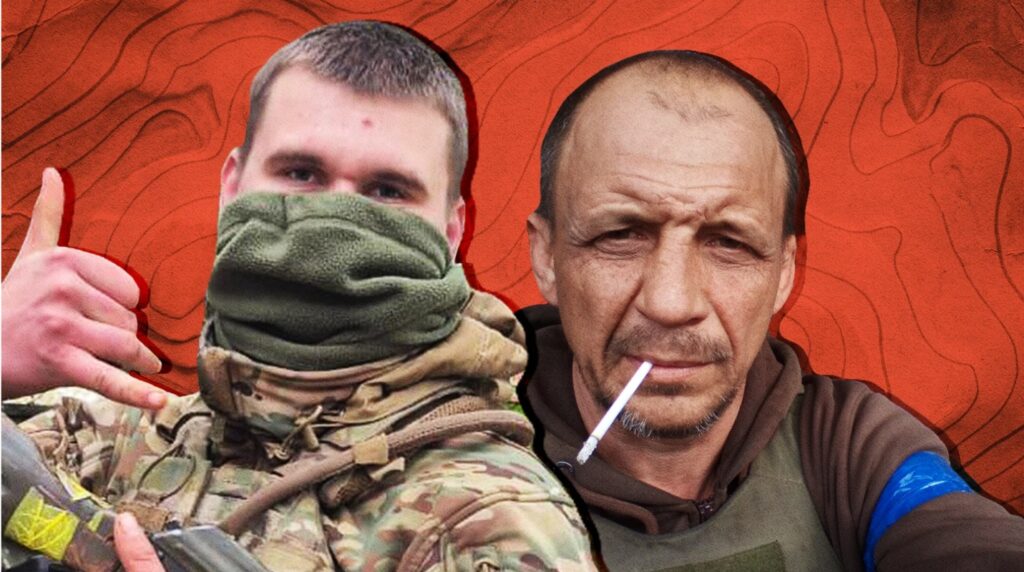
On 24 February 2022, Yaroslav Kravchuk, the director and coach of a youth Greco-Roman wrestling school, woke up at 5am. He made himself some tea and yawned. The evening before, he had been at the sauna with his students — the best way, he believed, to help tired muscles recover.
Outside, aircraft engines roared overhead. He assumed it was night exercises at the military airfield near his hometown of Zhytomyr.
Then the phone rang. It was a long-time friend, the commander of a combat brigade. “It’s started.”
“Pack a bag,” the 51-year-old told his wife as he woke her. She was used to it: he had fought in the Anti-Terrorist Operation (ATO) and never hid the fact that if a new offensive began, he would go again — even though, like other teachers, he had a deferment.
“I don’t remember the words she used to see me off, but there was nothing joyful about them. When I hear people now saying, ‘Let those who want to go fight go to war,’ I answer this: in all these years I have never met a single person who wants war. We went with swearing, with our plans shattered, because we understood the Russians weren’t just trying to change a flag. They were coming here to destroy everything,” he says of his motivation.
By 08:30, Yaroslav — a father of two sons and a keen carp fisherman — was already at the enlistment office. He was waiting for the men he had served with during the (ATO). They had agreed in advance that if Russia attacked, they would regroup and go to war together.
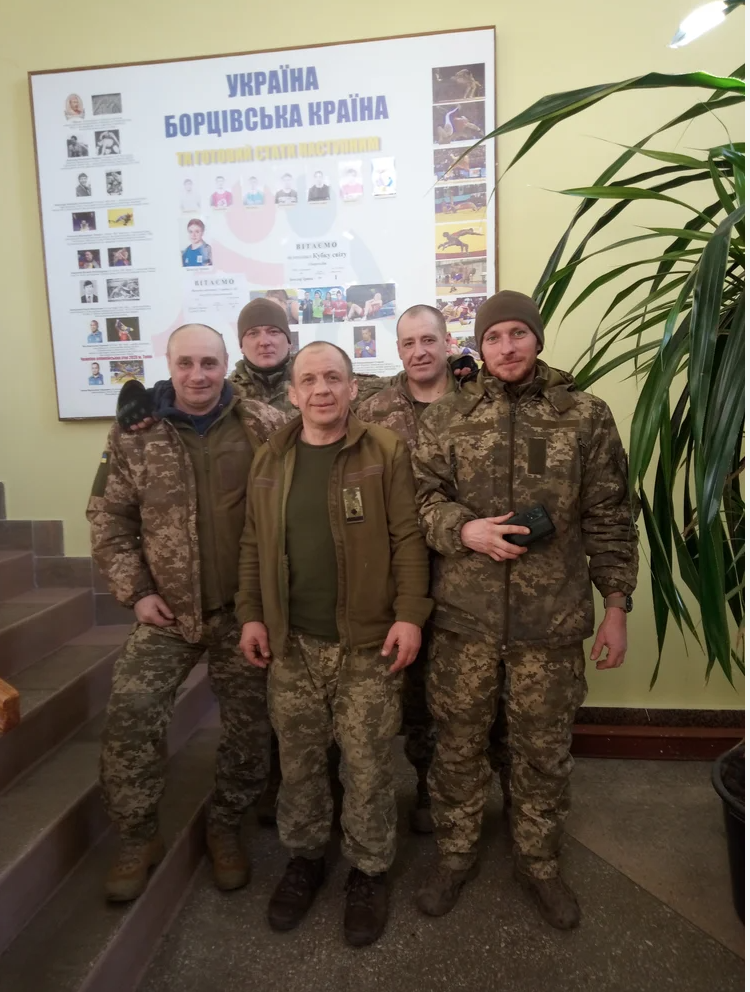
Yaroslav called each of them. No one answered at first. Later they rang back: “We’ve been issued weapons — we’re joining the Territorial Defence.” They knew that if they went with him, they would likely end up in the 25th, 95th or 30th brigades — among the most combat-ready units and certain to find themselves at the centre of the fighting.
Kravchuk was furious. “You could slip through the cracks in the Territorial Defence. I told them then that when the time came, I would ask each of them about it — and there would be consequences, including on their faces.”
By the evening of 24 February, he was already with the 2nd Battalion of the 95th Brigade — dressed, equipped and armed. His first assignment followed immediately: intelligence suggested an enemy airborne landing could take place at a nearby military airfield, and the unit was sent there to intercept it.
***
Meanwhile, in a village in the Rivne region, at 05:30 on 24 February, a grandmother went to wake her grandson.
“Dima, there’s a war outside.”
“Wow!” he exclaimed. “Let’s go watch TV.”
Fifteen-year-old Dmytro Kovalchuk was an ordinary teenager. He loved playing football with friends, fishing and foraging for mushrooms. He lived with his mother, grandmother and two brothers. His eldest brother had previously served in the Anti-Terrorist Operation (ATO). That morning he received a call: “Andriukha, come back.” He left immediately.
For the schoolboy, the day passed in a blur of news broadcasts, Telegram channels and messages with friends. Some classmates’ parents wanted to send their children abroad, but many refused — one said he was staying, another did not want to leave, and the rest followed suit. Only one girl was taken out of the country.
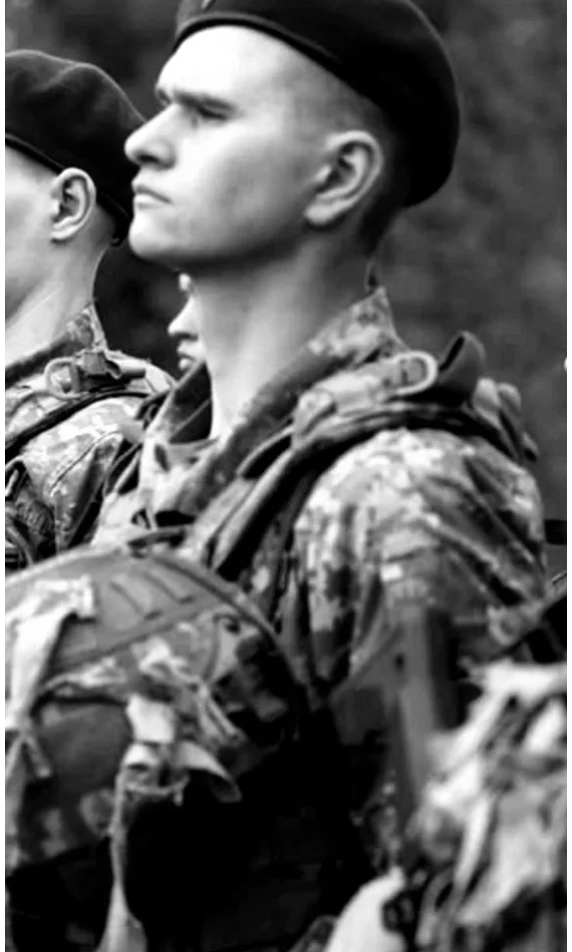
That day, contact with his older brother was lost, and their mother began to worry.
“But I knew Andrii would be fine, because he understands military matters and can get out of any situation safe and sound. It never even crossed my mind that he could be wounded — or worse. And that’s exactly how it turned out,” Dmytro says.
His brother got in touch later that evening: everything was fine, he had been carrying out assignments. He fought for two years before being discharged due to health problems. Now he is back home.
The first months: firing 200 mortar rounds a day
In the first days of the full-scale war, Yaroslav Kravchuk stopped a fellow soldier from firing at what he believed was an enemy helicopter in the fog — only for it to turn out to be Ukrainian. Kravchuk struck him on the shoulder just as he pulled the trigger, and the shot missed the aircraft. He was praised for it. Later, one of the soldiers jokingly found a major’s shoulder board and pinned it to his uniform. The callsign “Major” stuck.
The first months of the invasion became the hardest of Yaroslav’s four years of war.
“Spring 2022. The Sloviansk–Izium highway. The Russians were pushing hard to reach it. If they had succeeded, the Ukrainian grouping in Donbas would have been completely encircled. Our battalion was covering infantry near the village of Dovhenke. We had no idea what was happening around us. There were no Starlinks. Information reached us with delays.
We only knew what was happening to our immediate left and right. Artillery practically didn’t exist because there were no shells, and we had just two tanks — one of them hidden away. Our battalion had only three mortars. We fired 200 rounds a day — an extremely high intensity,” he recalls.
Ukrainian troops managed to hold their position despite never being rotated out. Over four months, the enemy did not advance a single metre. Yaroslav says he and his comrades achieved the impossible, constantly pushing themselves beyond their limits.
His experience in the Anti-Terrorist Operation meant little compared with the full-scale invasion. Friends who fought between April and June 2022 agree they had never faced — before or since — such an intensity of combat. And harder assignments still awaited them: the Serebriansky forest, the Kharkiv offensive, the defence of Kupiansk and the Kursk operation. They joke that, compared with earlier battles, those deployments felt almost like a resort.
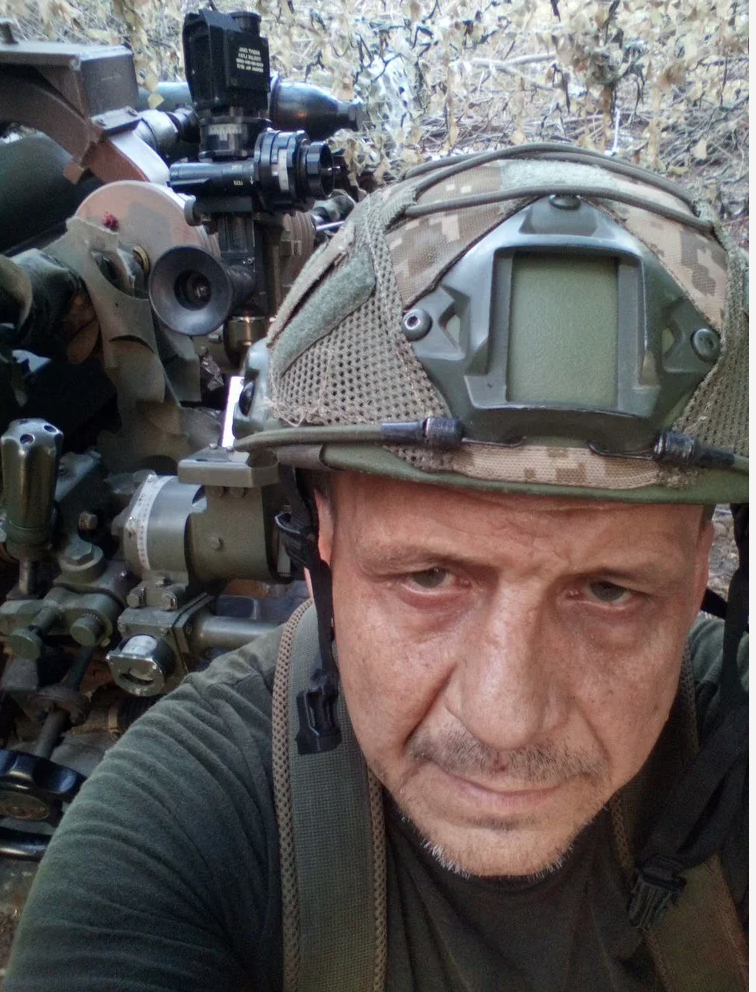
In the first weeks of the full-scale war in the Rivne region, young men were building checkpoints. Dima wanted to join them, but they would not take him — he was too young. In the evenings, he walked around the village with friends. Total darkness surrounded them, pitch black. It felt as if the place had died out — people were afraid of shelling. Strikes did come later, though not in the village itself: infrastructure and military facilities were hit elsewhere, and missiles struck Rivne. They learned about it from the news.
Dima did not follow the war’s chronology closely. At school, teenagers his age rarely discussed such things in detail. He remembers when Russian troops withdrew from Bucha and the truth about abuses against civilians emerged.
“What shocked me most during the war was the looting by our own people — breaking into damaged shops and empty homes, taking whatever they could,” he recalls. “I saw videos of them being caught and tied to poles. But my real anger towards the enemy came when our prisoners were mutilated and executed. I remember a video of a man lighting a cigarette before being shot and shouting, ‘Glory to Ukraine!’” (a reference to Oleksandr Matsievskyi, who was killed on 6 March 2023 — ed.).
As he finished school, the idea gradually took hold: he would enlist. He wanted to serve among the best. But he told no one about it.
After graduating, he went to Poland for seasonal work, picking apples. In November 2024, he turned 18. The day before, he had submitted an application through the website of the Azov Brigade — a unit he had long dreamed of joining. They called him back almost immediately: “Interested in serving with us? Come in for an interview.” He passed it successfully. Then came the question that changed everything for him: “Do your parents know you want to serve? They need to.”
Dmytro backed away. He did not want to frighten his mother.
Several brigades tried to recruit him, but he chose the 95th. They asked him the same question — and without hesitation he replied: “They know.”
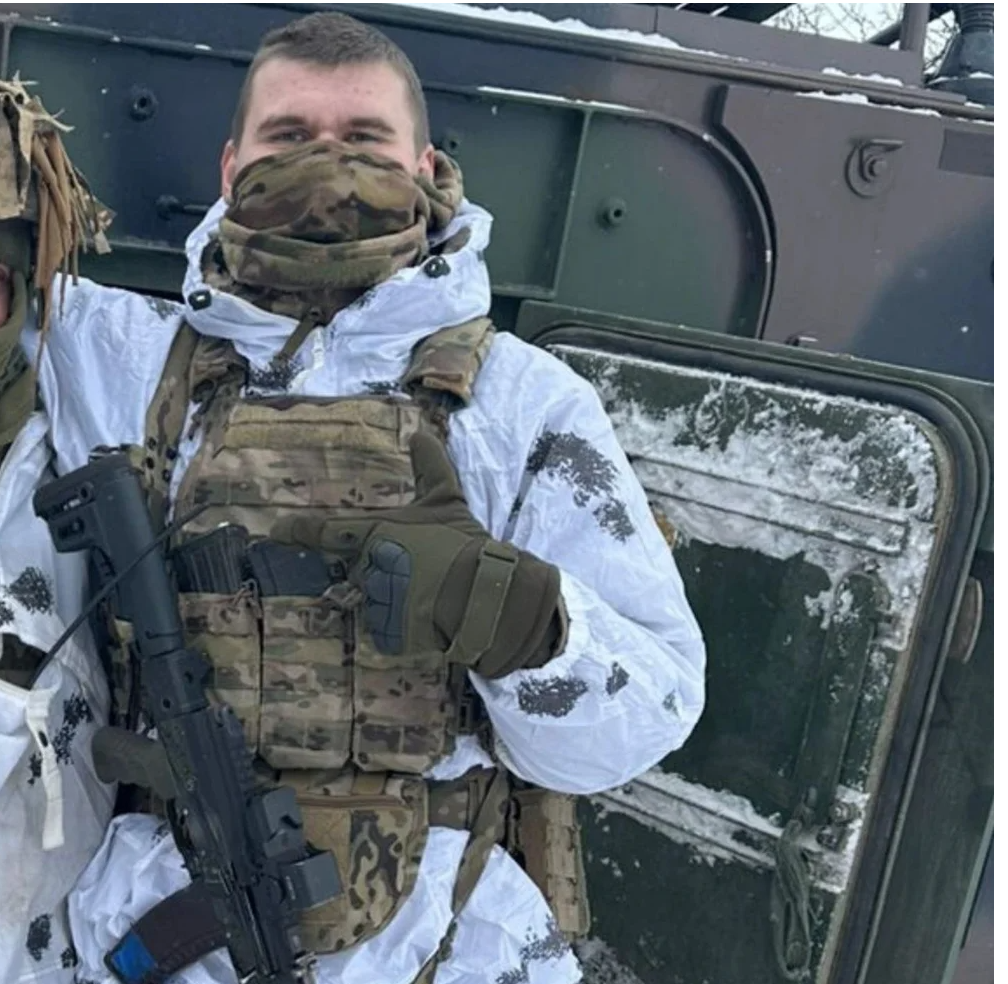
Around the same time, information emerged about the “18–24” contract, a programme designed by the Ministry of Defence to encourage young people under 25 to join the Armed Forces. The young man agreed to sign a one-year contract.
His family learned he had enlisted through TikTok. A channel filmed a report about the first recruits undergoing training — and Dmytro appeared in the footage.
“We thought you were in Poland,” his brother called to say.
“That’s not me. Just someone who looks like me.”
“Your mum recognised you.”
“Well… okay, it’s me. So what?”
His mother cried. She had already been worried about one son — now there were two. “Why do you need the army? You haven’t even lived your life yet.”
“But I don’t regret it,” says Dmytro, whose callsign became “Pale.”
He is now 19 and has already spent a year carrying out some of the most difficult assignments with the 13th Separate Air Assault Battalion of the 95th Brigade.
Much of it still seems exciting and fascinating to him: following a map into what is supposed to be a tree line only to find an open field instead; holding a position with enemy troops directly ahead and nothing separating them; letting them come closer before opening fire. He finds meaning in overcoming unpredictable challenges and testing himself.
There are painful moments too — above all, the loss of comrades.
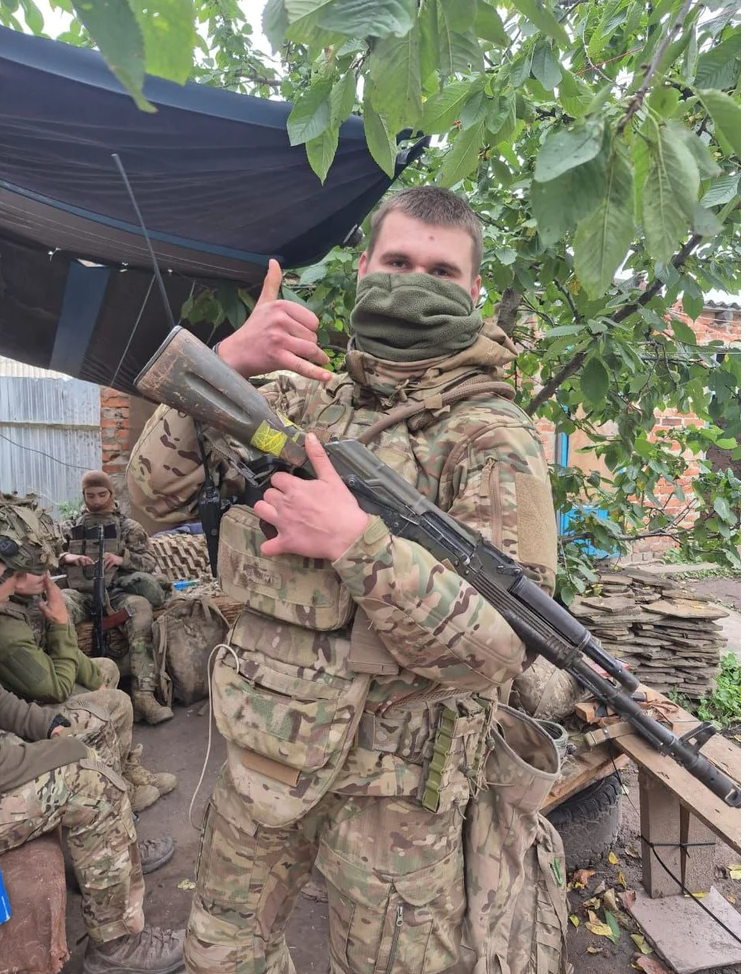
What the war has taught them — and what they have learned about themselves
“Major” believes that even though he is an athlete, physical fitness becomes secondary in war. The real challenge is psychological endurance.
During the battles for Dovhenke, the first commander of his mortar crew taped his bag to a bicycle and fled, abandoning the soldiers.
“And we chose him ourselves as commander in 2022 because he seemed the most experienced. He really created the illusion that you could rely on him.
We live in an extraordinary time — all the masks have come off, and you see exactly who people really are. Take this example: guys from a village whose biggest life experience had been getting drunk when they were young, barely able to stand, fighting in clubs while sitting on the floor. But in war, when everything is whistling and exploding around them, they do everything exactly as they should. And someone else — so experienced, such a hardened veteran — gets on a bicycle and betrays his own men. War shows everyone’s true nature. You can’t pretend to be someone else here,” Yaroslav Kravchuk concludes.
Over four years of fighting, he says he has learned that he can survive anywhere if even the slightest chance exists — and that he will complete the mission no matter what. He believes that certainty comes from the terrifying spring of 2022.
“I know my sense of responsibility towards others is very strong. Late last summer I was delivering artillery ammunition to a position, along with two cans of petrol for generators. A drone hit our vehicle from behind. My rifle burned, the radio burned, the entire vehicle was destroyed. I jumped out and escaped with bruises. But what tormented me most was guilt towards the unit. Because of me, we lost a vehicle,” he says.
Yaroslav called deputies of the Zhytomyr Regional Council. Together with the regional governor, they raised money for another vehicle. A week later he was already driving back to the front line — worrying more about the car than about himself.
The war also gave him friends — more than friends. People with whom he has grown so close, so inseparably connected, that they are simply known by one word: brothers-in-arms.
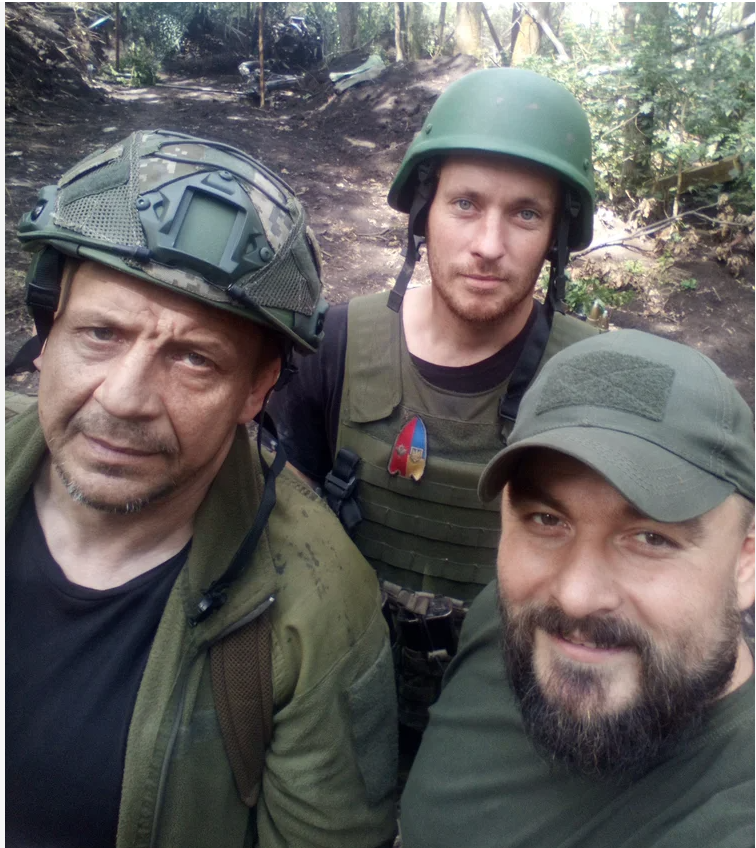
Dmytro once spent 34 days holding a position in the Sumy region. He says he constantly craved something sweet. A single Snickers bar would be shared between two soldiers and slowly savoured throughout the day. It felt like a luxury. One day, he ran out to pick some cherry plums, knowing they would be sweet because the same kind grew back home. That was when he noticed a package lying in a field — with a drone nearby.
“It turned out it had been sent to us and shot down. I thought: should I risk it and go for it, or not? I knew there would be water and food inside, so I made a dash for it — about ten metres across the open field. I opened it and there were six bottles of water, all intact. I ran back into the dugout shouting, ‘We’re living like kings!’ That’s when I realised you have to value everything. In war, the meaning of life changes,” he says candidly.
When his unit was pulled back — ordered to abandon the position — he returned to the house where he had been living with fellow soldiers. He was filthy and covered in blood after carrying a wounded fighter to safety along the way. Barely able to stand, he walked into the yard and saw strangers there. All he wanted was to see his own people and tell them everything.
“Where the hell were the guys I started with — the ones I trained with, signed contracts with? Gone… That evening, after washing up, I sat in the yard. Birds were singing, everything around me was intact, peaceful, beautiful. I thought again: you have to value every moment. And you have to pull others into that way of thinking too, so they learn to value life.”
Dmytro says the war has also made him more responsible, especially when it comes to training new recruits.
“A person’s survival depends on those skills. If we send someone to the front untrained, it means we’ve betrayed them,” he says.
His dream has come true — in war, he is among the best. He has found a level of friendship, support and solidarity he had never known before.
He is the only one from his former classmates who is serving. Almost no one writes to him or asks how he is doing. He feels he no longer has much to talk about with those who have not experienced war. But with the true friends he has met over the past year, he stays in constant contact — even when they are far away.
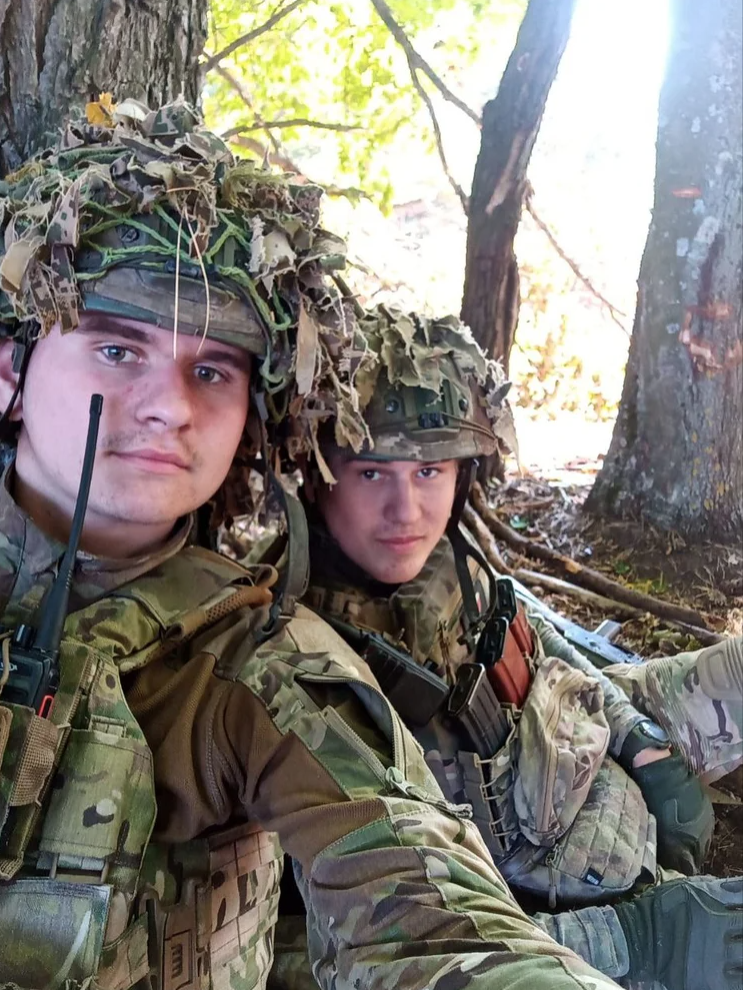
Older and younger
Yaroslav Kravchuk is now 55 — and there are few soldiers his age. Most are either men over 40 or very young recruits. He sees clear advantages among the latter.
“They are more adapted to digital technologies. More agile, healthier, more resilient and effective in extreme conditions. They don’t yet feel fear in the same way — they think they’re immortal, that death is something distant.
I remember myself when I was young, even though that was the 1990s. I lived life to the fullest. It was a time of hope. I never lost heart. Sometimes I woke up covered in blood after a fight the night before, but I always knew it was temporary.”
As for military experience, he does not believe older soldiers necessarily have more of it. New recruits are introduced gradually, sent on assignments alongside experienced fighters. Within six months, a young soldier can master skills that once took years to acquire.
Dmytro Kovalchuk agrees.
“If you compare a man at 40 and one at 20, the difference is huge. We’re better with phones, quicker at picking up fresh information. With older guys you sometimes have to explain things five times.
Life experience doesn’t really matter in war because there’s no time to think about family, a wife or children. Older soldiers have all that — and they’re more afraid. Young people feel they have less to lose. Here it’s just you, your brothers-in-arms, the enemy and danger.”
What gives strength?
Yaroslav Kravchuk clearly remembers how, instead of fairy tales, his great-grandmother and grandmother told him stories from the 1930s about being deported to Siberia, beyond Lake Baikal. The family had been dispossessed because they owned two cows. They were transported in freight wagons and only returned to Ukraine in 1954.
“My mother was just a small child then — she was born in the Irkutsk region — along with her older brother. He soon died of meningitis. My family’s history shows what follows when Moscow’s rule comes to Ukraine.
I went to stop them. And when things become very hard, I remember my relatives or visit their graves. It helps, because I know we are doing the right thing. I tell them: ‘Rest peacefully.’”
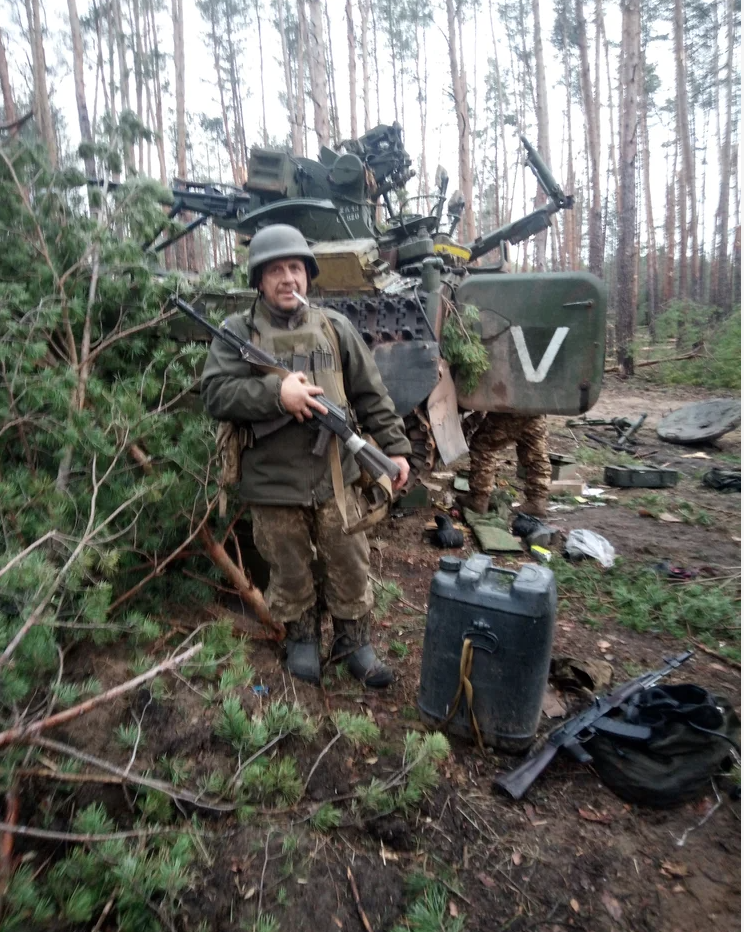
Dmytro Kovalchuk was withdrawing from a position where he had spent more than a month. He moved forward on unsteady legs across a vast cornfield. Unexploded mines lay everywhere, and he kept repeating: “Lord, save and protect me.” He felt certain he would not die there — that God would lead him out. One of his comrades stepped on a “petal” mine, shattering a bone. A drone hunted them as they moved, but the soldiers made it out.
“And all I wanted was to call my mum,” Dmytro says. The young fighter, who had avoided taking leave because he found life at war exciting, suddenly understood the strength his mother gave him — the mother who waits and prays for him.
After the war
Even now, coach Yaroslav Kravchuk finds time to run his wrestling school remotely and organise competitions. Over four years of war, four of his former students have been killed: Dmytro Konova (born 1984), Ruslan Rechko (1977), Oleksandr Zahurskyi (1988) and Andrii Yaremenko (1999). All were candidates for master of sport.
Major dreams that after the war he will train at least three Olympic champions.
“I’ll feel proud of myself when all of this is over,” he says. “And when we finish it well.”
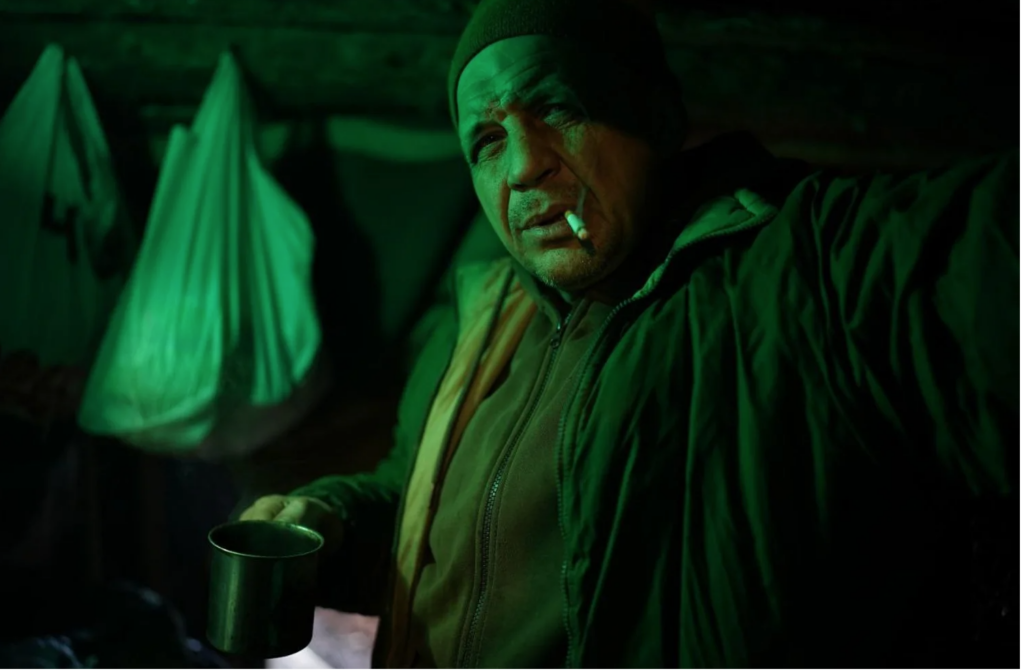
Dmytro Kovalchuk’s one-year contract expires on 13 March, and he plans to renew it. He hopes to remain in the military even after the war, helping to improve the army. As the conversation draws to a close, he recalls:
“In sixth or seventh grade, we used to draw pictures and send them to soldiers. Back then, I could never have imagined that children would one day be sending drawings to me at 18. It gives you strength. It means a lot. I really hope today’s sixth-graders won’t have to send them anymore. That’s why we’re here.”
This material was produced with the support of Mediaset.
War in Ukraine