Opinion: 'Inflated prices in Georgia’s shops result from collusion between cartels and ruling party'






Georgian Dream blamed for high food prices
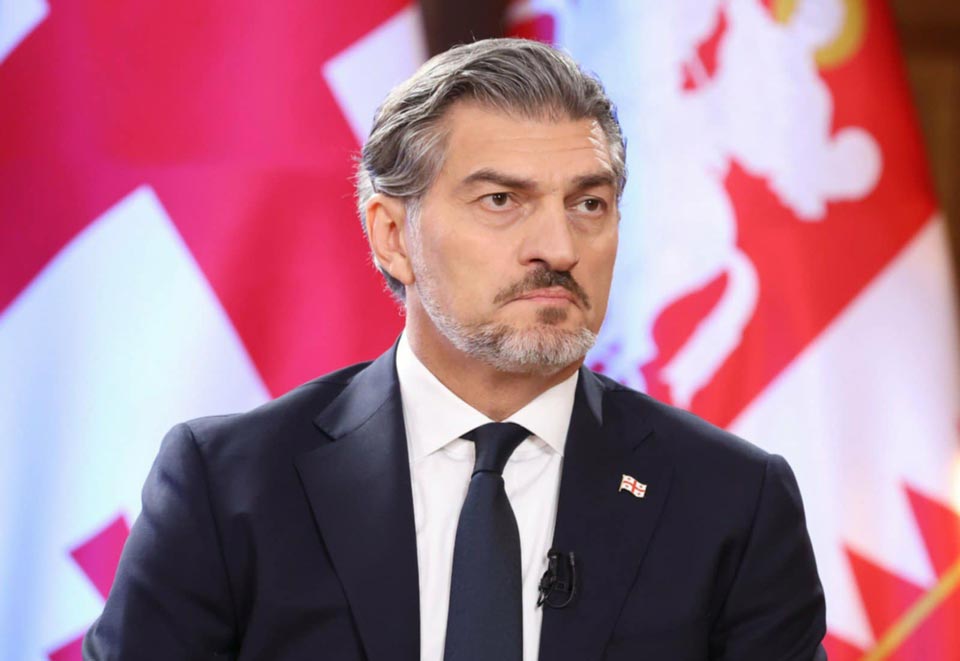
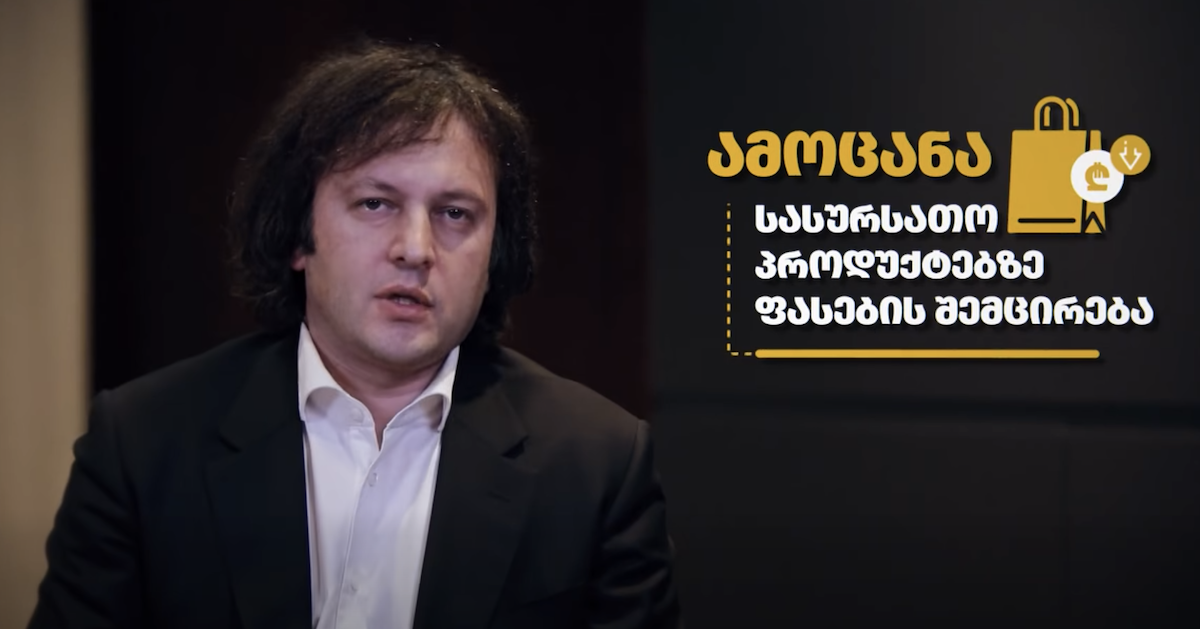
Political analyst and former Georgian Dream MP Dimitri Tsikishvili has responded to a video address by Prime Minister Irakli Kobakhidze on high prices, saying inflated shop prices are the result of collusion between cartels and the ruling party, rather than a simple outcome of economic processes.
Kobakhidze said that, in some cases, food prices in Georgian supermarkets significantly exceed those in European countries. He blamed mark-ups by retail chains and possible breaches of antitrust legislation, calling on law enforcement agencies to examine the issue.
Tsikishvili said that no matter how much Georgian Dream speaks about social justice, it remains an elite organisation obsessed with “Ferraris” and “Lamborghinis”.

Dimitri Tsikishvili: “Prices for basic food products are indeed critically high and in many cases even exceed prices in developed European countries.
The problem is real and genuinely concerns a very significant part of the population!
The reasons for this may be the following:
- Economic growth, which in itself generates inflationary pressure;
- The scale of the shadow economy, which makes prices, incomes and the economy as a whole largely uncontrollable;
- The fact that Georgia is a small market, meaning wholesale prices for imported goods are higher than in other European countries;
- High VAT, among other factors.
But the main reason is the one mentioned in the government’s own address: monopolies, oligopolies and cartel arrangements that have taken shape in recent years.
There is virtually no real competition in the country, either in terms of imports or sales, particularly at the level of supermarket chains.
This applies not only to food products, but also to household chemicals, medicines, petroleum products and much else — in short, to everything that determines living standards.
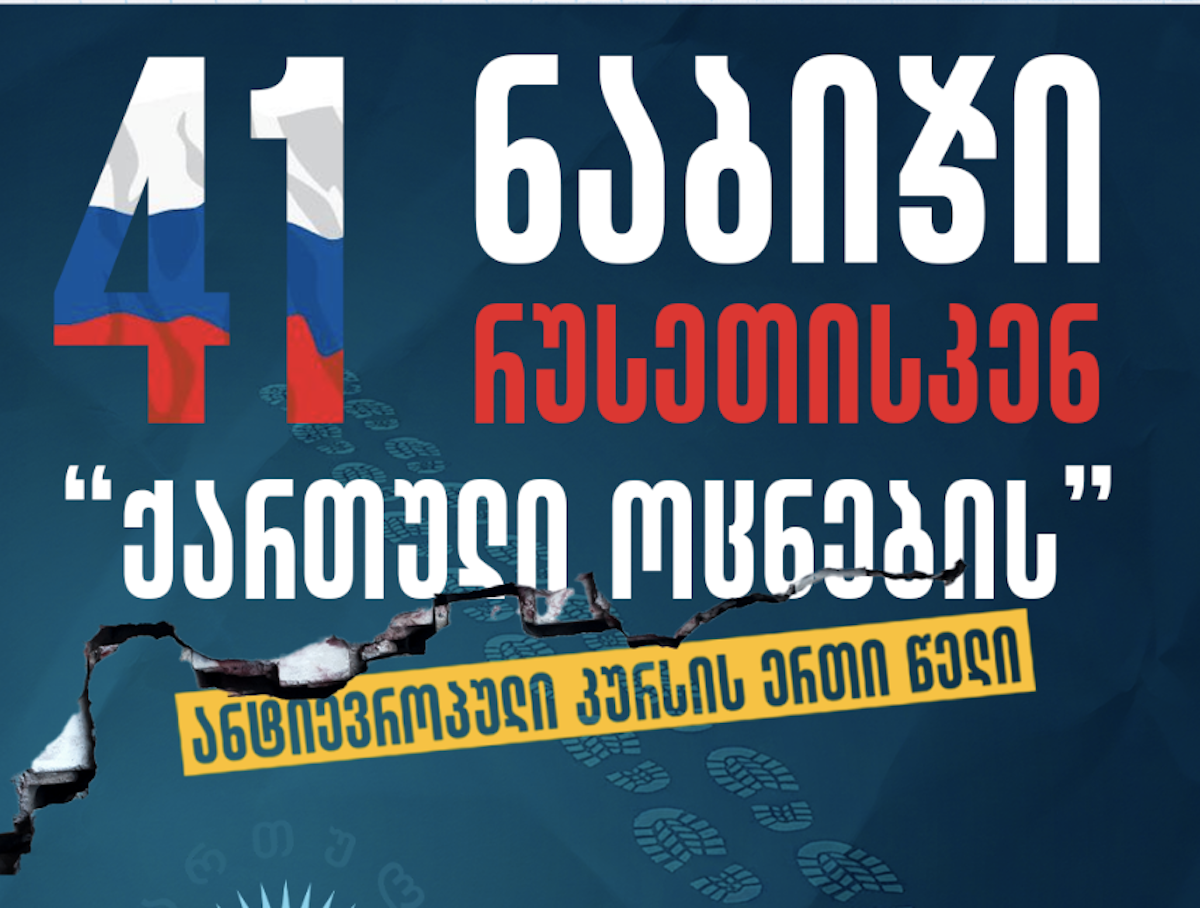
What is the government trying to do now? Is it genuinely concerned about rising prices? I am convinced it is not.
The companies that currently control key import channels and retail outlets have for years been closely linked to Georgian Dream, and in many cases artificially inflated prices are the result of joint action by cartels and Georgian Dream, rather than a mere by-product of economic processes.
What happens next?
As we have already seen in the fuel and pharmaceutical markets, the government will once again strike temporary deals with the main market players.
We will see meetings with business representatives and a sudden “awakening” of the antimonopoly agency.
There may be a few symbolic fines — selective and unsystematic.
This will undoubtedly deliver the first and quickest result: prices for certain items will indeed fall temporarily.
However, given that these measures will remain unsystematic and still manipulative, prices will after some time return to previous levels, “discounted” goods will disappear from shelves, or, worse, be replaced by low-quality, cheap products — as happened with low-cost Turkish medicines.
What can be done in practice:
- Ensure the functioning of a genuinely independent antimonopoly authority;
- Enforce antitrust legislation effectively;
- Develop democratic institutions for market regulation and the promotion of competition;
- Strengthen civic oversight;
- Guarantee an independent judiciary that protects competition and consumers unfairly pressured by the state or large companies;
- Safeguard the independence of the National Bank and curb the dominant role of two major banks in the banking sector;
- Carry out a fundamental tax reform and move towards a European model (lower VAT, higher profit tax, stronger social insurance and a gradual reduction of social assistance);
- Reduce the size of the shadow economy and shift to a development-oriented economic model.
Economic integration with Europe implies strengthening political institutions that protect consumer rights and counter cartels and the existence of mafia-style business structures in the country.
It is worth recalling that the creation of an independent antimonopoly authority was a mandatory requirement under the EU–Georgia Association Agreement. However, Georgian Dream turned it into a fiction, just as it dismantled the Anti-Corruption Bureau.
Under Georgian Dream’s anti-democratic and anti-European policies, these systemic reforms will not and cannot be implemented.
No matter how much Georgian Dream speaks about social justice, it remains an elite organisation obsessed with “Ferraris” and “Lamborghinis”.