Top stories in Azerbaijan, Armenia, and Georgia from 8-12 December, 2025
 Live
Live




-
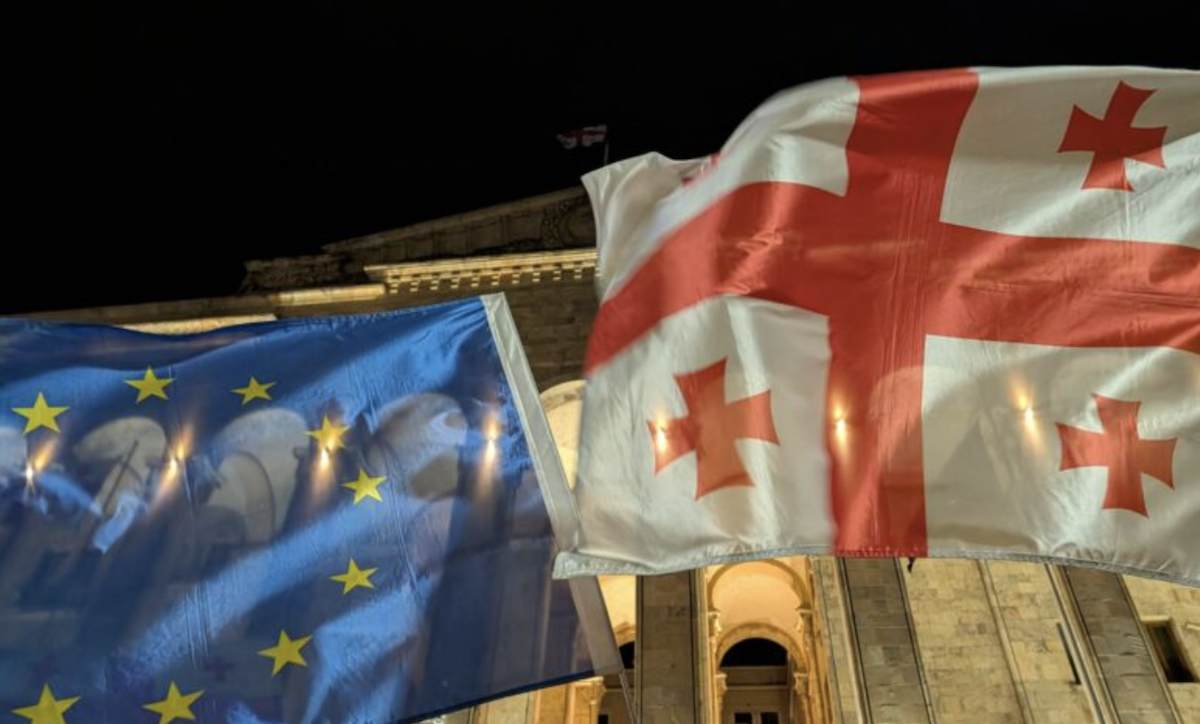
Friday, December 12, Georgia. The UN Special Rapporteur believes an independent investigation is necessary following the BBC film about the possible use of the toxic agent “kamit” against protesters in Georgia
-
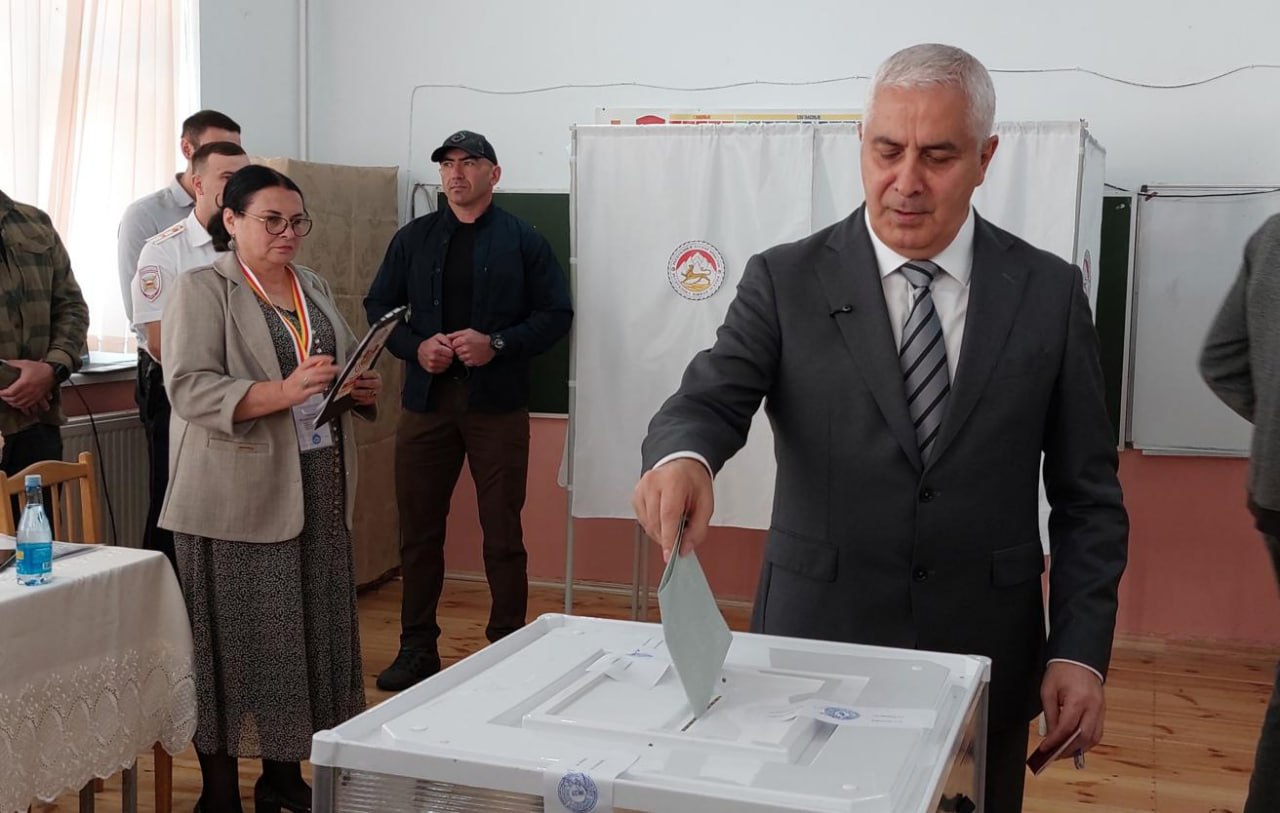
Friday, December 12, Azerbaijan. The criminal trial of the former leaders of the former unrecognized “NKR” is nearing its end
-
Friday, December 12, Armenia. Nikol Pashinyan proposes that Baku simultaneously close the issues of the return of both Karabakh Armenians to Azerbaijan and Azerbaijanis to Armenia
-
Thursday, December 11, Armenia.
-
Thursday, December 11, Azerbaijan.
-
Wednesday, December 10, Azerbaijan. Azerbaijan’s Foreign Ministry protested several points in the EU–Armenia “Strategic Partnership Agenda”
-
Wednesday, December 10, Armenia. Armenia and Germany signed a Joint Declaration on Strategic Partnership
-
Wednesday, December 10, Georgia. The speaker of the Georgian Dream's parliament: “The war in Ukraine began because that country wanted to join NATO"
-
Tuesday, December 9, Armenia. Nikol Pashinyan is proposing a plan for how to “restore the Armenian Apostolic Church after the removal of the Catholicos”
-
Tuesday, December 9, Azerbaijan. Azerbaijan and Slovakia plan to launch joint weapons production
-
Tuesday, December 9, Georgia. New tightening of rules against participants of the pro-European protests that have been ongoing continuously for over a year
-
Monday, December 8, Georgia. Former high-ranking Interior Ministry official confirms the use of the toxic agent ‘kamit’ against protesters
-
Monday, December 8, Azerbaijan. Iran’s Foreign Minister is visiting Baku
-
Monday, December 8, Armenia. The liturgy in Gyumri and the new escalation between the authorities and the church leadership
-
Top stories in Azerbaijan, Armenia, and Georgia from 1-5 December, 2025

-
Friday, December 12, Georgia. The UN Special Rapporteur believes an independent investigation is necessary following the BBC film about the possible use of the toxic agent “kamit” against protesters in Georgia
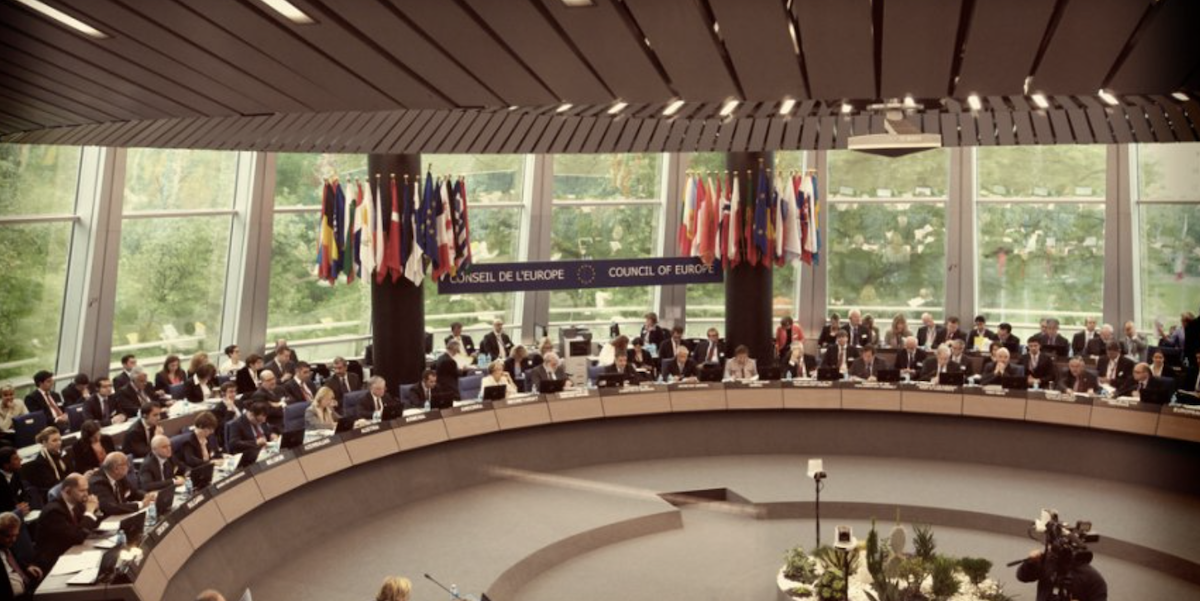
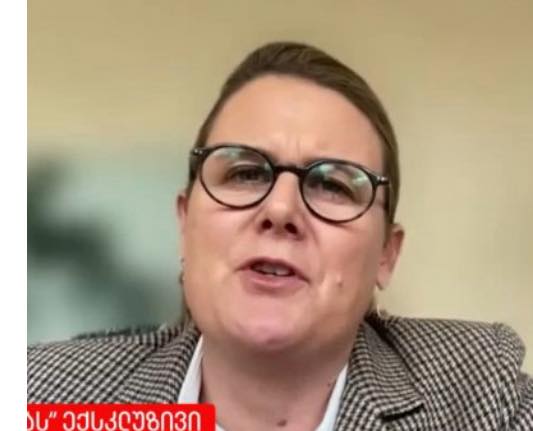
● UN Special Rapporteur on torture, cruel, inhuman or degrading treatment or punishment, Jill Edwards (pictured), commented on the BBC investigative film about the possible use of the toxic agent “kamit” against protesters in Georgia. She considers the investigation conducted by the State Security Service on this issue to be irrelevant. “One of the basic principles of international law is that a government cannot investigate itself,” Edwards told Formula TV. “One of the most important aspects of state power is transparency, and this requires transparent, independent, and impartial investigations. For example, I would call for using the mechanisms of the Council of Europe,” she said. In this context, Edwards recalled an incident in Serbia, when President Aleksandar Vučić was accused of using sonic weapons against demonstrators. Shortly after that, the European Court banned the Serbian government from using so-called jammers, which are mainly military devices. “I wrote about this to the Georgian government together with other Special Rapporteurs, but we still have not received an official response. Until an official response is received, the situation remains a ‘black hole’ for me,” the UN Special Rapporteur said.
● “Georgian Dream” is creating a registry of people with mental disorders. Parliament, formed by the ruling party, has already adopted in the third reading the corresponding amendments to the Law on Mental Health. According to information published on the official website, mental health data will be entered into a unified information database of people with mental health problems, alcoholism, drug addiction, and/or substance abuse. The explanatory note to the amendments states that the Ministry of Internal Affairs will play an active role in creating this database, and its formation is planned to be completed by March 1, 2026.
● Psychologist Jana Javakhishvili criticizes these amendments. “According to the explanatory note, the changes concern issuing citizens various kinds of driver’s licenses and the right to operate vehicles. In the absence of a reliable source of information, the state cannot properly ensure the effective functioning of mechanisms aimed at public safety. For example, determining a person’s health status in accordance with Georgian legislation is a problem,” Javakhishvili said.
● The “Georgian Dream” Prime Minister Irakli Kobakhidze is on a visit to Turkmenistan, where he is participating in events marking the 30th anniversary of that country’s recognition of permanent neutrality. He held a meeting with President Serdar Berdymukhamedov. It was reported that the prospects of the Trans-Caspian route (the Middle Corridor) were discussed. An important aspect mentioned was the plan to attract additional cargo from Central Asia to Georgia’s seaports along this route. Kobakhidze declared the country’s willingness to support the transit of Turkmen gas through Georgia and invited Berdymukhamedov to make an official visit to Georgia.
● Well-known designer Datuna Sulikashvili has been detained on charges of drug trafficking.
-
Friday, December 12, Azerbaijan. The criminal trial of the former leaders of the former unrecognized “NKR” is nearing its end
● Events are being held in Azerbaijan today marking the 22nd anniversary of the death of Heydar Aliyev, the former president, father of the current president, and regarded as the national leader of the country. Leaders of all government agencies are publishing messages to commemorate the date. Foreign Minister Jeyhun Bayramov wrote on social media: “The wisdom of the great leader Heydar Aliyev, his unwavering dedication to national interests, and his invaluable contribution to strengthening the traditions of statehood have left an indelible mark on our history and continue to live on today as a precious legacy guiding Azerbaijan’s development.”
● The foreign ministers of Azerbaijan and Hungary, Jeyhun Bayramov and Péter Szijjártó, issued a joint statement following the 3rd session of the Strategic Dialogue held in Budapest. They noted progress in cooperation in political, economic, energy, and other areas, as well as the strengthening of the strategic partnership. It was reported that special attention was given to Hungary’s participation in the reconstruction of Azerbaijani territories liberated from Armenian occupation.
● Hungary will purchase 800 million cubic meters of gas from Azerbaijan over the next two years. Azerbaijan’s state oil company SOCAR and Hungary’s MVM ONEnergy signed the new agreement. MVM Group owns a 5% stake in the Shah Deniz project and a 4% stake in the South Caucasus Pipeline Company (SCPC), the operator of the South Caucasus gas pipeline.
● Prime Minister Ali Asadov is visiting Turkmenistan, where he is participating in events marking the 30th anniversary of the country’s recognition of permanent neutrality. Asadov met with President Serdar Berdimuhamedow and conveyed greetings and congratulations from Azerbaijan’s President Ilham Aliyev. According to the press release, the meeting highlighted the high level of political dialogue between the two countries and the prospects for the development of bilateral cooperation.
● Ali Asadov also met in Ashgabat with Georgian Prime Minister Irakli Kobakhidze. It is reported that he conveyed greetings from President Ilham Aliyev. The press release notes the strong momentum in the Azerbaijan–Georgia strategic partnership across various sectors.
● Azerbaijan’s embassy in Thailand has officially opened.
● The criminal trial of the former leaders of the former unrecognized “Nagorno-Karabakh Republic (NKR)” is nearing its end. They are accused of war crimes, terrorism, attempting to overthrow the government, and other serious offenses. According to state agency AZERTAC, at the December 11 hearing, prosecutors and defense lawyers delivered their closing statements. The defendants also delivered their final remarks.
• The state prosecutor stated that, according to the evidence presented in court, “criminal groups began forming several years before the start of the first Karabakh war, and these groups were supported and armed by the leadership of Armenia.”
“The defendants carried out the functions they had assumed in order to achieve the unified goals of this criminal community — the annexation of Azerbaijan’s formerly occupied territories to Armenia.”• The lawyer representing the victims emphasized that “practically none of the defendants showed sincere remorse for their actions.”
• Defense lawyers argued that their clients were merely following orders and requested acquittals.
• In their final statements, most of the defendants said they did not consider themselves guilty, insisting they had committed no crimes and were acting in accordance with the “laws of the NKR.”
• Levon Balayan and Madat Babayan said: “I had a weapon, but I did not shoot at people; shots were fired into the air.”
• Defendant Erik Kazaryan said that between 2021 and 2023 he served as a soldier in the Armenian armed forces, fulfilled his military duty, and does not consider himself guilty.
• Defendant David Manukyan (former “deputy commander of the NKR army”) presented his counterarguments to the prosecution’s claims. However, the court then announced a recess; his final statement will continue at the next hearing on December 19.
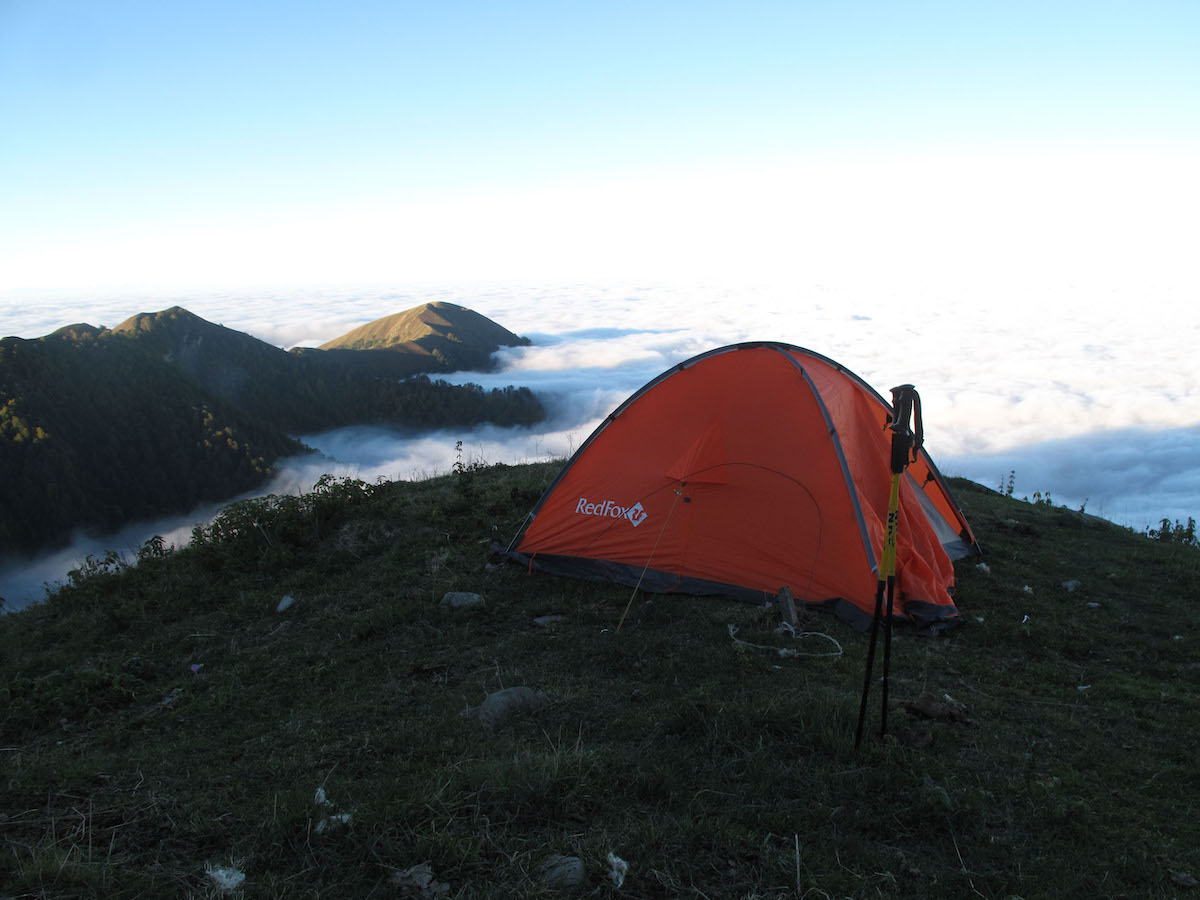
The JAMnews photo was taken near the village of Ilisu
-
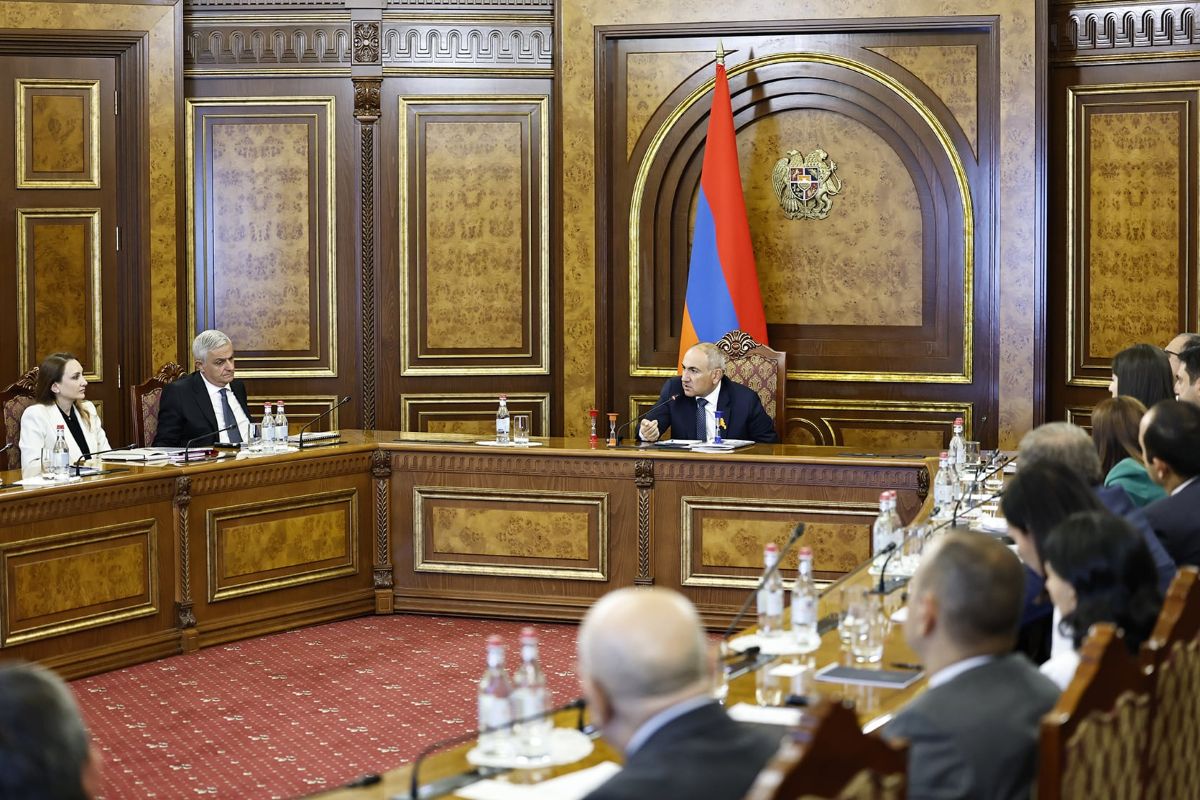
Friday, December 12, Armenia. Nikol Pashinyan proposes that Baku simultaneously close the issues of the return of both Karabakh Armenians to Azerbaijan and Azerbaijanis to Armenia
● Prime Minister Nikol Pashinyan made a sensational statement. He proposed that Azerbaijan jointly develop a roadmap and simultaneously close the questions of the return of both Karabakh Armenians to their homes and Azerbaijanis to Armenia (the so-called “Western Azerbaijan” project). This proposal came in response to a statement by Azerbaijan’s Foreign Ministry, which harshly criticized the EU–Armenia strategic partnership document. In particular, Azerbaijan objected to the phrase “Armenians from Karabakh who became refugees after Azerbaijan’s military actions.” The prime minister reiterated his long-held view: that the issue of Azerbaijanis returning to Armenia and Armenians returning to Azerbaijan does not contribute to peace. Read more here
● Former foreign minister Vartan Oskanian stated that Pashinyan’s remarks “endanger Armenia’s state interests and the future of the Armenian people.” “It is simply unbelievable what Pashinyan is ‘offering’ the Azerbaijanis. He urges them to stop calling the territory of Armenia ‘Western Azerbaijan’ and to give up the idea of settling Azerbaijanis in Armenia, promising in return that the Armenian side will close the issue of ‘the return of Karabakh Armenians.’ There can be no parallel between these topics — neither in terms of international law nor basic logic. Dozens of international agreements, conventions, and precedents grant the Armenian people the right not only to return to a formerly autonomous region predominantly populated by Armenians, but also to discuss the status of this region within the framework of international law, up to sovereignty. By equating these issues, Pashinyan has paved the way for Azerbaijan to bring its aggression against Armenia — which lacks any legitimacy under international law — onto the agenda,” Oskanian wrote on social media.
● Investigative Committee officers searched the Yerevan office of the former unrecognized Nagorno-Karabakh Republic.
“With the help of rescuers they opened a safe and found only empty folders and an Azat Artsakh newspaper,” lawyer Roman Yeritsyan told journalists. He believes the search is political rather than legal. “Law enforcement came for documents that would essentially contain information about certain deals or economic activities, but found none,” the lawyer said.
Many social media users noted that the timing of the search — the day after parliamentary hearings on the return of Karabakh Armenians to their homes — was unlikely to be a coincidence.● Former president Serzh Sargsyan, known for his pro-Russian stance, commented on Azerbaijan’s statement that the “EU–Armenia Strategic Partnership Agenda” hinders the peace process.
“And what will hinder Azerbaijan next? They’ll come up with something else,” Sargsyan said.● Prime Minister Nikol Pashinyan is in Moscow, where he took part in a meeting of the Eurasian Intergovernmental Council (operating under Russian leadership). “It is necessary to move consistently toward the creation of fully functioning common markets that ensure effective interaction, transparency, and a balance of interests among all sides,” Pashinyan said at the meeting.
● Armenia will receive a duty-free quota of 15,000 electric vehicles for 2026 from the Eurasian Economic Union, Economy Minister Gevorg Papoyan announced on Facebook.
● “At some point Armenia will have to choose between the European Union and the Russia-led Eurasian Economic Union. It is impossible to remain in both,” Russian Deputy Prime Minister Alexei Overchuk told journalists.
● “Armenia remains a full member of the CSTO (the Russia-led military alliance) and retains all of its corresponding rights and obligations. There are absolutely no obstacles to Armenia resuming active, normal, full participation in the organization,” Russian Foreign Ministry spokesperson Maria Zakharova said at a briefing.
● Delegates from the EU’s first assessment mission visited Armenia’s Investigative Committee, where they discussed the committee’s functions and capacities. They also talked about international cooperation and legislative reforms related to the committee’s work.
● President Vahagn Khachaturyan is on a visit to Turkmenistan, participating in events marking the 30th anniversary of the country’s recognition of permanent neutrality. He held a meeting with President Serdar Berdimuhamedow. According to the press release, the sides discussed expanding cooperation in the energy and telecommunications sectors.
-
Thursday, December 11, Armenia.
● Armenia’s Foreign Ministry responded to the statement by Azerbaijan’s foreign ministry claiming that the EU–Armenia strategic partnership agenda contradicts the peace process between Armenia and Azerbaijan.
“We emphasize that the Armenia–EU strategic partnership agenda reflects the substance of the bilateral partnership that has been formed and is deepening between Armenia and the European Union, based on shared values and mutual interests. It reflects not only the European aspirations of Armenia’s citizens, but also the EU’s commitment to supporting sovereignty, territorial integrity, democracy, and socio-economic resilience. It is obvious that this in itself only contributes to efforts aimed at further strengthening peace in the region.It should be noted that in the joint statement adopted following the Armenia–EU Partnership Council meeting held on the same day, in addition to support expressed on other occasions, the EU welcomed the historic milestone achieved between Armenia and Azerbaijan at the peace summit in Washington in August of this year, including the initialing of the ‘Agreement on the Establishment of Peace and Inter-State Relations between Armenia and Azerbaijan.’ The EU reaffirmed its strong support for further strengthening and institutionalizing peace between Armenia and Azerbaijan,” Foreign Ministry spokesperson Ani Badalyan told Armenpress.
● Parliament Speaker Alen Simonyan told journalists that another section of the Armenia–Azerbaijan border will be demarcated in the near future. “I cannot say anything specific about the section, nor about the timing. I think it will be in the first quarter of next year,” he said.
● “It is not a bad thing that Armenia’s corruption perception index remained unchanged in 2023 and 2024. It means there is no regression,” Justice Minister Srbui Galyan said. She recalled that progress had been recorded after the “Velvet Revolution,” and it has been maintained. “As for whether systemic corruption exists or not — my answer is that there is no systemic corruption in Armenia. Fortunately, we have a state in which no minister, deputy minister, or other high-ranking official is guaranteed protection from criminal prosecution. On the contrary, it is practically guaranteed that such cases will be initiated — and the current examples prove this. Of course, there is episodic corruption, but I can say it has always existed, ever since the emergence and development of society,” she stressed.
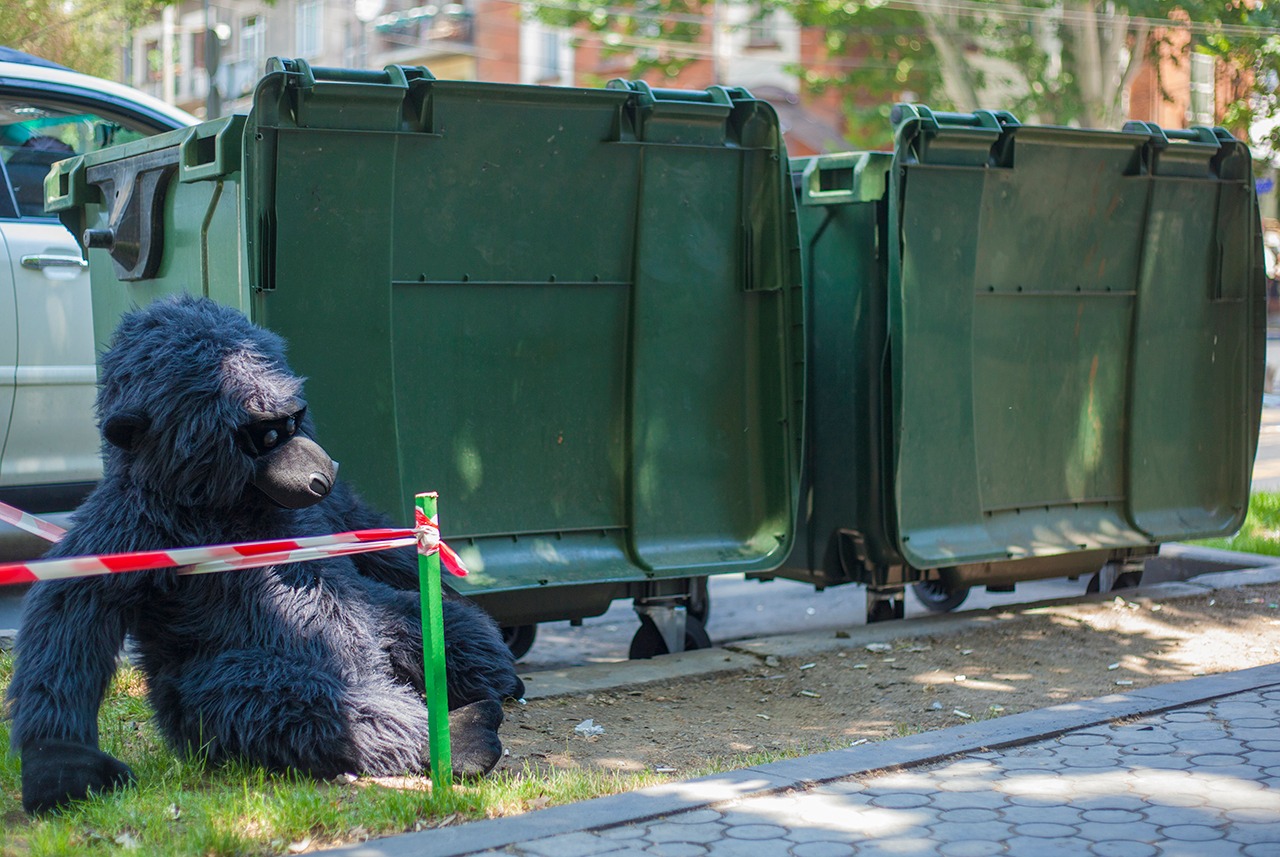
● A protest action was held outside the EU Delegation in Yerevan, featuring a poster with the well-known ‘see no evil, hear no evil, speak no evil’ monkey symbol. Participants said they were protesting the EU’s silence regarding developments in Armenia and Azerbaijan. Tigran Abrahamyan, secretary of the opposition “I Have Honor” faction, said that people in Armenia are facing political persecution, some of whom are behind bars. “At the same time, our compatriots are in a Baku prison, becoming subjects of a fake trial. Azerbaijan confirms the existence of 23 captives, but there is evidence of roughly 80 captives, which Azerbaijan denies. What is happening in Azerbaijan has nothing to do with European values. Your silence is support for Azerbaijan,” he said.
● Prime Minister Nikol Pashinyan told journalists: “I will travel from Hamburg to Moscow. There I will take part in the meeting of the EAEU Intergovernmental Council. We are deepening relations with the EU, and from here I am going to Moscow. Is this compatible? On the one hand, we are deepening our relations with the European Union, and on the other, I am going to Moscow. There is no contradiction, because in reality both processes are underway. When the moment comes and we understand that incompatibility exists, then we will decide what steps to take.”
● The prime minister flew from Hamburg to Moscow in the evening. However, according to Russian media, his plane was unable to land in Moscow due to closed airspace following a nighttime Ukrainian drone attack. As the aircraft approached Moscow, it was turned around and redirected to an alternate airport in St. Petersburg. Reports say the plane circled over the Tver region for nearly an hour waiting for landing permission, which was never granted. It eventually landed at Pulkovo Airport at around 1 a.m.
● As part of his official visit to Germany, Prime Minister Pashinyan met with Hamburg Mayor Peter Tschentscher. The sides discussed decentralized cooperation aimed at advancing Armenia–Germany relations. In particular, they spoke about expanding and deepening ties in the economic, investment, educational, and technological spheres. The Armenian prime minister also visited the Hamburg Chamber of Commerce, where he met with local business representatives.
-
Thursday, December 11, Azerbaijan.
● President Ilham Aliyev has sent a letter of gratitude to U.S. President Donald Trump in response to an earlier message from Trump. In that letter, Trump thanked Aliyev for nominating him for the Nobel Peace Prize. Aliyev wrote: “I firmly believe that your consistent commitment to conflict resolution, your personal engagement in promoting dialogue, and your contribution to reducing tensions in various parts of the world fully deserve international recognition at the highest level, including the Nobel Peace Prize. Your leadership, based on determination and responsibility, is a true example of service to strengthening global peace. I am confident that through continued dialogue and cooperation, our partnership will further contribute to peace, security, and prosperity in our countries and beyond.”
● A bill has been introduced in the U.S. Congress to lift restrictions on providing assistance to Azerbaijan. The initiative comes from Republican congresswoman Anna Paulina Luna of Florida. The announcement was published on the U.S. House of Representatives website; the full text of the bill will be released later. In August, President Donald Trump signed a document suspending Section 907 of the “Freedom Support Act.” Adopted in 1992 during the first Karabakh war, Section 907 banned U.S. government assistance to Azerbaijan over the blockade imposed on Armenia.
● Azerbaijan’s special representative Elchin Amirbekov expressed serious concern during meetings in Brussels over the “EU–Armenia Partnership Agenda” document. He stated that the document “artificially brings back issues that do not reflect reality and are no longer being discussed between the parties, harming the peace agenda in the region and Azerbaijan–EU relations.” He expressed hope that Armenia and the EU would take concrete steps to remove provisions that do not correspond to the actual situation.
A day earlier, Azerbaijan’s Foreign Ministry had protested certain points of the document, calling them “directed against Azerbaijan.”
● The appeal of Ali Karimli, the arrested chairman of the Azerbaijani Popular Front Party, has been rejected — he will remain in custody during the investigation. He is accused of attempting to seize power by force, which he denies, calling the case politically motivated. Karimli and his adviser Mamed Ibrahimli were detained in the same criminal investigation as the previously arrested former political “gray cardinal” Ramiz Mehtiyev, who for decades headed the Presidential Administration.
● Foreign Minister Jeyhun Bayramov is on a working visit to Hungary, where high-level meetings and the 3rd session of the Azerbaijan–Hungary Strategic Dialogue are planned.
● Presidential aide Hikmet Hajiyev met in Baku with Russian Deputy Foreign Minister Mikhail Galuzin. They discussed bilateral, regional, and international issues.
-
Wednesday, December 10, Azerbaijan. Azerbaijan’s Foreign Ministry protested several points in the EU–Armenia “Strategic Partnership Agenda”
● Azerbaijan’s Foreign Ministry protested several points in the EU–Armenia “Strategic Partnership Agenda,” signed after the Partnership Council meeting in Brussels. The ministry stated that the document contradicts the Armenia–Azerbaijan peace process. They called unacceptable the inclusion of points “directed against Azerbaijan” in a bilateral document that sets strategic priorities for the next seven years between the EU and Armenia.
The document refers to “Karabakh Armenians who became displaced persons after Azerbaijan’s military actions” and classifies them as “refugees.” The MFA reminded that the Armenian residents of Karabakh rejected Azerbaijan’s reintegration plan and left the region voluntarily. Declaring this issue a partnership priority between the EU and Armenia is “a clear example of bias against Azerbaijan.” The statement also criticizes the document’s mention of EU support for the “full, immediate, and effective implementation” of all relevant rulings of the International Court of Justice, saying it clearly refers to Armenian claims against Azerbaijan. Raising a bilateral issue by a third party “is illogical” and ignores Azerbaijan’s own legal claims against Armenia. The MFA added that since the draft peace agreement initialed in Washington contains provisions on dropping such claims, bringing this up in an EU–Armenia document contradicts the peace process and raises questions about Armenia’s stated intentions.
Azerbaijan also rejected as “unacceptable” the classification of ethnic Armenians convicted of crimes against humanity and war crimes in Azerbaijan as “prisoners,” and the suggestion that their release should be a separate priority. The MFA noted that the EU–Armenia document supports Armenia’s “Crossroads of Peace” initiative, which lacks regional consensus, while failing to mention the TRIPP project agreed on at the August 8 summit in Washington—raising doubts about Armenia’s commitment to TRIPP and the EU’s declared support.
The ministry reminded that Article 7 of TRIPP prohibits hosting third-party forces on the shared border. However, the document focuses not on ending the EU Monitoring Mission in Armenia (EUMA), but on maintaining and strengthening it—another source of concern. “We expect Armenia and the EU to take concrete steps to remove these harmful and unrealistic points. We will closely monitor the situation and draw the necessary conclusions,” the MFA said.
● President Ilham Aliyev thanked Slovakia for supporting the reconstruction of Karabakh and assisting Azerbaijan in demining. He noted that Slovak equipment is helping save lives and prevent injuries. Since the end of the 2020 war, more than 400 people have been killed or seriously injured by landmine explosions. Aliyev concluded his official visit to Slovakia on December 9.
● Speaking at the reception, Slovak President Peter Pellegrini said the two countries are “opening a new chapter in energy, economic, and defense cooperation,” with significant potential for expansion. A joint arms production venture is reportedly planned.
● Iran, Azerbaijan, and Russia held the first meeting of their trilateral working group on transit transportation. Work has begun to remove trade barriers and simplify transit procedures, according to Iran’s IRNA agency. The meeting follows efforts to increase trade and implement the 2022 memorandum of understanding and the agreement signed in October 2025. Current trade volume is “far below its real potential,” said Iranian customs official Ebrahim Nagdi.
● Moldova and Azerbaijan are actively negotiating expanded cooperation in the gas sector, including potential Moldovan access to regional supply routes via the Greece–Bulgaria–Romania–Moldova corridor. Moldova views this as strategically important as it has recently reduced its dependence on Russia as its sole gas supplier, Moldovan Ambassador Alexandru Esaulenko told the pro-government outlet Report.
● About 13.4% of Azerbaijan’s territory—11,667 sq km—remains contaminated with landmines laid by Armenia during years of occupation. Since 1991, more than 3,400 people have been victims of mines, The Belgium Times reported, citing presidential representative Elchin Amirbekov. Since late 2020, $464 million has been spent on demining, including $23.9 million in international aid. Thirteen countries and eleven international organizations are involved.
● The trial of Ruben Vardanyan, former “state minister” of the former self-proclaimed “Nagorno-Karabakh Republic,” continues. He is accused of torture, mercenarism, war crimes, terrorism, and other offenses. According to state agency Azertac, the latest hearing concluded witness testimonies from those injured or who witnessed killings during periods when Armenian forces were active under his leadership. The trial now moves to its next phase; the next hearing is set for December 12.
● One of the victims of the December 9 explosion in a private home in Baku has died. Another remains in intensive care in moderate condition. The cause of the explosion has not yet been officially reported.
● In the third quarter, the number of payment-card fraud cases in Azerbaijan increased 3.9 times, the Central Bank reported. 98.9% of cases occurred in online commerce and mobile apps.
-
Wednesday, December 10, Armenia. Armenia and Germany signed a Joint Declaration on Strategic Partnership
● Armenia’s Security Council Secretary Armen Grigoryan and Azerbaijani presidential aide Hikmet Hajiyev gave a joint interview to Euronews. Grigoryan said that the leaders of Armenia and Azerbaijan are thinking about how to ensure peace and stability in the region, which has led to discussions on how to institutionalize peace and move forward. “The progress is enormous, and we acknowledge this. In any conflict, the sides lack trust, but we are working on it. Implementing regional economic projects will strengthen interdependence, reinforce peace, and bring economic benefits to both societies,” he said.
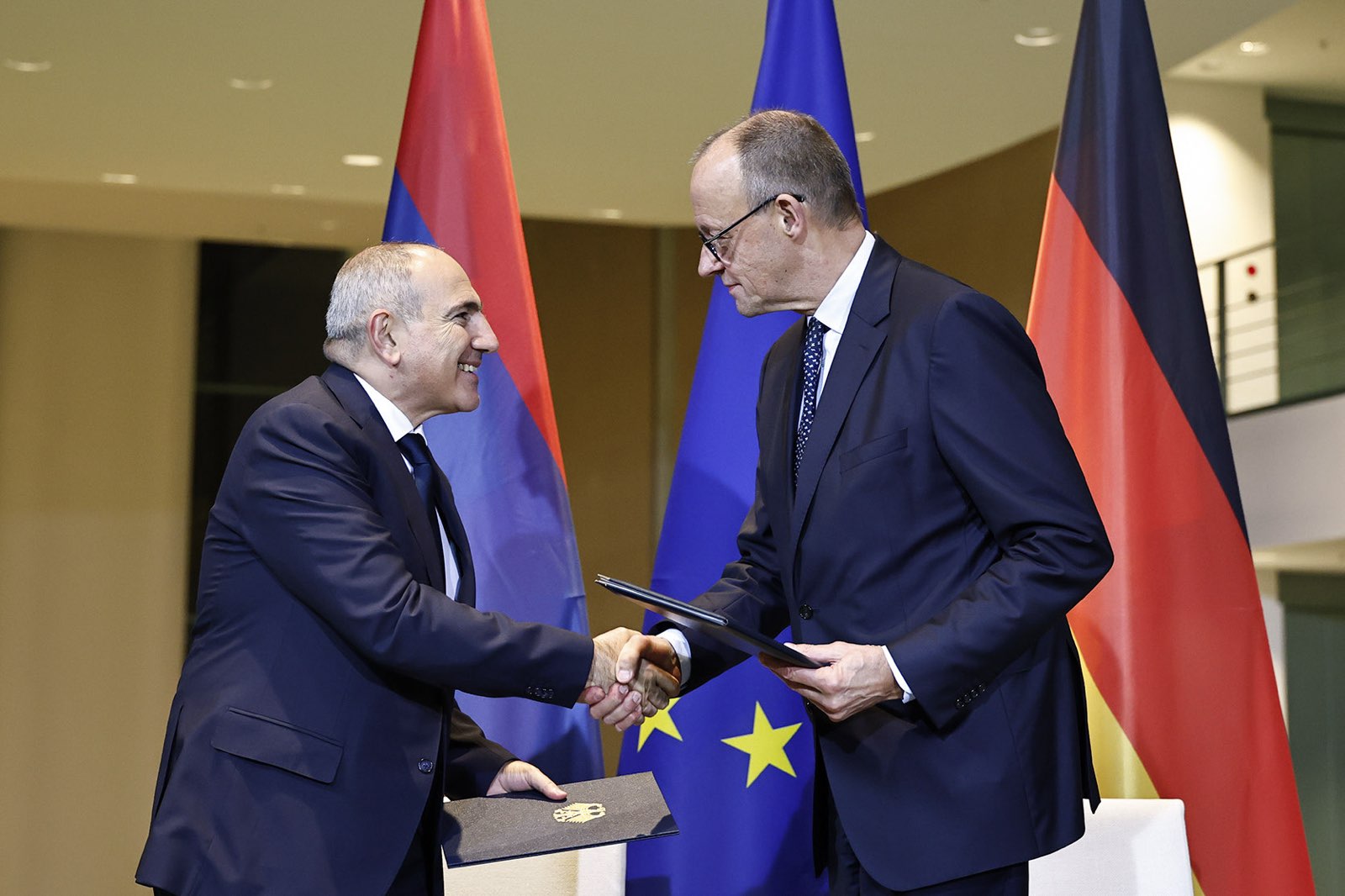
● Armenia and Germany signed a Joint Declaration on Strategic Partnership during Prime Minister Nikol Pashinyan’s visit. “This is a historic visit. Relations between Armenia and Germany are entering the phase of strategic partnership,” the PM stated.
● “Peace with Azerbaijan benefits Armenia, Azerbaijan, the South Caucasus, and the EU,” Pashinyan said during his meeting with German Chancellor Friedrich Merz.
● As part of the Armenia–EU visa-liberalization dialogue, the first EU mission to assess implementation of the Action Plan has arrived in Armenia. Both sides underlined that the documents being prepared must be comprehensive and practically applicable. Mission members praised the constructive partnership with Armenia. The European Commission’s first report on the Action Plan is expected ahead of the European Political Community summit.
● Several civil society organizations and public figures issued a statement condemning what they see as actions by the authorities undermining the autonomy of the Church. “Attempts by the authorities to interfere in the formation of church administrative bodies and internal decision-making are illegal and reprehensible. Attempts to arbitrarily edit or change church canons, traditions, rituals, sacraments, hierarchical structures, and other areas of church life formed over centuries are also unacceptable,” the statement says.
● On December 9, Armenia’s first president Levon Ter-Petrosyan met with Russian Ambassador Sergey Kopyrkin at his residence. They exchanged views on current Armenia–Russia relations and prospects for their development. Ter-Petrosyan is one of the harshest critics of Prime Minister Nikol Pashinyan’s policies. Local media report that this is their third meeting since the beginning of the year.
● It is becoming increasingly difficult for state institutions to compete with the private sector in attracting and retaining top talent, mainly because of salary levels. This was stated by Economy Minister Gevork Papoyan during a panel discussion at the First Conference of Armenian State Body Representatives.
● Tbilisi hosted the third joint meeting of the parliamentary commissions of Armenia and Georgia. They discussed current processes stemming from the strategic relations between the two countries.
● The President stated that Armenia shows its worst indicators in the area of the rule of law.
● “In Armenia, the time of hypocritical scoundrels has come,” wrote former MP and opposition public figure Mikran Akopyan, who was beaten the previous day. He was attacked in the parking lot of the Dalma Mall shopping center. His lawyer said the attackers were masked. Akopyan sustained bodily injuries.
● In Armenia’s Ararat region, a 15th-century Gospel manuscript was stolen. The valuable item was kept in the village of Taperakan, according to social-media posts by the Matenadaran Museum-Institute of Ancient Manuscripts. The institution stressed the need to regulate the storage of such artifacts kept in private homes.
-
Wednesday, December 10, Georgia. The speaker of the Georgian Dream's parliament: “The war in Ukraine began because that country wanted to join NATO"
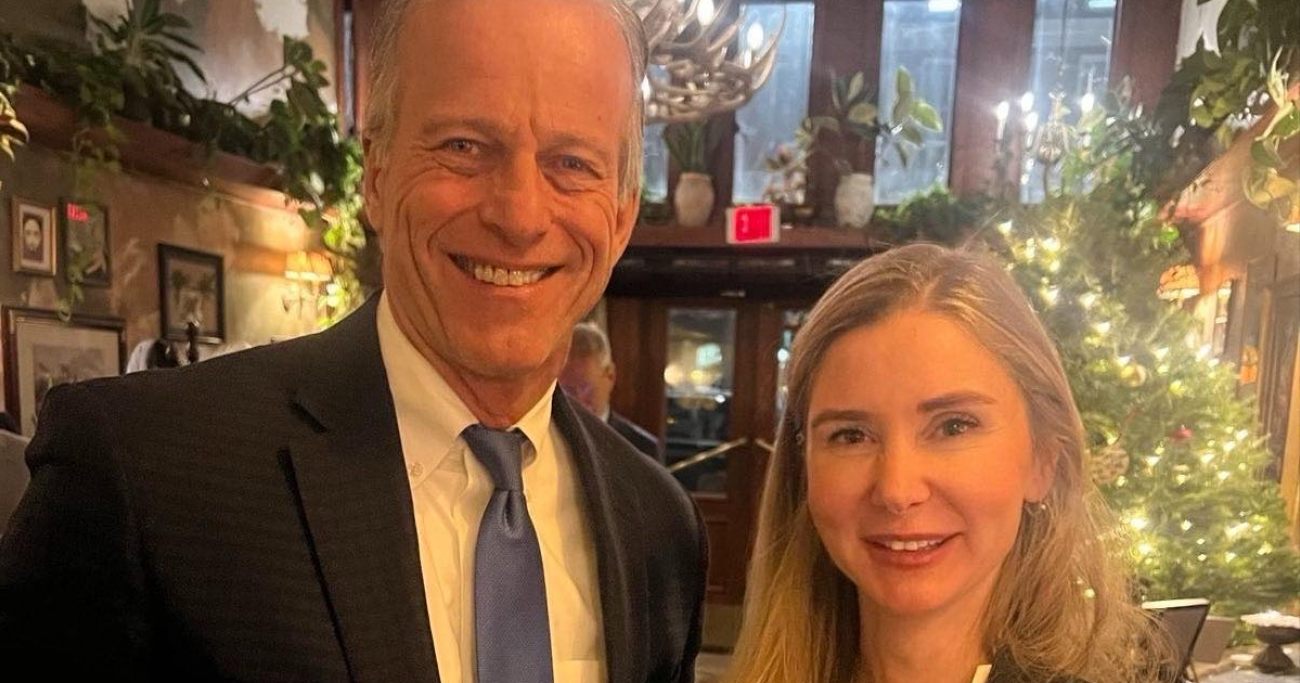
● Tina Bokuchava, chair of the opposition United National Movement, met with John Thune, the U.S. Senate Republican Majority Leader, who earlier, according to The Hill, declined to support the MEGOBARI bill proposing sanctions against the leadership of the ruling Georgian Dream for democratic backsliding. Bokuchava said they discussed “the most serious crisis in Georgia, possible solutions, and restoring Georgian-American friendship.” She wrote on Facebook: “No matter how hard Russia, Bidzina Ivanishvili, or any forces acting against Georgia’s national interests try, my meeting with Senator Thune reaffirmed that the U.S. will always stand strong and defend the sovereign choice of the Georgian people to live in a free, developed, democratic, pro-Western state.”
● OSCE/ODIHR spokesperson Katya Andrus told Formula that freedom of assembly is a fundamental right that should be protected through communication, not force. She refrained from directly commenting on the BBC investigation alleging possible use of toxic substances against protesters in Tbilisi, but stressed that authorities must not use substances “harmful and unacceptable for maintaining public order” when dispersing rallies.
● Georgia’s ruling Georgian Dream party supported in the first reading another repressive amendment to the law on assemblies and demonstrations. The amendment requires organizers to notify the Interior Ministry in advance, allows the ministry to propose an alternative location or route, and imposes penalties: up to 15 days of detention for participants who disobey police orders and up to 20 days for organizers. A repeated violation could result in up to one year in prison.
● The British Embassy responded to PM Irakli Kobakhidze’s demand that the UK government “apologize for the lies spread by the BBC.” The embassy stated that the BBC is independent from the British government, so the issue of any apology lies solely within the corporation’s competence.
● “The war in Ukraine started because that country wanted to join NATO,” said Parliament Speaker Shalva Papuashvili of Georgian Dream. “In reality, NATO is like a carrot dangling in front of cattle for Georgia—an incentive to move in the desired direction, but the cattle will never reach it. This is the bitter reality we see. We have no grounds to complain, as Ukraine is shedding blood for this,” Papuashvili said.
● On December 17, the European Parliament will hold debates on Georgia to discuss the country’s democratic crisis. According to Rikard Jozwiak, Europe Editor at Radio Free Europe/Radio Liberty, the document to be published after the Council meeting will state that reforms introduced by the Georgian government do not meet EU expectations for a candidate country. It will also note, he says, that Georgia’s EU accession process has effectively reached a dead end.
● A court upheld the pretrial detention of opposition leader Levan Khabeishvili, accused of offering bribes to officials in exchange for unlawful actions and of calling for the overthrow of state authority. Another opposition figure, Murtaz Zodelava, was released on bail during the same hearing.
● Transparency International Georgia issued a statement expressing deep concern over the country’s corruption levels by the end of 2025. According to the organization, “Georgia is a captured kleptocratic state.”
Photo: Tina Bokuchava, chair of the opposition United National Movement, met with John Thune, the U.S. Senate Republican Majority Leader
-
Tuesday, December 9, Armenia. Nikol Pashinyan is proposing a plan for how to “restore the Armenian Apostolic Church after the removal of the Catholicos”
● The third meeting of the “3+3” regional cooperation platform is expected to take place in Yerevan or Baku, with discussions ongoing, Foreign Ministry spokesperson Ani Badalyan told Public Television. The “3+3” format brings together Armenia, Azerbaijan and Georgia on one side, and Turkey, Iran and Russia on the other, though in practice it has functioned as “2+3” since Georgia refuses to participate while Russia occupies its territories.
● The Mother See of Etchmiadzin strongly condemned the actions of the authorities led by the prime minister, who intervened by force to conduct liturgies in churches across several dioceses. The Church said this “grossly violates ecclesiastical order and the constitution, offends believers’ spiritual feelings and sows division.” A day earlier, Nikol Pashinyan and other leaders attended a service in the “Seven Wounds” church in Gyumri, held by bishops who had publicly supported Pashinyan’s campaign to remove Catholicos Garegin II. The local clergy warned that if anyone other than diocesan priests performed the liturgy, it would mean “the cathedral has been seized.”
● Pashinyan outlined steps for “restoring the Armenian Apostolic Church” after the removal of Catholicos Ktrich Nersisyan (Garegin II). He said there should be elections for a church locum tenens, adoption of a new church rulebook, and then open elections for the Catholicos of All Armenians.
● Georgia made a “friendly gesture” to support the Armenia–Azerbaijan peace process and will allow a one-time free transit of Azerbaijani oil products to Armenia, Economy Minister Gevorg Papoyan said. No fee will be charged this time, though future transit fees will apply.
● Georgian Prime Minister Irakli Kobakhidze met in Tbilisi with Armenian Labour and Social Affairs Minister Arsen Torosyan to discuss prospects for strategic partnership.
● Joint efforts with the United States to combat smuggling were discussed in Yerevan at a meeting between State Revenue Committee chairman Eduard Hakobyan and U.S. State Department EXBS regional advisor Kern Chesney. Also present was Zachary Barter, director of the U.S. Embassy’s narcotics and law-enforcement cooperation office. The sides stressed the importance of U.S. support for improving border-control infrastructure and staff training.
● A report by Dozhd TV said the 23-year-old Chechen woman Aishat Baymuradova, killed in Yerevan in October, was a relative of Ramzan Kadyrov. According to Svetlana Anokhina of the “Marem” human-rights group, Baymuradova’s grandmother was a cousin of Akhmat Kadyrov, the father of Chechnya’s leader.
● Armenia has launched electronic newborn registration on the website hartak.am, Justice Minister Srbuhi Galyan announced. Parents can register a birth using a QR code and must log in with an ID card, submit an application, and provide an email address for follow-up communication.
● Prime Minister Nikol Pashinyan received world and two-time European weightlifting champion Nazik Avdalyan, praising her contribution to representing Armenia internationally and promoting sport in the country. He stressed that sports development remains a government priority.
-
Tuesday, December 9, Azerbaijan. Azerbaijan and Slovakia plan to launch joint weapons production
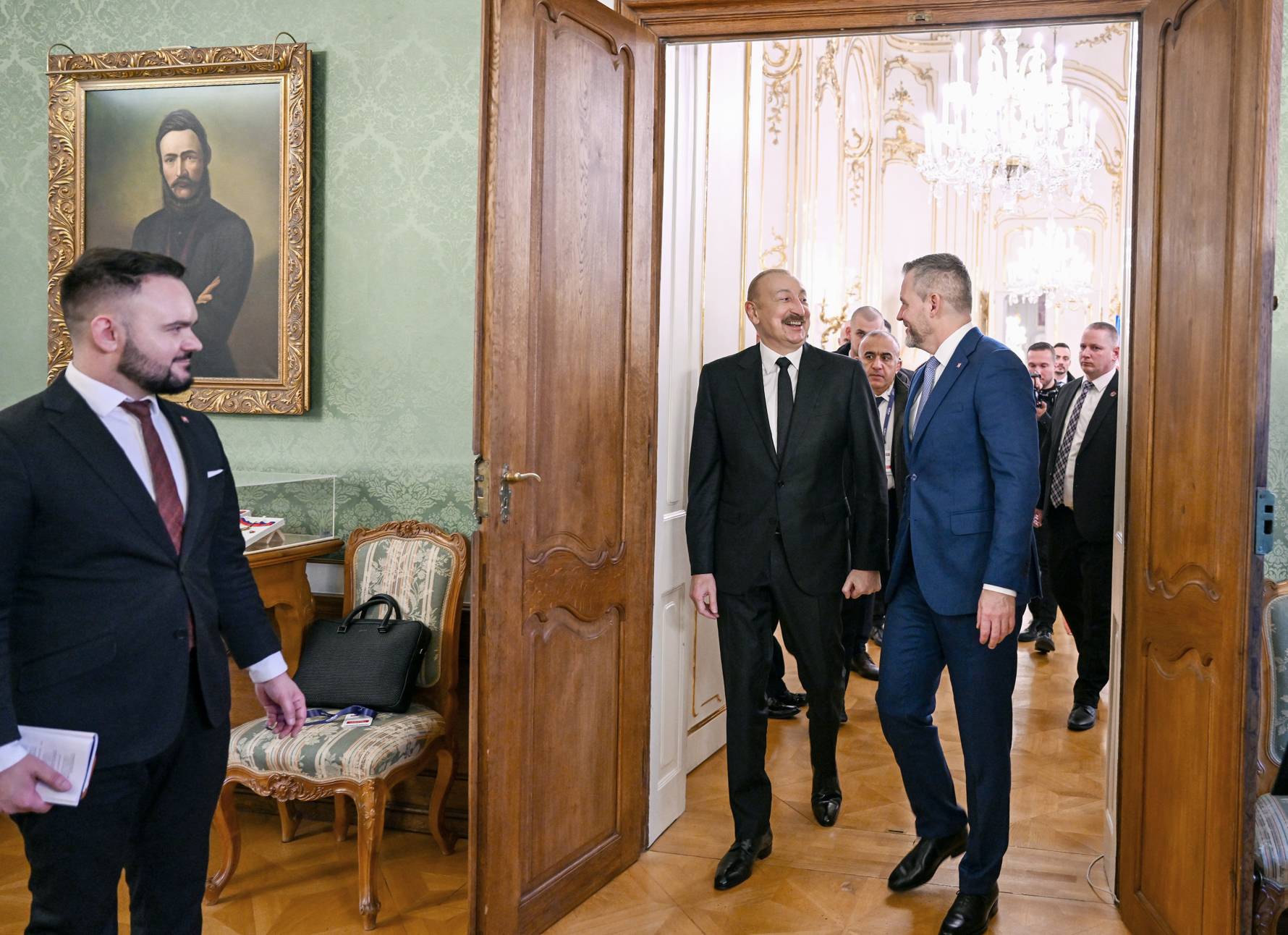
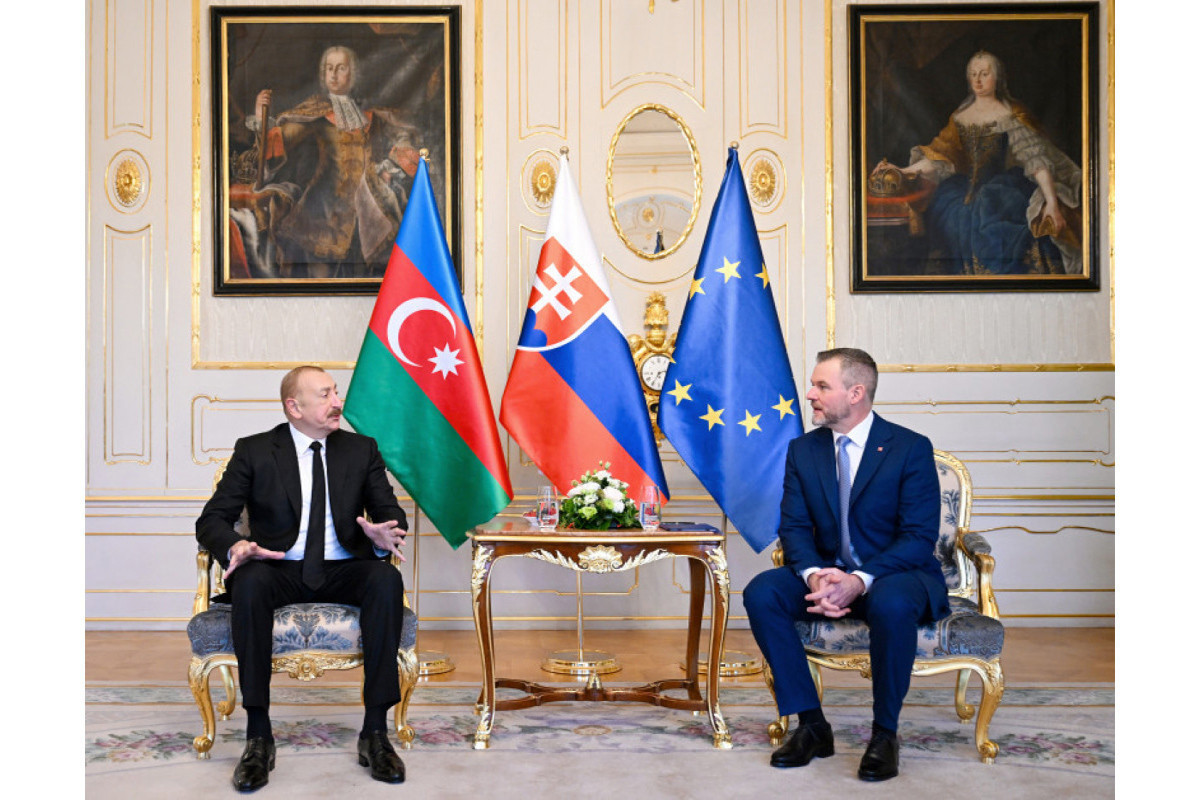
● In Bratislava, Azerbaijani President Ilham Aliyev met with Slovak President Peter Pellegrini in an expanded-format meeting. Pellegrini told reporters that this was the first official visit by an Azerbaijani president to Slovakia and highlighted the strong potential for developing bilateral ties. He recalled that the two countries signed a Strategic Partnership Declaration last year, have recently opened embassies, and set up an intergovernmental commission. The Slovak president congratulated Aliyev on the initialling of a peace agreement brokered by Donald Trump.
Aliyev said the active phase of Azerbaijani-Slovak relations began when Pellegrini visited Baku as prime minister. He expressed appreciation for what he described as Slovakia’s active role in reconstruction efforts in Karabakh, which Azerbaijan says was liberated from Armenian occupation. He also noted Slovakia’s support for the development of Azerbaijan’s relations with the European Union. Aliyev invited Pellegrini to pay an official visit to Azerbaijan, an invitation that was accepted, according to the press release.
● Pellegrini identified energy supply as a key area of cooperation. “The European Union has decided on a complete ban on Russian gas imports to Slovakia. The timeline is very short. Azerbaijan can play a role in diversifying energy supplies. Slovakia is currently at the end of the pipeline, whereas previously, toward Western Europe, it was always at the beginning. You can imagine how costly this is,” he said.
Aliyev responded that Azerbaijan began gas deliveries to Slovakia last year. He said 14 countries now receive Azerbaijani gas, eight of them EU member states. He added that Azerbaijan ranks first globally among countries exporting gas via pipelines. “As new gas fields are developed, additional resources will become available, and of course it will be possible to supply larger volumes of Azerbaijani gas to Slovakia and to neighbouring states,” Aliyev said.
● Both presidents identified defence industry cooperation as an important area. Azerbaijan has expressed interest in purchasing Slovak automatic artillery systems. The two presidents also confirmed their intention to establish joint production of various weapons systems and sell them to third countries.
● Aliyev said Azerbaijan is investing further in the development of transit infrastructure and stressed that this area “should not be overlooked” in the context of Azerbaijani-Slovak relations, given its significant potential.
● Chris McKinney, Deputy Director for Partnership, Security Cooperation and Counter-WMD at U.S. European Command, visited Baku and held meetings with the defence and emergency ministries. “This visit will strengthen long-term defence cooperation between the United States and Azerbaijan and underscores shared interests in the security and stability of Azerbaijan and the region as a whole,” the U.S. Embassy said.
● The U.S. Embassy in Azerbaijan and the Azerbaijan State Maritime Academy discussed cooperation in maritime transport and engineering. Talks also covered expanding the American Spaces network and English-language education programmes in partnership with U.S. universities.
● Georgia announced it will provide a one-time free transit of oil from Azerbaijan across its territory to Armenia. The Economy Ministry said Georgia “remains a strategic and reliable partner of both countries and consistently supports a policy of peace and regional cooperation.” Pro-government Azerbaijani media had earlier accused the Georgian authorities of inflating the transit tariff by a factor of 40. Read more here
● Iranian Foreign Minister Abbas Araghchi is holding high-level meetings during his visit to Baku, with a focus on developing transport and transit corridors between Iran and Azerbaijan and advancing joint projects. At a joint press conference with Azerbaijani Foreign Minister Jeyhun Bayramov, Araghchi said he discussed “all key issues” during his meeting with President Aliyev. He called the visit strategically important and said Iran is “looking forward” to welcoming Aliyev.
Bayramov said Azerbaijan is interested in strengthening friendly relations with Iran and described this year as an important one for bilateral ties.● An appeals court rejected the complaint filed by Mamed Ibrahimli, an adviser to the chairman of the Azerbaijani Popular Front Party, who remains in custody pending investigation. Ibrahimli and party leader Ali Kerimli are accused of attempting to seize power by force — charges they deny, calling the case politically motivated. Both were detained as part of the same criminal case as Ramiz Mehdiyev, a once-influential political figure and longtime head of the presidential administration, who is also under arrest.
● At a meeting of the Azerbaijan–Kyrgyzstan intergovernmental commission on economic and humanitarian cooperation in Baku, the two sides agreed on measures to create a new portfolio of joint projects in energy, industry, infrastructure, and small and medium-sized business.
● Court proceedings continued in the criminal case against Ruben Vardanyan, the former state minister of the former self-proclaimed Nagorno-Karabakh Republic and a citizen of Armenia, who is in pre-trial detention. He is accused of torture, mercenarism, war crimes, terrorism, and other offences. The state news agency Azertac reported that the court heard testimony from people injured in, and witnesses to, deadly incidents during military operations carried out by Armenian forces when Vardanyan held office. Vardanyan requested access to several case-related documents; the request was granted. The next hearing is scheduled for 9 December.
-
Tuesday, December 9, Georgia. New tightening of rules against participants of the pro-European protests that have been ongoing continuously for over a year
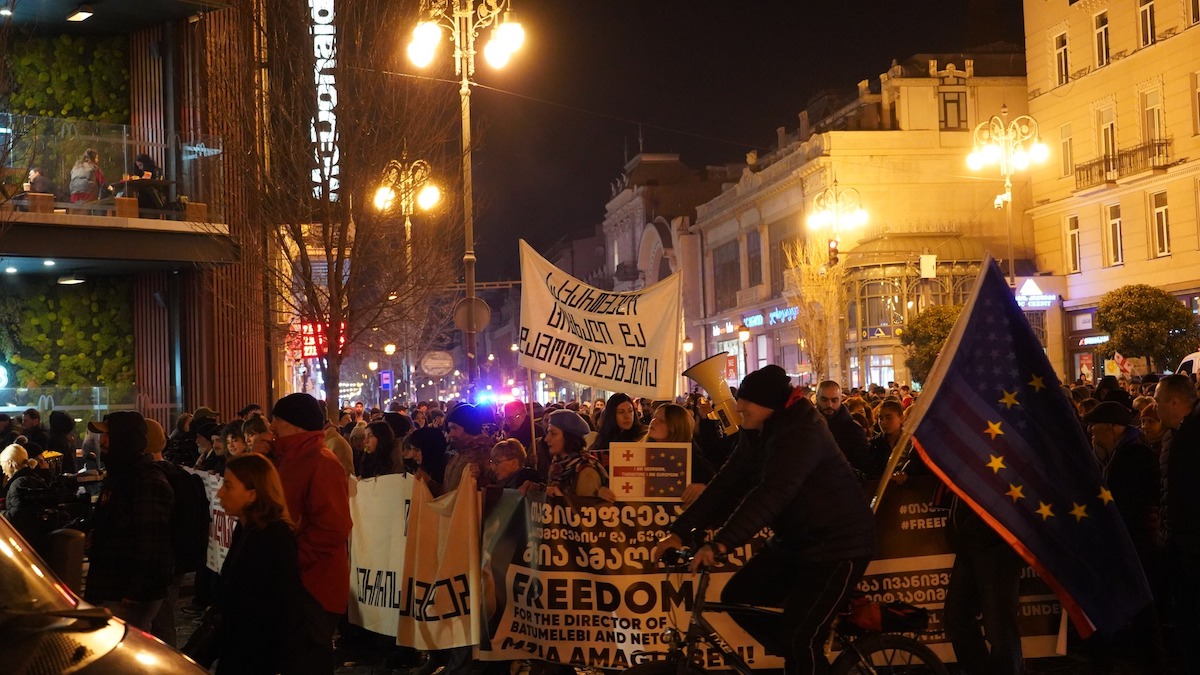
● New restrictions are being proposed against participants of the pro-European protests that have been ongoing continuously for more than a year. Georgian Dream MP Irakli Kirtskhalia stated at a briefing that the Interior Ministry will inform protest participants of the permitted location or route for their rally. If participants do not comply, they will face administrative arrest for up to 15 days, and in the case of repeated violations — criminal charges, including up to one year of imprisonment.
● UK Minister of State Stephen Doughty: “I am deeply concerned by the BBC report alleging that Georgian police used toxic chemicals against protesters in Tbilisi in late 2024. We expect Georgia to uphold its commitments under the Chemical Weapons Convention and ensure proper investigation of any alleged violations related to the use of toxic chemicals.” More details here.
● “The State Security Service, within the framework of its investigation, has responded to all questions, completely disproving the BBC’s fabrications. There is no room left for speculation in the case of the alleged use of ‘kamit’ in Georgia,” said Georgian Dream Deputy Interior Minister Aleksandre Darakhvelidze. More details here about the arguments of Georgia’s State Security Service.
● Chairman of the Georgian Dream parliamentary faction Shalva Papuashvili called the BBC investigation on the possible use of the toxic agent “kamit” against protesters an attempt at “psychological brainwashing.”
“Some European political groups are influencing vulnerable members of Georgian society so much that these citizens end up believing anything. Let me remind you: when the war in Ukraine began, drawings of a cat appeared on walls and in underpasses in Tbilisi. Many started believing absurd rumors that it was a sign Russia would bomb Georgia. Now they are trying to convince these vulnerable people that chemical weapons from the First World War are allegedly being used. They also widely claimed in the West that (jailed ex-president) Mikheil Saakashvili had developed dementia. And then he suddenly ‘recovered’ from dementia — supposedly the first such case in the world. Brussels is brainwashing our people,” Papuashvili said.● Georgian Railways will provide free one-time transit of oil from Azerbaijan through Georgia to Armenia. The Ministry of Economy stated that “Georgia remains a strategic and reliable partner of both countries and consistently supports a policy of peace and cooperation in the region.” Earlier, pro-government Azerbaijani media accused the Georgian authorities of inflating the transit tariff for this shipment by 40 times. More details here.
● In 2026, the Prime Minister of Georgia will receive a salary 43 times higher than the pension of an average citizen. These figures appear in the final draft of next year’s state budget, according to Transparency International Georgia. Also starting in 2026, six agencies employing 456 people in 2025 will be dissolved: the Anti-Corruption Bureau, Special Investigation Service, National Security Council Office, Public Service Bureau, Business Ombudsman’s Office, and the Administration of South Ossetia. More details here.
● The Tbilisi City Court is holding a preliminary hearing in the case of arrested former Defense Minister Juansher Burchuladze and his detained deputies Giorgi Khaindrava and Vasil Mkheidze. They remain in custody for the duration of the investigation. Burchuladze was arrested on September 11 on charges of abuse of power and money laundering. He faces up to 12 years in prison.
● The Ministry of Education has denied reports that prospective university applicants will no longer be able to choose more than one university or department. “There will be no restrictions for applicants,” the ministry said.

-
Monday, December 8, Georgia. Former high-ranking Interior Ministry official confirms the use of the toxic agent ‘kamit’ against protesters
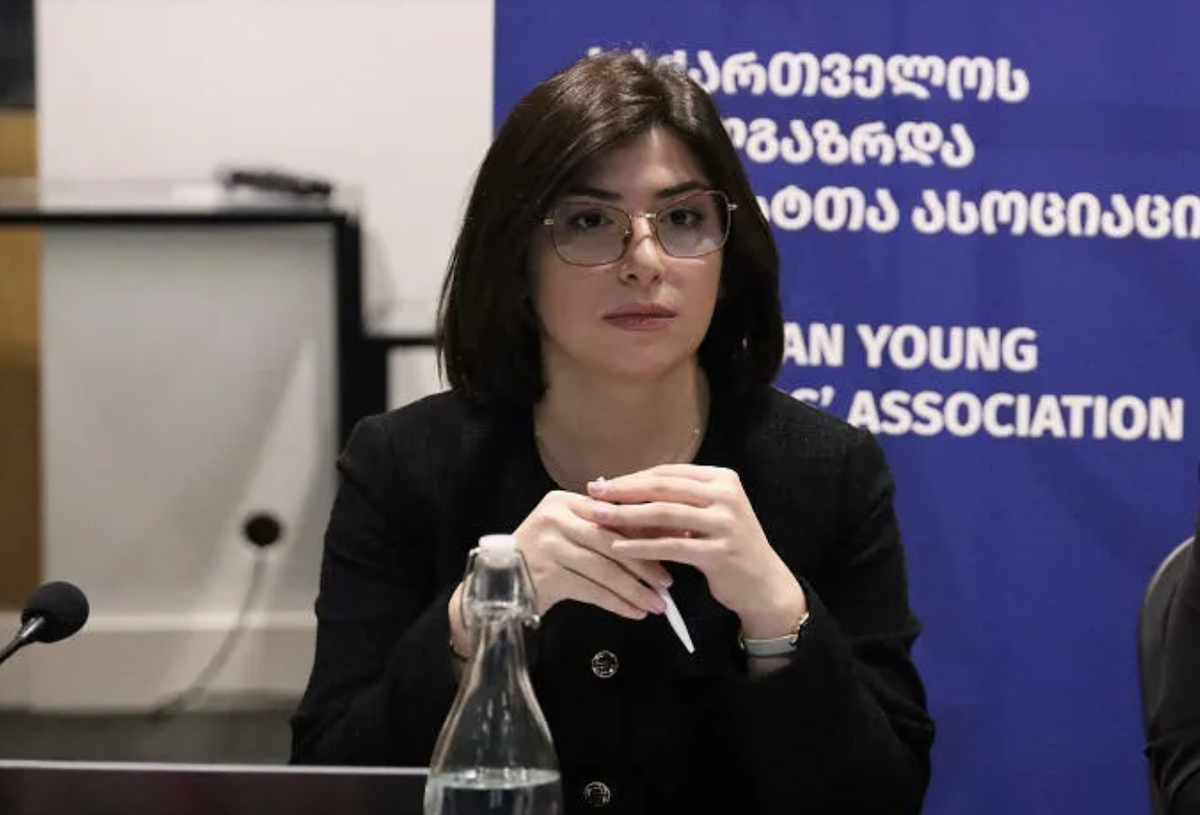
● A key figure in the BBC investigation, former head of the armaments division of the Georgian Interior Ministry’s Special Operations Department Lasha Shergelashvili (pictured), gave comments confirming parts of the BBC’s report on the possible use of the toxic substance “kamit” against protesters in Tbilisi. In an interview with Formula TV, he said that “this substance was tested by the Interior Ministry in 2009 or before 2009, turned out to be too poisonous, and was sealed away.” “I know for a fact that it was used against protesters at the CEC building in Tbilisi on November 8, 2020, after the parliamentary elections,” Shergelashvili said. More on the BBC investigation here.
● Fifth President Salome Zurabishvili said she is “puzzled” by the statements from Georgian Dream regarding the use of toxic substances against protesters, including the findings of the security service’s investigation. “One person says one thing, another says something else. Meanwhile, public reaction is growing, international reaction is growing, and I would say the ruling party is becoming increasingly confused. An investigation with the participation of foreign organizations is necessary so that we can know exactly which chemical was used,” Zurabishvili stated.
Earlier, the State Security Service (SSG) reported that it had completed its investigation of the claims made in the BBC report and categorically rejected the allegation that “kamit” had been used. At a briefing on December 6, the SSG stated that “a chemical substance was indeed added to the water cannons, but it was not ‘kamit,’ it was ‘chlorobenzylmalononitrile,’ which is not prohibited.” More here.
● GYLA chair Nona Kurdovanidze said the SSG provided incomplete information about the number of people poisoned during the dispersal of the protests. The SSG stated that 54 people were admitted to hospitals on November 28 and in the following days, and only five were diagnosed with mild poisoning. Kurdovanidze said that these numbers do not include those who sought medical help on their own, and the total number remains unknown.
● Tbilisi Mayor Kakha Kaladze, responding to the scandal involving the BBC publication, said: “The State Security Service will not allow foreign intelligence agencies or their local operatives to undermine the country’s statehood. During the investigation following the BBC film, anyone found to have deliberately acted against Georgia’s national interests will be punished to the fullest extent of the law.”
● Amnesty International called on the international community to respond quickly to the BBC investigation about the possible use of World War I–era chemical weapons against protesters in Georgia. The organization criticized the intimidation of journalists, human rights defenders, witnesses, and experts who spoke to the BBC. Amnesty calls for an independent international investigation and a full embargo on police equipment supplies to Georgia while the country is governed by Georgian Dream. More details here.
● President appointed by “Georgian Dream,” Mikheil Kavelashvili, claimed the BBC publication appeared because “Georgia’s leaders refused to carry out the orders of the deep state.”
● The Azerbaijani pro-government outlet Minval Politika issued harsh criticism of the Georgian authorities. The author writes about “worrying changes” in Tbilisi–Baku relations and points to two negative developments& Baku is ready to supply oil products to Yerevan, and the only route is through Georgia. But Tbilisi increased the transit price by 40 times, the outlet claims. It also states that Azerbaijani truck drivers are regularly and unjustifiably detained at the Georgian border for weeks or even months. According to Minval Politika, “all these actions raise questions about the future of regional cooperation involving Georgia.” More here.
● Merab Dvalishvili has been stripped of his UFC featherweight title after losing to Russian fighter Petr Yan. The Georgian fighter has 21 victories, including 15 consecutive wins. On October 5, Dvalishvili defeated Cory Sandhagen by unanimous decision, successfully defending his title for the third time. He first won the championship belt on September 14, 2024, by defeating then-champion Sean O’Malley. Prior to that, he had beaten three former UFC champions — José Aldo, Petr Yan, and Henry Cejudo.
● In a village in the Telavi municipality, three underage girls violently assaulted one of their peers. The Interior Ministry stated that the 12–13-year-old schoolgirls demanded an apology from another student over a previous conflict, and when she refused, they used physical force. An investigation has been launched.

-
Monday, December 8, Azerbaijan. Iran’s Foreign Minister is visiting Baku
● Iran’s Foreign Minister Abbas Araghchi is visiting Baku. Earlier, Iranian MFA representative Esmail Baghaei said at a press conference in Tehran that Iran places great importance on developing relations with Azerbaijan and is interested in ensuring stable peace and security in the South Caucasus. He also announced that the Iranian foreign minister will soon visit Russia and Belarus.
● Presidential aide Hikmet Hajiyev said that international support is needed to secure the economic benefits of the peace agenda between Azerbaijan and Armenia, including the joint construction of transit routes and regional cooperation. He spoke about this during a panel at the Doha Forum, where Hajiyev participated together with Armenia’s Secretary of the Security Council Armen Grigoryan.
“Talking about peace is much easier than talking about conflict. In the past, Armenia and Azerbaijan constantly argued with each other, spoke about conflict and disagreements. Now we are talking about peace. While acknowledging the decisive role of the United States in this process, I want to emphasize the importance of bilateral relations between Azerbaijan and Armenia. Both countries have realized that above all, we need peace. We must create this peace, reach an agreement, and then present it to our international partners. We are now continuing the peacebuilding process on a bilateral basis, including cooperation at the level of civil society institutions. This approach has proven to be effective and productive,” said Hikmet Hajiyev.
● Speaking at the Doha Forum, Hikmet Hajiyev spoke about his conversation with popular American talk-show host Tucker Carlson. “I told him that his latest segment on Armenian-Azerbaijani relations was not positive enough to contribute to peace. He agreed with me. I suggested that next time he invite representatives of Armenia and Azerbaijan together so we can genuinely discuss the real peace agenda. International media and the international community should support us. We are moving toward the future and want to protect our future generations from the wounds of war,” Hajiyev said.
● The detained chairman of the opposition Azerbaijan Popular Front Party, Ali Kerimli, has fully rejected the charges against him, calling them political repression, and has refused to testify, the party reported. Official sources have not commented. Kerimli was arrested on December 2 on charges of attempting to seize power and forcibly change the constitutional order. Searches were carried out in his home, as well as in the apartment of his son-in-law Elnur Seidov and several of his supporters. Read more here
● President Ilham Aliyev thanked Kyrgyzstan for being one of the first countries to support Azerbaijan’s accession to the cooperation format with Central Asian states. Aliyev said this at a meeting in Baku with a delegation led by Kyrgyz Deputy Prime Minister Bakyt Torobaev. According to Aliyev, this decision will play a major role in developing ties between Central Asia and the South Caucasus, including ensuring stable and uninterrupted cargo transit in both directions.
● The Azerbaijan–Kyrgyz joint investment fund, established by the two heads of state, has already begun financing its first projects, Aliyev said. He emphasized that Azerbaijan has allocated financial resources to form the fund’s capital and will provide additional funds if the number of projects increases.
● Presidential aide Hikmet Hajiyev met in Baku with Jassim Muhammad Al-Budaiwi, Secretary-General of the Gulf Cooperation Council. They discussed opportunities to further expand cooperation.
● The importance of Azerbaijan–UAE cooperation was highlighted by President Ilham Aliyev during a meeting with leaders of the influential Arab companies 2PointZero and International Resources Holding. The UAE is a strategic partner of Azerbaijan in the field of renewable energy, Aliyev said.
● Baku hosted a two-day “D-8 Youth Dialogue” conference over the weekend. Participants adopted the Baku Declaration, committing to increasing youth involvement in decision-making, strengthening green skills, and expanding regional cooperation.
The forum is based on the D-8 Organization for Economic Cooperation, which includes Bangladesh, Egypt, Indonesia, Iran, Malaysia, Nigeria, Pakistan, and Turkey. In 2024, Azerbaijan joined the forum, expanding it to nine member states (D-9). Founded in 1997, the organization seeks to improve member states’ positions in the global economy, expand commercial ties, deepen participation in international governance, and raise living standards.Photo Teymur Mammadov

-
Monday, December 8, Armenia. The liturgy in Gyumri and the new escalation between the authorities and the church leadership
● It has been 37 years since the devastating Spitak earthquake. It occurred on December 7, 1988, at 11:41 a.m. in the northern regions of Armenia. More than 25,000 people died, tens of thousands were injured, and hundreds of thousands were left homeless.
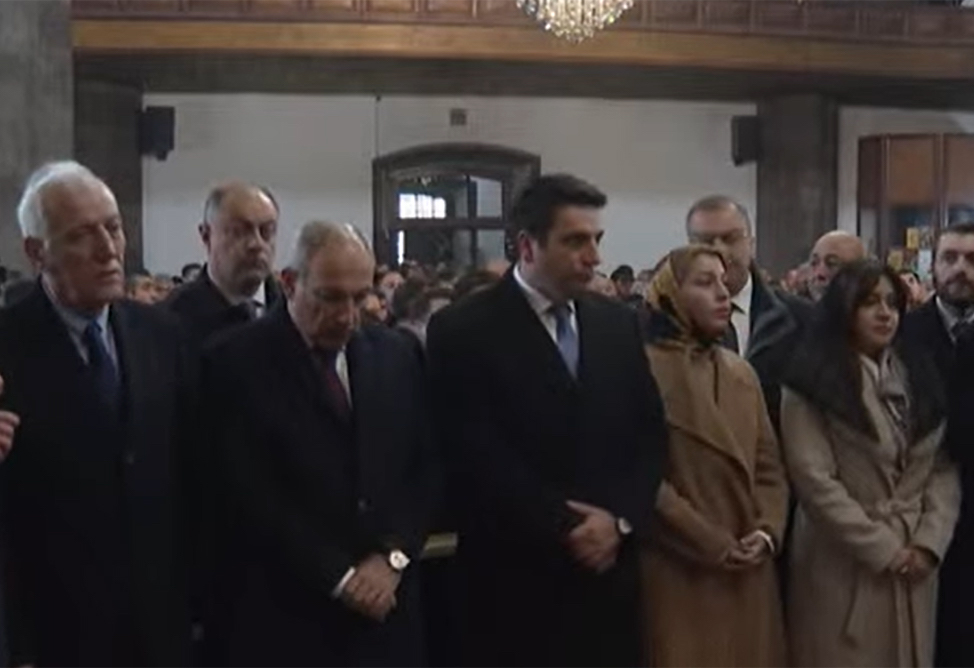
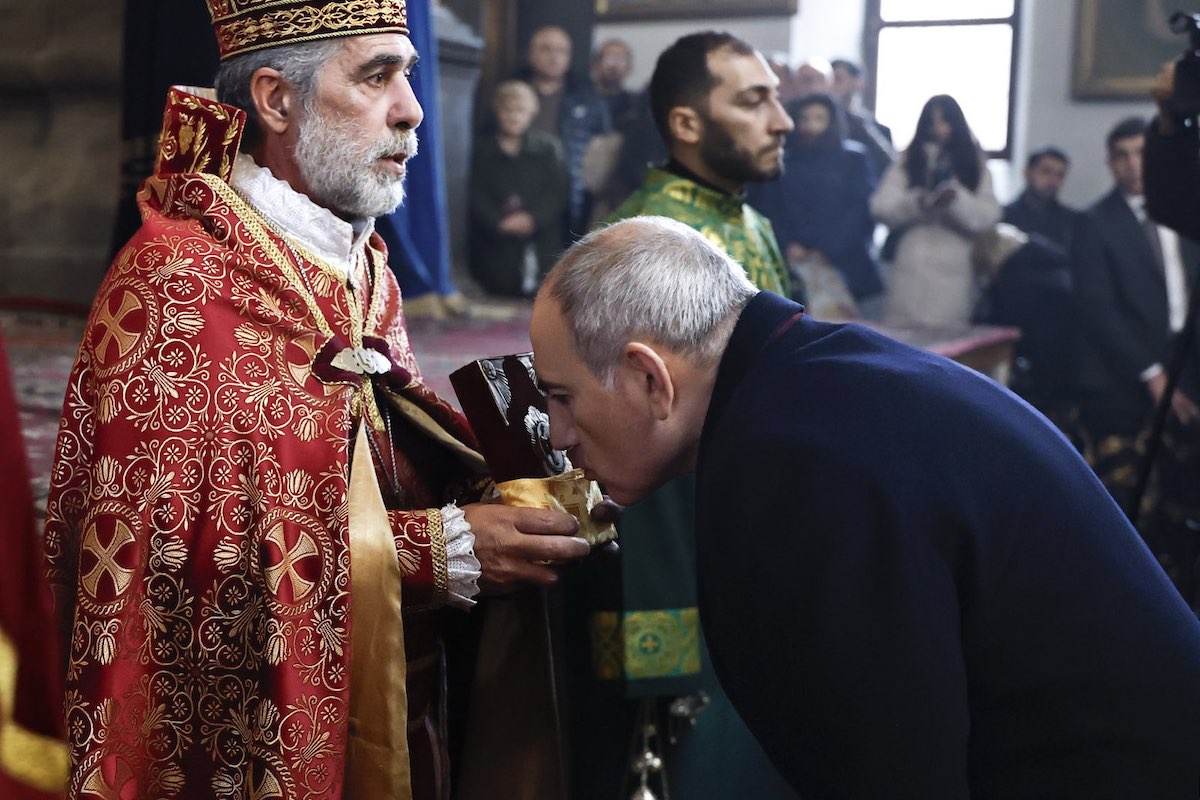
● On the anniversary of the tragedy, Prime Minister Nikol Pashinyan, President Vahagn Khachaturyan, Speaker of Parliament Alen Simonyan, and ruling party MPs traveled to Gyumri, one of the earthquake’s epicenters. They laid flowers at the memorial and took part in commemorative events. Afterward, the state leaders went to the Seven Wounds Church to participate in a liturgy — which triggered a new escalation between the authorities and the leadership of the Armenian Apostolic Church. The liturgy was performed by bishops who had previously supported Pashinyan and opposed Catholicos Garegin II.
A day earlier, clergy of the local Shirak Diocese issued a warning signed by 29 priests: if anyone other than diocesan clergy performed the liturgy, “it would mean that the cathedral had been seized.” As Pashinyan approached the church, dozens of residents lined the street, chanting “Armenia without Nikol” and protesting his actions toward church leadership. More on this conflict here
● Edmon Marukyan, leader of the opposition Bright Armenia party, condemned Pashinyan’s visit and the liturgy controversy.
“On the 37th anniversary of the earthquake, he disrupted the mourning of Gyumri residents, sowed political intrigue, and occupied the Church of the Seven Wounds by holding his own liturgy there. What is happening in Gyumri is preparation for what will happen in the future,” Marukyan said.● Prime Minister Pashinyan stated: “It would be appropriate if, before Sunday liturgies, choirs in all churches performed the Armenian national anthem.” He added that in 301 A.D., the Armenian Apostolic Church was established by a state decision, and therefore such a practice “would be correct.”
● Armen Grigoryan, Secretary of the Security Council, called the agreements reached at the August 2025 Armenia–Azerbaijan summit in Washington, mediated by Donald Trump, “a very significant historical achievement that brought peace to the region and transformed the entire atmosphere.” He said this during a panel discussion at the 23rd International Forum in Doha, held jointly with Azerbaijani presidential aide Hikmet Hajiyev. “Today, we are not discussing conflict – we are discussing how to strengthen peace,” Grigoryan said.
-
Top stories in Azerbaijan, Armenia, and Georgia from 1-5 December, 2025