Georgia’s richest people: Forbes ranking and the real map of power






The richest people in Georgia
On 23 March 2026, the business outlet Forbes Georgia published its first list of the country’s 100 richest entrepreneurs.
Who owns wealth in Georgia?
The combined wealth of the 100 entrepreneurs in the ranking exceeds 60.1 billion lari. This figure equals around 60% of the country’s economy and is roughly three times larger than Georgia’s state budget revenues.
Wealth in Georgia is highly concentrated. Ten of the 100 richest entrepreneurs control about 60% of the total wealth, while the top five account for nearly half. The average wealth in the ranking stands at around 600 million lari, but the median is just 227 million. This gap points to a sharply uneven distribution of wealth within the group.
The sectoral structure of capital reinforces this pattern. Finance, telecommunications, healthcare, and real estate dominate the ranking. These sectors reward scale and market position. Wealth tends to accumulate steadily through stable cash flows and market consolidation, rather than through rapid spikes typical of technology sectors.
“Wealth concentration in Georgia is evident both across the economy and within the country’s economic elite. However, this ranking does not aim to evaluate this dynamic, but to describe it,” Forbes notes.
Mikheil Lomtadze, a businessman operating in the digital and banking sector in Kazakhstan, tops the list with an estimated fortune of nearly 16 billion lari. He also ranks 597th globally on the Forbes list.
Bidzina Ivanishvili, founder and honorary chairman of the ruling Georgian Dream party — often described as the country’s “informal ruler” — takes second place.
Old and new opportunities in the economy
According to Forbes Georgia, most wealth is concentrated in finance, telecommunications, healthcare, trade, and real estate. These sectors rely heavily on existing infrastructure.
The publication notes that, unlike the technology sector — where capital can grow rapidly and unevenly — traditional industries strengthen their positions over time. They benefit from accumulated advantages. This reflects what Forbes describes as the “institutional reality” of a developing economy, where access to markets and networks plays a decisive role.
The study also points to the emergence of innovation-driven capital. However, the hierarchy of wealth still largely depends on control over existing economic systems.
How was the ranking compiled?
The ranking includes only assets located in Georgia and excludes foreign and offshore holdings. Analysts based the data on financial statements, ownership structures, sector analysis, and multiple verification checks.
The list relies on 2023 financial reports, public registry data, company websites, and other publicly available sources.
Only individuals whose assets could be assessed using verifiable public data were included.
Just 12 women appear among Georgia’s 100 richest individuals.
The average age in the ranking is 56. The youngest participant is 25, and the oldest is 90.
Only two individuals — Mikheil Lomtadze and Bidzina Ivanishvili — appear in the global Forbes ranking.
Top 10: who controls the most capital?
Mikheil Lomtadze (50) — 15.853 billion lari
He serves as CEO and chairman of the board at Kaspi. More than half of Kazakhstan’s population uses its app. Originally from Batumi, Lomtadze built his fortune in Kazakhstan. Since 2024, he has owned the English football club Wycombe Wanderers.
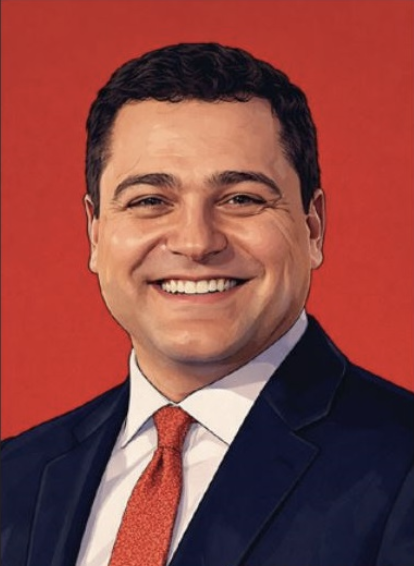
Bidzina Ivanishvili (70) — 7.254 billion lari
A former prime minister of Georgia and founder of the Georgian Dream party. He built most of his wealth in Russia, primarily in the banking and metallurgy sectors. He has also been involved in a long-running dispute with the Swiss bank Credit Suisse.
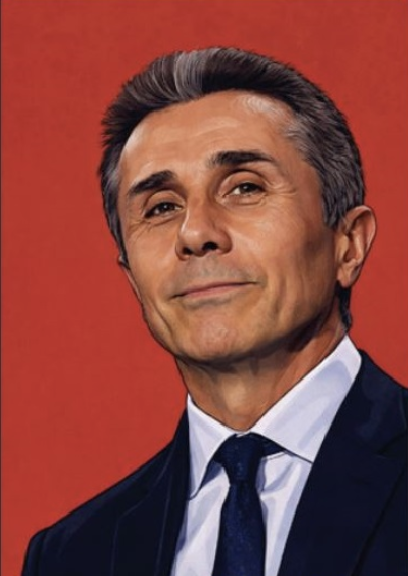
Giorgi Jokhtaberidze (72) — 2.764 billion lari
He owns a 75% stake in Magticom, one of Georgia’s leading telecommunications companies. He is also the son-in-law of former president Eduard Shevardnadze and a collector of contemporary Georgian art.
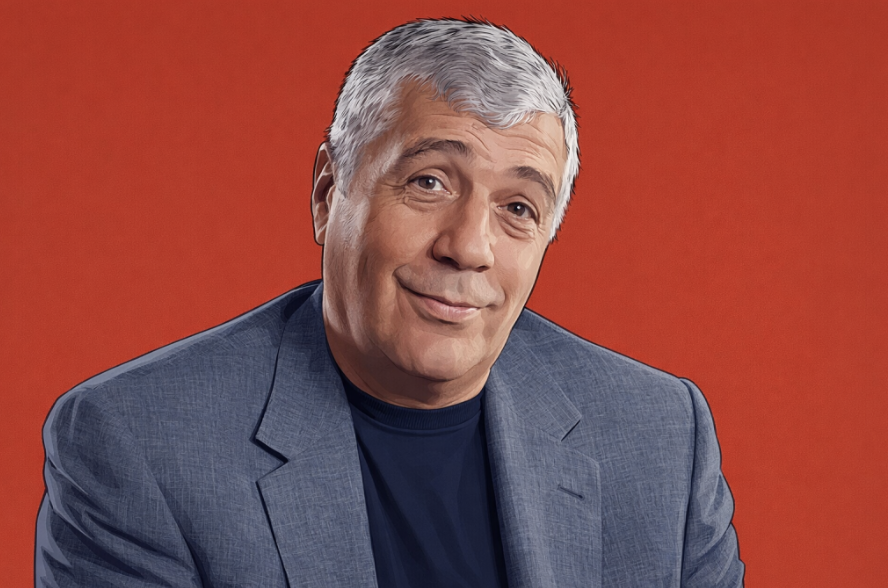
Irakli Rukhadze (59) — 2.227 billion lari
He owns a 25% stake in Magticom, a near-total stake in Liberty Bank, and is the sole owner of Rustavi Steel. He also owned the Imedi TV channel, which he recently sold.
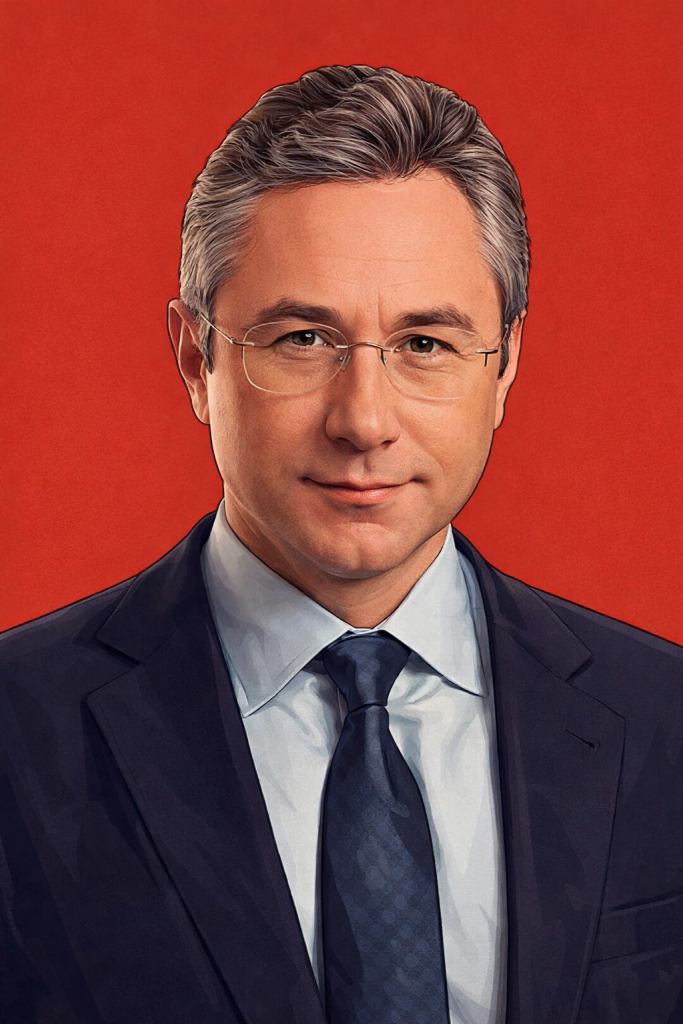
Temur Chkonia (75) — 1.745 billion lari
He is the main operator of Coca-Cola Bottlers Georgia and the McDonald’s restaurant network in Georgia. He has played a prominent role in business since the 1990s.
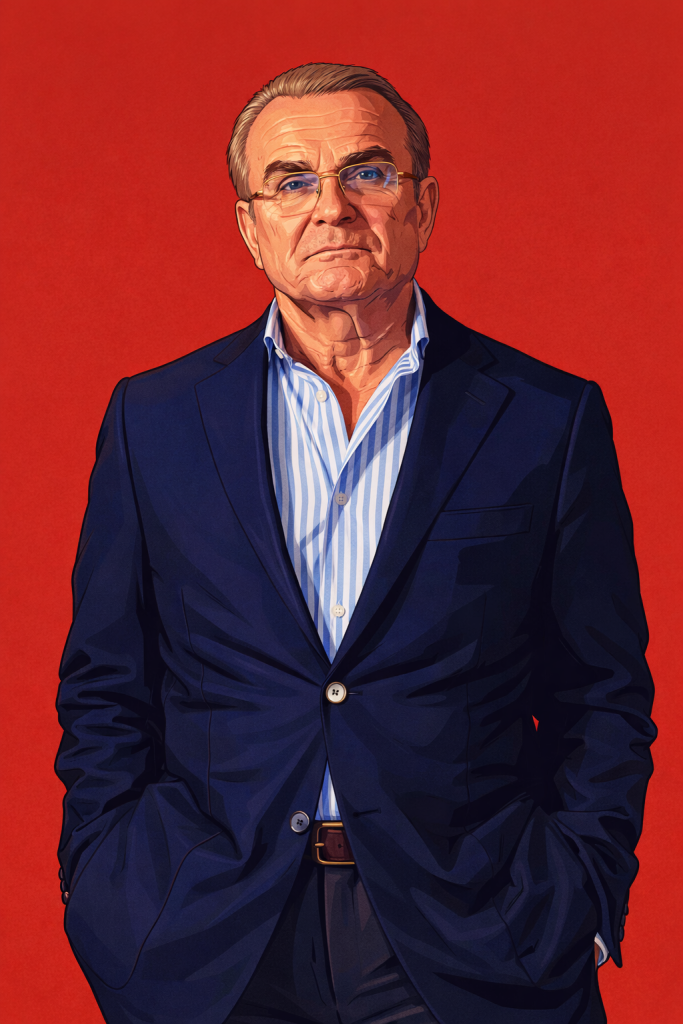
Paata Kurtanidze (58) — 1.562 billion lari
He owns the Aversi pharmacy chain and is the main shareholder of a pharmaceutical company.
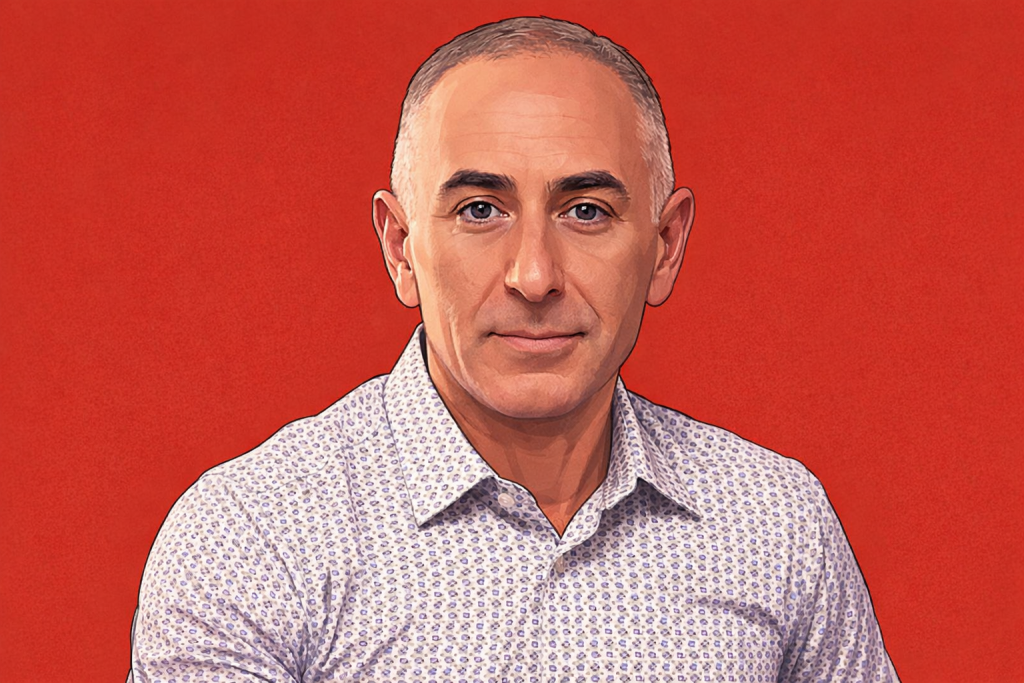
Giorgi Ramishvili (58) — 1.485 billion lari
He is the owner of Silk Road Group. The group includes the telecommunications operator Silknet and other major companies, including hotels.
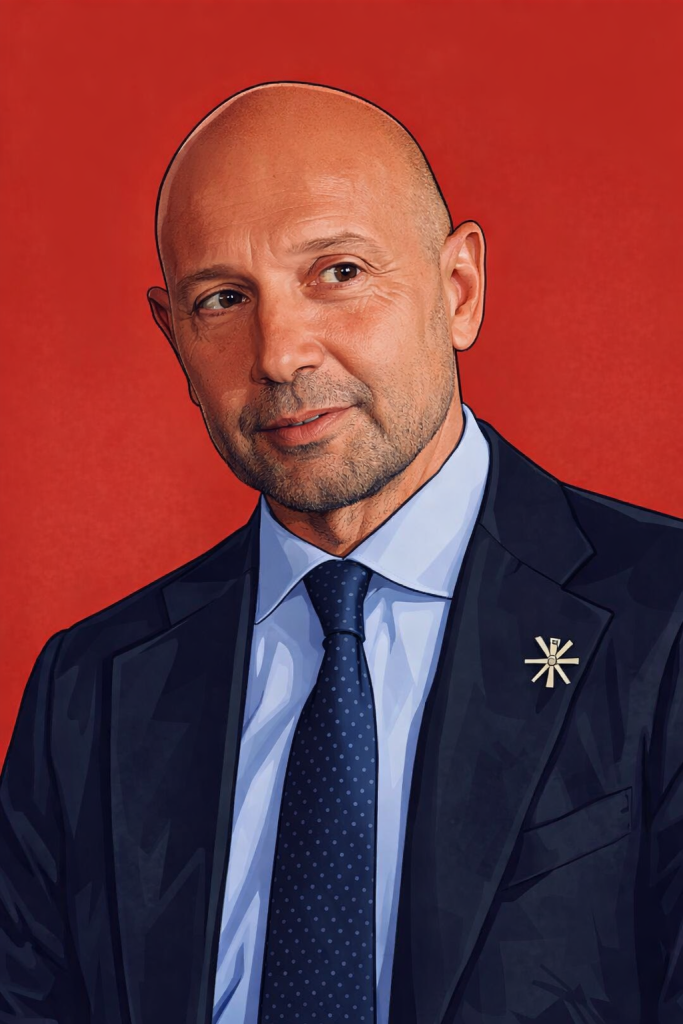
Kakhaber Okriashvili (59) — 1.141 billion lari
He owns the PSP pharmacy chain and GM Pharma, as well as several medical centres. He has also served as a member of the Georgian parliament.
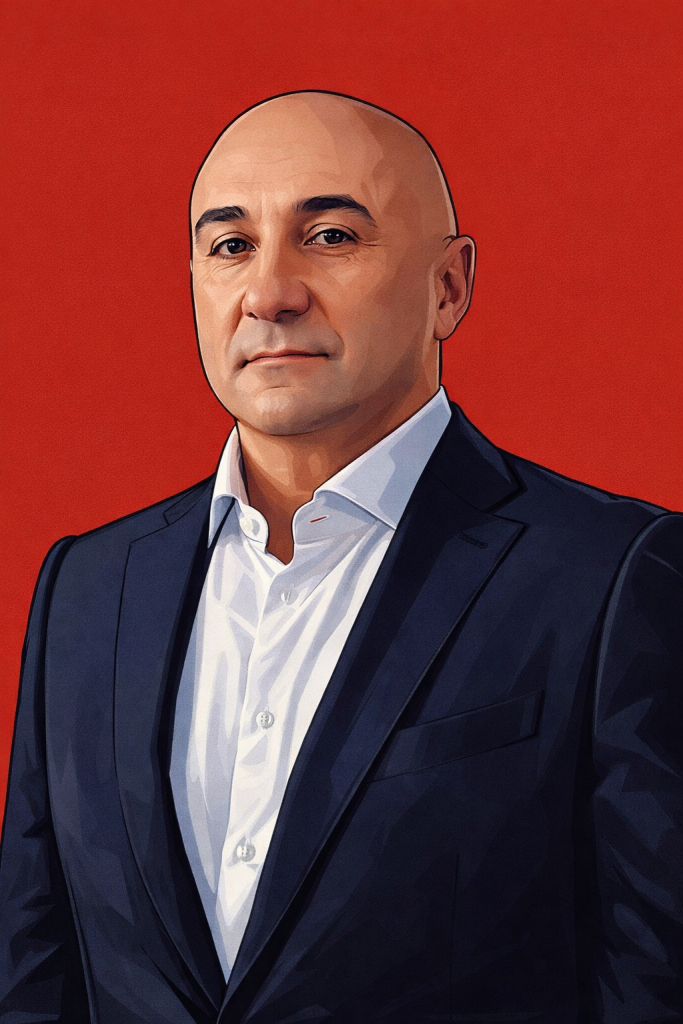
Khvicha Makatsaria (61) — 1.132 billion lari
He is a key figure in the energy sector. He holds shares in Tbilisi Energy and Telasi.
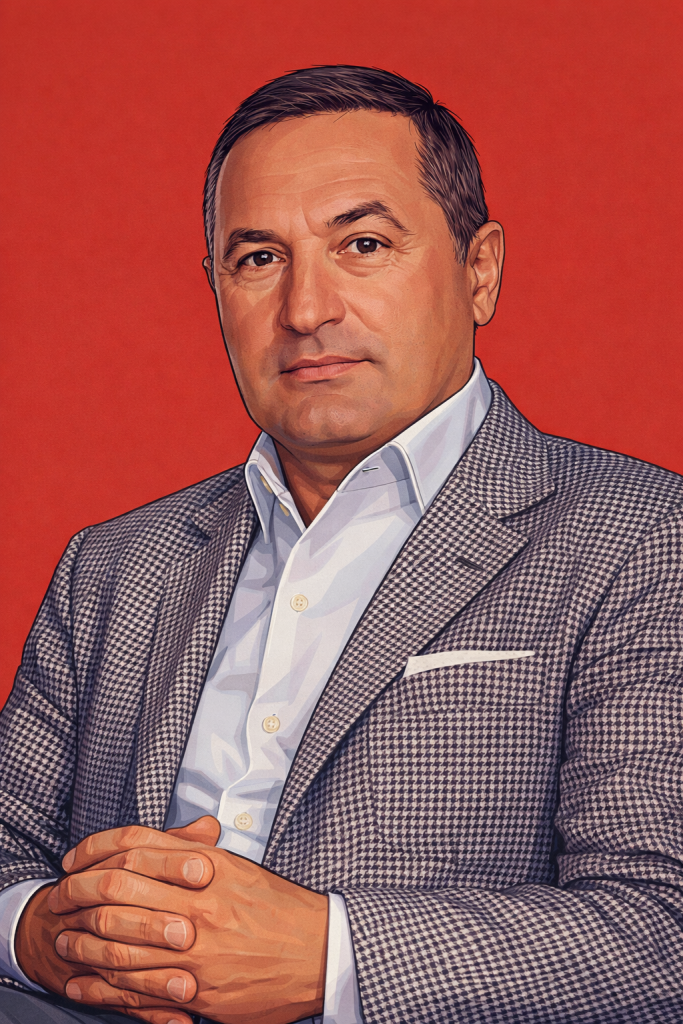
Gia Gorgoshadze (55) — 1.045 billion lari
He is the founder of the construction and home improvement company Gorgia, which operates nationwide.
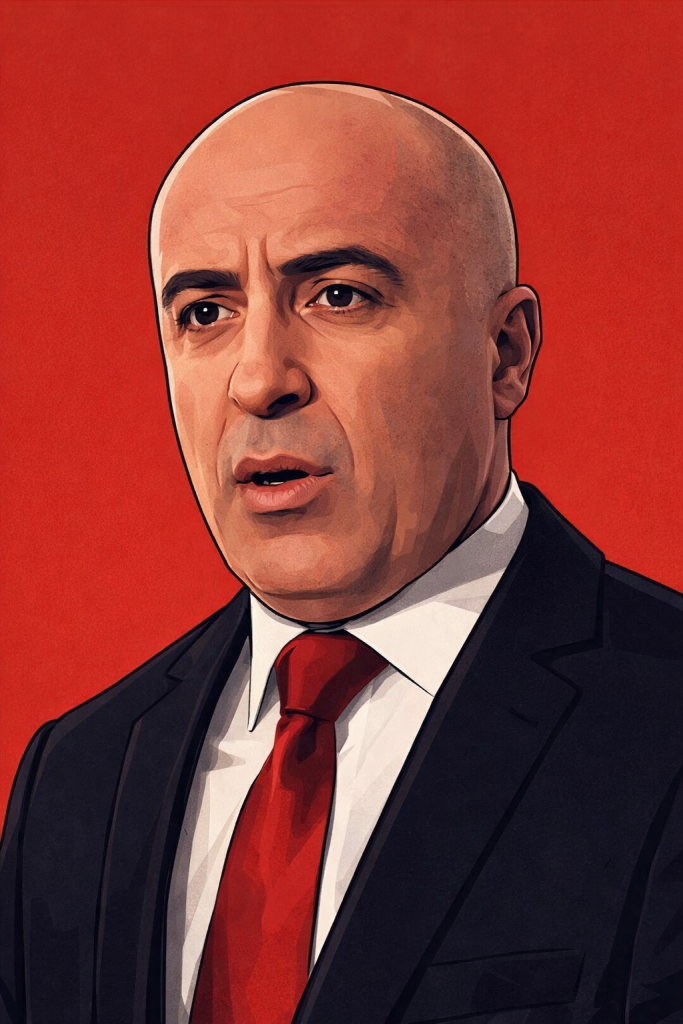
Other key figures
The ranking includes both business figures and current and former politicians.
Maka Asatiani (12th place) — a former model and businesswoman working in the energy sector and real estate.
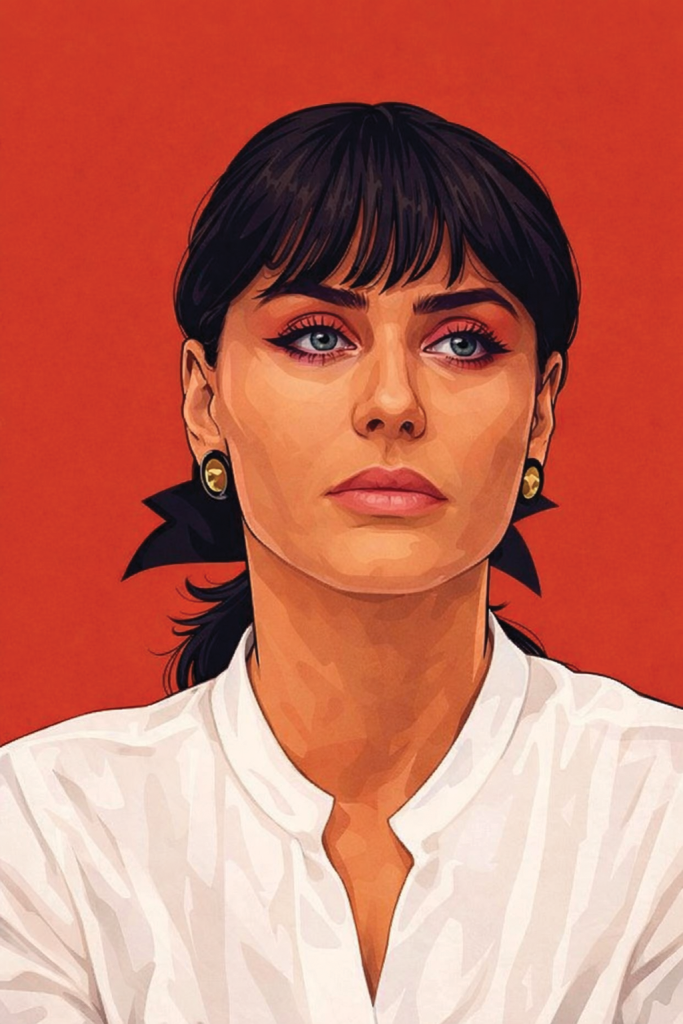
Mamuka Khazaradze (18th place) — leader of the opposition Lelo party and co-founder of TBC Bank. He currently faces criminal charges.
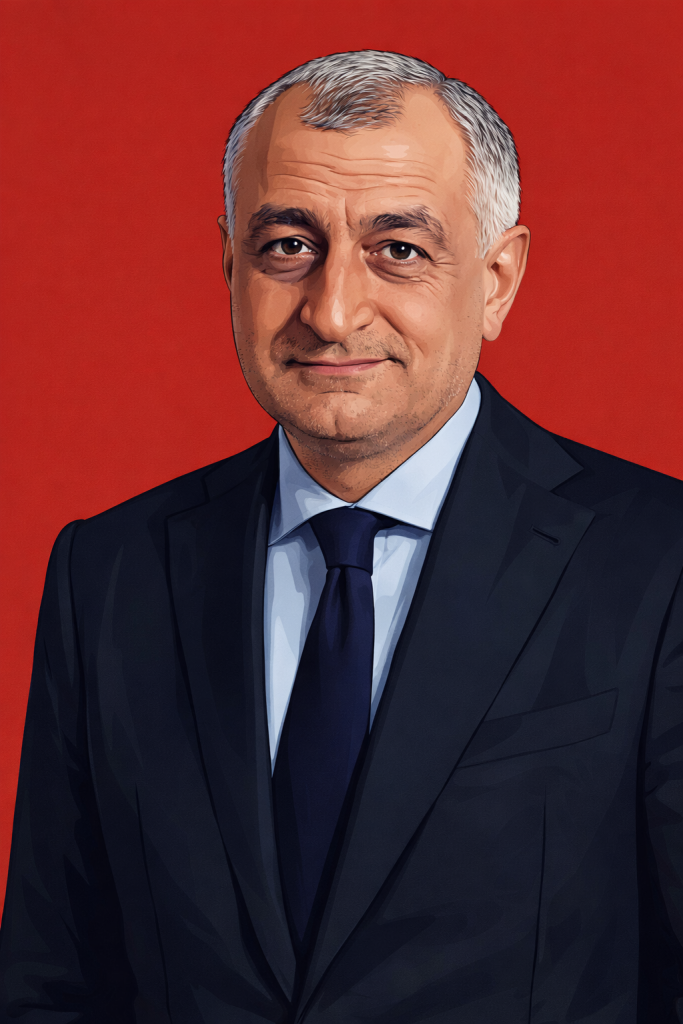
Badri Japaridze (23rd place) — another co-founder of TBC Bank, who also faces criminal charges alongside Mamuka Khazaradze.
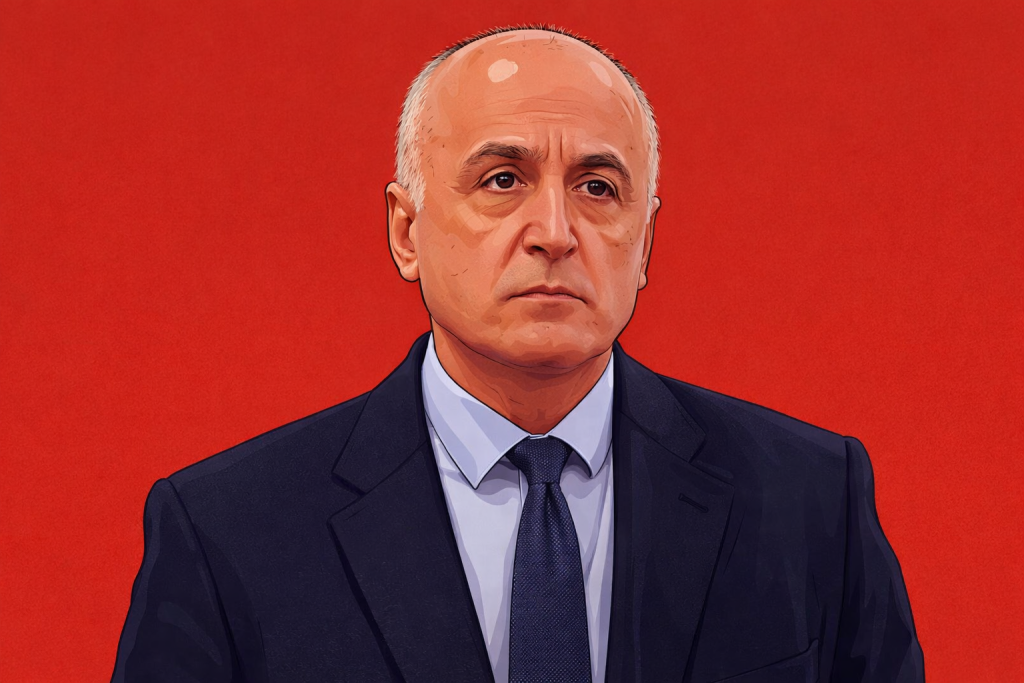
Kakha Bekauri (36th place) — former head of the Georgian National Communications Commission and co-owner of the Ori Nabiji supermarket chain.
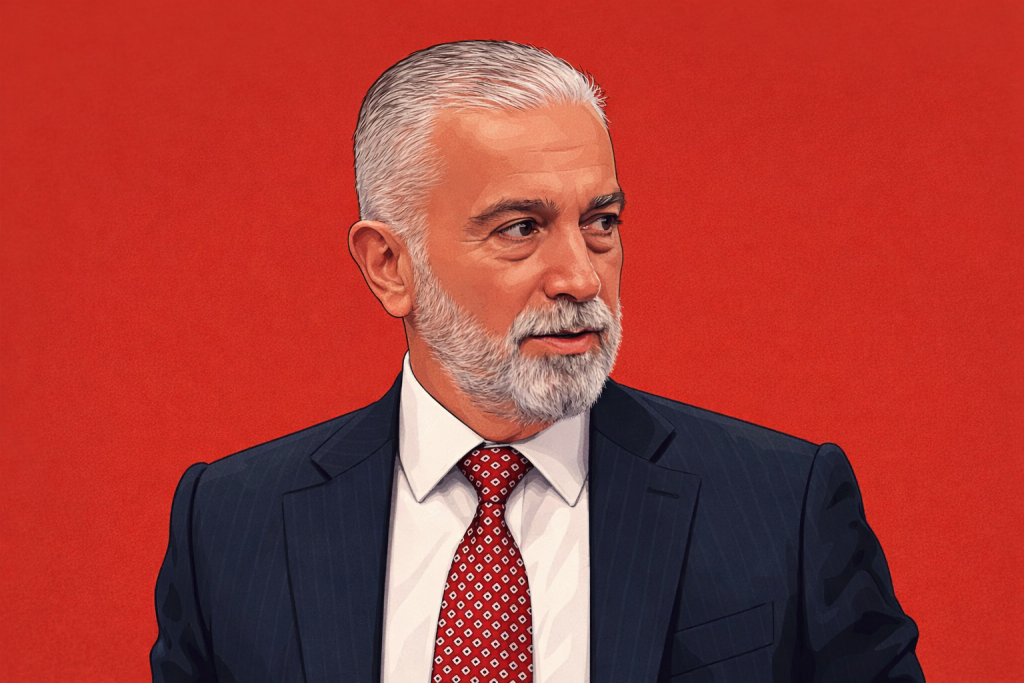
Anton Obolashvili (around 46th place) and Shota Berekashvili (73rd place) — MPs from the ruling party with business interests in the pharmaceutical and construction sectors.
Zaal Dugladze (80th place) — a member of Georgia’s 10th convocation parliament and co-owner of a wine business.
Context
Tamta Mikeladze, director of the Social Justice Centre, said that even a brief look at the data shows it reveals more than just “who is rich in Georgia”. It also provides insight into the structure of the economy, the distribution of power, and, ultimately, the country’s development model.
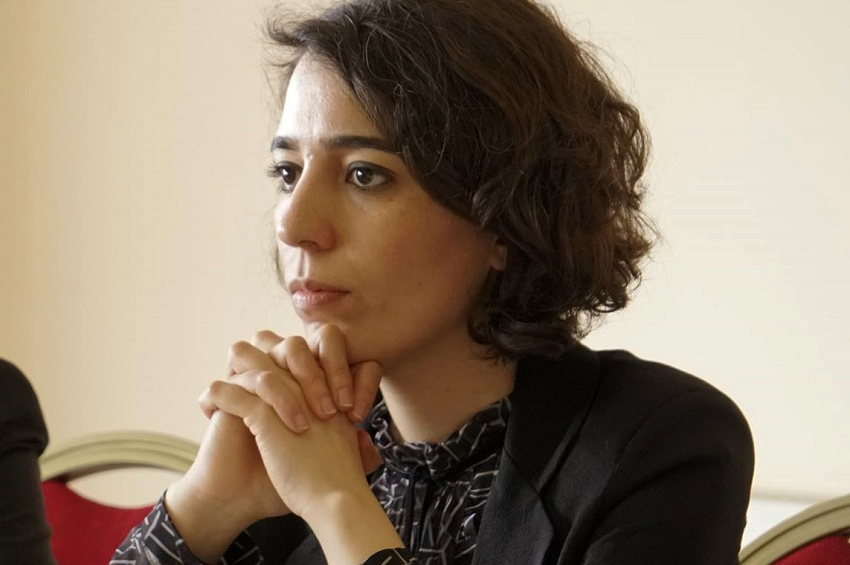
Tamta Mikeladze: “There are several very important trends that explain Georgia’s political and economic system, and that every family and every citizen can see and feel in their daily lives:”
- Wealth is concentrated in the hands of a minority, with clear signs of an oligopolistic economy. The top 10 control 60% of total wealth, while the top five account for 50%. Moreover, just two individuals — Ivanishvili and Lomtadze — hold a third of the capital among the country’s 100 richest people.
This primarily means that wealth in the economy is distributed unevenly, and that key economic resources and levers of influence belong to a small group. In such a system, it is difficult for new players to enter the market, and such concentrated economic power can easily translate into political influence.
In a sense, the market is structurally dominated and biased in favour of the strongest actors. This is not a classic free-market system.
2. Sectoral dominance and weak production base
Finance and banking, monopolistic services, real estate and infrastructure, and import-dependent businesses linked to global brands dominate the economy. At the same time, the industrial base remains weak. High-tech manufacturing, export-oriented industry, and innovation-driven sectors are largely absent.
In other words, Georgia does not have a “real economy” in the sense of one driven by production. It relies primarily on services, imports, and finance.
Estimates suggest that 45% of total wealth is concentrated in markets where monopolistic players set the rules — including regulation and pricing.
3. Social impact
This type of economy does not generate large numbers of productive, well-paid jobs, and wealth does not “trickle down”. As a result, it contributes to social stagnation, low social mobility, youth emigration, and a weakening middle class.
In addition, limited competition in the service sector often leads to excessive price increases. These costs are passed on to citizens in the form of what can be described as “hidden taxes”. Because these burdens are less visible, they rarely become the subject of political debate, even though their impact on living standards is direct and systemic.
It is possible to argue that in such a system, the population not only fails to benefit from the economy, but in effect helps sustain this unequal concentration of wealth.
4. A broader structural divide
More broadly, this model creates a divide between a low-income population and a narrow economic elite that accumulates wealth. This is not only about concentration, but also about the extraction of capital from the labour of ordinary citizens, including through inflated and often unjustified costs.
5. Post-Soviet legacy and family capitalism
The legacy of post-Soviet capitalism remains visible. Wealth accumulated in the 1990s, resources gained through privatisation, and the age profile of wealthy entrepreneurs all point in this direction. Seventy of the 100 richest individuals are over 50, meaning that around 70% of wealth belongs to an older business elite. Many of them built their fortunes during the crises of the 1990s and early 2000s.
Around 15–20% of this wealth is geographically linked to post-Soviet capital.
Family capitalism is also a defining feature. An estimated 25–30% of these businesses operate within family or clan structures. Wealth circulates within a closed circle, with limited mobility.
Georgia’s lack of significant natural resources may partly limit the risks associated with such a system. Otherwise, the outcome could resemble more entrenched forms of oligarchic or authoritarian governance seen in parts of Central Asia.
6. The overlap between business and politics
One of the most striking patterns is the close intertwining of economic and political power. There is a clear flow both from business into politics and from politics into business. Around 35–40% of individuals on the list have direct or indirect political ties.
In such conditions, political decision-making becomes more responsive to elite interests than to those of voters and the broader public.
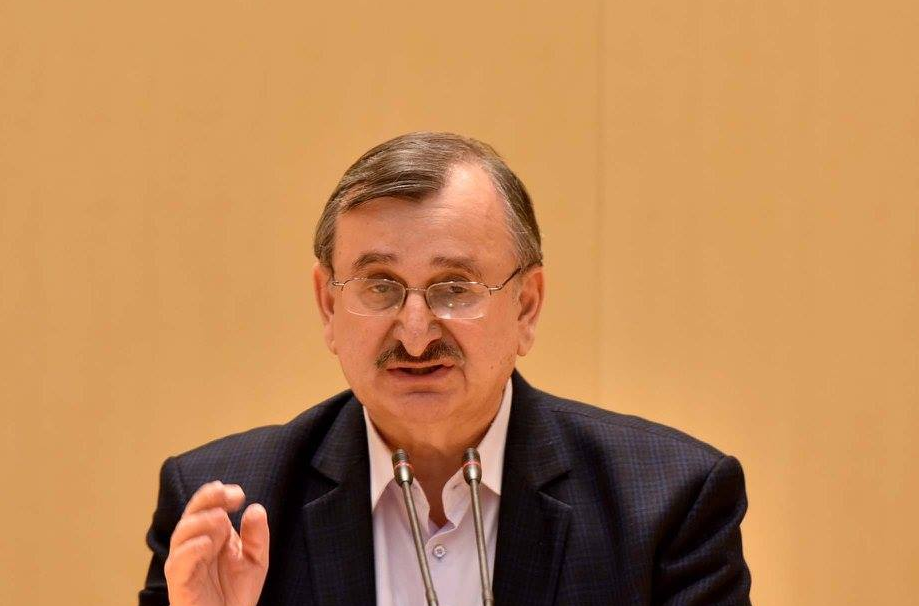
Roman Gotsiridze, an economist, said: “Georgian Forbes has published its first list of 100 Georgian millionaires. It is a good attempt. The list will likely be refined over time. In my view, some figures are overestimated, while others are underestimated. I jokingly congratulated an acquaintance who appeared in the ranking on Messenger, and he was surprised, saying he would very much like to have that level of wealth.
Two points caught my attention:
Only three or four of the 100 richest individuals are currently advertised on critically important television channels. It is already clear where the others advertise, or used to advertise.
Has Ivanishvili become richer or poorer? He has become richer, in every respect. The value of his shares has increased, as has the value of his art collection and real estate. He has even recovered losses from his dispute with a Swiss bank. Of that amount, $463 million has already been transferred, while $600 million remains frozen, despite his legal victory. Moreover, he has earned substantial sums within Georgia itself. His companies win tenders, and most benefit from various tax and non-tax advantages. Now even Bachiashvili — his former adviser and the ex-head of the Georgia Co-Investment Fund — has become a millionaire.
Since Georgian Forbes does not directly replicate data from the main Forbes list, it places Ivanishvili second, even though he is wealthier than the Kazakhstan-based businessman Mikheil Lomtadze.
As for Lomtadze, his inclusion in the ranking is comparable to compiling a list of ‘100 Georgian choreographers’ and including the American ballet master Giorgi Balanchivadze (George Balanchine).
Lomtadze appears in the ranking only because he was born in Georgia and has not renounced his Georgian citizenship. As he is listed as Georgian in the global Forbes ranking, the local edition also chose to include him. That may be justified. However, when analysing the data, his wealth should be excluded entirely, as his involvement in the Georgian economy is effectively zero.”
The richest people in Georgia