Flurry of diplomatic visits to Baku fuels speculation over Azerbaijan's OSCE chairmanship bid


Diplomatic visits to Baku and OSCE
Between 17 and 26 November, Azerbaijan received visits from the foreign ministers of Germany, Italy, Georgia and Lithuania, the prime minister of Montenegro and the US secretary of homeland security. Estonia’s foreign minister is also expected to visit Baku on 27 November.
According to official statements, the main topics of discussion were energy, the development of the Middle Corridor and the peace process between Azerbaijan and Armenia.
However, these visits coincided with a decisive stage in another diplomatic process. On 19 November, Azerbaijan announced in Vienna its readiness to chair the OSCE. The issue of the organisation’s chairmanship for 2027–2029 will be discussed at a meeting of the OSCE Ministerial Council, scheduled to take place on 3–4 December in the Swiss city of Lugano. This raises the following question:
What are the objectives of these numerous visits by foreign officials to Baku, and are they linked to Azerbaijan’s bid for the OSCE chairmanship?
Who visited and why?
According to official statements, the main topics of the visits were as follows:
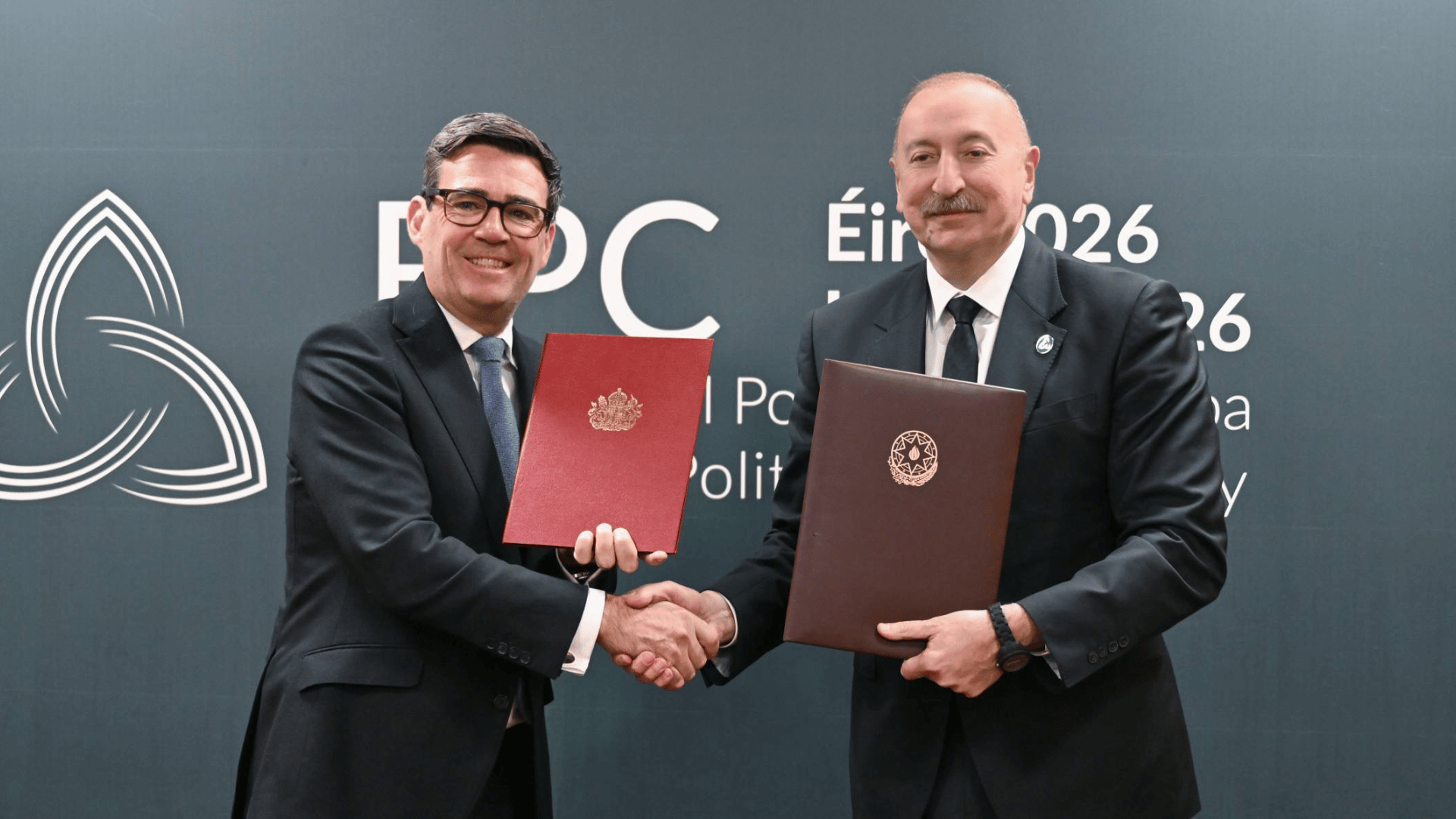
- Germany, 17–18 November. During a meeting between President Ilham Aliyev and Foreign Minister Johann Wadephul, discussions focused on Azerbaijani gas supplies to Germany, which began this year, the development of the Middle Corridor and “cooperation within international organisations”. Wadephul travelled to Yerevan after visiting Baku.
- US, 22 November. Secretary of Homeland Security Markwayne Mullin discussed the TRIPP transport route, which will pass through Armenian territory, during his meeting with Aliyev. The launch of the project’s implementation was announced the following day.
- Italy, 22–23 November. According to the Italian Foreign Ministry, Azerbaijan is the country’s second-largest oil supplier and third-largest gas supplier. The ministry stressed that, against the backdrop of the crisis in the Strait of Hormuz, Azerbaijan was a “strategic and reliable partner” in ensuring Italy’s energy security. Foreign Minister Antonio Tajani also attended a business forum featuring representatives of more than 240 companies.
- Montenegro, 24 November. Prime Minister Milojko Spajic spoke about Azerbaijani investment in Montenegro’s economy.
- Georgia, 24 November. Azerbaijani Foreign Minister Jeyhun Bayramov and Georgian Deputy Prime Minister and Foreign Minister Maka Bochorishvili discussed the development of the Middle Corridor and the Baku-Tbilisi-Kars railway.
- Lithuania, 25–26 November. Foreign Minister Kestutis Budrys said that once Lithuania assumed the presidency of the Council of the EU in January 2027, Vilnius intended to initiate the process of easing visa requirements for Azerbaijani citizens. During his meeting with Aliyev, Budrys also announced the forthcoming signing of a joint declaration on strategic partnership between the two countries.
None of the official statements issued by the parties mentioned Azerbaijan’s bid for the OSCE chairmanship.
What is at stake at the OSCE?
Switzerland currently holds the OSCE chairmanship. On 19 November in Vienna, Swiss Foreign Minister Ignazio Cassis proposed adopting a single decision on which countries would chair the organisation over the next three years. Switzerland believes that such an approach would ensure continuity in the organisation’s work and regional balance. According to the OSCE, Azerbaijan, Armenia, Austria and Norway expressed their readiness to assume the chairmanship during the meeting. Cyprus and Georgia reaffirmed their candidacies, although consensus on either has yet to be reached.
The decision requires consensus among all 57 OSCE participating states. This means that any of them, including Armenia, can block any candidacy. No agreement has yet been reached on the chairmanship for 2027. The foreign minister of Georgia, whose candidacy has also failed to secure unanimous support among participating states, visited Baku that same week. However, neither side mentioned the OSCE chairmanship in its official statements.
Relations between Baku and the OSCE have been strained for many years. In 2015, the Azerbaijani government terminated its memorandum of understanding with the OSCE Project Co-ordinator in Baku and ended the operations of its office. The OSCE Minsk Process, which facilitated mediation efforts to resolve the Karabakh conflict, was terminated in September 2025 by a decision of the OSCE Ministerial Council following a joint request from Baku and Yerevan. Azerbaijan is now seeking the chairmanship of the organisation.
All countries whose representatives visited Baku are OSCE participating states. Some carry particular political weight in the context of the forthcoming decision: Italy and Germany are among the EU’s largest member states, Lithuania will assume the presidency of the Council of the EU in January, and the US is acting as a mediator in the peace process between Armenia and Azerbaijan.
Who opposes Azerbaijan’s bid?
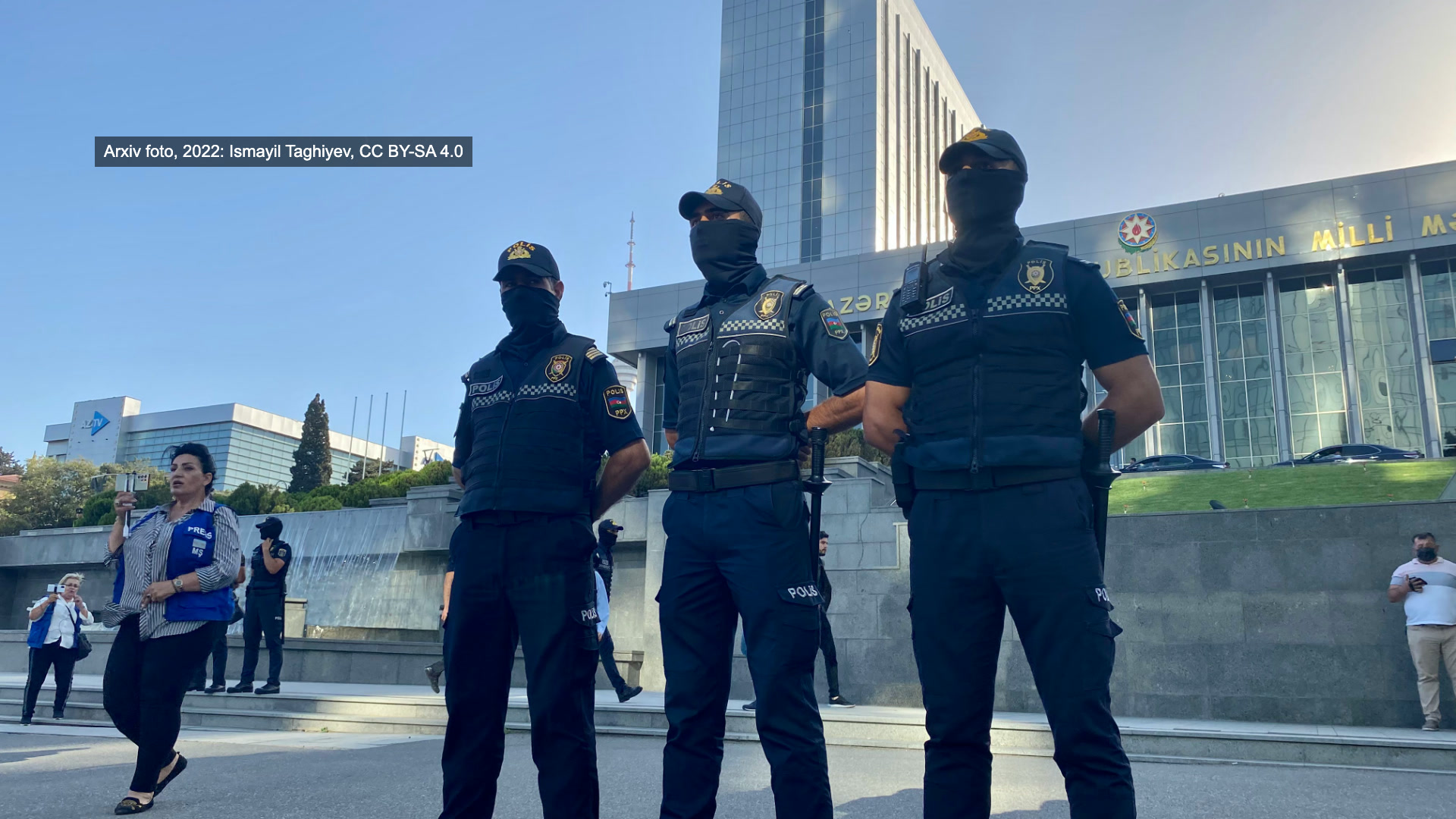
Civil society representatives were the first to openly oppose Azerbaijan’s candidacy. A joint appeal published on 23 November on the website of the human rights organisation Human Rights House Foundation was signed by 46 organisations, including the World Organisation Against Torture (OMCT), the US-based Freedom Now, the Human Rights Centre of Azerbaijan and the Network of Independent Lawyers.
The signatories called on OSCE participating states not to support Azerbaijan’s bid to chair the organisation. They cited a report by the Parliamentary Assembly of the Council of Europe (PACE), published in May 2026, according to which Azerbaijan had 328 political prisoners, including 31 journalists. The appeal also noted that Azerbaijan was among the countries with the highest number of unimplemented judgments of the European Court of Human Rights (ECtHR).
The Azerbaijani government has yet to make any public statements regarding either the appeal by human rights organisations or its bid for the OSCE chairmanship.
Possible pardons and other explanations
The increase in diplomatic visits to Baku caught the attention of Ilgar Mammadov, former chairman of the REAL party and now a member of its political committee. In a Facebook post, he suggested that one of the reasons behind the intensified diplomatic contacts could be Azerbaijan’s bid for the OSCE chairmanship:
“If this is the reason, then the possibility of releasing some political prisoners through presidential pardons at the end of the year is also being discussed, so that participating states can justify their support for Azerbaijan’s chairmanship to international human rights organisations.”
Mammadov did not rule out other explanations. In his view, if the visits were linked to rising tensions surrounding Iran, this would be accompanied by an increase in oil prices, which has not materialised. The politician argued that the prospect of rising gas prices better explained the geographical pattern of the visits, but did not provide a complete picture either.
There has been no official information about possible pardons so far. Mammadov himself presented this as just one of several possible scenarios.
What to expect from the Lugano meeting?
The final decision on the OSCE chairmanship is expected to be taken by consensus in Lugano. Switzerland said consultations would continue until the meeting of the organisation’s Ministerial Council.
However, Baku’s diplomatic agenda extends beyond this issue. Azerbaijani Foreign Minister Jeyhun Bayramov believes that Lithuania’s presidency of the Council of the EU, which begins in January, will provide a good opportunity to advance the visa liberalisation agenda in the first half of 2027. Bayramov stressed, however, that decisions on visa policy are taken at EU level.
Estonia’s foreign minister is expected to visit Baku on 27 November, with just a week to go before the OSCE Ministerial Council meeting in Lugano.