Part of Crimean Bridge collapses into sea: what damage to one of Kremlin’s key propaganda symbols means


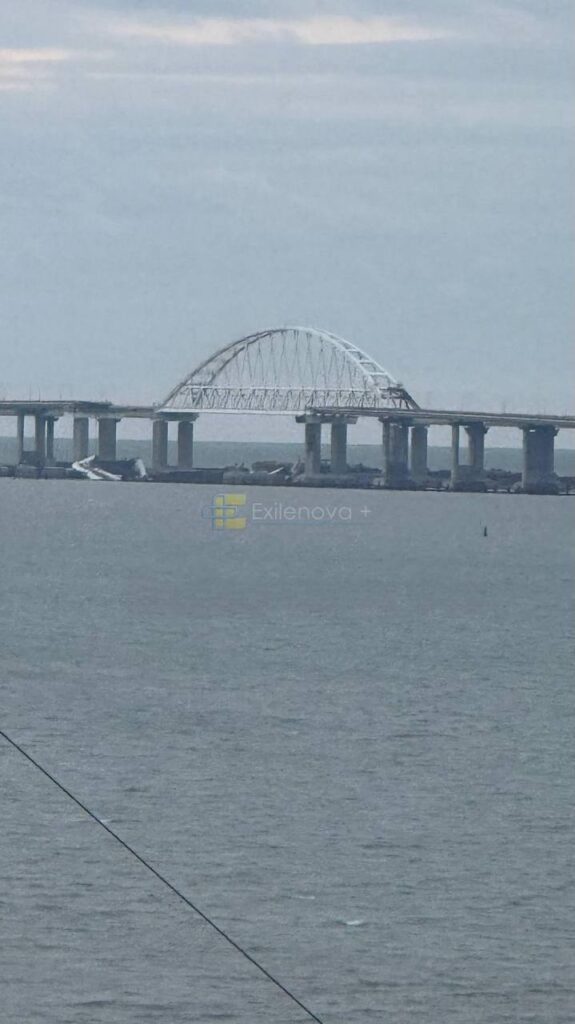
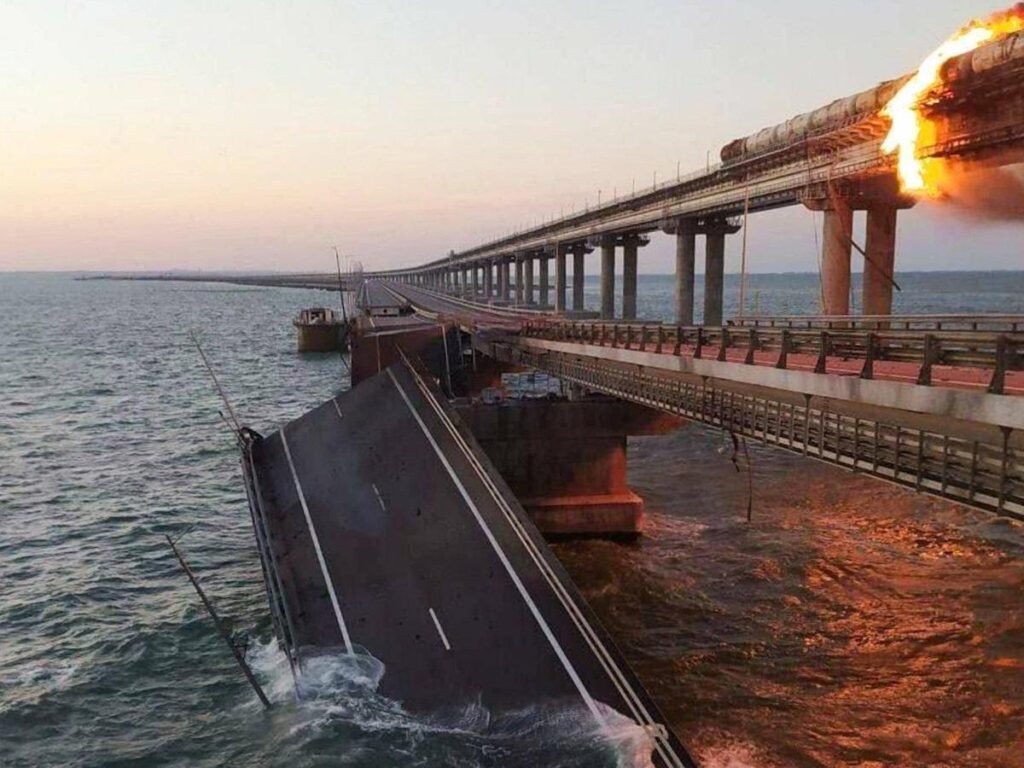
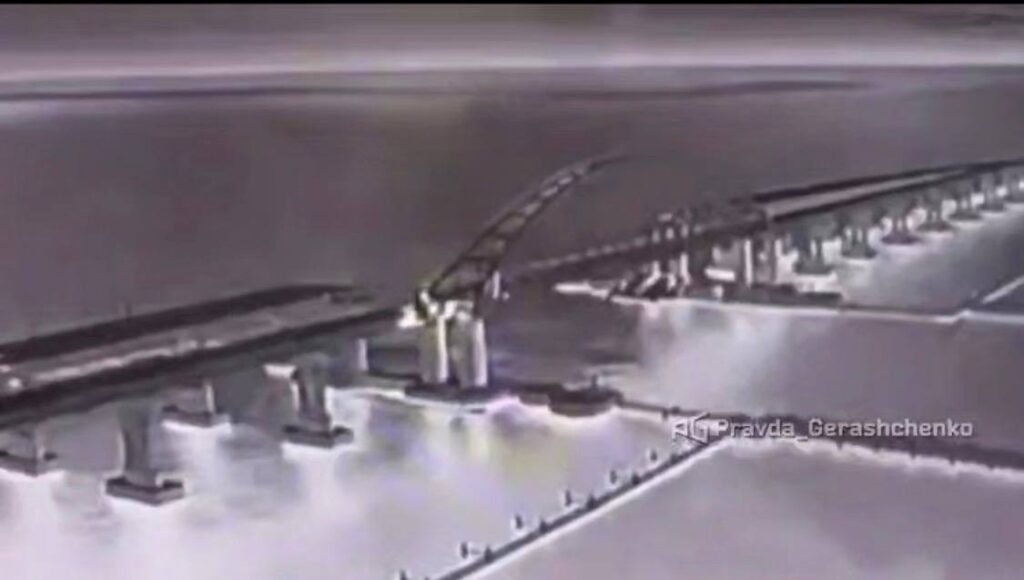
On 17 November 2026, the Crimean Bridge, which spans the Kerch Strait, was severely damaged in another Ukrainian attack. Video footage and photographs circulating online appear to show a large metal arch and a section of the road deck collapsing into the sea. Both road and rail traffic across the bridge have been suspended.
The attack is particularly significant because the Crimean Bridge is a vital land corridor linking the Crimean Peninsula, which Russia annexed in 2014, with Russian territory. Moscow has also used the bridge to supply its military forces.

For years, the Crimean Bridge was regarded as one of Vladimir Putin’s largest infrastructure projects and a symbol of Russian control over Crimea. Its damage creates several problems at once: it complicates Russian military logistics, increases the cost of supplying Crimea and shows how difficult it is for Moscow to secure one of its most heavily protected strategic assets.
It is important to note that the collapse on 17 November was preceded by an attack on 16 November, which also reportedly damaged the bridge’s structure. This means the bridge has been hit in a series of successive strikes rather than in a single isolated incident.
According to Anton Herashchenko, an adviser to Ukraine’s interior minister, the attack involved a Ukrainian FP-5 Flamingo cruise missile. Russian authorities confirmed the attack and the suspension of traffic across the bridge, but have yet to issue an official statement about its collapse.
The Russian outlet Agentstvo reports that federal television channels did not mention the attack on the Crimean Bridge in their morning news bulletins. Instead, they covered strikes on several bridges in Kyiv and other parts of Ukraine.
What does the collapse of the bridge arch mean from an engineering perspective?
To understand the scale of the damage to the Kerch Bridge, it is important to know how it is constructed.
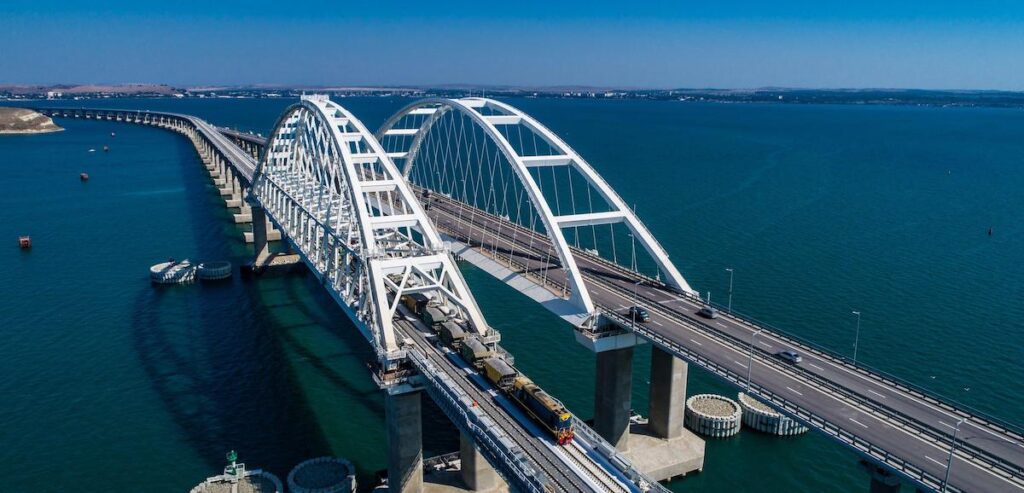
The bridge is approximately 19 kilometres long and consists of two independent parallel structures: one carries road traffic and the other railway traffic.
Both structures rest on concrete supports. However, the navigable section of the Kerch Strait features large metal arch structures that support the corresponding spans and provide sufficient clearance for ships to pass underneath.
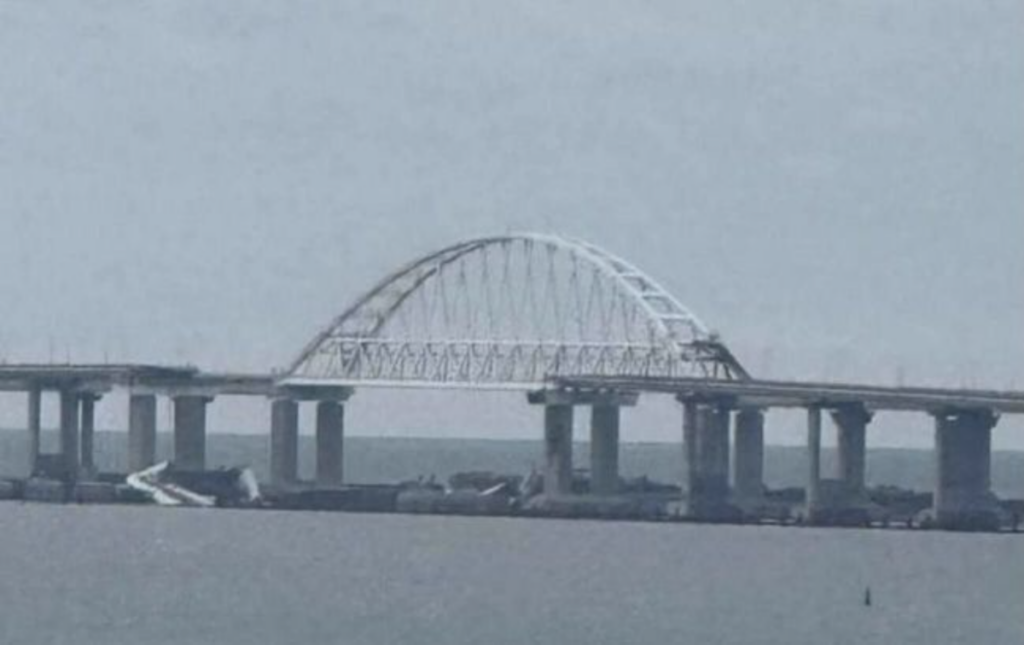
According to reports published on 17 November, a roughly 227-metre-long arch of the road bridge collapsed into the sea, along with the section of road deck connected to it. The adjacent railway arch was also damaged but has not collapsed.
Why does this matter?
The arch is not a decorative feature of the bridge but a key load-bearing element. Its damage means that the load in the affected section can no longer be safely distributed.
This creates several technical problems:
- Damage to the load-bearing structure: After the arch collapses, the affected section of the bridge can no longer support the weight of cars and heavy vehicles.
- Risk of damage to adjacent elements: The failure of one major structural component can place additional stress on neighbouring supports and spans.
- Safety of the railway infrastructure: The road and railway sections are separate structures, but they form part of the same transport corridor. Suspending rail traffic until the damage has been assessed is therefore a logical safety measure.
- Possible disruption to shipping: Debris from the collapsed structure could also obstruct the shipping channel used by vessels.
It is important to stress that the collapse of the arch does not mean the entire 19-kilometre bridge has been destroyed. However, one of its most important sections has been damaged. Restoring traffic will require a detailed structural assessment, the removal of debris and the necessary engineering and repair work.
Rebuilding such a large load-bearing element is a far more complex, time-consuming and costly process.

What does the collapse of the Kerch Bridge mean symbolically?
For Russia, the bridge is one of the most visible political symbols of the annexation of Crimea.
When Russia annexed Crimea in 2014, one of Moscow’s main challenges was establishing a land link between the peninsula and Russian territory, as the Kerch Strait separates Crimea from Russia’s Krasnodar Krai. By building the bridge, the Kremlin overcame this geographical barrier.
Vladimir Putin personally championed the project. In May 2018, he drove a lorry across the bridge and officially opened its road section. The event was broadcast on Russian state television and became an important part of the Kremlin’s propaganda narrative.
For Moscow, the bridge carried several key messages:
- Consolidation of the annexation of Crimea: The bridge served as a demonstration of Russia’s integration of the peninsula into its own territory.
- Putin’s political project: Its construction was presented as a personal achievement of the president and a showcase of Russia’s engineering capabilities.
- Demonstration of Russian control: The bridge signalled that Moscow intended to maintain a long-term presence in Crimea and had no plans to return the peninsula to Ukraine.
Russia decided to build the bridge in 2014, following its annexation of Crimea. Construction began in 2016. The road section opened on 15 May 2018, while rail traffic began in December 2019.
The bridge is considered one of the longest in Europe. Its construction cost around 228 billion roubles (approximately $3.5–3.8 billion at the exchange rate at the time).
The project involved extensive engineering work. The structure includes supports on both land and underwater, while specially designed high arches allow ships to pass through the navigable section of the strait.
After the first explosion in 2022, the damage to the bridge was seen in Ukraine as an important moral and symbolic victory. At the time, Al Jazeera reported that the attack had heightened the perception of Russia’s vulnerability.
How many times has Ukraine attacked the Kerch Bridge before?
Before the attack on 17 November 2026, Ukraine had carried out three major successful operations against the Kerch Bridge. Ukrainian officials subsequently confirmed or acknowledged responsibility for them.
The strike on 16 November 2026, which directly preceded the attack on 17 November, should also be treated as a separate incident.
8 October 2022: First major explosion
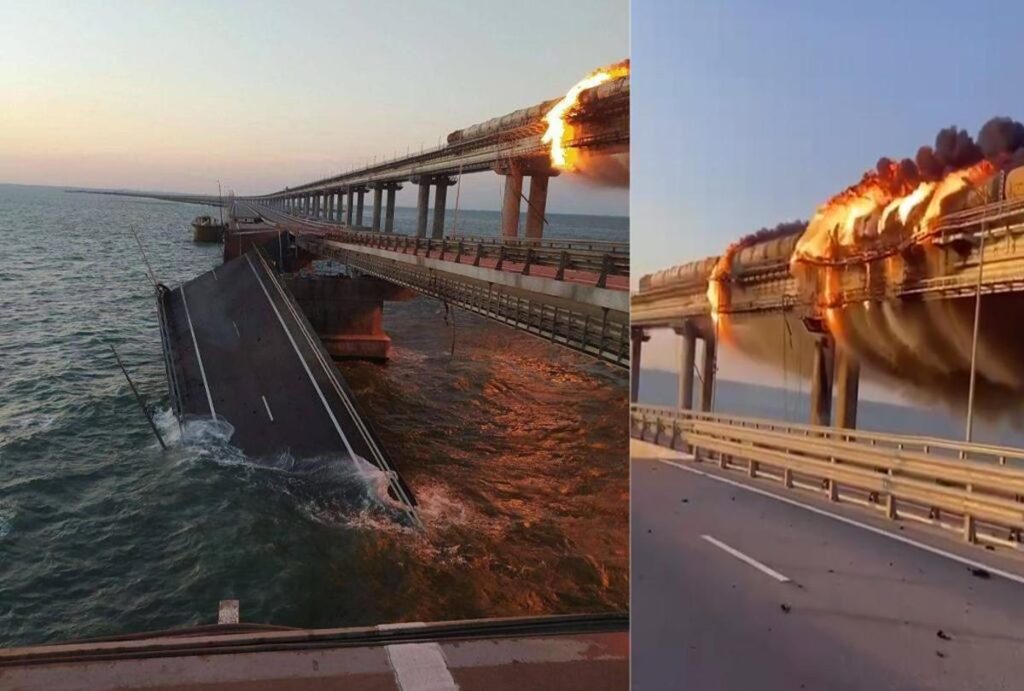
A lorry travelling across the bridge exploded, damaging several road spans and causing some of them to collapse. The blast also set fuel tankers on a passing railway train on fire. Four people were killed.
Ukraine subsequently acknowledged its involvement in the attack. Repairs to the damaged sections took several months.
17 July 2023: Sea drone attack
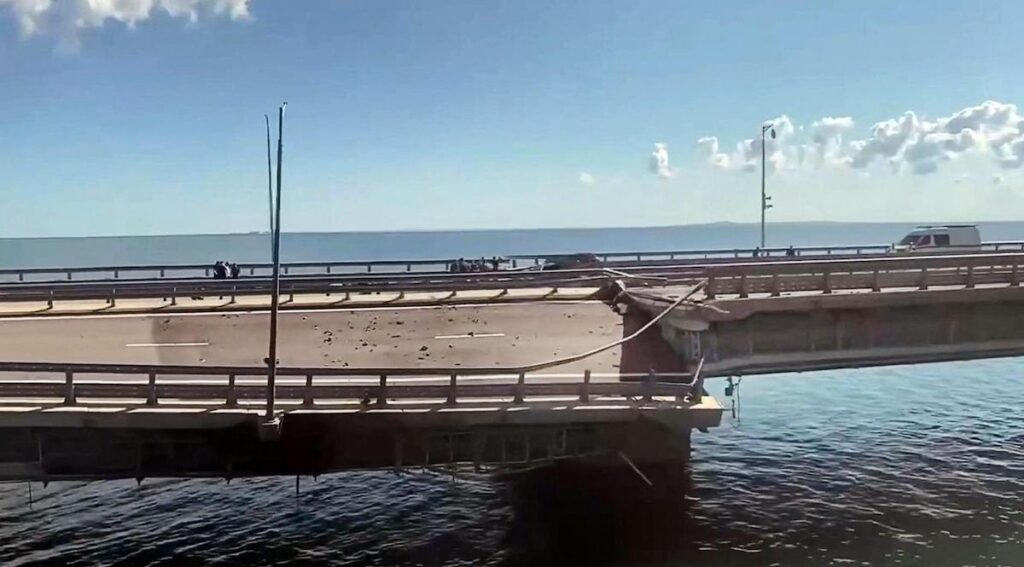
Ukraine attacked the bridge using Sea Baby naval drones. The road section sustained damage, and one of its spans collapsed. Two civilians were killed in the attack, and their child was injured.
Vasyl Maliuk, head of Ukraine’s Security Service (SBU), later confirmed that Ukrainian forces had carried out the operation.
3 June 2025: Underwater explosion
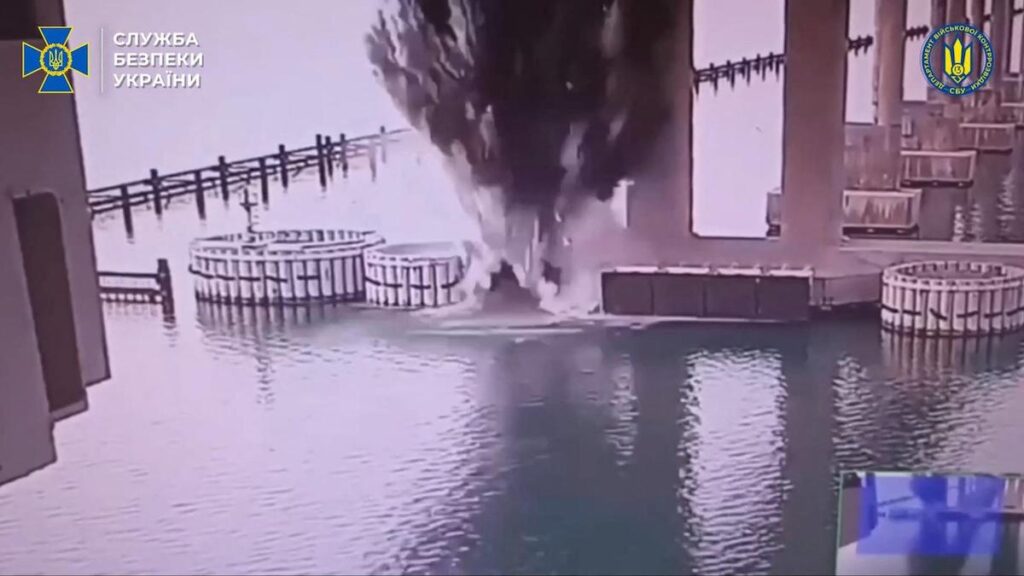
Ukraine’s Security Service (SBU) detonated explosive devices near the bridge’s underwater supports. According to the Ukrainian side, the blast had an estimated force of 1,100 kilograms of TNT.
The SBU said the operation had been in preparation for several months and that the bridge’s supports had sustained significant damage. The agency claimed that the structure had been left in a critical condition.
16 November 2026: Another strike
The Ukrainian drone attack damaged the bridge’s structure. Russian authorities initially described the damage as minor, but traffic across the bridge was temporarily suspended and later partially restored.
What did Russia use the Kerch Bridge for?
For Russia, the bridge was not just a transport link for Crimea’s population. It was also one of the key logistical routes used in its war against Ukraine.
Military role
After Russia launched its full-scale invasion of Ukraine in 2022, the bridge acquired particular strategic importance. It allowed Russia to transport military supplies from its territory to Crimea and then onwards to the occupied regions of southern Ukraine.
These supplies included:
- military equipment and armoured vehicles;
- ammunition and weapons;
- fuel and other military supplies;
- military personnel and logistical resources.
The bridge allowed Russian forces to move military supplies relatively quickly from Russian territory to Crimea and then distribute them towards the front line in southern Ukraine.
In March 2024, Vasyl Maliuk, head of Ukraine’s Security Service (SBU), said Russia had significantly reduced its use of the bridge to transport military equipment following Ukrainian strikes.
According to Maliuk, 42–46 trains carrying weapons and ammunition crossed the bridge every day before the attacks. After the strikes, that number fell to four or five.
Civilian and economic role
The bridge is also an important transport route for Crimea’s residents and tourists.
It was used to deliver:
- food;
- fuel;
- consumer goods;
- construction materials;
- various industrial products.
The bridge also carried passenger trains and cars travelling between Russia and Crimea.
A prolonged disruption would therefore affect not only military supplies but also everyday economic life in Crimea, the cost of delivering goods and the tourism industry.
What alternatives does Russia have?
Disabling the Kerch Bridge does not mean that Russia will lose the ability to supply Crimea altogether.
Moscow can use the land corridor through the occupied parts of southern Ukraine. It links Russia’s Rostov region with the occupied territories of Donetsk, Zaporizhzhia and Kherson regions, and Crimea.
However, this route has several drawbacks. It is significantly longer, runs close to active combat zones and is itself vulnerable to Ukrainian strikes.
Russia could also use the ferry crossing across the Kerch Strait, but it would not be able to fully replace the bridge’s capacity.
Disabling the Kerch Bridge therefore represents a serious logistical blow to Russia, even if Moscow continues to supply Crimea via alternative routes.
Why is this attack significant?
From a military perspective, Russia is losing – at least temporarily – one of its most important transport corridors, which it used to supply its forces in Crimea and southern Ukraine.
From an economic perspective, a prolonged closure of the bridge will increase the cost of supplying Crimea and put additional pressure on alternative transport routes.
From a political perspective, it is another blow to Putin’s project, which has become a symbol of Russia’s annexation of Crimea.
It is also particularly significant that the bridge was considered one of Russia’s most heavily protected strategic assets. It was guarded by air defence systems, maritime barriers and other security measures. Yet Ukraine has managed to strike it repeatedly.
However, the ultimate strategic impact will depend on how long the bridge remains out of service, how severe the damage is to its supports and the adjacent railway structure, and how quickly Russia can increase the capacity of alternative routes.
One thing is clear: the Kerch Bridge is one of the most important symbols Putin has created since the annexation of Crimea. Its repeated damage sends Moscow a clear message: in its war against Ukraine, no infrastructure asset is safe or beyond reach.