

Millions spent on Patriarch’s funeral: scandal involving Georgia’s former culture minister Tinatin Rukhadze






Scandal involving former officials in Georgia
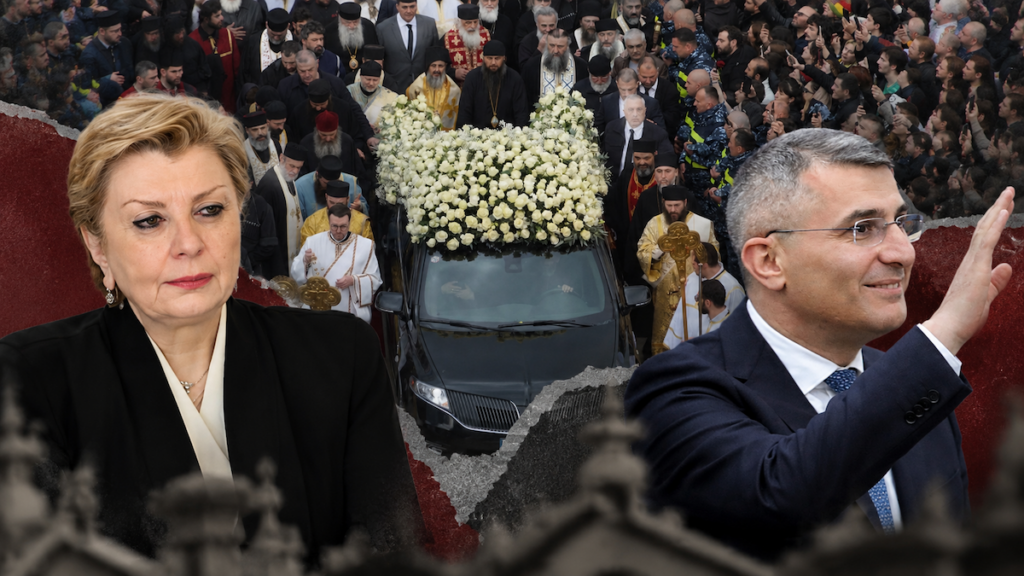
On 14 October 2026, Davit Okitashvili, a supporter of the Georgian Dream party, publicly accused former Culture Minister Tinatin Rukhadze of misusing funds allocated for the funeral of the Patriarch of Georgia and called on the prosecutor’s office to launch an investigation. Okitashvili also criticised former State Security Service chief Mamuka Mdinaradze, whom he described as Rukhadze’s political patron.
Other Georgian Dream supporters also responded to Okitashvili’s allegations. Opposition figures believe such attacks on former senior officials may be intended to pave the way for their arrests.
How much did the Patriarch’s funeral cost?
Patriarch Ilia II was buried on 22 March 2026. The government allocated a total of 5.59 million lari to organise the funeral, distributing the funds among six government agencies. The largest share — 3 million lari — went to the Ministry of Culture, which Tinatin Rukhadze headed at the time.
It later emerged that the authorities had not spent more than half of the allocated funds. On 8 May, the government revised the funding to reflect actual expenditure, reducing the total to 2.56 million lari.
Georgian minister quits politics shortly after ex-PM’s accusations
From ‘crown prince’ to prisoner: Irakli Garibashvili’s break with Georgia’s ruling party
Patriarch’s funeral: farewell ceremony of unprecedented scale in Tbilisi. Photos/videos
The Ministry of Culture spent just 722,600 lari of the 3 million lari originally allocated to it. The remaining 2.28 million lari went unspent.
However, it remains unclear exactly how the ministry spent the 722,600 lari: who received the money, what services they provided and how transparently the ministry selected contractors.
September: first questions and the prime minister’s response
Questions about spending on the Patriarch’s funeral emerged in September, following an investigative report by the Pirveli television channel.
Acting Culture Minister Mikheil Kiknadze initially said that the audit documents reflected the shortcomings investigators had identified. However, he later added: “I did not say that there had been any violations.”
Prime Minister Irakli Kobakhidze also commented on the issue on 14 September. He said the Ministry of Culture had spent only 722,000 lari of the 3 million lari allocated to it.
“If anyone had wanted to steal the money, they could easily have taken all three million,” Kobakhidze said.
He also made the following promise:
“This is preliminary information. I will examine the matter in greater detail and provide the public with a detailed account.”
The Patriarchate defends Rukhadze
On 16 September, Archpriest Andria Jaghmaidze, head of the Patriarchate’s public relations service, issued a statement.
He said the Patriarchate had known from the outset that a significant portion of the money allocated for the funeral would remain unspent.
“During that period, we were in frequent contact with Ms Tika Rukhadze, and we knew from her that most organisations and individuals who provided various services had declined any remuneration or payment,” Jaghmaidze wrote.
He expressed hope that people would stop using the Patriarch’s name as a pretext for unfounded accusations and slander.
What links Tika Rukhadze to Tikhart?
According to Transparency International Georgia, Tinatin Rukhadze earned 410,000 lari as a consultant for Tikhart, an event management company, in the two years before she became culture minister.
The organisation also reports that Tikhart secured government contracts worth a total of 3.8 million lari through direct procurement, bypassing competitive tenders.
These circumstances raise questions about whether the company also received payment for organising the Patriarch’s funeral. However, no publicly available information confirms that it did.
Transparency International Georgia has called on the Ministry of Culture to disclose who received the 722,600 lari spent on the funeral and specify which services they provided.
Another problem is that the government does not have to disclose procurement information for purchases financed through the government’s reserve fund. This makes it harder for the public to scrutinise how the authorities spend public money.
The minister’s resignation and a new political climate
Tinatin Rukhadze became culture minister in October 2024. On 28 July 2026, she left the post, citing health reasons. No evidence has established a link between her resignation and the allegations concerning funeral expenditure.
On 15 September, Prime Minister Irakli Kobakhidze appointed Maia Bitadze, a Georgian Dream MP, as culture minister, specifically praising her integrity.
Around the same time, Mamuka Mdinaradze also left his political post as head of the State Security Service. Rukhadze and Mdinaradze subsequently became targets of coordinated public attacks.
October: accusations from a Georgian Dream supporter
On 14 October, Davit Okitashvili, president of the Georgian Chamber of Culture and an active Georgian Dream supporter, publicly accused Tinatin Rukhadze of obstructing his projects and damaging his reputation. He also described Mamuka Mdinaradze as the former minister’s patron.
Okitashvili raised questions about the cost of the Patriarch’s funeral and called on the prosecutor’s office and the State Audit Office to investigate the spending. In a post, he asked Rukhadze:
“Ms Tika, where did the millions go?!”
Other Georgian Dream representatives supported Okitashvili’s post, including party activist and MP Dimitri Samkharadze.
What does Mamuka Mdinaradze have to do with it?
Okitashvili did not limit his attacks to the former culture minister.
He claimed that Mamuka Mdinaradze had acted as Rukhadze’s political patron. According to Okitashvili, Mdinaradze helped secure her appointment as minister, and she subsequently acted under his influence.
In an interview with Palitranews on 15 October, Okitashvili repeated these allegations. He also claimed that both Rukhadze and Mdinaradze had betrayed Georgian Dream.
However, he noted that the prosecutor’s office had not contacted him.
Georgian Dream representatives also responded to Okitashvili’s accusations.
MP Tengiz Sharmanashvili said the prosecutor’s office should ask Okitashvili what evidence he had. If his claims proved credible, investigators should question those involved, including Rukhadze and Mdinaradze.
Opposition warns of possible arrests
The opposition also reacted to the October developments.
Nika Gvaramia, one of the leaders of the Coalition for Change, said Okitashvili’s statements might be intended to prepare the public for the possible arrests of Tinatin Rukhadze and Mamuka Mdinaradze.
Gvaramia suggested that Bidzina Ivanishvili could be behind the process.
Ana Tsitlidze, a representative of the United National Movement, accused Rukhadze and Bakur Bakuradze, the former director general of Rustavi 2, of embezzling funds allocated for the Patriarch’s funeral. She also suggested that authorities might arrest Mamuka Mdinaradze.
Former MP Eka Beselia suspected that Okitashvili’s statement might form part of a pre-planned process. She said that if an investigation began immediately after his statement, it would confirm her suspicions.
Scandal involving former officials in Georgia