Two German foundations shut down in Georgia, citing government restrictions






German foundations, including the Konrad Adenauer Foundation and the Friedrich Naumann Foundation, have ended their activities in Georgia after more than 20 years of work in the country.
Both organisations say the conditions set by the Georgian government under new legislation, known as the “Grants Law”, have made it impossible for them to implement projects and continue their activities.
Parliament Speaker Shalva Papuashvili said foreign political parties and foundations affiliated with them should not pursue political goals in Georgia.

What the foundations say
The Tbilisi offices of both foundations closed on 30 September 2026. In statements published on 2 October, the organisations said the Georgian government’s decision to reject their grant applications had limited their ability to continue working in the country.
The Friedrich Naumann Foundation, which has operated in Georgia since 2002, said it had applied under the new law on foreign funding and grants so it could continue funding projects and working with local partners. However, the foundation said the authorities required every component of its programme to align with state priorities and required it to obtain the necessary permits for all activities.
“It was not easy for us to take this step, but it was inevitable. The actions of the Georgian government make it impossible for the foundation to continue its activities in the country,” the organisation said.
According to the foundation, the authorities rejected its application on 28 July 2026. The organisation said that under the circumstances, it no longer saw a way to continue working in line with its values and principles.
The Friedrich Naumann Foundation worked in Georgia to support liberal ideas, an open society, the country’s European future and dialogue between societies. The organisation said it would continue to support Georgian citizens who are fighting for a free and democratic system in the country.
The Konrad Adenauer Foundation also said that the closure of its office in Tbilisi was not a voluntary decision but resulted from the political and legal conditions created by the Georgian government.
“The closure of our office in Tbilisi is a direct consequence of the political and legal framework established by the Georgian government, under which the foundation can no longer fulfil its core mission as a political foundation on the ground,” the organisation said.
According to the foundation, the government rejected its project funding applications on 28 July. The organisation said it had made active efforts, including with the involvement of the German federal government, to preserve the possibility of continuing its work, but those efforts failed.
The foundation said project approval appeared possible only if the projects no longer reflected the foundation’s political nature and mission. It also stressed that maintaining a physical presence in Georgia without the ability to carry out its core activities was not an acceptable option.
The Konrad Adenauer Foundation has operated in Georgia since 2003. Its work has focused on promoting democracy and the rule of law, developing parliamentarianism, strengthening German-Georgian relations and supporting Georgia’s European integration. The organisation has also supported young researchers and students through scholarships and educational programmes.
The foundation said it would retain its legal entity status in Georgia so that it could return to the country if the political situation changes.
Both organisations said they would maintain ties with Georgia and their local partners, and attributed the suspension of their activities solely to the restrictions introduced under the new legislation.

Shalva Papuashvili’s comment
In response to the Konrad Adenauer Foundation’s statement, Parliament Speaker Shalva Papuashvili said foreign political parties and organisations affiliated with them should not pursue political missions in Georgia.
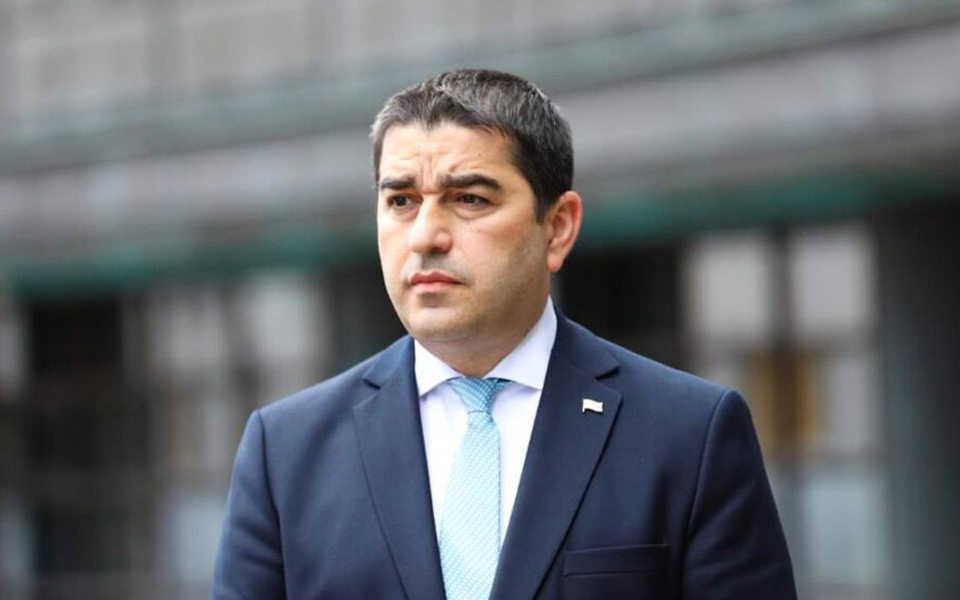
“In their statement, they [the foundations] say that they have a political mission and that, since they can no longer carry it out, they see no reason to remain in the country. This is somewhat surprising.
As we know, political foundations are affiliated with political parties. The Adenauer Foundation, for example, is affiliated with the Christian Democratic Union. Let me remind you that the Christian Democratic Union is part of the EPP and, therefore, is a partner party of the United National Movement. Yet it says it wants to carry out a political mission in Georgia. In my view, foreign political parties and their foundations have no political mission to carry out in Georgia,” Papuashvili said.
He said the government had explained to the Adenauer Foundation that, to approve its grant projects, it needed to exclude projects of a political nature. Activities in academic, educational and other fields could receive approval, he said.
“However, judging by their statement, they apparently have no interest in academic, educational or other similar activities. As their own statement makes clear, they were interested in carrying out a political mission, and they are leaving because they can no longer do so. The decision is theirs,” the parliament speaker said.
Papuashvili, who is now criticising the German foundation, himself worked for German organisations for many years. From 2003 to 2007, he served as a senior legal expert at the German Technical Cooperation Society (GTZ). From 2007 to 2020, he headed the organisation’s office in Georgia.

Comment
Historian and Ilia State University professor Beka Kobakhidze commented on the closure of the Konrad Adenauer Foundation’s office in Georgia. He noted that for many years the foundation had provided scholarships to top students and created a wide range of opportunities for them.
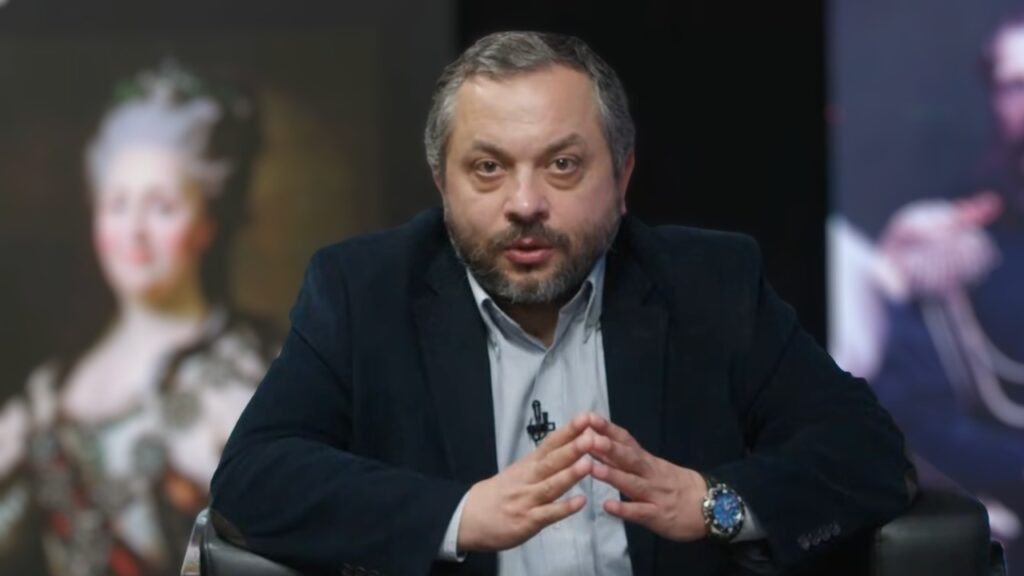
Beka Kobakhidze: “I constantly see posts from my students thanking the Konrad Adenauer Foundation.
Do you know how Georgian master’s students live? They have to work all day to pay for housing, food and transport. Then they have to make it to a lecture at 7 p.m., attend until 9 p.m., return home by 10 p.m., eat and study. In these circumstances, quality education often remains disconnected from real-life conditions. We launched the master’s programme in the history of modern Georgia in 2020, and from day one, the foundation provided scholarships to the top students in our programme. This financial support helped them with their studies and helped us maintain a high standard of education.
The Adenauer Foundation is a right-leaning organisation, but they never once said, ‘Let’s give scholarships to students with right-wing views and not to those on the left.’ Many left-wing students received these scholarships. They never told us what or how to teach. They placed their full trust in us and gave us complete academic freedom, while we awarded scholarships based on meritocratic principles. At the end of each semester, we reviewed academic performance, and the top two or three students received scholarships.
It is impossible to count how many international conferences our students attended thanks to funding from the foundation. These opportunities deepened their knowledge, and that knowledge led to numerous achievements: Tsinandali Awards, numerous awards from the FaRiG Foundation, books by our graduates that became bestsellers at book fairs, participation in international research projects, admission to doctoral programmes, and jobs as university lecturers. And the list could go on indefinitely. The Adenauer Foundation laid the foundation for all of this.
I am immensely grateful to the foundation’s staff, who have now become close friends of mine, and whom I met through our joint work.
As of 1 October 2026, the foundation has ceased its activities in Georgia. Do you know the background? The Adenauer Foundation was expelled from Russia in 2022.”
What does the so-called “Grants Law” provide?
A package of laws adopted on 4 March 2026 significantly expanded the definition of a “grant”. It now covers both financial and non-financial support if such support could be used to influence domestic or foreign policy, including activities linked to the interests of a foreign state or political force.
The law also strengthens the State Audit Office’s oversight of grants. When a foreign legal entity provides funding to a branch operating in Georgia without government approval, the authorities can impose sanctions, including a fine equal to twice the value of the grant.
Violations of grant legislation can also lead to criminal liability. The penalties include fines, community service or imprisonment for up to six years.
The amendments also affect the political process. People who work primarily for organisations funded by foreign sources cannot join political parties for eight years. Moreover, restrictions imposed on political parties also apply to structures that are not formally parties but effectively engage in political activity.
The legislative package also tightens administrative liability for private companies that engage in public political activities.
One of the most controversial aspects of the amendments involves new provisions added to the Criminal Code that expand the definition of “extremism”. Under the new article, public calls for actions directed against the constitutional order — including calls to disobey the authorities or establish alternative structures — may constitute criminal offences.
In addition, authorities classify crimes committed on the grounds of refusing to recognise constitutional state bodies as offences committed under aggravating circumstances. This increases the sentence by at least one year.
Experts say such wording allows for broad interpretation and increases the risk that the law could be used against dissent and critical activity.
Two German foundations shut down in Georgia