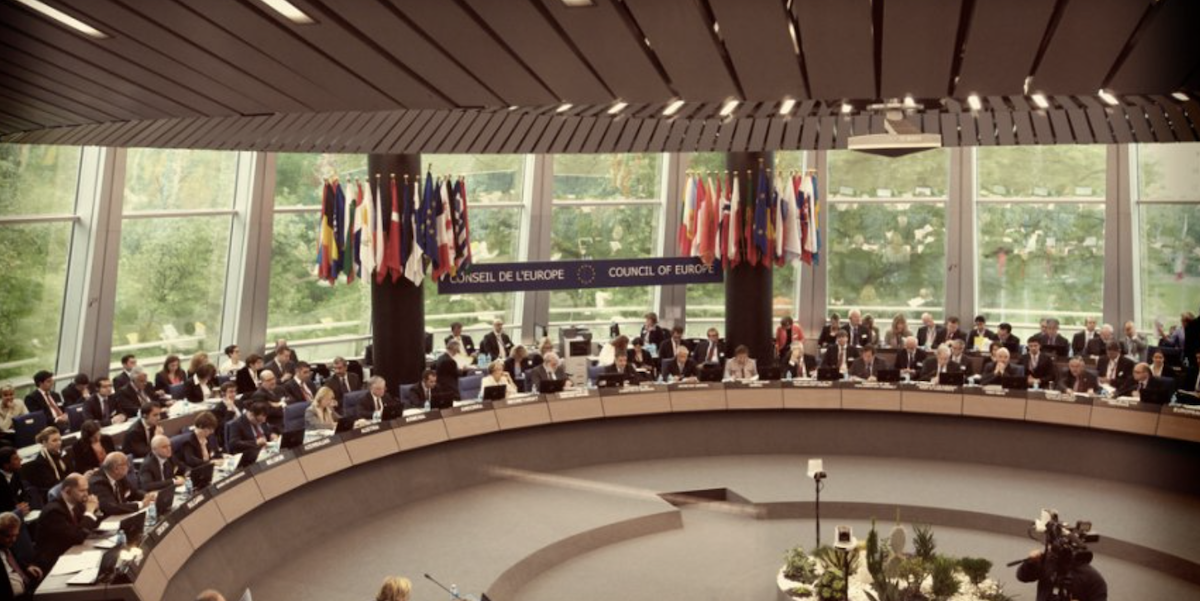


Armenia’s anti-corruption campaign: law on confiscating illicit assets takes effect






Armenia’s law on confiscating illicit property
A large-scale anti-corruption campaign is unfolding in Armenia . As part of the campaign, the state is confiscating assets belonging to members of the country’s former financial and political elite.
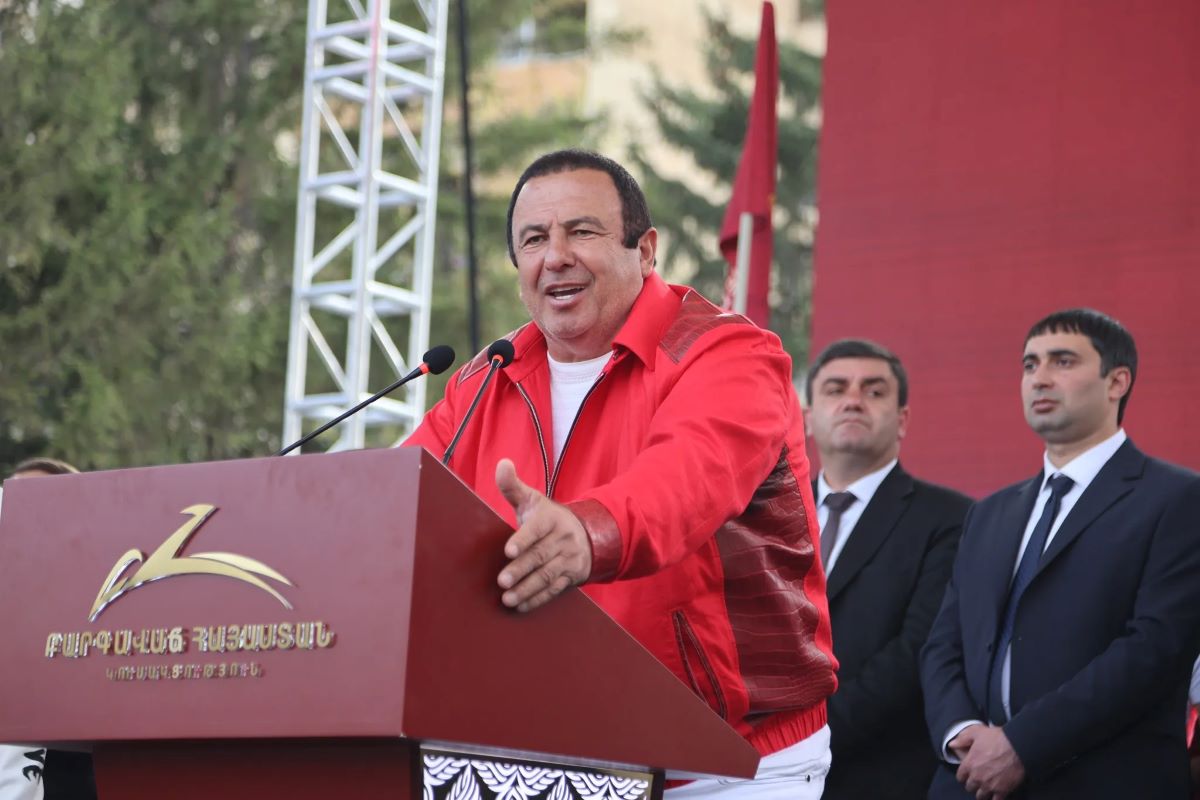
The authorities say they are moving from high-profile political accusations to a systematic effort to recover illegally acquired property. The list of people accused of corruption whose numerous properties and business assets have been frozen includes former Armenian president Robert Kocharyan , Prosperous Armenia party leader Gagik Tsarukyan, and former finance minister and ex-head of the State Revenue Committee Gagik Khachatryan. Prosecutors accuse those involved in these high-profile cases of money laundering, bribery and abuse of office.
At the same time, the debate in Armenia goes beyond how they managed to amass such wealth. It also concerns whether the process complies with the law, whether the authorities apply the law equally to everyone, and whether the confiscated property is genuinely being returned to the people.
- “No more gifts” – Armenia introduces new regulations on civil servants
- “There is a process, no result”: on confiscation of illegal property in Armenia
- Corruption scandals in Armenia
About the law
Armenia’s Law on Confiscation of Property of Illicit Origin has been in force since 2020. The authorities adopted it “to strengthen the fight against corruption and restore social justice”. The law applies to assets worth more than 50 million drams ($132,120). It allows the state to confiscate property if its owner cannot prove that the income used to acquire it came from legal sources.
According to the Prosecutor General’s Office, between 2018 and the first half of 2026, the state and local communities recovered assets worth approximately 304 billion drams (around $840 million). More than two-thirds of that amount — about $562 million — was recovered over the past three and a half years.

Comment from lawyer Aram Orbelyan
“The Law on Confiscation of Property of Illicit Origin contains fundamental contradictions. In international practice, confiscation models are clearly separated. One involves checking declarations: if a person cannot explain their income, the state confiscates the property. The other involves confiscation following proof of a crime. Our lawmakers, however, have mixed everything together into complete confusion.
The grounds for an investigation are chaotic. Half of the provisions are linked to criminal cases, including cases that authorities have suspended or closed on non-exonerating grounds. The other half allows officials to launch confiscation proceedings based simply on ‘operational information’. As soon as any intelligence report appears, law-enforcement agencies immediately begin examining a person’s property, going back as far as 1991.”
The factual vacuum of the 1990s
“What political statements describe as ‘plunder’ is often impossible to prove in court because the circumstances of that era were different. In the 1990s, non-monetary transactions, including agricultural exchanges, were widespread. There was no clear system of tax and customs control. Vehicle databases only appeared in the early 2000s, while electronic tax records emerged in 2013.
Moreover, the law at the time did not require businesses to keep documents for more than five years. This has naturally created an information vacuum today. Young prosecutors fail to take this historical context into account, leading to dead ends in court.”
Intrusion into private life and the political context
“The extent of the intrusion into private life raises serious questions. The law allows investigators to examine years of bank statements belonging to any relatives of a person under investigation. As a result, investigators and prosecutors gain access to strictly personal spending unrelated to corruption: where people went on holiday, what they ordered in cafés and what illnesses they received treatment for.
Society sees this mechanism exclusively as a ‘law to recover what former [authorities] stole’. Legally, however, the law should target corruption as such, rather than individuals. To ensure that anti-corruption tools do not appear politically selective, they must operate universally. They should apply to all elites, regardless of their current political status or affiliation with the ruling camp.
Authorities must examine both the past and the present transparently, without politically motivated cases, while taking limitation periods and the economic realities of earlier years into account. The process should objectively target illicit property, rather than serve as a selectively applied repressive tool.”

Comment from Varuzhan Hoktanian, an expert at Transparency International’s Anti-Corruption Centre
“The law sparked legal disputes from the outset, which led to a review of its constitutionality by the Constitutional Court. The court, in turn, sought an expert opinion from the Venice Commission. International experts offered two key recommendations. First, the confiscation of property for the benefit of the state should take place through separate civil proceedings, rather than criminal prosecution resulting in imprisonment. Second, some responsibility for proving the lawful origin of assets should fall on the owner.
It is often extremely difficult to prove that property has a corrupt origin. For example, Kocharyan’s case involves the signing of government decisions. For the charges to stand, the prosecution must prove that he deliberately approved specific decisions in the expectation that the assets would eventually pass to his family. This is extremely difficult to establish, so the evidence often appears unconvincing. The situation is compounded by the absence of a mandatory declaration system in the 1990s. As a result, it is now virtually impossible to confirm that property was acquired legally.”
Discrimination or fight against corruption?
“Applying legal mechanisms exclusively to one group of people discredits the anti-corruption institution itself, turning the law into a tool of political pressure. Attempts to deprive opponents of financial resources by seizing their property create a risk of completely clearing the political field. If this is combined with double standards during elections — harsh punishment, including arrests, for vote-buying while ignoring the abuse of administrative resources — the system of checks and balances itself collapses. Ignoring any of these abuses leads to dictatorship.”
What happens to confiscated property?
“The legal question is only one side of the problem. The question of what happens to confiscated property after the state receives it is no less important.
I recall a similar confiscation from Soviet history — the dekulakisation campaign of the late 1920s and early 1930s. We later learned about the grave consequences it caused, including the Holodomor. As it turned out, the party nomenklatura ultimately received everything that the authorities had seized. Today, these assets could likewise pass to new wealthy individuals or another nomenklatura. Once again, ordinary people would receive nothing.
When people talk about confiscating property, they mean both financial assets and movable and immovable property. For example, someone may have built a luxurious house and live in it. If we return to the Soviet example, after the October Revolution, the authorities seized property from wealthy people and turned luxury homes into communal apartments. That will not happen in our case. No one plans to move an ordinary citizen into someone else’s mansion. This raises the question: who received the mansion belonging to formerprimeministerformer prime minister Hovik Abrahamyan, or the Golden Palace hotel in Tsaghkadzor?
The situation is also problematic here. Even if a new wealthy owner buys these properties, a change of government could lead to their seizure again, with the authorities claiming that the original confiscation was unlawful.
Moreover, the phrase ‘returning property to the people’ sounds somewhat abstract to me. The trend shows that confiscated real estate goes not to the people, but to another wealthy person close to the authorities. And the public will ask: ‘What do we get out of it?’
Let me give you an example. There used to be a kindergarten in our courtyard. A newly wealthy owner acquired it through an illegal transfer. If the state takes the building back today and restores its former status as a kindergarten, then yes, that would mean ‘returning it to the people’.
In other cases, this could become a vicious circle in which each successive government dispossesses the previous one. This is quite dangerous, especially in the context of investment. Investors should not have to fear that the authorities might dispossess them tomorrow.”
How can confiscated funds be used?
“As for monetary confiscations, the seized funds go into the budget, into what is known as a ‘common pot’. It is unclear how the authorities then spend this money. These are not earmarked revenues, so the authorities decide how to use them.
It would be better to classify these revenues as earmarked funds and regulate them by law, directing the money towards social programmes designed to improve citizens’ welfare.”
Armenia’s law on confiscating illicit property