Is Georgia expecting a new wave of migrants from Russia?






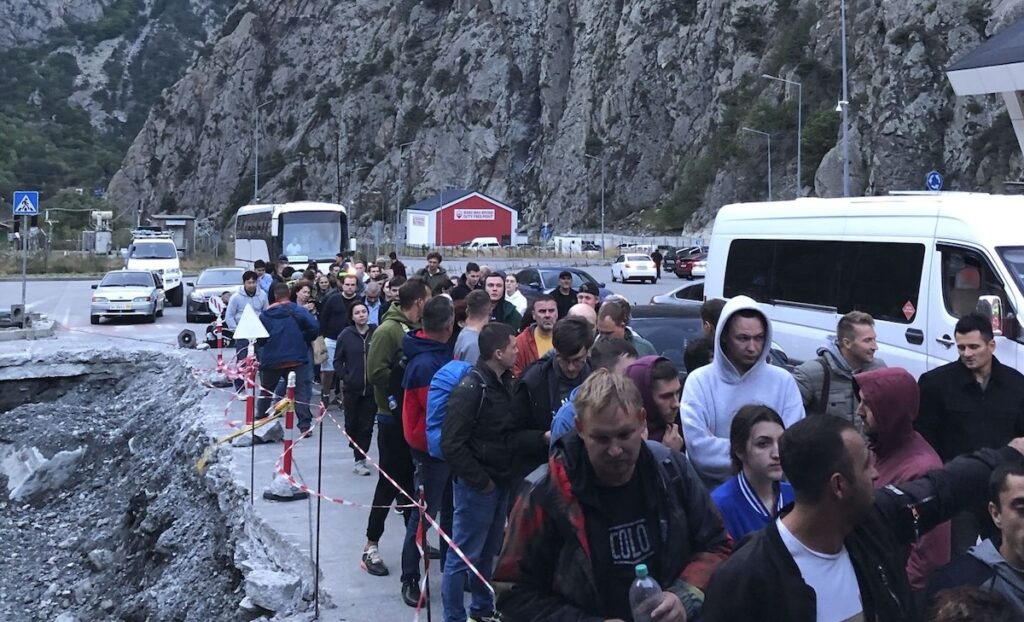
While rumours of a possible mobilisation circulate in Russia, Georgia is bracing for a new wave of Russian migrants. However, current data from the Upper Lars checkpoint on the Russian-Georgian border do not yet indicate a mass exodus from Russia.
In mid-August, Russia’s Customs Service said that Upper Lars had seen a “record flow” of travellers. The agency said more than 20,000 people crossed the border in passenger cars on 18 August.
Georgia’s Interior Ministry disputed the Russian figures. According to its data, 7,880 citizens of various countries entered Georgia from Russia between 8 and 19 August, while 8,406 people left Georgia for Russia. In total, 16,286 people crossed the border in both directions.
Russia’s customs authorities later clarified their figures, also saying that more than 16,000 people had crossed the border in both directions. This time, however, they did not describe the figure as “record-breaking”. They noted that more people were travelling towards Russia as the tourist season came to an end.
The figures nevertheless caused concern in Georgia. Many people remembered September 2022, when tens of thousands of Russians entered Georgia after Moscow announced a partial mobilisation.
That large influx drove up property prices significantly. Many people in Georgia now fear that the situation could happen again.
Why are people expecting a new wave of migrants?
Reports of a new mobilisation in Russia remain unconfirmed, but they are spreading widely. The reports claim that mobilisation could be announced after September’s State Duma elections. The Russian authorities have made no official statements to that effect.
Nikoloz Urushadze, managing partner at the consulting company G. Miller International Georgia, says that even these rumours could prompt some Russian citizens to leave the country.
“Even if Russia ultimately does not announce mobilisation, the expectation of it still affects people. They are afraid, and fear is often a powerful factor driving people to move,” he told BusinessPressNews.
Urushadze believes Georgia remains one of the most accessible destinations for Russian citizens and could face a new influx of migrants if Russia announces mobilisation.
The experience of 2022
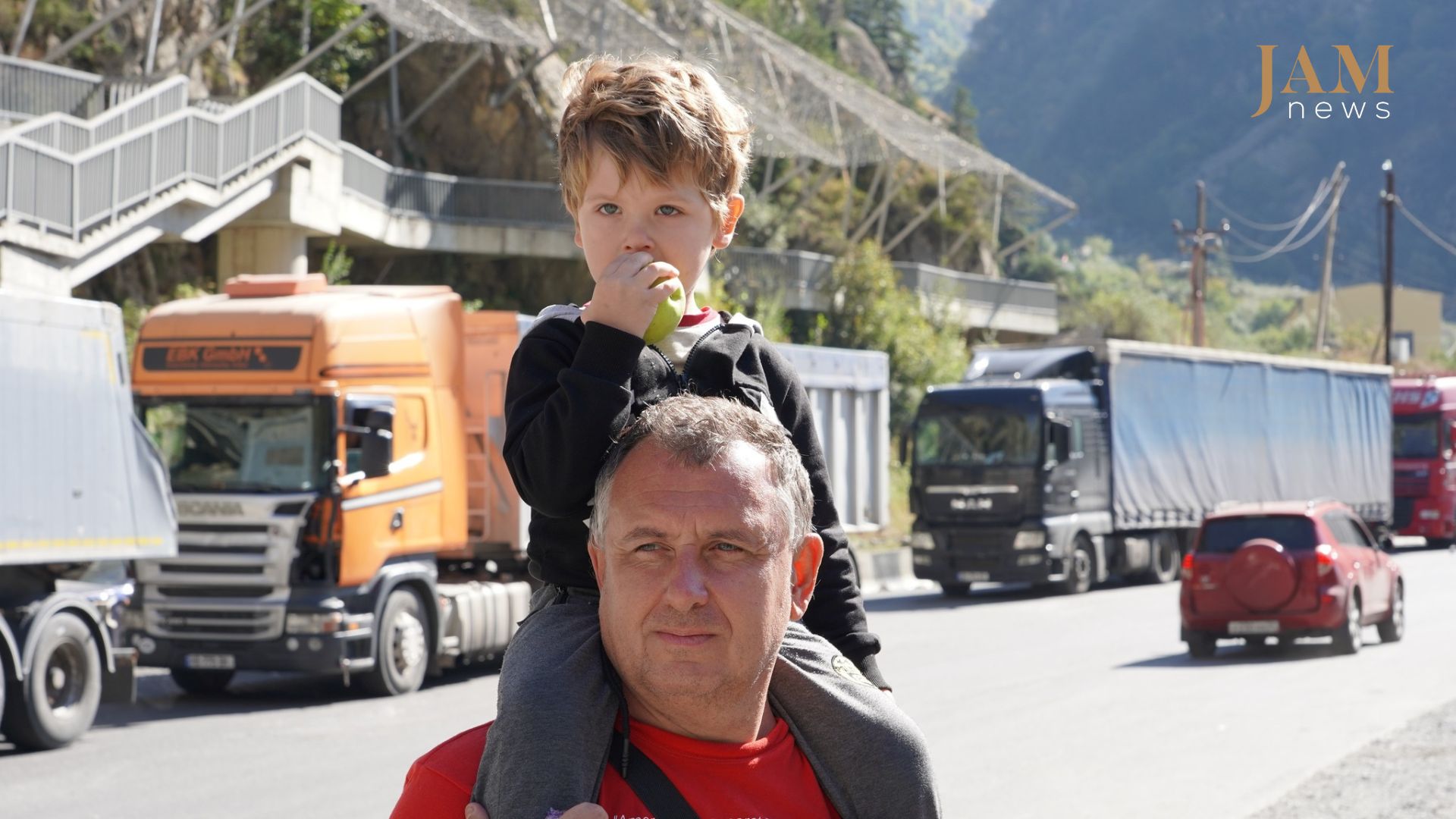
In September 2022, immediately after Russia announced its partial mobilisation, the queue at the Upper Lars checkpoint stretched for 20-30 kilometres on the Russian side. Around 5,500 cars were waiting at the border. Authorities even set up a mobile military recruitment office in North Ossetia, where the checkpoint is located.
According to Georgia’s then-interior minister, Vakhtang Gomelauri, around 10,000 people crossed the border each day. Before the mobilisation announcement, the figure stood at about 6,000.
As a result of the influx, around 100,000 Russian citizens lived in Georgia for a period. Some local residents called on the authorities to introduce a visa regime for Russian citizens.
How could a new influx affect property prices in Georgia?
According to Nikoloz Urushadze, a new wave of Russian migrants would primarily affect the property market. Increased demand would push up rental prices again. Georgia experienced this in 2022-2023, when the arrival of large numbers of Russian citizens sharply increased rental costs in Tbilisi and Batumi.
Russian citizens, along with Ukrainians and Belarusians, are also actively buying property in Georgia. In the first half of 2026, they accounted for 18% of all buyers. A year earlier, their share stood at 13%. During the same period, the share of Georgian citizens among apartment buyers in the resort city of Batumi fell from 43% to 33%.
Urushadze points to another problem. In his view, some Russian citizens do not integrate into local society and the economy. Instead, they create their own closed infrastructure.
“Georgia is a country where 300,000 Russians could come and create a little Russia here, with their own schools and universities. They would not need the Georgian language or anything else at all,” he says.
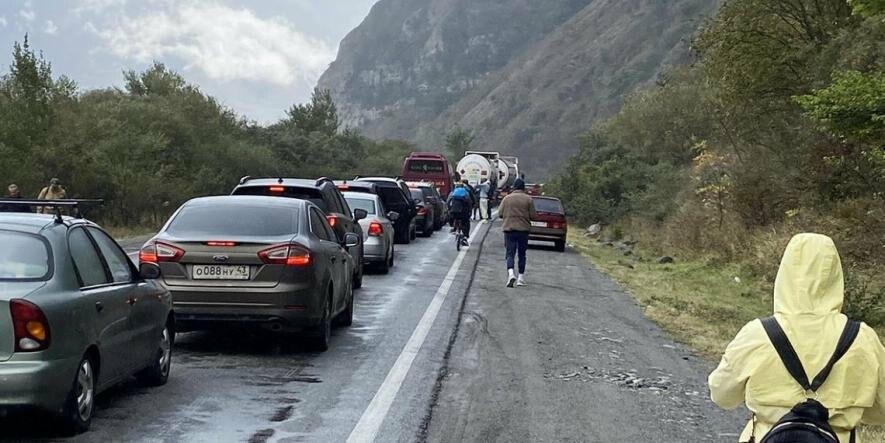
At this stage, the situation on the Russian-Georgian border does not resemble the mass exodus of 2022. The queues in August were mainly linked to the tourist season and a temporary border closure due to bad weather. Many people were leaving Georgia rather than entering it, returning to Russia.
The real scale of any new influx will become clearer later. The decisive factor will be whether the Russian leadership officially announces mobilisation.
Russian migrants in Georgia