Historic home of Abkhaz literary patriarch Dmitry Gulia destroyed in Abkhazia






Dmitry Gulia’s dacha destroyed in Abkhazia
An outcry has erupted in Abkhazia after reports emerged that a businessman had seized and demolished historic seaside dachas belonging to Dmitry Gulia, regarded as the patriarch of Abkhaz literature, and Konstantin Simonov, the renowned Soviet writer.
The two properties were located in the coastal settlement of Agudzera. According to reports circulating on social media, the owner of a neighbouring beachfront plot decided to expand his estate by taking over the writers’ properties. The buildings were demolished, and the entire site was levelled with heavy machinery.

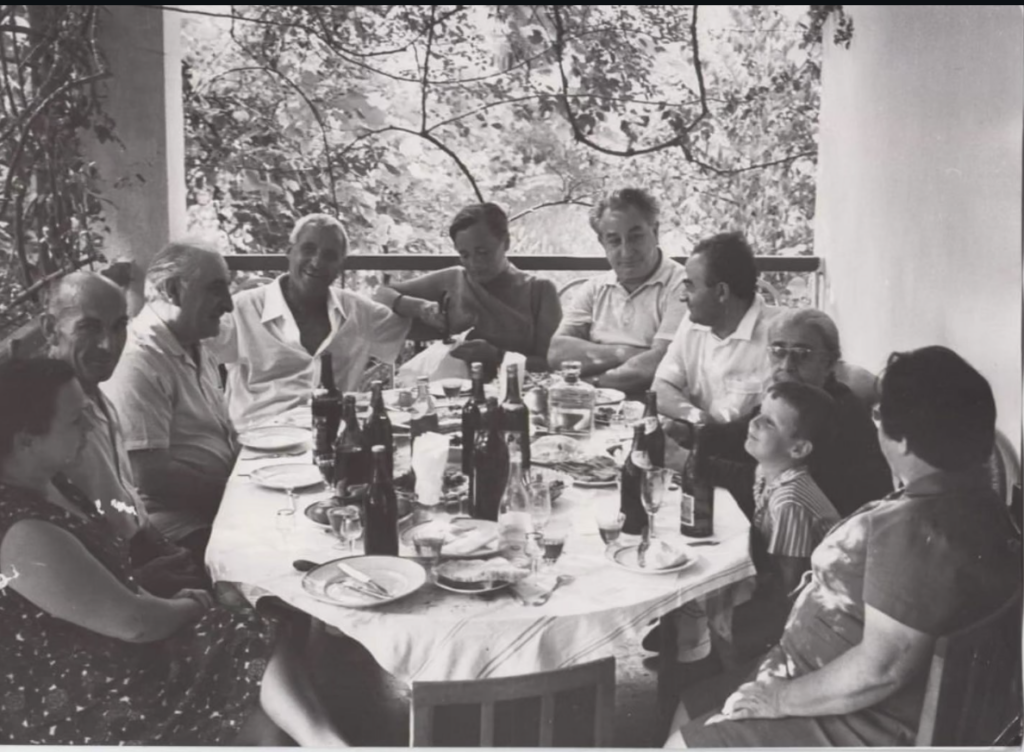
The dacha was built in 1957 by the prominent Soviet writer Georgy Gulia for his father, Dmitry Gulia, the founder of Abkhaz literature.
According to Dmitry Gulia’s granddaughter, Tatyana Gulia, he was already elderly and in poor health, and doctors advised him to live by the sea. Dmitry Gulia spent the last three years of his life in the modest single-storey house, which had a veranda and three rooms. He also died there.
The public outcry forced the Abkhaz authorities to state that “a mistake had been made and there was no threat of the land being seized.”
Next to the Gulia house stood the dacha of another prominent Soviet writer, Konstantin Simonov, who was a close friend of Georgy Gulia. Before his death in 1979, Simonov bequeathed the property to the Gulia family.
During the 1992–93 Georgian-Abkhaz war, both writers’ dachas were looted and partially destroyed. After the war, staff from the Dmitry Gulia Museum helped maintain the two buildings.
Tatyana Gulia discovered that the land had been taken over while visiting the cemetery in Gulripsh, where her grandmother is buried. She wrote on social media:
“We suddenly saw a bulldozer driving across our property, leveling everything to the ground, despite the memorial plaque that had been installed there by the Dmitry Gulia Museum.”
After public outrage mounted, Aslan Ankvab, the head of the Agudzera village administration, called the Gulia family to say that officials had reviewed all the documents and confirmed that both the land and the house remained the property of the Gulia family.
“The remains of the house have been destroyed, but the land itself has been preserved. The authorities have decided to describe what happened as a misunderstanding,” Tatyana Gulia later wrote.
- Abkhazia reopens Dioskuri embankment after major renovation – video
- Mandarin season in Abkhazia. Video
- Procession and pyre – Abkhazia marks victims of the 19th-century Russo-Caucasian War. Video
The terminology, place names and views expressed in this article are those of the author and do not necessarily reflect the editorial position of this website.
Dmitry Gulia’s dacha destroyed in Abkhazia