

“Curator” Sergei Kiriyenko and Russia’s new policy in Abkhazia: view from Tbilisi






Moscow curator in Abkhazia Kiriyenko
In recent years, one of the central figures shaping political processes in Abkhazia has been Sergei Kiriyenko, First Deputy Chief of Staff of the Presidential Administration of the Russian Federation. Although his oversight also includes South Ossetia (the Tskhinvali region), it is in the more politically active Abkhazia that his activities are most clearly visible.
Both regions are considered by Georgia to be its territories occupied by Russia. Most countries in the world share this position. Russia, along with four other countries (Nicaragua, Venezuela, Nauru, and Syria), has recognized Abkhazia and South Ossetia as independent states.
Before Russia’s invasion of Ukraine: Kozak’s approaches
Kiriyenko assumed responsibility for Abkhazia and South Ossetia from Dmitry Kozak, who served as Deputy Head of the Presidential Administration until September 2025 but was relieved of oversight of these regions a year earlier.
The contrast between the two figures is not merely personal; it reflects a broader shift in the Kremlin’s approach toward Abkhazia.
From the period following the occupation of Crimea to Russia’s full-scale invasion of Ukraine, it became increasingly evident that Abkhazia was losing its former political significance for Moscow.
Traditionally, Russia had used Abkhazia as a lever of pressure against Georgia. However, following the unilateral recognition of Abkhazia in 2008, this instrument largely lost its value, pushing Kremlin policy into a strategic dead end.
This stagnation was reflected in both Kozak’s role and his working methods.
He was never deeply involved in Abkhaz affairs and maintained a noticeable distance from internal political processes.
Another key figure of that period, Vladislav Surkov, focused primarily on ideological and strategic dimensions.
His concept of the “Russian World” extended beyond Georgia’s occupied territories to Crimea and Donbas, shaping a new framework for Russia’s neighborhood policy. Such an approach inherently limited Moscow’s direct involvement on the ground. Visits by Kozak or Surkov, as well as meetings between de facto leaders and Vladimir Putin, were rare and treated as major political events.
During that period, Russia was unable – or unwilling – to intervene openly even in Abkhazia’s de facto presidential elections, instead cautiously supporting individual candidates.
This relative restraint fostered among Abkhaz a stronger sense of autonomy and political agency, while simultaneously increasing sensitivity to excessive Russian interference in domestic affairs.
One explanation for this distancing may be that Abkhazia was gradually losing its functional relevance for Russia, or that its earlier role was becoming obsolete.
After the full-scale invasion – the Kiriyenko era: soft power and integration
A turning point in this policy trajectory was Russia’s occupation of Crimea and its subsequent full-scale invasion of Ukraine. The difference between Russia’s pre-war and current policies toward Abkhazia is stark.
Prior to the war, the Kremlin focused primarily on ensuring Abkhazia’s formal subordination, preventing external actors from gaining influence in Sukhumi, and keeping the region firmly within Russia’s strategic orbit.
According to Olesya Vartanyan, a research assistant at George Mason University, Abkhazia’s importance for Moscow declined after the annexation of Crimea, as Ukraine became the primary arena of confrontation between Russia and the West.
Vano Abramashvili, head of the Peace Program at the Caucasian House in Tbilisi, shares this assessment, arguing that during Kozak’s tenure Abkhazia was a lower priority for the Kremlin and Russian policy in the region was largely left on autopilot.
Security concerns dominated Moscow’s agenda, manifesting in tighter control over civil society and a harsher approach toward local critical actors.
This, in turn, exposed the rigidity and clumsiness of Kremlin policy in Abkhazia. Abramashvili emphasizes that before the war in Ukraine, Russia’s main objective was to preserve Abkhazia’s strategic alignment and prevent any drift away from the Russian sphere.
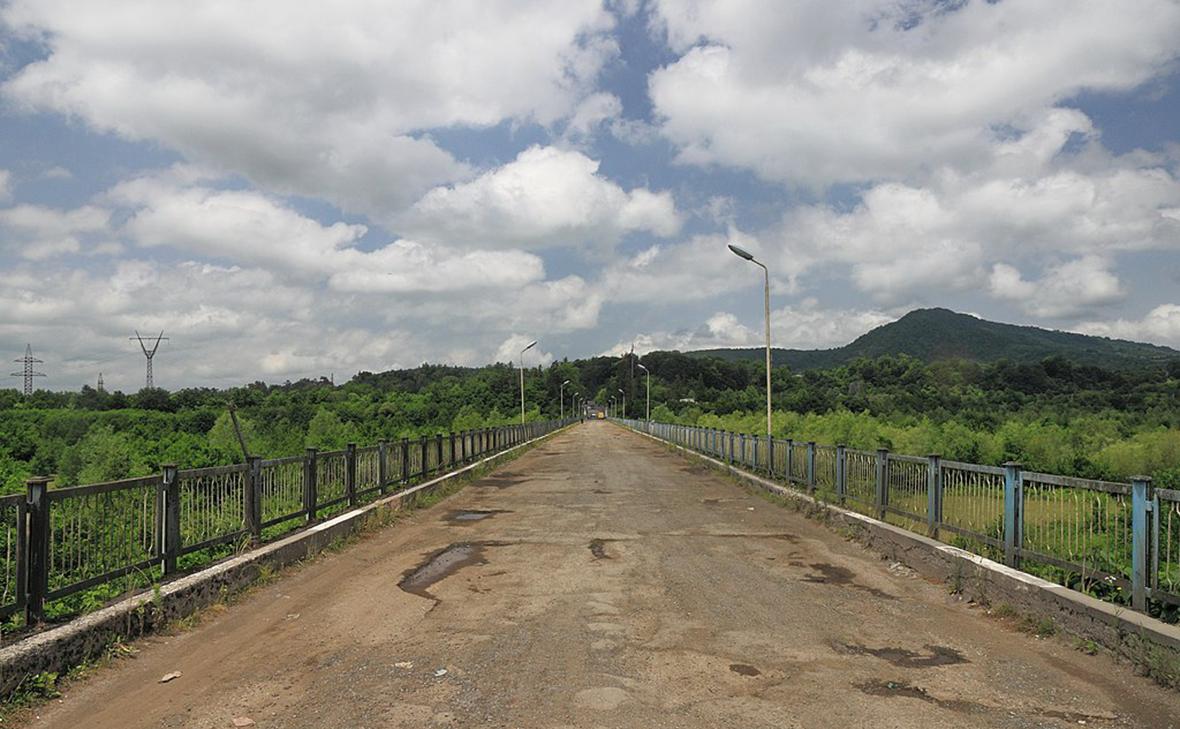
Following the outbreak of the full-scale war in Ukraine, Abkhazia acquired renewed strategic significance. This shift is primarily linked to non-sanctioned economic activity.
Russia accelerated the rehabilitation of Sukhumi airport and the development of infrastructure at the Ochamchire port.
Achieving these objectives required tighter control over local political processes. Rather than relying on coercive or confrontational methods, the Kremlin opted for a softer, more flexible approach that allowed for deeper and more effective engagement on the ground.
Sergei Kiriyenko emerged as an ideal figure to implement this strategy.
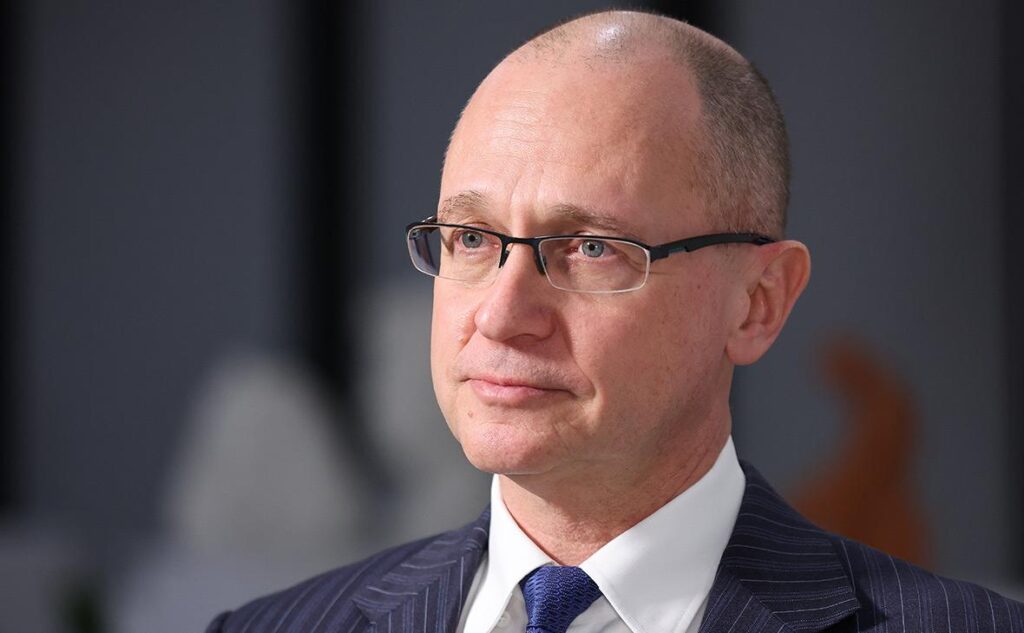
Unlike Kozak, Kiriyenko is personally involved in Abkhazia’s internal affairs. He frequently emphasizes that he was born in Sukhumi and presents himself as a figure with local roots. Kiriyenko is also known as a relatively non-confrontational actor who prioritizes cooperation and partnership over coercion.
This working style has enabled him to defuse internal political crises in Abkhazia, fostering relative stability rather than escalation. His personal engagement in these processes is highly visible.
According to Vano Abramashvili, Kiriyenko’s personal skills and management style align closely with the Kremlin’s revised policy approach. He is, in this sense, an optimally selected figure who effectively leverages his networks and competencies. Kiriyenko is particularly notable for his hands-on micromanagement, which he manages to exercise without provoking new conflicts.
Kiriyenko’s visits to Abkhazia have become so frequent that they are now perceived as routine. This level of activity creates the impression that he is permanently present on the ground and has become an integral figure in Abkhazia’s internal political landscape, backed directly by the Russian president and his administration.
Future risks
Never before has Russia been so intensively involved in Abkhazia’s internal affairs. The substance of the new policy differs markedly from previous approaches.
There are also objective reasons for this shift: the authority of Abkhazia’s political elite has steadily eroded due to years of governance failures, while Moscow’s preferred candidate, Badra Gunba, lacks strong personal authority and influence.
To stabilize the situation, he requires constant external support – delivered in a way that does not provoke resentment within Abkhaz society.
Kiriyenko performs this role with notable effectiveness.
At the same time, Kiriyenko draws on his extensive experience to identify and promote new faces and cadres within Abkhazia’s public administration, an investment that may yield long-term dividends. For now, Abkhazia’s internal political dynamics do not provide sufficient grounds for widespread criticism of the Kremlin’s unusually deep involvement.
The new de facto authorities remain in a “honeymoon” phase, but once this period ends, social and political challenges are likely to resurface. In such a scenario, the Kremlin’s prominent role may become a primary target of criticism, potentially damaging its reputation.
At present, however, Russian policy in Abkhazia – and Kiriyenko’s role within it – appears effective. As Abramashvili notes, Kiriyenko has managed to produce a perceptible shift in Abkhaz society, significantly reducing the perceived threat associated with Russia’s presence.
The erosion of this sense of threat may, in turn, transform Abkhaz society itself. In this respect, Kiriyenko’s activities may ultimately generate changes far more profound than those currently visible.
The terminology, place names and views expressed in this article are those of the author and do not necessarily reflect the editorial position of this website.