

‘41 steps towards Russia’ - Transparency International’s report on Georgian Dream policy






Report on the Georgian Dream’s policies in 2025
International organisation Transparency International has published its final report for 2025, analysing 41 political steps taken by the ruling Georgian Dream party on what it describes as an anti-European path.
“Over the past year, the Georgian Dream, which seized power in the parliamentary elections of October 26, 2024, has repeatedly confirmed to the population of Georgia and the international democratic community that it will do anything – suppress the free will of citizens, torture freedom-loving demonstrators, limit political pluralism, and sever all ties with Georgia’s strategic partners – so that the Georgian Dream and Bidzina Ivanishvili stay in power.” the organisation says.
Here are the key steps outlined in Transparency International’s report on Georgian Dream.
Anti-European political decisions
- Rigged the Parliamentary elections of October 26, 2024, and did not investigate any electoral violations. All the international organizations observing the October elections concluded that the parliamentary elections were not free and fair.
- The Georgian Dream used all methods of intimidation, bribery and manipulation, put all central and local public institutions at the service of the party, massively harassed independent observers and mobilized violent groups. According to the assessment of international and local observers (including OSCE/ODIHR), the elections were held in an unequal environment, where the ruling party completely subordinated state institutions to its own party interests, thereby effectively usurping power and depriving the Georgian people of their freedom of choice;
- The parliament convened in disregard of the requirements of the law. The Georgian Dream immediately convened the first session of the parliament and recognized its authority without waiting for either the decision of the Constitutional Court (which was considering a lawsuit related to the legitimacy of the elections) or the decree of President Zurabishvili on convening the first session. A president elected with the participation of such a parliament is also illegitimate;
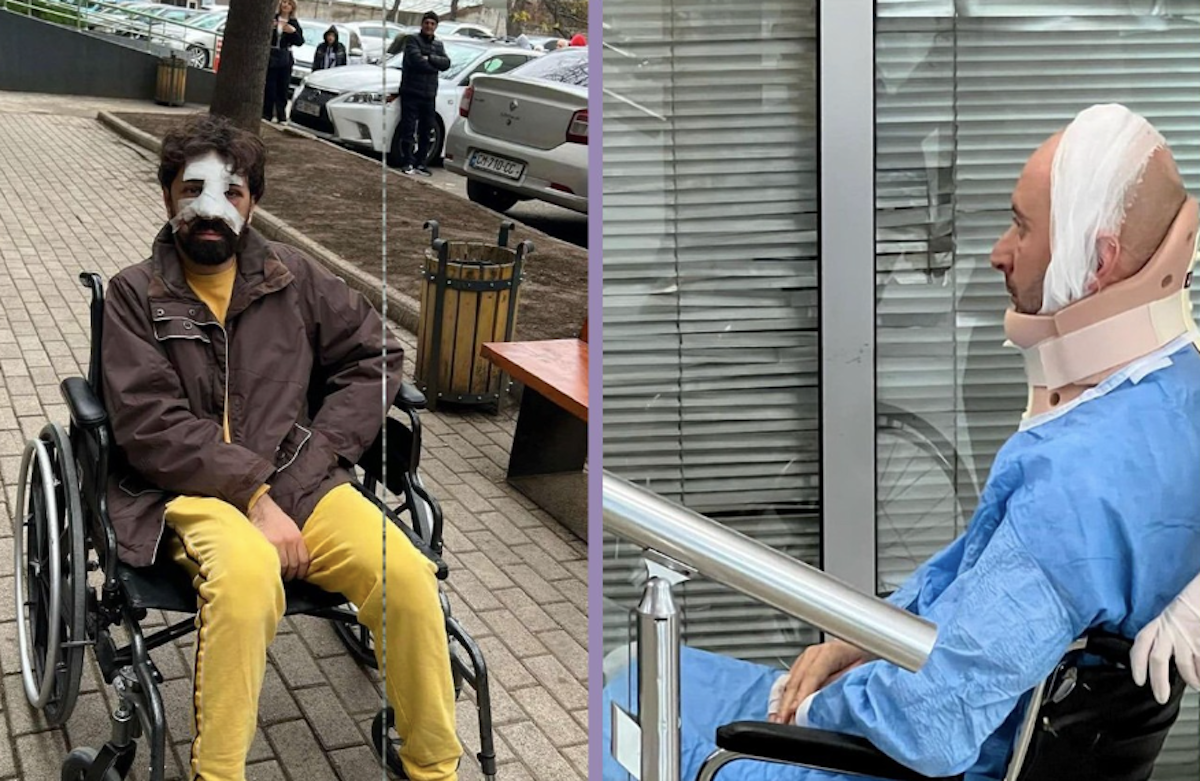
- Dispersed and tortured peaceful demonstrators, Chemical weapons were used against them, did not punish those who issued illegal orders and those who executed these orders. In November-December 2024, special police forces brutally dispersed tens of thousands of peaceful demonstrators; The police used disproportionate force, tortured and inhumanely treated up to 300 peaceful demonstrators. Not a single police officer or responsible person was held accountable. The Georgian Dream does not provide the public with information about what chemical weapons it used during the November-December, 2024 protests;
- Prisoners of conscience have emerged in Georgia. Their arrests and trials are not based on any evidence and are politically motivated;
- The majority of opposition party leaders in Georgia are imprisoned on political grounds, while new cases have been opened against them on charges of crimes against the state. Six out of 10 leaders of opposition parties that have overcome the electoral barrier are in prison, three have been released, and one has been forced to leave the country. Almost all opposition leaders are accused of crimes against the state and face long prison terms.
- Physical and verbal attacks on journalists have become the norm. Working in Georgia has become dangerous for journalists. Investigative authorities have not investigated cases of targeted persecution and physical violence against journalists. Journalists are not only illegally arrested, as happened in the case of Mzia Amaglobeli, but they are also deliberately physically assaulted during protests. There were more than 400 cases of physical violence, persecution and harassment against journalists during and after the protests. No one has been held accountable. In the past year, Georgia’s press freedom index has also deteriorated significantly. According to the May 2025 Reporters Without Borders (RSF) report, Georgia has fallen 11 positions, moving from 103rd to 114th place, and is next to countries such as Colombia, the Philippines and Kenya.
- A political decision was made to persecute Georgian NGOs and repressions against the civil sector began. Today, more than 100 Georgian civil society organizations are under various types of monitoring. The bank accounts of 7 NGOs have been frozen and the heads of the organizations have been summoned for questioning as part of a fabricated investigation;
- Solidarity among citizens has been criminalized. Solidarity funds were frozen and facts of citizens helping and supporting each other are being investigated as part of a criminal investigation.
- A temporary investigative commission was created in the Parliament with the aim of banning political opponents and parties. This commission arbitrarily appropriated authority that is not provided for by the parliamentary regulations. The so-called “Tsulukiani Commission”, on the one hand, did maximum damage to the multi-party political system in the country (it demanded the banning of parties, the arrest of political leaders for failing to appear at the commission, etc.), and on the other hand, it demonstrated a collaborationist position regarding the 2008 Russian-Georgian war, which was welcomed by the highest political officials in Russia
Anti-democratic and freedom-restricting laws
- The parliament adopted a law aimed at persecuting and stigmatizing Georgian NGOs. The Foreign Agents Registration Act envisages not only financial fines for NGOs and critical citizens, but also imprisonment;
- The amendments to the Law on Grants have restricted Georgian NGOs from assisting citizens and have generally made their activities impossible. No international organization can issue a grant to a Georgian NGO without the prior consent of the Georgian Dream government; this makes it impossible to provide assistance to thousands of Georgian citizens.
- Public assemblies and demonstrations have been restricted and rallies have been criminalized. The Law on Assemblies and Manifestations and the Code of Administrative Offenses were made stricter five times in one year – starting with a threefold increase in fines and ending with the introduction of imprisonment. According to the latest edition, a demonstrator who steps onto the street or wears a mask is subject to administrative detention for up to 15 days, and in case of repetition, a criminal sentence of up to 1 year. In recent weeks, about 150 citizens have been sentenced to administrative imprisonment for various terms, and criminal prosecution has already been initiated against one citizen. Previously, more than 1,000 people were fined administratively, some more than once;
- Persons criticizing high-ranking officials of the Georgian Dream were subjected to prosecution, and attempts at censorship emerged. Fines for publicly voicing criticism have increased. Verbal insults, cursing, or insulting a political official and public servant are punishable by a fine of 6,000 GEL or 60 days in prison;
- The election legislation and environment have deteriorated. The rules for staffing the CEC have changed, the rules for observing elections have become more complicated (identification of people, registration of observation missions, etc.). Voting rights of emigrants have been restricted; emigrants will only be able to vote upon arrival in Georgia. All changes to the municipal electoral system adopted in 2021, which were the result of an agreement between political parties brokered by the then President of the European Council, Charles Michel, have also been repealed. With these changes, the Georgian Dream has practically adopted a single-party local government;
- Constitutional guarantees of the right to speech and expression were abolished. In the consideration of defamation disputes, the burden of proof in court was placed on the defendant instead of the plaintiff; a journalist may be held liable simply for not disclosing the source of information;
- Restrictive media legislation was adopted. These changes practically abolished the mechanism of self-regulation of broadcasting. It was prohibited for broadcasters to receive direct or indirect foreign funding (cash or other material benefits), including the transfer of equipment, training, media development programs, etc. With the amendments to the Law on Grants, online media will not be able to receive funding from foreign funds at all, which was their main source of income;
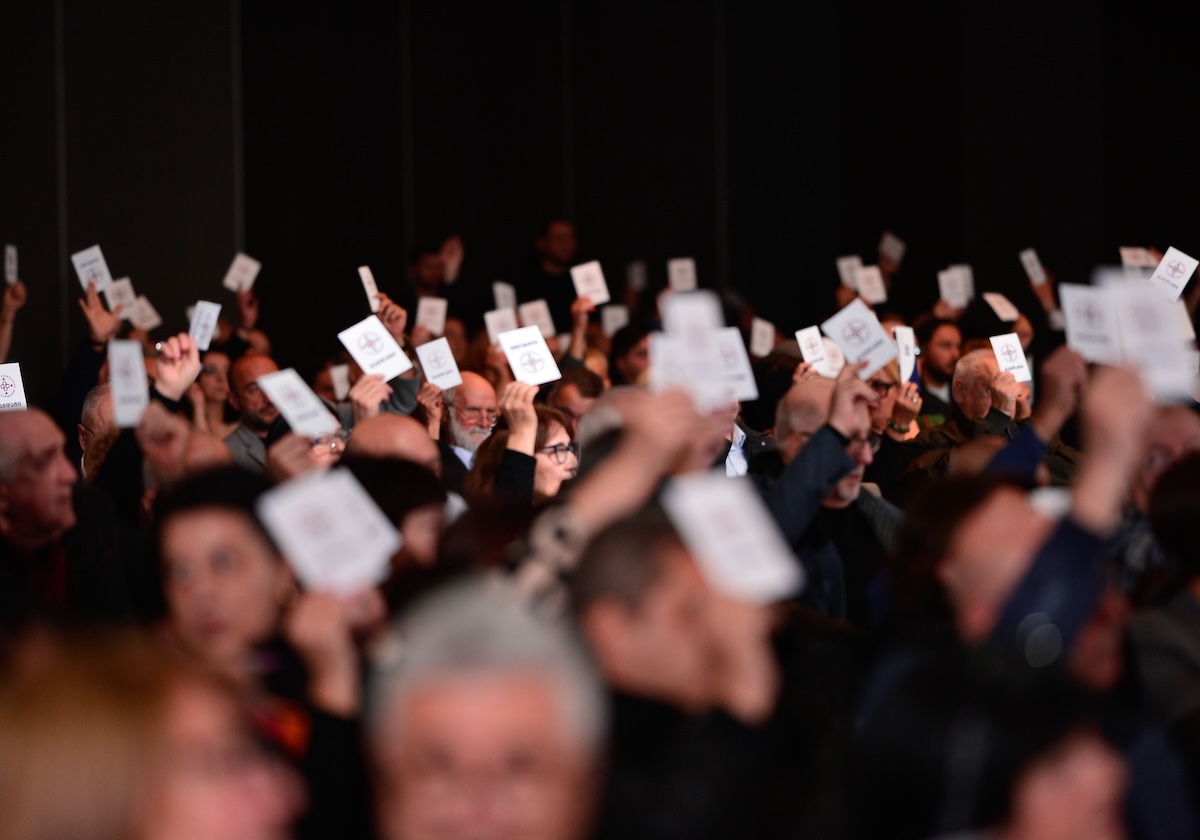
- The procedure for the abolition of political parties was simplified. The Constitutional Court was granted the authority to dissolve a party within 14 days of filing a constitutional complaint that “repeats” the goals, activities, or personnel of a previously dissolved party. Also, in the event of filing a corresponding constitutional complaint, political activity, the right to hold a position in the state service, and the right to vote in elections may be prohibited for members of political parties or persons “related” to them;
- The Georgian Dream filed a lawsuit with the Constitutional Court demanding the banning of 3 main opposition parties. Members of the Georgian Dream and other parliamentary factions, artificially created by the party in violation of the Constitution, demanded the banning of opposition political parties: United National Movement, Akhali and Lelo. The lawsuit is based on the conclusion of the Temporary Investigative Commission, the so-called ‘Tsulukiani Commission’, created in violation of the Constitution and the Rules of Procedure of Parliament. The Constitutional Court has 9 months to make a decision;
- Guarantees enjoyed by civil servants have been abolished and their repression has been made easier. Amendments to the Law on Civil Service have worsened the legal situation of civil servants and have effectively nullified all the achievements of the civil service reform over the years. Up to 1,500 civil servants have been dismissed for protesting the anti-Western actions of the Georgian Dream government against the constitution. With the new amendments, middle-level officials – acting heads of departments and services and their deputies – are considered persons employed under an administrative contract and the head of the agency/minister can dismiss them at any time and for any reason;
- The Georgian Dream party has adopted the so-called Offshore Law, which exempts assets transferred from offshore jurisdictions to Georgia from taxation. As a result of the legislative change, oligarchs were given the opportunity to hide assets in Georgia without paying taxes;
- Courtrooms were closed to the media and the public. According to the amendments to the Law on Common Courts, the High Council of Justice will be deciding whether to allow audio-video recording of court sessions. Access to court decisions has also been restricted. Court acts will become available as public information to any interested person only after the final court decision enters into legal force, which means that until the decision is appealed in all instances, it will not be available to the public; The court may seize personal belongings, including mobile phones, computers, photo, video and/or audio equipment, from a person entering the court building;
- Parliament will no longer exercise parliamentary control over the executive branch. The new regulations of the Parliament have effectively abolished important mechanisms of parliamentary oversight – the Minister’s Hour, Thematic Review Mechanism. Important functions of Committees have been abolished; a Committee will no longer consider the following issues: election of an official, creation of temporary investigative and other temporary commissions, declaration of confidence in the government, election of the President, dismissal of an official from office by impeachment, and other issues.
- The ‘education reform’ distances the Georgian educational system from Europe. Legislative changes have been announced that will distance Georgia from the Bologna process and limit the opportunity for Georgian youth to continue their studies in European countries. Georgian Dream attacks independent universities (for example, based on a statement of the rector of the Technical University, the Prosecutor’s Office launched an investigation into the University of Georgia). Georgian Dream PM Irakli Kobakhidze plans to privatize real estate on the balance sheet of state universities and use the proceeds to build university campuses outside urban centers.
- Civil society involvement in government decision-making has been limited. The Georgian Dream has abolished cooperation with the non-governmental sector through legislation. All norms requiring the participation of non-governmental organizations in government decision-making, which was also a requirement of the European Union, have been removed from the legislation.
Structural changes in governance
- The National Security Council was abolished. The Crisis Management Room was a British model and allowed various agencies to have maximum coordination in overcoming crisis situations;
- The Special Investigation Service was abolished. The purpose of which was to investigate crimes committed by law enforcement agencies, including torture and other ill-treatment. Although this service, especially under the leadership of former prosecutor Karlo Katsitadze, demonstrated its incompetence and inefficiency throughout its existence, its abolition is still a step backwards;
- The Anti-Corruption Bureau is being abolished. The creation of an independent, properly empowered anti-corruption body that would combine all anti-corruption functions was a prerequisite for Georgia to receive the status of a candidate for EU membership. Instead of fighting corruption, the Georgian Dream first turned the bureau into a repressive mechanism against civil society, and now, by abolishing it, it is also formally backtracking on EU requirements;
- The Personal Data Protection Service is being abolished. This service was originally created to bring the country closer to EU legislation;
- The Civil Service Bureau has been abolished. The Bureau was created to establish an independent and professional civil service;
- The Intelligence Service has been abolished. Merging the Intelligence Service with the State Security Service leads to excessive concentration of power in one institution;
- The Gender Equality Council has been abolished in the Parliament. Similar councils have been abolished in local councils as well. The Open Governance Council has also been abolished in the Parliament;
- The Information Center on NATO and the EU has been abolished. This center was created to combat Russian disinformation.
Anti-European foreign policy and integration into the Russian space
- Bidzina Ivanishvili and the Georgian Dream declared Europe, the United States and democratic international organizations as enemies. The party carries out coordinated attacks on Western partners and disinformation campaigns aimed at tarnishing their reputation. Throughout the year, representatives of the Georgian Dream have been attacking representatives of the governments of democratic countries, members of their parliaments, their ambassadors and convincing Georgian citizens that the so-called ‘deep state’ is fighting against Georgia’s sovereignty;
- The US suspended its strategic partnership with Georgia. This decision was made by the US following the public statement of the Ivanishvili government on the suspension of European integration and specific anti-democratic actions that violated the basic principles of the strategic partnership;
- The Georgian Dream refused budgetary support from the West. This financial assistance was supposed to be spent on projects that are important for Georgian citizens.
- Personal sanctions from Western countries have become widespread. The Georgian Dream party still maintains more than 250 officials and civil servants sanctioned by the West in the public sector, including some of the high-ranking law enforcement officials included in the Magnitsky list for human rights violations.
- The Georgian Dream government does not participate in European structures. It refused to participate in the Parliamentary Assembly of the Council of Europe, Euronest and other important European platforms;
- A Russian-style anti-Western propaganda machine has been created. The main propaganda vehicle is the Imedi TV company, financed by Bidzina Ivanishvili.
- The Georgian Dream government has signed a strategic partnership document with China. Over the past 10 years, direct Chinese investments have increased 5 times and exceeded $600 million. Over the same period, annual trade turnover has increased three times and amounted to $2 billion. After the abolition of tourist visas, visits from China to Georgia have increased by 83%.
- The participation of Russian capital in the Georgian economy has increased. In recent years, trade turnover with Russia has increased by 66%. The Russian market share in Georgian wine exports has increased to 67%. In January-September 2025, a record number of tourists (1.2 million) from Russia entered Georgia;
- Oil from a Russian company, the owner of which is sanctioned, entered Georgia from Russia. This Company Russneft is currently also sanctioned by the British government. According to international media, 100 thousand tons of crude oil were delivered to the newly opened Kulevi oil refinery for processing.
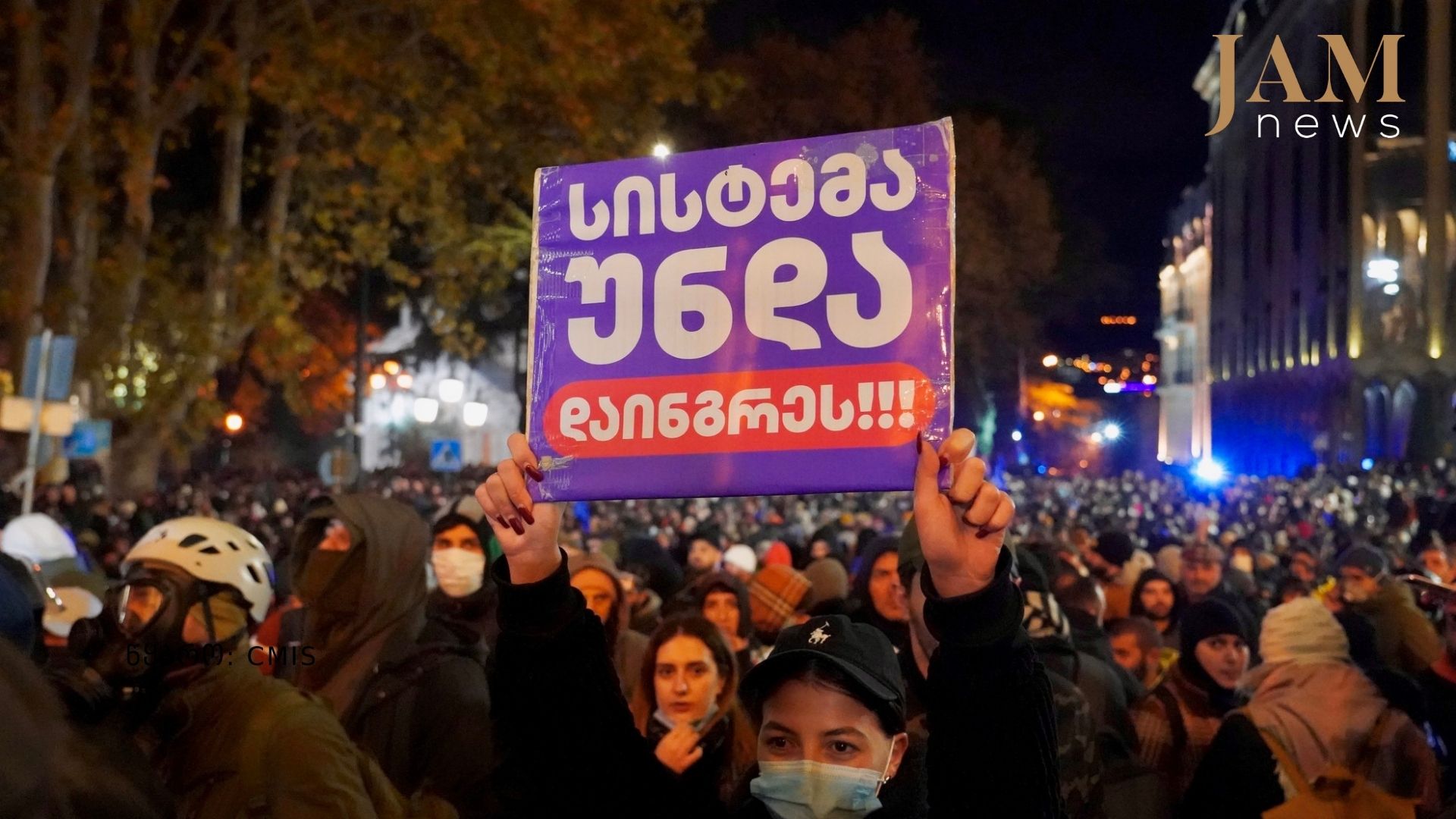
“Despite the repressive policies pursued by Bidzina Ivanishvili and the Georgian Dream, Georgian society has continued to resist throughout the year. It does not want to live under Russian-style authoritarianism and believes Georgia should return to the European path of development — one in which the rights of all citizens are protected, elections cannot be hijacked by any political force, and there are no political prisoners or prisoners of conscience,” Transparency International concluded.
Report on the Georgian Dream’s policies in 2025