Visit of European Council president to Baku amid war in Iran: what does European Union want?






Visit of António Costa to Azerbaijan
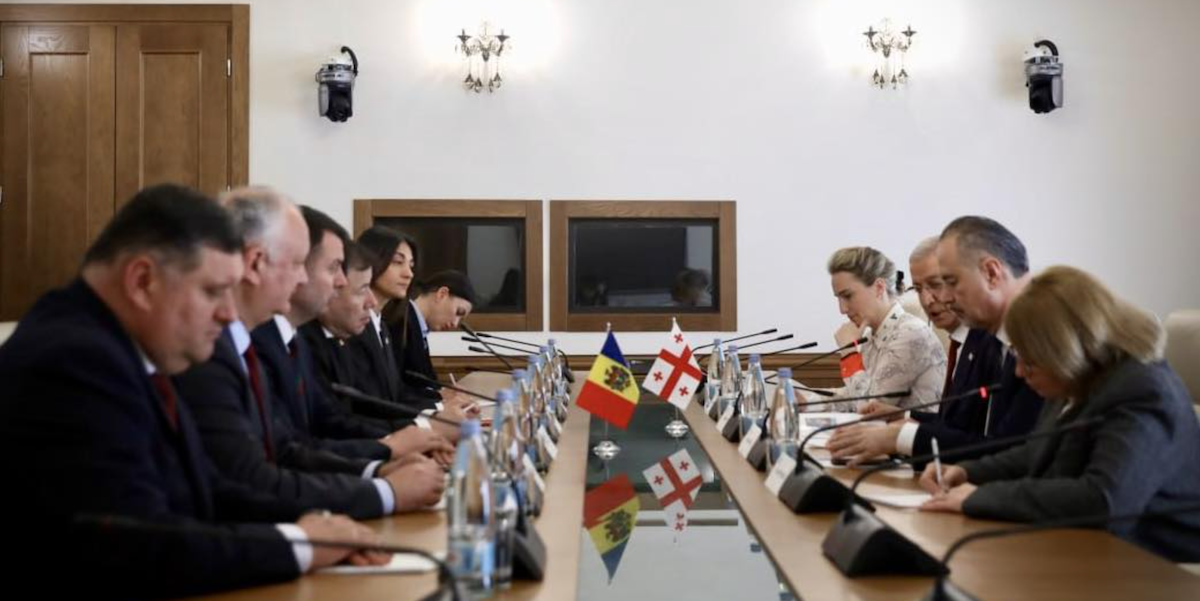
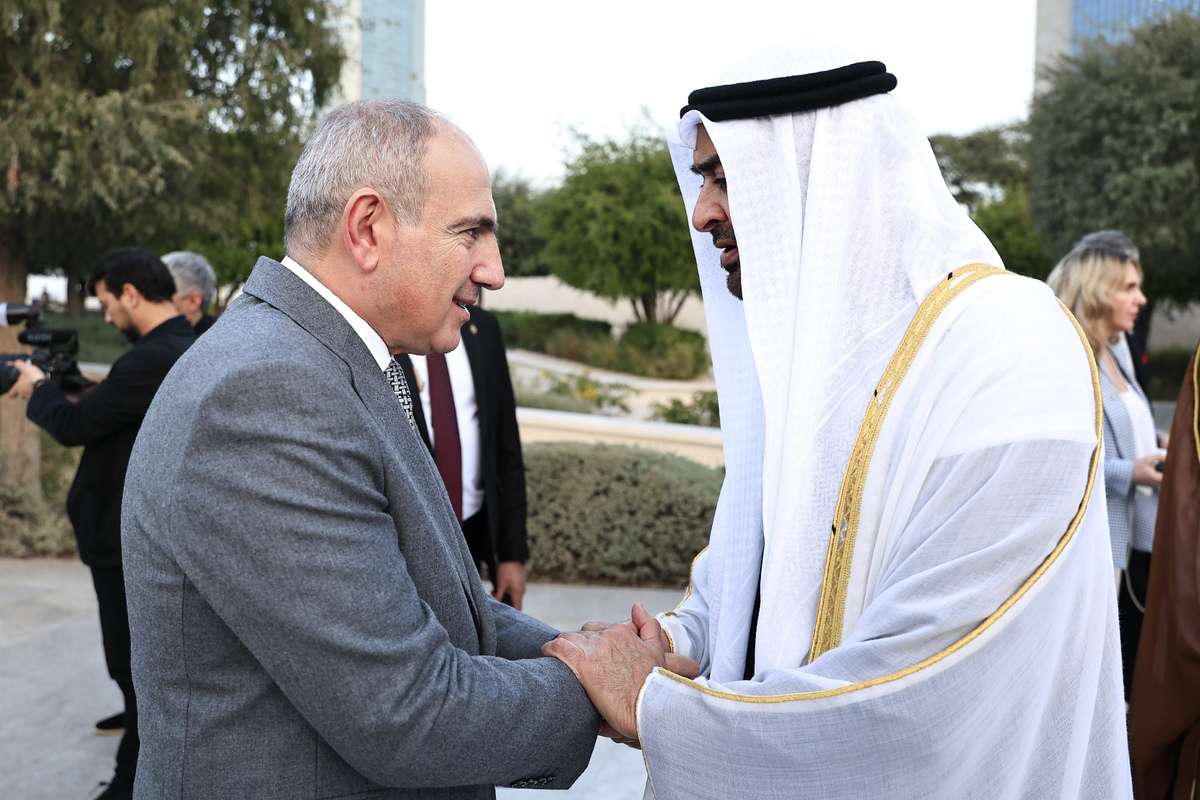
President of the European Council António Costa arrived in Baku for high-level talks with President Ilham Aliyev, after which the two leaders delivered joint press statements.
The visit had been announced by the European Council several days earlier, with Azerbaijan described as a “strategically important partner.” The agenda was expected to focus on diversifying energy sources and the rapidly developing crisis in the Middle East.
The timing of the visit itself carried a signal. Costa arrived in Baku as the European Union is simultaneously trying to shape a new model of energy security after reducing its dependence on Russia and to contain growing regional security risks caused by the war around Iran. Just two days before travelling to Baku, Costa and European Commission President Ursula von der Leyen held a video conference with regional leaders on the “war in Iran,” warning about its possible impact on energy security. Among the risks discussed were attacks on energy infrastructure and the potential closure of the Strait of Hormuz.
For Azerbaijan, the regional consequences are no longer abstract. In early March, international media reported drone attacks targeting the Azerbaijani exclave of Nakhchivan, including damage to the Nakhchivan airport building. Iran denied responsibility.
In Baku, Costa addressed these tensions directly, expressing the European Union’s “full solidarity” with Azerbaijan. He also thanked Baku for helping to safely repatriate EU citizens from Iran.
At the same time, the peace process in the South Caucasus has entered a stage both sides describe as a rare window of opportunity. In a joint press release, the EU and Azerbaijan welcomed the “historic momentum” in the normalisation process between Azerbaijan and Armenia. The results of the Washington summit on 8 August 2025 were highlighted as an important milestone.
In his press remarks in Baku, Costa also described the progress achieved in the peace process as “historic.” He stressed that the EU’s role is based less on mediation than on supporting the implementation of agreements and strengthening economic interdependence.
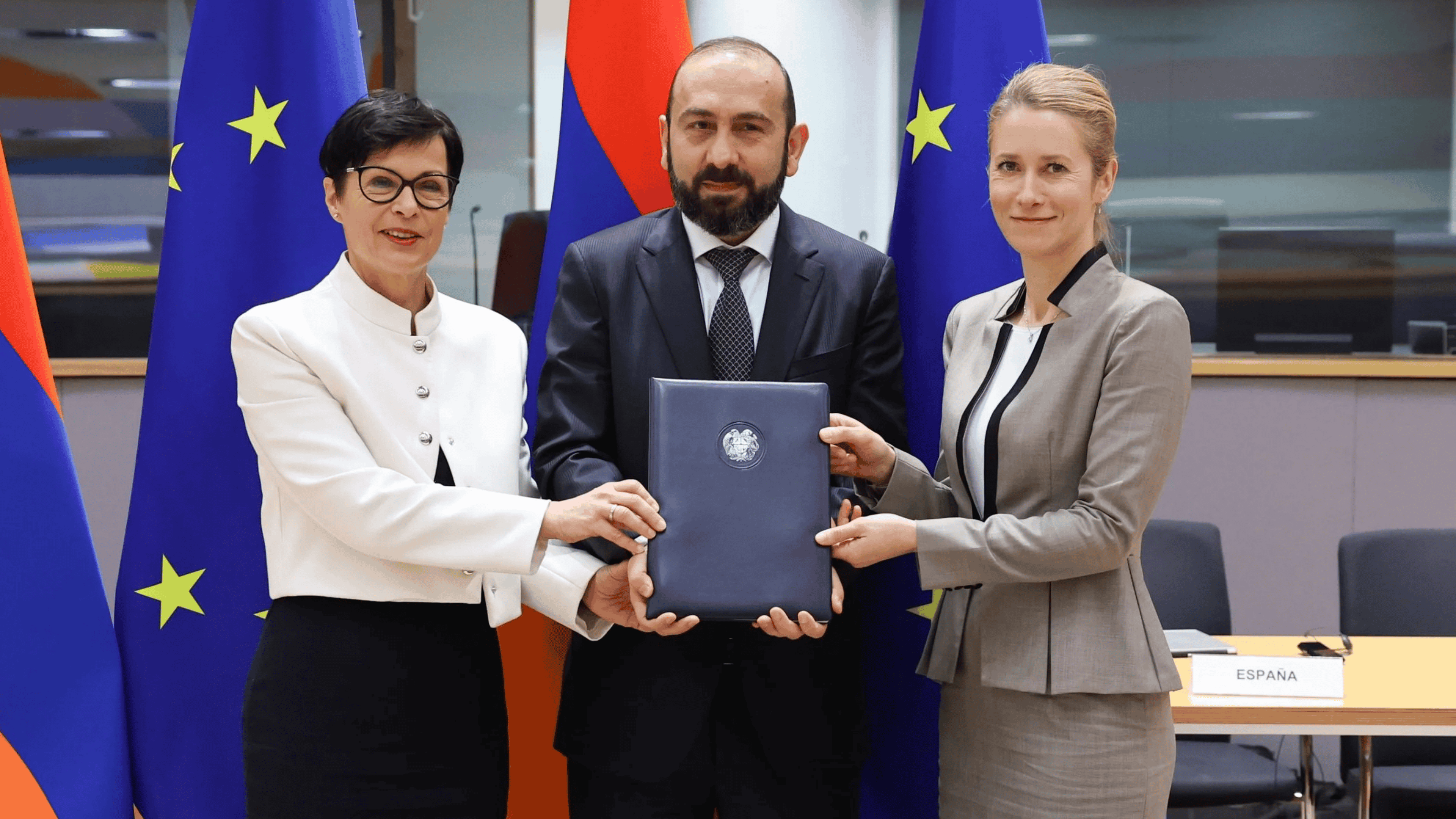
Historical and strategic context
Relations between the European Union and Azerbaijan are still based on the Partnership and Cooperation Agreement (PCA), signed in 1996 and entering into force in 1999. Over time, these ties have been shaped by two lasting factors: Azerbaijan’s geographical role as a transit country and key transport corridor, and its hydrocarbon resources.
From an institutional perspective, Brussels has been negotiating an updated framework agreement for several years. The European Council approved a negotiating mandate in 2016, and formal talks began in 2017. During his visit, Costa said both sides were working on a new framework for closer cooperation. He also highlighted existing dialogue mechanisms, including the human rights dialogue.
A joint EU–Azerbaijan press statement also reaffirmed the commitment to conclude a new comprehensive bilateral agreement in the near future and to update the EU–Azerbaijan Partnership Priorities.
Strategically, the current stage reflects broader changes in the EU’s energy policy since 2022. In July that year, European Commission President Ursula von der Leyen signed a “Memorandum of Understanding on a strategic partnership in the field of energy” with Azerbaijan. The document was directly linked to the EU’s strategy of reducing dependence on Russian fossil fuels.
The memorandum set out plans to double the capacity of the Southern Gas Corridor. The goal was to supply at least 20 billion cubic metres of gas annually to the European Union by 2027.
This energy agenda has gained even greater importance as the EU moves towards a complete phase-out of Russian gas. In January this year, the European Council formally adopted regulation providing for a gradual ban on Russian pipeline gas and liquefied natural gas (LNG). Under the regulation:
- from the beginning of 2027, a full ban on LNG imports will come into force,
- and from autumn 2027, imports of pipeline gas will also be prohibited.
In other words, even before the Iranian crisis, the European Union’s need for stable energy supply chains and transport corridors outside Russia had already been structurally increasing.
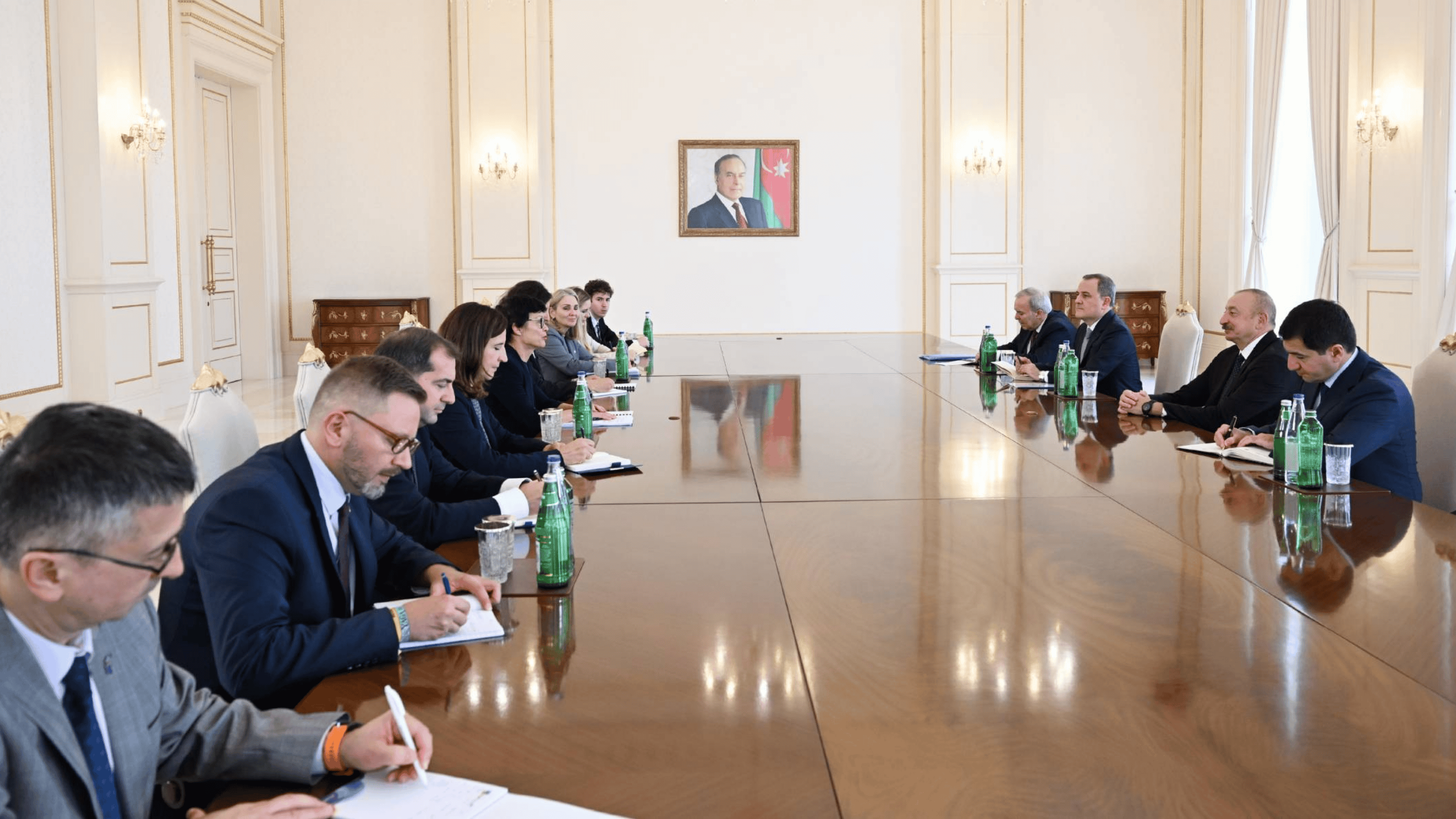
Key themes: energy, connectivity, security, climate and peace
Public materials surrounding the visit, including joint press texts and statements by both leaders, suggest a conscious effort not to frame relations solely around “gas cooperation.” However, it would be inaccurate to say that gas has suddenly moved into the background.
Energy remains a central pillar. The joint press statement highlights Azerbaijan’s role as a reliable partner in diversifying Europe’s energy supplies and reaffirms the commitment to continue implementing the 2022 Memorandum of Understanding.
Costa directly linked the energy partnership to crisis management. “At a time when the war in Iran is shaking global energy markets, this partnership is more important than ever,” he said.
EU institutions also continue to present the Southern Gas Corridor as a diversification route for energy supplies from the Caspian region to south-eastern Europe.
Connectivity and transport emerged as the second key theme, with unusually specific emphasis. The joint statement underlined Azerbaijan’s key role in developing the Middle Corridor. EU support was highlighted within the framework of the Global Gateway initiative. This includes assistance for the modernisation of railways in the Nakhchivan Autonomous Republic and continued work on the TRIPP project.
Costa also described the completion of the Baku–Nakhchivan railway connection as “necessary” for unlocking the strategic potential of the Middle Corridor.

What “connectivity” means in practice can be illustrated by two projects.
- The Black Sea submarine cable project is mentioned in the joint statement as part of cooperation on renewable energy through “electricity interconnection initiatives, such as the Black Sea submarine cable project.” The initiative is based on the strategic partnership on green energy transmission between Azerbaijan, Georgia, Romania and Hungary, signed in Bucharest in 2022. European Commission President Ursula von der Leyen also supported the initiative at the time of its launch.
- The Middle Corridor agenda under the Global Gateway initiative is the second example. European Commission reports note that cargo volumes along the Middle Corridor increased fourfold between 2022 and the end of 2025. The route is increasingly seen as a reliable long-term alternative to the Northern Corridor.
On regional security and the peace process, the joint statement welcomed the “historic momentum” in negotiations between Armenia and Azerbaijan and reaffirmed EU support for the bilateral peace process.
Costa repeated this point in his remarks, saying the EU supports the implementation of the Washington agreements. He stressed that sustainable peace is built not only on “agreements on paper” but also on everyday economic ties.
The documents also refer to broader security cooperation, including:
- tackling organised crime
- cooperation in countering irregular migration.
The geopolitical context was also addressed directly, with the leaders discussing developments in Iran and Ukraine. Costa went further, saying that the escalation in Iran is already affecting Azerbaijan and describing it as part of a broader pattern of actions that contradict international law.
Finally, climate policy, the digital sphere and people-to-people contacts are presented as a “third pillar” of the partnership, aimed at making cooperation more sustainable and future-oriented. The joint press text welcomed the outcomes of COP29, reaffirmed readiness to cooperate on climate and environmental protection, and highlighted digital transformation and artificial intelligence.
Issues of mobility and the existing visa facilitation mechanisms were also noted separately.
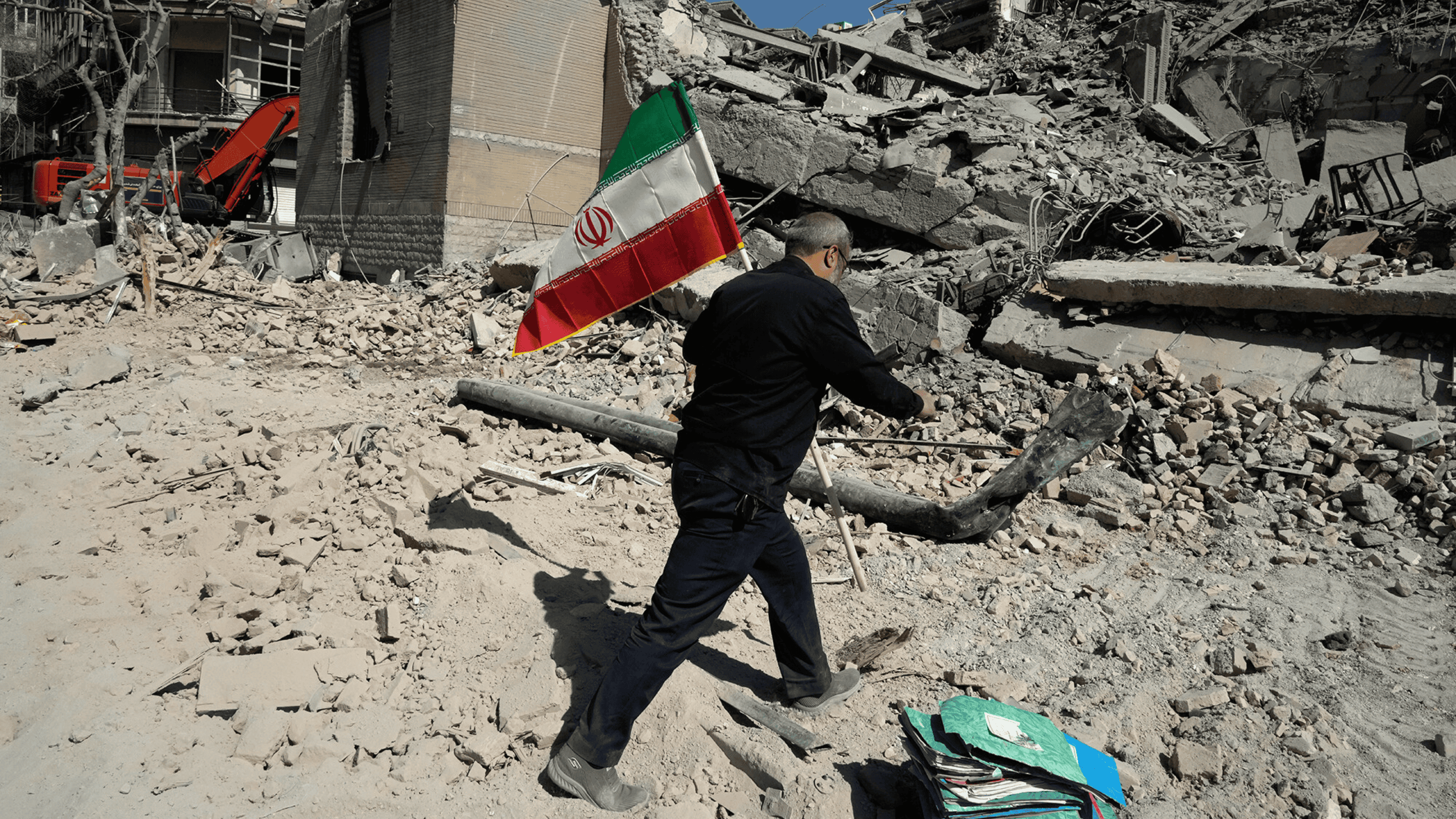
Analytical perspective: opportunities, constraints and trade-offs of the visit
The meetings in Baku show that relations are taking on a broader strategic character, yet internal contradictions are also becoming more visible.
In energy and economic terms, Azerbaijan’s main leverage lies in its role as a physically connected supplier of energy resources to Europe. This is particularly important at a time when the EU is seeking to legally reduce its dependence on Russian gas while simultaneously facing supply chain disruptions linked to the crisis in the Middle East.
Costa’s remarks, linking the war around Iran with volatility in global energy markets, indicate that Brussels now sees Azerbaijan not only as an energy supplier but also as part of a regional risk-mitigation system.
However, these relations come with costs for both sides. For the EU, expanding energy cooperation creates a degree of tension with its climate policy and governance principles. The 2022 memorandum of understanding attempted to soften this contradiction by linking increased gas supplies with methane emission reductions and the development of clean energy.
Even so, given the EU’s long-term decarbonisation commitments, financing large new gas infrastructure projects remains structurally difficult. This issue frequently appears in public debate: whether Azerbaijan can reach the target of 20 billion cubic metres of gas per year without long-term commitments and investment from Europe.
For Azerbaijan, the opportunities extend beyond pipeline gas. Baku’s effort to present itself as a regional connectivity hub is evident in the way both sides discuss gas alongside projects such as the Middle Corridor, the modernisation of the Baku–Nakhchivan railway and the Black Sea electricity interconnector.
If these projects are implemented, interdependence between Azerbaijan and the EU will no longer be limited to energy. It will also expand into areas such as logistics, energy network infrastructure and digital connectivity. These sectors tend to create longer-lasting institutional links than raw commodity trade.
From a regional security perspective, the visit suggests that Brussels is gradually shifting from the role of a “mediator” in the Armenian–Azerbaijani process to that of a supportive partner willing to invest. The EU welcomed the peace treaty and political declaration initialled in Washington in August 2025 and signalled readiness to invest in regional connectivity projects as part of the normalisation process.
Costa’s remarks in Baku followed the same logic: the EU supports the implementation of the agreements reached and sees the expansion of economic interdependence as a stabilising factor.
However, security crises can quickly overshadow connectivity diplomacy. Drone attacks on Nakhchivan demonstrate how the dynamics of war in the region could turn Azerbaijan’s transport and energy infrastructure into a strategic target or a zone of risk.
The EU’s statements on the Iranian crisis also highlighted attacks on energy infrastructure and the possibility of disruptions in the Strait of Hormuz, showing that energy security diplomacy and hard security concerns are already closely intertwined.
In other areas — digital development, climate policy and people-to-people contacts — the statements in Baku largely reflect intentions, while concrete outcomes remain limited for now. Nevertheless, these intentions matter in terms of political and narrative legitimacy. Both sides explicitly mentioned cooperation on digital transformation and artificial intelligence, indicating that EU–Azerbaijan relations are being framed within a broader European agenda of resilience.
Mobility and visa facilitation are also significant from a domestic political perspective, as they offer tangible benefits for citizens. At the same time, they remain politically sensitive given the growing focus within the EU on irregular migration and security.
Another constraint concerns reputation. EU institutions themselves note that human rights, civil society activity and media freedom are “key components” of EU–Azerbaijan relations.
International monitoring organisations have also described Azerbaijan’s political environment during recent election periods as “restricted”. Even if strategic interests push the sides towards deeper cooperation, this complicates the EU’s narrative of a “values-based partnership”.
Costa’s separate mention of “human rights” among the dialogue mechanisms suggests that Brussels is trying to keep this issue on the agenda while simultaneously expanding cooperation in energy and security.
Visit of António Costa to Azerbaijan