German envoy to Georgia addresses sanctions against Kulevi port, vetoed by Slovakia and Hungary






Sanctions proposed against Georgia’s Kulevi port
German Ambassador to Georgia Peter Fischer said an official legislative proposal to impose sanctions on Georgia’s Kulevi port was included in the EU’s 20th sanctions package but failed to pass after Hungary and Slovakia vetoed it.
Speaking at an event marking the fourth anniversary of Russia’s full-scale invasion of Ukraine, Fischer said the sanctions package had been “quite extensive”, including new measures targeting Russian oil as well as sanctions against ports receiving Russian crude or tankers linked to the so-called shadow fleet.
According to the ambassador, the issue of Kulevi port was formally considered in Brussels and supported by a package of evidence.
During his remarks, Fischer also said the Georgian authorities view Hungary as their “best friend” within the European Union. However, he added that such a partnership would not be enough to secure Georgia’s accession to the EU.
20-й пакет санкций, подготовленный Евросоюзом и еще не принятый окончательно, включает неThe EU’s 20th sanctions package, which has been prepared but not yet finally adopted, includes several key measures:
- sanctions against a further 43 vessels linked to Russia’s so-called shadow fleet;
- a ban on technical servicing of tankers carrying Russian liquefied natural gas;
- restrictions on transactions involving four specific port terminals in third countries.
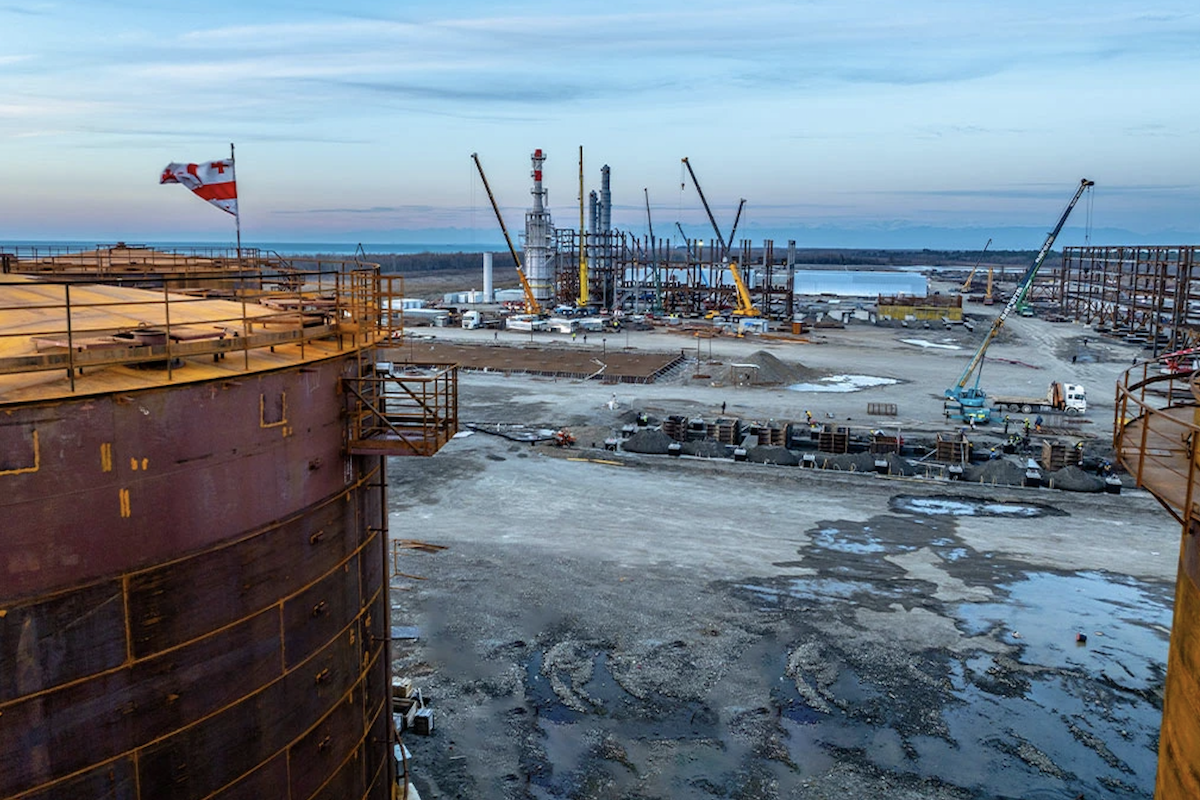
Kulevi port was included on the latter list. In the document, it is described as infrastructure used for the transshipment of Russian oil or petroleum products through high-risk schemes that could undermine the effectiveness of sanctions and potentially facilitate the circumvention of Western restrictions.

Sanctions proposed against Georgia’s Kulevi port