Opinion: How Azerbaijan would react to a US and Israeli military operation in Iran






Azerbaijan amid the war with Iran
The attack of Iran, launched on 28 February by the US and Israel—codenamed Operation Epic Fury—has rapidly escalated from a regional flare-up into an expanding conflict.
The war has now entered a critical new phase as hostilities reach the borders of Azerbaijan. On 5 March, reports emerged of drone strikes targeting the Nakhchivan Autonomous Republic, an Azerbaijani exclave.
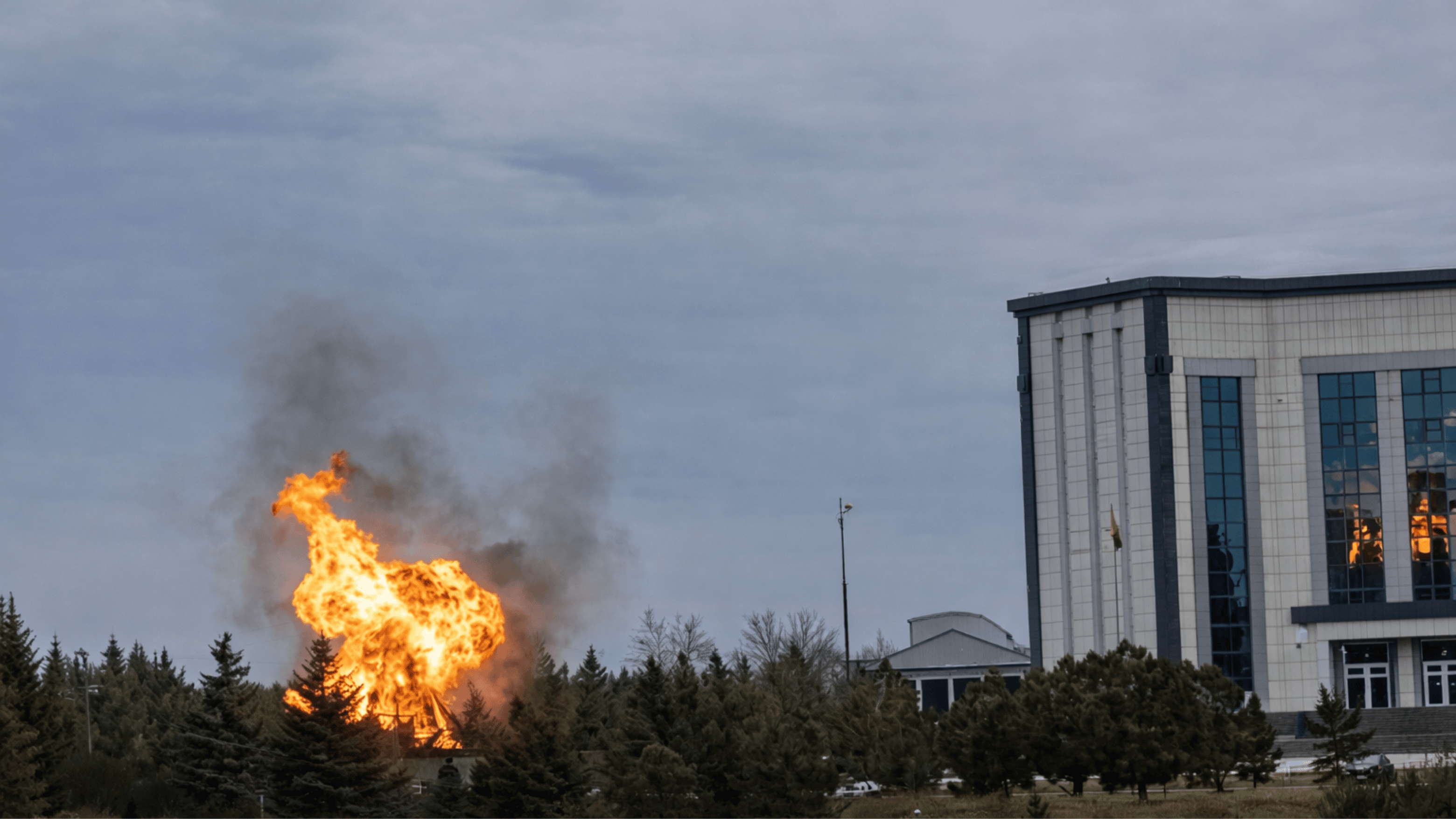
According to an official statement from Azerbaijan’s Foreign Ministry, the strikes on Nakhchivan originated from Iranian territory. One UAV reportedly struck an airport terminal, resulting in civilian casualties, while another landed near a school in the village of Shekerabad. Unconfirmed reports also suggest a drone hit a military canteen in the region.
Tehran has formally denied responsibility. Iranian state-aligned sources have instead characterised the incidents as an “Israeli provocation” designed to draw Baku into the fray.
Beyond immediate border security, the crisis presents a fundamental dilemma for Baku. Given Nakhchivan’s geographical isolation, Azerbaijan’s lengthy land border with Iran, and its strategic energy and transport links, there are growing fears that Tehran may view Azerbaijan as a secondary target.
For now, Baku’s most realistic objective is the rapid containment of the conflict to prevent it from spilling over its borders. Official rhetoric from Azerbaijan remains focused on calls for restraint and an immediate de-escalation of hostilities.
Official Baku: Sovereignty as a “red line” and immediate measures
In the months leading up to the conflict, Baku’s core position remained consistent: Azerbaijan emphasised that it would “never allow” third parties to use its airspace or territory for military operations against Iran. This stance was explicitly reaffirmed in a Foreign Ministry report following a telephone call between the Azerbaijani and Iranian foreign ministers on 29 January.
Immediately after the outbreak of war, a Foreign Ministry statement on 28 February described the “regional military escalation” as a grave threat, calling for maximum restraint and negotiations. This aligns with Baku’s desire to avoid appearing as an overt member of any military coalition.
However, official rhetoric sharpened following the incident in Nakhchivan. A statement from the Foreign Ministry on 5 March strongly condemned the attacks, noting they contravened international law. Azerbaijan demanded a swift investigation and clear explanations from Tehran, stating that Baku reserves the “right to take appropriate retaliatory measures.”
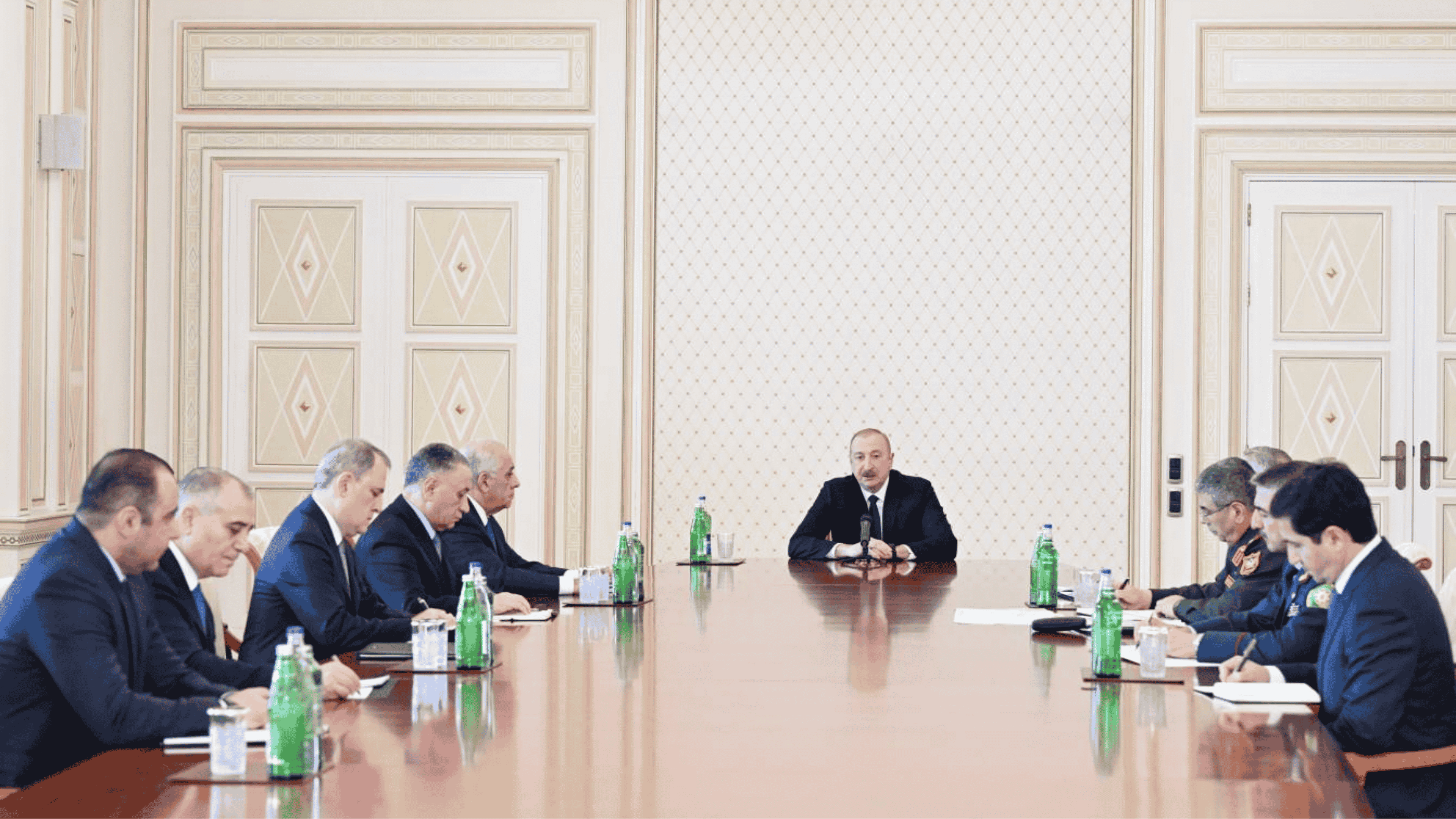
On the same day, President Ilham Aliyev addressed a meeting of the Security Council, characterising the incident as a “terrorist act against the Azerbaijani state.” He demanded an apology and an explanation from Iran, while announcing that the Armed Forces had been placed on “Level One mobilisation.”
Parallel diplomatic efforts to de-escalate the situation have also been undertaken. According to an official readout from the Presidential Administration regarding a phone call on 8 March, Iranian President Masud Pezeshkian told President Aliyev that Iran had no connection to the Nakhchivan incident and that an investigation was underway.
A further component of the official reaction has been the demonstration of international backing. A Foreign Ministry commentary on 7 March welcomed the US State Department’s condemnation of the Iranian drone attacks, noting that this aligned with the “spirit” of the US-Azerbaijan Strategic Partnership Charter. The particular significance of US support was explicitly highlighted.
This can be interpreted as an attempt by Baku to maintain its rhetoric of neutrality while simultaneously intensifying its search for “security guarantees.”
Dominant narratives on government-aligned platforms
Within Azerbaijan’s information space—specifically state media and government-aligned platforms—the Nakhchivan incident is generally framed through three primary narratives. First, it is presented as a strike on “civilian infrastructure” that has triggered a “security shock.” Second, it is used to justify Azerbaijan’s right to a legal and military-political response. Third, Iran’s denial of responsibility and the potential for “provocation” are treated as key elements of an ongoing information war.
Analytical reports on the subject highlight the proximity of Nakhchivan’s airport to the border and the risks of a “chaotic expansion” of the war as it enters its sixth day. Proposed countermeasures include the reinforcement of air defence systems and additional troop deployments along the frontier.
The economic and logistical impact also features prominently in the news cycle. Following an official government decree on 5 March, authorities announced a temporary suspension of freight transport across the Azerbaijani-Iranian border, including transit operations.
The situation has had immediate consequences for aviation. According to the Financial Times, the closure of Azerbaijan’s southern airspace following the Nakhchivan incident has narrowed the available corridor for flights between Europe and Asia, forcing airlines to reroute and increasing fuel consumption.
Under these circumstances, Azerbaijan’s primary objective is twofold: ensuring national security while minimising the reputational damage to its status as a “regional transit hub.”
The “loss of control” in Iran, transport projects, and the refugee scenario
In commentaries by the government-aligned political analyst Elkhan Shahinoglu, two parallel lines of reasoning emerge: the first concerns a “loss of rationality and control” within Iran’s decision-making process, and the second addresses the impact of this instability on Azerbaijan’s strategic projects and security.
In the immediate aftermath of the Nakhchivan incident, Shahinoglu termed it Iran’s “greatest mistake,” predicting a firm diplomatic response from Baku. He further noted that there are no American bases in Nakhchivan, arguing that any Iranian justifications for the strike lack credibility.
Subsequently, Shahinoglu claimed that de facto power within Iran has shifted to IRGC generals, alleging that the Supreme Leader has been killed and no successor has been chosen, leaving President Pezeshkian’s authority weakened. Within this logic, the attacks are framed not as a “centralised political decision,” but as a manifestation of an aggressive line pursued by the security apparatus.
The future of regional transport occupies a central place in Shahinoglu’s “package of expectations.” He emphasises that a prolonged war could diminish the relevance and efficiency of the “North-South” transport corridor, in which Azerbaijan is a key participant, pushing Iran-related transport projects to the sidelines. The decision to suspend cross-border freight on 5 March serves as a preliminary confirmation of this forecast.
Another critical theme is the potential for a “humanitarian wave.” Shahinoglu has written that if the conflict intensifies and Iran faces a chaos reminiscent of the “Syrian scenario,” Iranian citizens—including ethnic Azerbaijanis—may seek refuge in neighbouring countries, including Azerbaijan.
While Baku has not officially articulated such a scenario, the narrative aligns broadly with the government’s dual-track approach: calling for regional de-escalation while maintaining a framework for “diplomatic and humanitarian contacts.”
The ‘Southern Azerbaijan’ narrative and real-world constraints
Independent and international analysts frequently categorise the prospect of Azerbaijani military-political moves to establish de facto control over northwestern Iranian territories—referred to in Baku as “Southern Azerbaijan”—as “rhetoric for a domestic audience” or a “utopian fantasy.”
An analysis published by Carnegie notes that while waves of instability in Iran’s ethnic Azerbaijani regions fuel calls for “unification” within nationalist circles in Baku, the official leadership remains cautious. Their primary fears are the destabilisation of southern borders and widespread economic shocks.
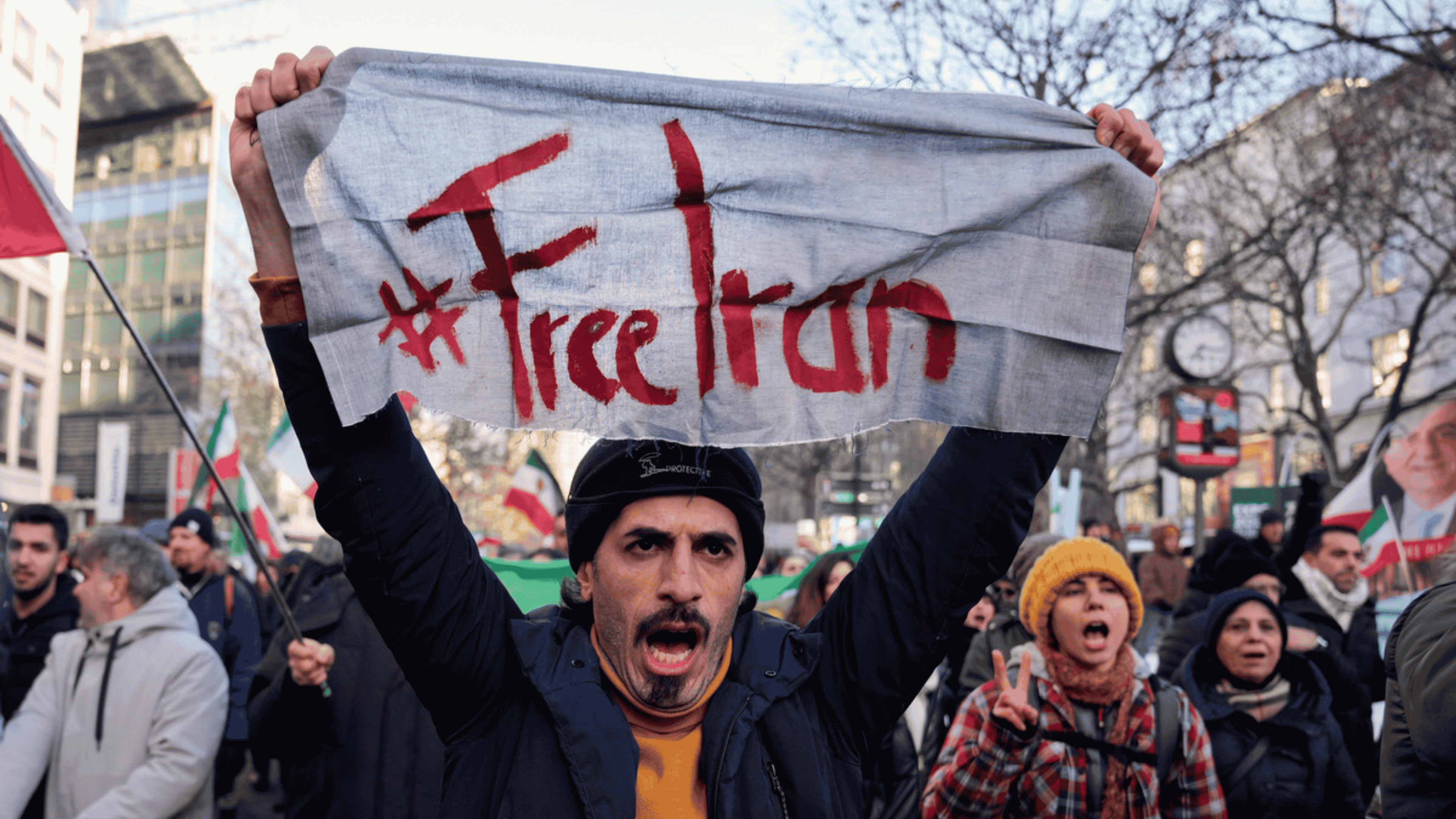
The source further argues that there is no compelling evidence of significant separatist sentiment among Iranian Azerbaijanis; during both past and current protests, separatist slogans have been notably absent. Discontent is more commonly tied to pan-Iranian issues such as corruption, the economic crisis, and political repression.
A second major constraint involves international legal and strategic risks. Official Baku repeatedly stresses the principle of “non-interference in the internal affairs of other countries.” Any move to establish de facto control over Iranian territory would represent a radical escalation, violating Baku’s stated policy and sharply increasing the risk of direct war with Tehran. Consequently, Carnegie describes the “unification” idea as a “utopian fantasy” for the current leadership.
Within Azerbaijan, there are also concerns that Tehran may view Azerbaijani energy facilities as potential targets in retaliation for strikes on Iran’s own infrastructure. This context includes both the alleged drone strikes on Nakhchivan and Azerbaijan’s role as a key oil supplier to Israel.
This risk is compounded by a “mutual strategic dependence”: while Israel provides Azerbaijan with advanced weaponry and technology, Azerbaijan remains a vital source of energy for Israel.
A final critical factor is Nakhchivan’s logistical reliance on Iran. Lacking a direct land connection to mainland Azerbaijan, the autonomous republic receives its primary supplies and freight via Iranian territory. The closure of this route threatens to cause severe disruption to daily life in Nakhchivan.
As the war drags on, Baku’s motivation to secure alternative routes to Nakhchivan—including projects such as TRIPP—is only likely to intensify.
At what stage of intervention might Azerbaijan stop?
To answer this question, it is essential to distinguish between two levels of potential involvement: (a) defensive measures to protect sovereign territory, and (b) military-political actions directed into Iranian territory.
Current evidence suggests that Azerbaijan is already operating within category (a). Official statements cite the “right to respond,” the President has placed the Armed Forces on “Level One” mobilisation, border logistics are being restricted, and risks to airspace are being managed. These actions do not yet signify Azerbaijani participation in the war on the side of the US and Israel.
A category (b) scenario—involving military intervention in the “Southern Azerbaijan” region of Iran or the establishment of de facto governance—appears unlikely based on current official discourse and international analytical assessments.
The primary deterrents include Baku’s official rhetoric against intervention, the risk of triggering a full-scale war with Tehran, the lack of widespread separatist activity among Iranian Azerbaijanis, and the assessment that Azerbaijan’s long-term strategy remains one of risk minimisation.
Instead, the actual limits of intervention are more likely to be defined by the following escalation scenarios:
- Retaliation for repeated strikes: Should attacks on Azerbaijani territory recur or energy infrastructure be targeted, Baku may adopt a harder line, potentially involving a surge in border reinforcements and closer military-political coordination with regional allies.
- The Nakhchivan supply crisis: If supply routes to the exclave remain blocked long-term, Baku will accelerate alternative transport projects, specifically TRIPP (the Trans-Regional Internal Partnership Project), alongside enhanced logistics and air corridors via Turkey. The prioritisation of TRIPP as a project for “uninterrupted connectivity with Nakhchivan” is a notable development in this context.
- The migration wave: If internal conflict in Iran triggers a mass displacement, Azerbaijan’s most probable “practical intervention” would take the form of humanitarian and border management: including reception, transit, security vetting, and filtration measures.
- The Turkey factor: Finally, if Turkey becomes a direct target—for instance, if Iranian missiles are directed toward its territory—the Azerbaijan-Turkey alliance could shift into a more active military phase. However, at present, Ankara appears to have no interest in such an escalation.
How long could the war last?
It is impossible to provide a “precise” forecast regarding the duration of this conflict. Even major media outlets, one week into the hostilities, emphasize that the outcome remains uncertain and the ultimate impact of military operations remains unclear.
The general consensus among experts suggests that if the belligerents do not abandon their “maximalist goals,” the confrontation could become protracted, evolving into a war of attrition. Some analysts believe a diplomatic pivot is only possible if Iran makes concessions and acknowledges a significant weakening of its strategic position.
The question of whether a ground invasion is inevitable has become a focal point of debate. An analysis by Al Jazeera highlights that the likelihood of a land operation faces not only military hurdles but also formidable political, legal, and logistical barriers.
The publication notes that US decisions to initiate military action do not always follow classic formal procedures. While the Constitution mandates that Congress officially declare war, history shows that presidents have frequently launched military operations without a formal declaration.
For Azerbaijan, a prolonged conflict intensifies two specific consequences:
- Border risks: The increased likelihood of drones crossing the border, whether by accident or design.
- Economic and transit shocks: This includes the narrowing of air corridors, the suspension of cross-border trade, and delays to critical regional projects.
Consequently, Baku’s most realistic objective remains the rapid localisation of the war to prevent it from spilling over into its territory. Azerbaijan’s official statements continue to prioritise calls for an end to the escalation and the exercise of maximum restraint.
Azerbaijan amid the war with Iran