Top stories in Azerbaijan, Armenia, and Georgia from 17-21 November, 2025
 Live
Live




-
Friday, November 21, Azerbaijan. Five experts from Armenia will take part in a roundtable in Baku today
-
Friday, November 21, Armenia. Foreign Ministry: “Armenia has been urging its partners in the United States to resume dialogue with Georgia
-
Friday, November 21, Georgia. Russian Foreign Ministry: “Westerners want to drag the South Caucasus into dangerous geopolitical games; this is a conspiracy against Russia
-
Thursday, November 20, Armenia. "The process of normalizing relations between Armenia and Turkey will soon bring positive results,” said the head of Armenia’s delegation to the OSCE Parliamentary Assembly
-
Thursday, November 20, Georgia. PACE has called for the termination of cases against opposition politicians
-
Thursday, November 20, Azerbaijan. A joint working group with the United States on TRIPP was established during Allison Hooker’s visit to Baku
-
Wednesday, November 19, Georgia. EU Commissioner Marta Kos: "We will continue to support civil society in Georgia, even though it is very, very difficult"
-
Wednesday, November 19, Azerbaijan. The first Azerbaijan-U.S. Think Tanks Forum, dedicated to TRIPP and peace with Armenia
-
Wednesday, November 19, Armenia. The parliament is discussing the 'March 1 case' – the death of 10 people during the dispersal of a protest in Yerevan in 2008
-
Tuesday, November 18, Armenia. Armenian-American working groups have been established to implement the agreements reached at the historic Washington summit
-
Tuesday, November 18, Azerbaijan. Euronews has opened an office in Baku
-
Tuesday, November 18, Georgia. Georgian citizens will no longer be able to vote in elections abroad; they will have to return to the country to do so
-
Monday, November 17, Georgia. A scandal is growing around the UAE investment project; Erasmus+ has ended its operations in Georgia
-
Monday, November 17, Azerbaijan. Azerbaijan has officially joined the format of meetings of the Central Asian heads of state
-
Monday, November 17, Armenia. The ruling party won the elections in the Vagharshapat community, a victory that is significant for the government amid its conflict with church leaders
-
Top stories in Azerbaijan, Armenia, and Georgia from 10-14 November, 2025

-
Friday, November 21, Azerbaijan. Five experts from Armenia will take part in a roundtable in Baku today
● A roundtable will take place in Baku today with the participation of five experts from Armenia. The Armenian government’s press office reported this, though the experts’ names were not disclosed. It is noted that the Armenian experts will arrive on a charter flight Yerevan–Baku–Yerevan. The meeting is described as an additional platform for developing mutual ties and thematic cooperation between the sides.
The first such expert meeting took place in Yerevan on October 21–22, when Azerbaijani experts arrived by charter flight. Armenia’s Secretary of the Security Council, Armen Grigoryan, attended that meeting and later announced that an Armenian return visit to Baku was planned. More details here.
● The EU intends to continue providing strong support to the normalization process between Azerbaijan and Armenia, based on consultations by the EU Special Representative for the South Caucasus, Magdalena Grono, with the leadership of both countries. EU foreign affairs spokesperson Anita Hipper told the pro-government outlet Report that the special representative’s recent visit to Baku and her visit to Yerevan, which concluded yesterday, were part of regular high-level consultations, in addition to her almost daily communication with officials in both countries. She said the discussions cover not only political issues but also humanitarian topics, including demining and clarifying the fate of missing persons.
● “The European Union supports Baku and Yerevan on their path toward lasting peace and regional progress,” EU Special Representative for the South Caucasus Magdalena Grono wrote on X following her two-day visit to Yerevan. “I am grateful for the substantive exchange of views on the peace process between Armenia and Azerbaijan, on Armenia-Turkey normalization, regional cooperation, and the humanitarian agenda. I was also pleased to take part in engaging discussions with civil society representatives,” she wrote.
● Azerbaijan’s Minister of Economy Mikayil Jabbarov is holding meetings during his visit to Israel. He posted on X about successful talks with Ze’ev Elkin, Israel’s finance minister and co-chair of the Azerbaijan–Israel joint commission. Today, the fourth meeting of the intergovernmental Azerbaijan–Israel joint commission will be held in Jerusalem.
It is reported that Azerbaijan’s direct investments in Israel’s economy have grown significantly — increasing 1,356 times in the first half of the year. The total amount reached $542.543 million, representing 40.2% of Azerbaijan’s total foreign direct investment.
● Israel’s foreign minister, Gideon Sa’ar, wrote on X that he plans to visit Azerbaijan soon. He also commented on his meeting in Tel Aviv with Azerbaijan’s Economy Minister Mikayil Jabbarov. Sa’ar said the discussion covered the U.S. president’s Gaza peace plan, the peace process between Azerbaijan and Armenia, and the deepening bilateral and economic ties between Israel and Azerbaijan.
● A court has rejected the request of Vugar Mammadov, the detained editor-in-chief of “Hürriyet TV,” to be placed under house arrest due to health issues. He is accused of extortion through intimidation. He denies the charges, saying he is being persecuted for his critical statements about the authorities.
● A media forum of the D-8 Organization for Economic Cooperation will take place in Baku today, titled “Promoting Dialogue, Cooperation, and Regional Solidarity.” The forum is organized by the state Media Development Agency (MEDIA) and will host around 150 participants — heads of media agencies, major media companies, and experts from D-8 member states. Two panel discussions are planned: “Responsible Journalism and Digital Innovation” and “Strategic Communication and Crisis Management.” The program also includes a seminar, “Media Ethics in the Digital World: Technologies, Trends, and Narratives.”
● An Azerbaijani delegation — including representatives of the parliament, the Foreign Ministry, the Center for Analysis of International Relations, and the Jewish community — took part in a roundtable at the Hudson Institute in Washington. The event was held by the Institute’s Center for Peace and Security in the Middle East. According to local media, the discussions covered Azerbaijan’s relations with regional countries, its alliance with Turkey, its developing relations with the United States, the TRIPP transit project, and other topics. The Center’s director, Mike Doran, reportedly emphasized that Azerbaijan is a gateway to Europe for Central Asian states and that this role deserves greater attention.
● Staff from the state demining agency ANAMA held a seminar on explosive-ordnance risks for Karabakh residents — former internally displaced people who have returned to their homes in the Khojavend and Aghdam districts. Specialists explained key safety rules, warning people to avoid areas they are unsure about and not to touch suspicious objects.
● The “Yeni Klinika” in Baku has opened a Bone Marrow Transplantation Center. It is reported that it includes departments for both adults and children and fully meets modern international standards.
● The trial has continued in the criminal case of Ruben Vardanyan, the Armenian citizen and former state minister of the former self-proclaimed “Nagorno-Karabakh Republic,” who is being held in pre-trial detention. He is accused of torture, mercenarism, war crimes, terrorism, and other offenses. According to the state agency Azertac, testimony was heard from individuals wounded in, or witnesses to, deadly incidents caused by Armenian military actions during Vardanyan’s tenure in the unrecognized entity. The next hearing is scheduled for November 21.


-
Friday, November 21, Armenia. Foreign Ministry: “Armenia has been urging its partners in the United States to resume dialogue with Georgia
● Armenia has been urging its partners in the United States to support renewed dialogue with Georgia, emphasizing the potential benefits for Georgia in the context of unblocking regional communications in the South Caucasus. According to Armenpress, Deputy Foreign Minister Vahan Kostanyan said this when asked whether the simultaneous visits of high-level U.S. delegations to Yerevan and Tbilisi were connected. U.S. Deputy Assistant Secretary Alyson Hooker visited Armenia, while State Department representative Jonathan Askonas visited Georgia. “We discussed with Georgian representatives that Tbilisi could also benefit from the full reopening of transit in the region. We are very pleased that these discussions in Tbilisi took place,” Kostanyan said.
● Foreign Minister Ararat Mirzoyan responded to Turkish FM Hakan Fidan’s comment that normalization with Turkey is important for Armenia, but Ankara would lose leverage over Yerevan in the Armenia–Azerbaijan peace process if it happened now.
“Establishing diplomatic relations with Turkey and opening the border are indeed important for Armenia. Equally important is the further institutionalization of peace with Azerbaijan. Armenia is sincerely working in both directions. Neither of these processes is conditional on the other. But if one insists on seeing a causal link, then full normalization with Turkey would not hinder but rather positively influence the normalization process between Armenia and Azerbaijan,” Mirzoyan said.● A roundtable in Baku with the participation of five Armenian experts will take place today. Armenia’s government press office announced this, without naming the experts. They will travel on a charter flight Yerevan–Baku–Yerevan. The meeting is described as an additional platform for developing mutual ties and thematic cooperation.
The first such expert meeting was held in Yerevan on October 21–22, when Azerbaijani experts arrived via charter. Armenia’s Security Council secretary Armen Grigoryan attended that meeting and later announced a reciprocal visit to Baku. More details here.
● Prime Minister Nikol Pashinyan has arrived in Astana on an official visit. Meetings are planned with Kazakhstan’s President Kassym-Jomart Tokayev, the prime minister, the speaker of the Mazhilis, as well as expanded-format talks between the delegations.
● The opposition Dashnaktsutyun party (widely viewed as pro-Russian) will soon issue an official statement and begin consultations with other political forces, MP Ishkhan Saghatelyan announced. He argued that the opposition’s current steps against the government are insufficient. He said the opposition must cooperate at least on issues such as protecting political prisoners, creating mechanisms against repression, and defending the church.
“Those forces with whom we have already spoken responded positively. The opposition field should not target each other. The main target should be the anti-Armenian government,” Saghatelyan said.● Armenia and Poland have signed a cooperation roadmap for 2025–2027.
● Starting September 1, 2026, the one-time childbirth allowance will be set at 500,000 drams (around $1,310), regardless of the number of children in the family. The government approved the change. Currently, the benefit is 300,000 drams for the first and second child, 1 million drams for the third and fourth, and 1.5 million drams (about $4,000) for the fifth and subsequent children.
-
Friday, November 21, Georgia. Russian Foreign Ministry: “Westerners want to drag the South Caucasus into dangerous geopolitical games; this is a conspiracy against Russia
● Russian Foreign Ministry spokesperson Maria Zakharova stated that “Westerners” want to draw the South Caucasus into “dangerous geopolitical games.” “Western policy, including that of the European Union, is gaining momentum in the South Caucasus. Look at what they are doing with Georgia. Under hypocritical slogans, the Westerners want to drag the region into dangerous geopolitical games. This is a constant desire, but now it has reached a new level. The actions of the European Union are a conspiracy against Russia,” Zakharova said.
● Speaker of the Georgian Dream parliamentary faction, Shalva Papuashvili: “We are witnessing the direct Sovietization of Brussels, involving representatives from Eastern Europe. We see foreign policy being handed over to Kaja Kallas, who was born and raised in Soviet Estonia in a family of Soviet officials. European affairs have ended up under the control of Ms. Kos, a successful athlete from communist Yugoslavia, who was accused of cooperating with Yugoslav intelligence services.”
● Georgian clergy, representatives of the “Georgian National-Cultural Federal Autonomy in Russia” (the Georgian diaspora), and pro-Putin businessman David Tsetsheladze participated in events in Moscow dedicated to the 120th anniversary of the birth of Georgian art historian David Arsenishvili, the first director (in 1949) of the Andrei Rublev Museum of Ancient Russian Culture and Art.
● The lawyer of Bidzina Ivanishvili, the oligarch, founder, and honorary chairman of the ruling Georgian Dream party, announced that a decision will be made on November 24 regarding the ongoing multi-year legal dispute in London between Ivanishvili and Swiss bank Credit Suisse. The lawyer again referred to “blackmail” against Ivanishvili and “political persecution by the U.S. State Department.” “Bidzina Ivanishvili has fully accepted that funds linked to the Credit Suisse case, as well as assets accumulated in Julius Baer, will not be returned to him or his family […] But Bidzina Ivanishvili and his family will continue to protect the peace and economic stability of Georgia, and pursue charitable activities,” the lawyer said.
“Absurd sanctions were imposed against Bidzina Ivanishvili at the direction of the State Department. Decisions by President Donald Trump will serve as one indicator of how real his fight against the State Department is,” the lawyer’s statement added.
● The appellate court upheld a two-year prison sentence for activist Anatoli Gigauri, who was arrested in August during pro-European protests.
● Georgia’s Revenue Service detained an employee of the municipal monitoring service of Tbilservice Group on charges of taking bribes from street vendors in Tbilisi. According to reports, the official demanded payments of 3,000 lari (approximately $1,200) every two weeks from individuals associated with vendors near the Akhmeteli Theatre metro station. In return, he promised to provide advance information about inspections, exempt them from fines for illegal trade, and return confiscated goods. The relevant criminal statute carries a prison sentence of 6 to 9 years.
● The Ministry of Internal Affairs is launching a project called “Profession – Police Officer” in public schools. Children will be given tours of MIA departments and meetings with police officers in the field. “We believe these events will help spark interest in the honorable and proud profession of a police officer,” MIA Chief Gega Geladze told journalists.
-
Thursday, November 20, Armenia. "The process of normalizing relations between Armenia and Turkey will soon bring positive results,” said the head of Armenia’s delegation to the OSCE Parliamentary Assembly
● President Vahagn Khachaturyan summarized his meeting in Tbilisi with Georgian President Mikheil Kavelashvili. “We discussed the results of the trilateral meeting between the leaders of Armenia, Azerbaijan, and Donald Trump in Washington on August 8. We also talked about the economic opportunities that will arise from the unblocking of regional infrastructure. This process fully corresponds to the vision of the ‘Crossroads of Peace’ project presented by the Armenian government,” Khachaturyan said.
● Foreign Minister Ararat Mirzoyan held a phone conversation with the Syrian foreign minister. They discussed bilateral relations and agreed to intensify cooperation in areas of mutual interest, including through exchange visits.
● Prime Minister Nikol Pashinyan met in Yerevan with Helen Clark, head of the Global Leadership Foundation.
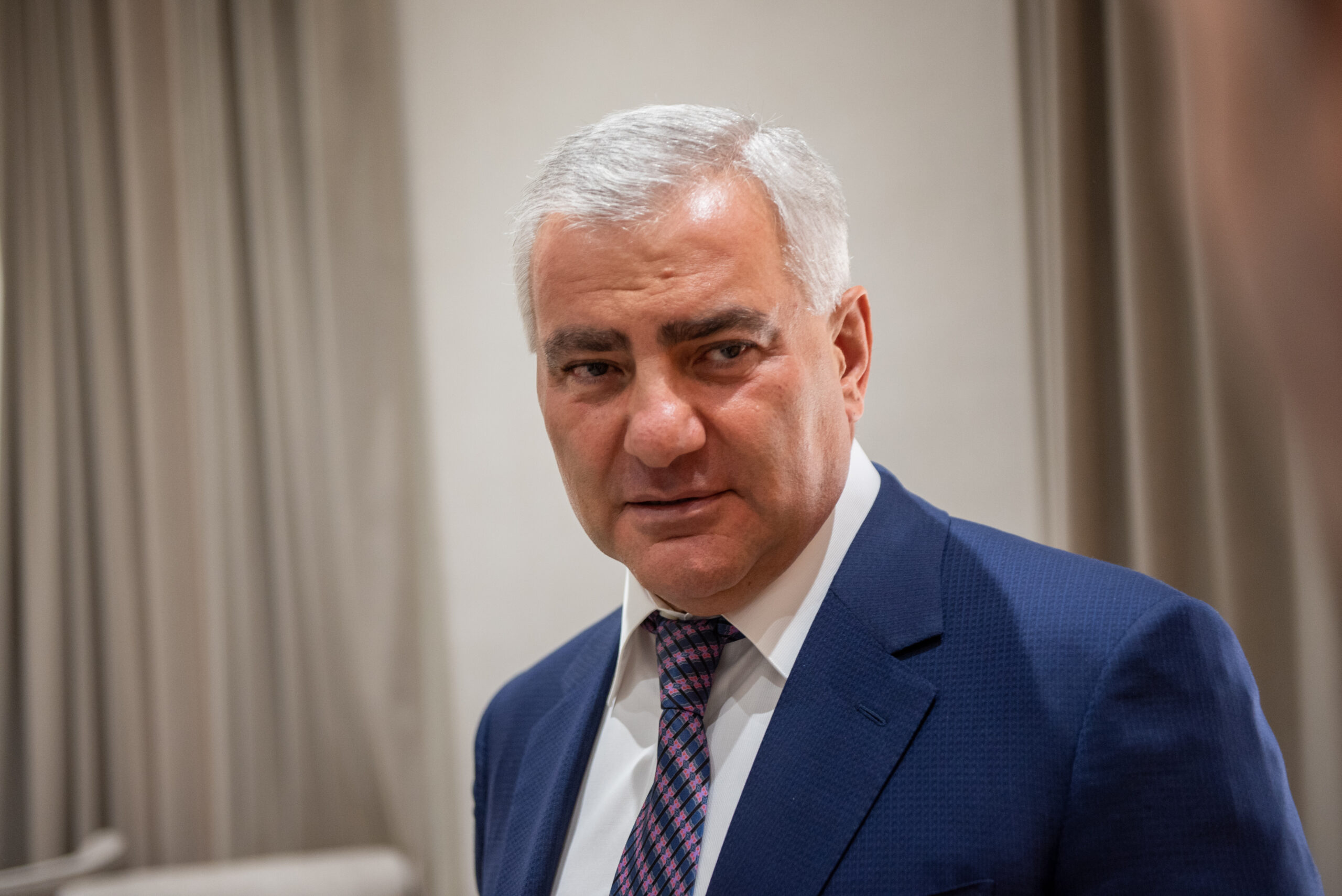
● Russian dollar billionaire Samvel Karapetyan, who is under arrest on charges of calling for the overthrow of Armenia’s constitutional order, sent an open letter to his supporters, writing: “In just a few months, we will be congratulating one another on the triumph of justice.” His pre-trial detention was extended for two more months the day before.
● The property and assets of National Assembly deputy and former Yerevan mayor Taron Margaryan have been frozen. The Prosecutor General’s Office is seeking the confiscation of unlawfully obtained assets and funds amounting to more than 2 billion drams (about $5 million). The materials of the criminal case against Margaryan were sent to court in September. According to local media, the former mayor and former head of the State Property Management Committee Arman Saakyan are accused of misappropriating land plots in Yerevan. Both held their posts in 2011–18 (before Nikol Pashinyan’s team came to power).
● “The process of normalizing relations between Armenia and Turkey will soon yield positive results. The constructive and active political dialogue now underway gives hope that it will soon evolve into institutionalized relations, opening of borders, and broader cooperation,” said Sargis Khandanyan, head of Armenia’s delegation to the OSCE Parliamentary Assembly and chair of the National Assembly’s Foreign Relations Committee. He delivered a speech at the OSCE PA meeting in Istanbul titled “Bridge of Prospect: Strengthening Dialogue, Mediation, and Trust in an Era of Uncertainty.”
● Dirimart London will open the first London solo exhibition of renowned French-Armenian artist Sarkis (Sarkis Zabunyan). The exhibition, titled Stays Together, will present 24 works created in different periods and in various techniques. The works form a cycle of questions and answers around the theme “What unites us?”
Sarkis, originally from Istanbul, represented Turkey at the 56th Venice Biennale in 2015 and took part in the group exhibition of the Armenian Pavilion the same year. His works have been exhibited in leading institutions worldwide, including the Centre Pompidou in Paris and the Guggenheim Museum in New York. Over his career, he has held more than 500 exhibitions globally.
● “France has always stood by Armenia, in both good and difficult times,” said French Ambassador Olivier Decottignies in a speech marking the 30th anniversary of the embassy.
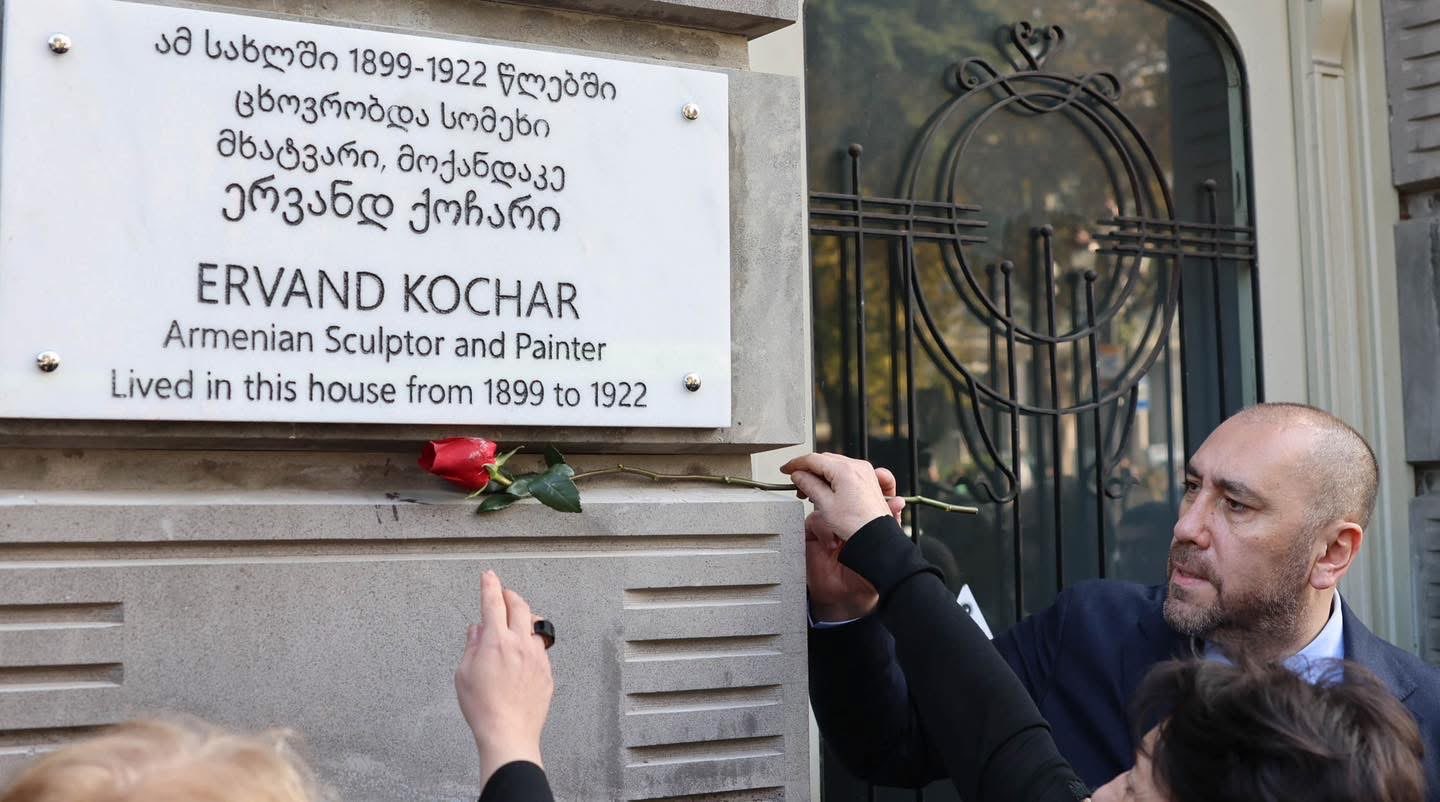
● As part of the celebration of the 125th anniversary of the great Armenian sculptor and artist Ervand Kochar, a memorial plaque has been installed in Tbilisi at 13 Pushkin Street, where Kochar lived from 1899 to 1922.
-
Thursday, November 20, Georgia. PACE has called for the termination of cases against opposition politicians
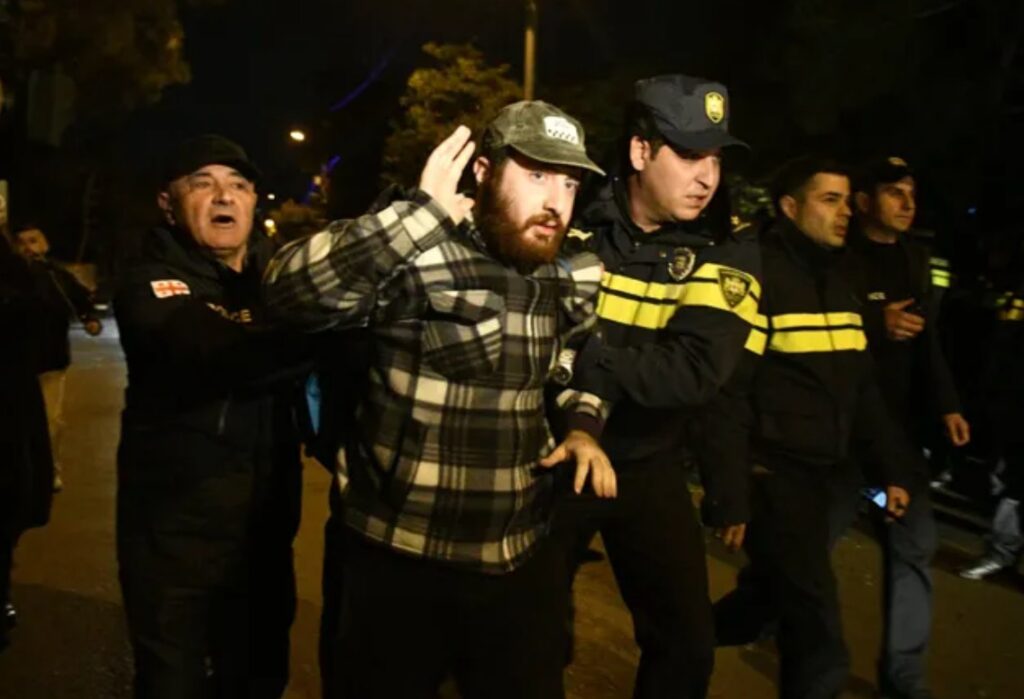
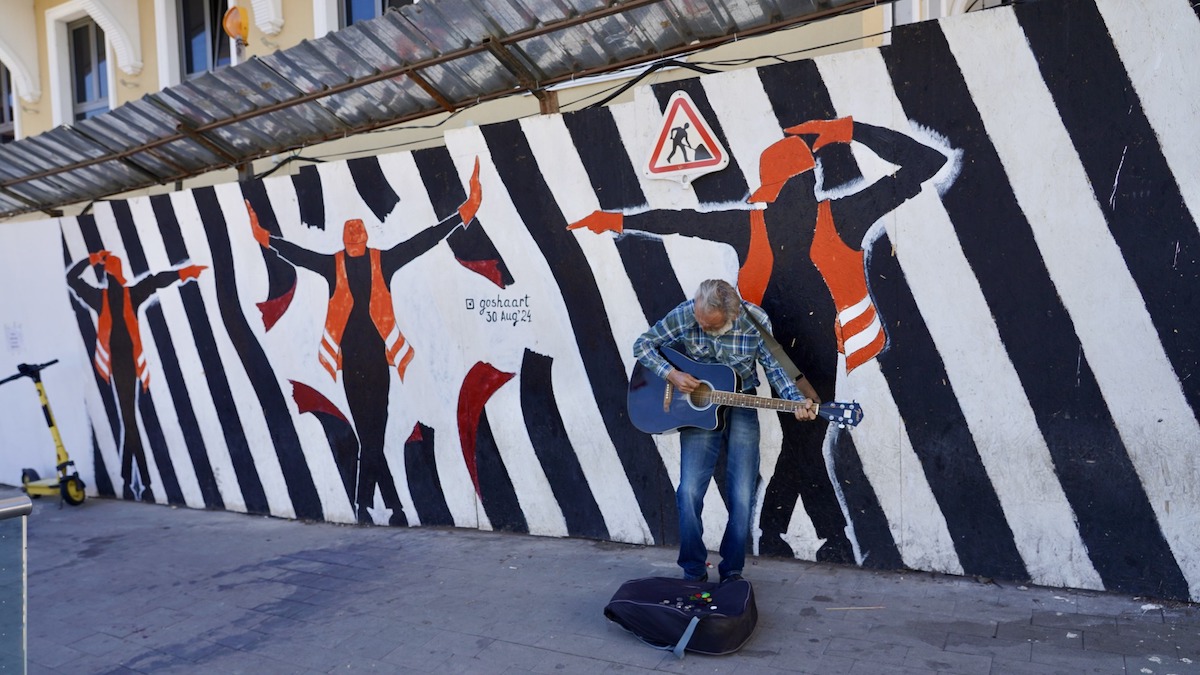
● Police used force to detain 15 people during last night’s march in support of prisoner of conscience Mate Davitdze (pictured). The rally took place on Melikishvili Avenue, where Davitdze was arrested exactly one year ago. The pro-European protest has been ongoing continuously for more than a year. The demands remain unchanged: the release of dozens of detained protesters, new fair parliamentary elections, and returning the country to the path of European integration.
● The Freedom Square party announced its official registration, 10 months after applying to the state registry.
● The Supreme Court refused to review the appeal of activist Giorgi Okmelashvili, who was detained during the pro-European protests. Publika cites the court’s ruling, which states that the Supreme Court fully upholds the appellate court’s decision, based on a “body of evidence that was thoroughly and objectively examined and leaves no doubt.”
● A delegation from the Parliamentary Assembly of the Council of Europe (PACE) called for the termination of cases opened against opposition politicians. In a statement released after their visit to Georgia on November 10–12, PACE co-rapporteurs for Georgia, Edite Estrela (Portugal, Socialist Party) and Sabina Budhidich (Bosnia and Herzegovina, ALDE), urged Georgian Dream to fully comply with the Venice Commission’s recommendations to drop the “foreign agents” law and amendments to the Administrative Offenses Code.
● Prime Minister Irakli Kobakhidze of Georgian Dream called the creation of the so-called “South Ossetia administration” during the presidency of Mikheil Saakashvili an act of “betrayal.” “They reinstated a name and borders that had been abolished since 1990,” Kobakhidze said. In modern Georgia, this territory is referred to as the Tskhinvali region, and the ruling party has submitted a bill to abolish this administration.
The self-proclaimed “Republic of South Ossetia” is recognized as a state by Russia and four other countries. The rest of the world recognizes this region as part of Georgia.
● Deputy Interior Minister Aleksandre Darakhvelidze (Georgian Dream) criticized the EU’s decision to cancel the traditional annual Georgia–EU human-rights dialogue. He said the meeting was postponed for “unclear reasons.” “Nothing was explained to us,” Darakhvelidze told reporters. Local media report that the reason was his own inclusion in the Georgian delegation — Darakhvelidze is under EU sanctions. More details here.
● Prime Minister Irakli Kobakhidze said that Brussels postponed the meeting to “avoid discussing contentious issues.” He stated that EU officials were “avoiding a discussion” because a person they consider sanctioned had been included on the participant list. However, Kobakhidze claimed the EU has imposed no restrictions on this person, and that only Estonia’s Foreign Ministry has sanctioned him.
● Former Defense Minister Irakli Okruashvili (who served under Saakashvili) has been sentenced to seven years in prison. The verdict concerns a notorious case from 2004 — the attempted falsification of circumstances surrounding the killing of 19-year-old Buta Robakidze during a late-night police stop. At the time, Okruashvili was Interior Minister. While convicting him, the court acquitted former Prosecutor General Zurab Adeishvili, who oversaw the investigation into Robakidze’s killing. More details here.
● Judge Dimitri Gvritishvili, a member of the High Council of Justice, confirmed the adoption of a new rule banning the use of electronic devices, including phones, during court hearings. “The ban applies to everyone,” he told journalists when asked whether it would apply to reporters, lawyers, and prosecutors. Special lockers have already been installed in the courthouse lobby, though enforcement has not yet begun.
● Those who provided taxi services without a permit, or in violation of permit conditions, before November 1, 2025, will be exempt from fines, Mayor Kakha Kaladze announced. He described the taxi-system reform as one of the successes of the capital’s transport policy.
● The leader of the neo-Nazi violent group “Maniac-Killer Cult,” Mikheil Chkhikvishvili, who was extradited from Moldova to the United States in May, has pleaded guilty. He faces up to 40 years in prison. More details here.
● The ruling Georgian Dream party has submitted legal amendments to support juveniles in conflict with the law. The changes require taking into account the individual needs of minors. When justified, a court may send them to a rehabilitation center for juveniles.
● The National Statistics Office reported that in the third quarter of this year, the unemployment rate decreased by 0.5% year-on-year, reaching 13.3%. At the same time, the share of the labor force among the population aged 15 and older dropped by 0.1% to 54.5%.
-
Thursday, November 20, Azerbaijan. A joint working group with the United States on TRIPP was established during Allison Hooker’s visit to Baku
● U.S. Under Secretary of State for Political Affairs Allison Hooker arrived in Baku from Yerevan. She held a meeting with Foreign Minister Jeyhun Bayramov, during which the creation of a joint working group was announced. This group will work on implementing the agreements reached by the leaders of Azerbaijan and Armenia with the participation of Donald Trump at the August 8 summit in Washington. A similar working group has been established between the U.S. and Armenia, and both groups will be led by Deputy Assistant Secretary Sonata Coulter.
Hooker noted that this is her first visit to the region. She said the main task is to discuss practical steps for implementing these agreements — in trade, energy cooperation, strengthening regional ties, and security issues. Hooker emphasized that both sides, as well as Armenia, have a great deal of work ahead.
The press release also states that the American partners were informed of Azerbaijan’s interest in speeding up work on the “Trump Route for International Peace and Prosperity” (TRIPP), aimed at ensuring unimpeded connectivity between mainland Azerbaijan and the Nakhchivan Autonomous Republic through Armenian territory.
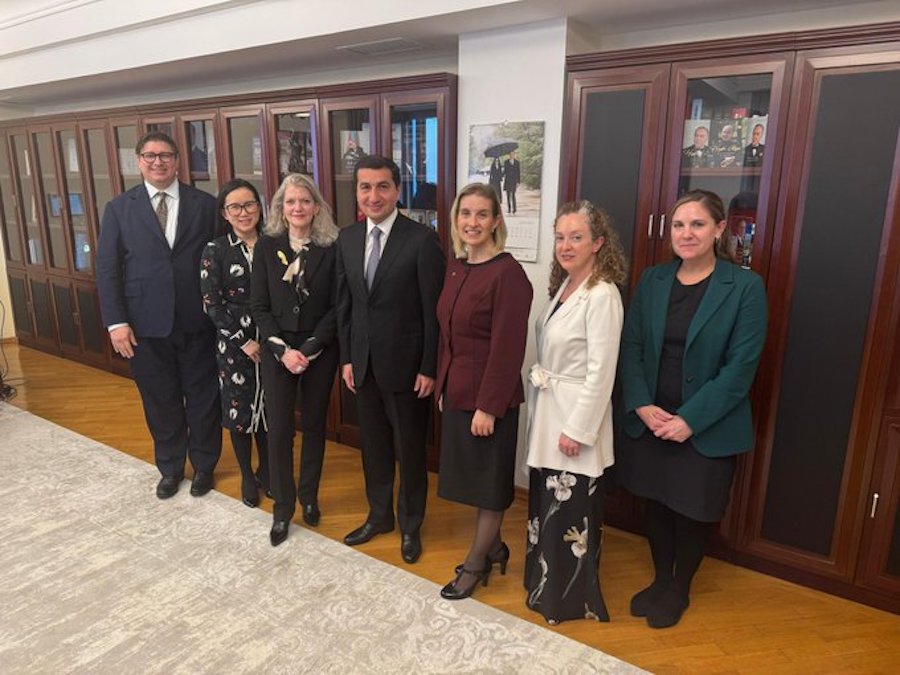
● Presidential aide Hikmet Hajiyev wrote on X about his meeting with Allison Hooker (pictured below), during which they discussed normalization of relations between Baku and Yerevan and initiatives to strengthen regional cooperation.
● Rovshan Rustamov, chairman of Azerbaijan Railways, told NE Global about major progress on the Azerbaijani segment of the “Trump Route.” According to him, construction of the 110-kilometer Goradiz–Agbend railway is actively continuing, with eight new stations being built along the route. The work is expected to be completed in 2026. Rustamov also noted that design work is underway for reconstruction of railway infrastructure in Nakhchivan, after which construction of a new rail network meeting modern standards will begin.
● Rustamov stressed that the TRIPP transit corridor is being designed from the outset with expansion in mind and is a project of strategic importance. It will not only connect Azerbaijan directly with Nakhchivan through Armenia, but also integrate with Turkey’s railway system. He said Turkey has already begun construction of the corresponding 224-kilometer line. “In the future, TRIPP could compete with the Baku–Tbilisi–Kars route in terms of freight volume,” Rustamov said.
● U.S. President Donald Trump said: “Russian President Vladimir Putin called me and said he couldn’t believe I managed to resolve the conflict (between Azerbaijan and Armenia), since we (Russia) had been trying to do it for so many years.” The episode appears in a video published on the White House YouTube channel.
● An Azerbaijani business delegation will soon travel to Estonia, following agreements reached during the recent visit of Estonian Foreign Minister Margus Tsahkna to Baku. Estonia’s ambassador to Azerbaijan, Vaino Reinart (based in Ankara), told the pro-government outlet Report that Tsahkna was accompanied by a large business delegation interested in expanding partnerships with Azerbaijan.
● Lithuania has sent Russia a new protest note condemning the latest strikes on Ukraine. It highlights the damage inflicted on the Azerbaijani embassy in Kyiv. “During the November 14 attack, a Russian missile hit the Azerbaijani Embassy in Kyiv. This was a gross violation of the Vienna Convention and an attack on the inviolability of diplomatic missions. Lithuania expresses full solidarity with Azerbaijan’s Foreign Ministry and its diplomatic community,” the Lithuanian MFA said.
Earlier, Azerbaijan’s Foreign Ministry summoned the Russian ambassador and issued a strong protest over the impact of an “Iskander” missile on the grounds of Azerbaijan’s embassy in Kyiv during the missile and drone strikes around 1 a.m. on November 14. The Russian diplomat was informed that the explosion completely destroyed part of the embassy’s perimeter fence and damaged structures, official vehicles, the administrative building, and the consular section.
● Gurbanguly Berdimuhamedov, Chairman of Turkmenistan’s Halk Maslahaty, invited President Ilham Aliyev to visit Turkmenistan in 2026. The invitation was included in his congratulatory message to Aliyev on Azerbaijan’s admission to the Consultative Council of Heads of State of Central Asia.
● The director and manager of the furniture workshop located on the premises of Bakı Ağac Emalı have been sentenced to six years in prison over the explosion that occurred there in January last year. Ten people were killed and 23 injured. Tagy Ibragimov and Toghrul Rzayev were found guilty of violating fire safety regulations. Investigators also determined that Ibragimov caused environmental and property damage and evaded taxes on a large scale. The prosecution had sought nine years of imprisonment for both defendants.
● AZAL aircraft will soon offer internet access thanks to a new agreement between AZAL and Viasat Inc., a global leader in satellite communications. The signing took place at Dubai Airshow 2025.
-
Wednesday, November 19, Georgia. EU Commissioner Marta Kos: "We will continue to support civil society in Georgia, even though it is very, very difficult"
● The Kutaisi Court of Appeals upheld a two-year prison sentence for journalist Mzia Amaglobeli, founder of the popular outlets Batumelebi and Netgazeti. Prosecutors had requested a harsher sentence of at least four years. Report from the courtroom and details here.
● “Georgia must ensure the effectiveness and independence of its institutions and the impartiality of anti-corruption work, the special investigation service, and the data protection service,” said Guillaume Mercier, European Commission representative for enlargement, international partnership, and the Mediterranean, in response to a question from Euroskope on how the commission assesses the Georgian Dream’s decision to abolish the anti-corruption bureau.
● U.S. State Department representative Jonathan Asconas is visiting Georgia. According to the U.S. embassy, the purpose of his visit is to discuss how Georgia can support the transit project “Trump International Route for Peace and Prosperity” (TRIPP). This road will connect Azerbaijan with its autonomous region of Nakhchivan through Armenia. The agreement to build this transit route was reached by the leaders of Armenia and Azerbaijan during a meeting in Washington on August 8 with Donald Trump. During his visit to Tbilisi, Asconas is scheduled to meet with the foreign minister, government officials, and representatives of international financial institutions, the U.S. embassy reported.
● During a meeting with the U.S. State Department delegation, Georgian Dream government head Levan Zhorzholiani noted that “the Georgian government is not satisfied with the current level of relations with the United States,” according to an official press release.
● EU Commissioner for Defense Andrius Kubilius said during a panel discussion at the EU Enlargement Forum: “The question was asked: how should we help Georgia? First of all, Moldova, Ukraine, the Western Balkans, and Montenegro must join the EU as soon as possible. This will help Georgia understand that EU enlargement is real. For a long time, some oligarchs sent signals that enlargement had been forgotten in the EU and that it was supposedly unrealistic. We must clearly show both arguments and evidence. Enlargement will happen, and Georgia will return to the enlargement path if changes occur in the country.”
● EU Commissioner for Enlargement Marta Kos said: “We will continue supporting civil society in Georgia; our financial assistance has doubled and will increase further. Although it is currently very, very difficult. The government is very strict about whom we fund. We are now looking for ways to provide support without harming existing NGOs. For example, last week I held a dialogue with civil society representatives from candidate countries, including representatives from Georgia.”
● The annual EU–Georgia human rights dialogue meeting has been canceled. The meeting was scheduled to take place in Brussels on November 21. According to Realpolitik, the cancellation was due to the inclusion of a sanctioned individual in the Georgian delegation.
● The European People’s Party and its allies adopted a special resolution on Georgia at the OSCE Parliamentary Assembly. The resolution condemns government repression of peaceful protesters and increased pressure on the media, civil society, and political opposition. It calls on OSCE member states and other countries to investigate recent high-profile cases of corruption and money laundering in Georgia.
● The election monitoring organization ISFED protested the Georgian Dream’s decision to prevent Georgian citizens living abroad from voting where they live. “Considering the geographic mobility of modern society, this is another step against inclusive democracy that undermines the principle of universal suffrage. The decision contradicts advanced international electoral practices and creates the impression that it is driven solely by narrow party interests,” ISFED said.
● The Georgian Young Lawyers’ Association (GYLA) also protested this legislative initiative by the Georgian Dream. “This decision contradicts the principle of universal suffrage guaranteed by Georgia’s Constitution and is unacceptable,” GYLA said.
● Georgian Dream Foreign Minister Maka Bochorishvili claims that “there are no restrictions for Georgian citizens to participate in elections.” “The decision to allow voting only at polling stations inside the country was made to protect the principles of democracy and stability,” Bochorishvili said.
● Former President Salome Zourabichvili called on Georgians to take to the streets for a pro-European protest on November 28. It will mark exactly one year since the Georgian Dream Prime Minister announced the suspension of Georgia’s EU integration process until 2028. “Today the line of occupation passes along Rustaveli Avenue (where the parliament is located and where thousands of pro-European protesters have gathered daily for over a year),” Zourabichvili said. She listed several demands shared by the opposition and most of society, including:
- • Opposition to the Prime Minister’s anti-European decision and deliberate isolation of the country, turning toward Russia.
- • Opposition to unfair sentences for prisoners of conscience and their imprisonment.
- • Opposition to Russian-style laws, a repressive regime, corruption scandals, and the plundering of the country.
- • Condemnation of violence against people—physical, moral, or financial.
- • Condemnation of the so-called education reform, which blocks Georgian students’ access to European universities.
- • Condemnation of the country’s halted development due to suspended investments and aid programs.
- • Condemnation of the discriminatory, unjust, and meaningless decision to ban voting for Georgian citizens abroad.
● The self-proclaimed South Ossetian Ministry of Foreign Affairs condemned the decision to abolish the administration of the “former South Ossetian Autonomous Region,” now the Tskhinvali region in modern Georgia. Officials in Tskhinvali called on the Georgian Dream government to “realistically perceive the political reality established since August 2008” (when Russia recognized South Ossetia as an independent state). The statement also said that “accepting Georgia’s geopolitical status quo could form the basis for regional stability.”
-
Wednesday, November 19, Azerbaijan. The first Azerbaijan-U.S. Think Tanks Forum, dedicated to TRIPP and peace with Armenia
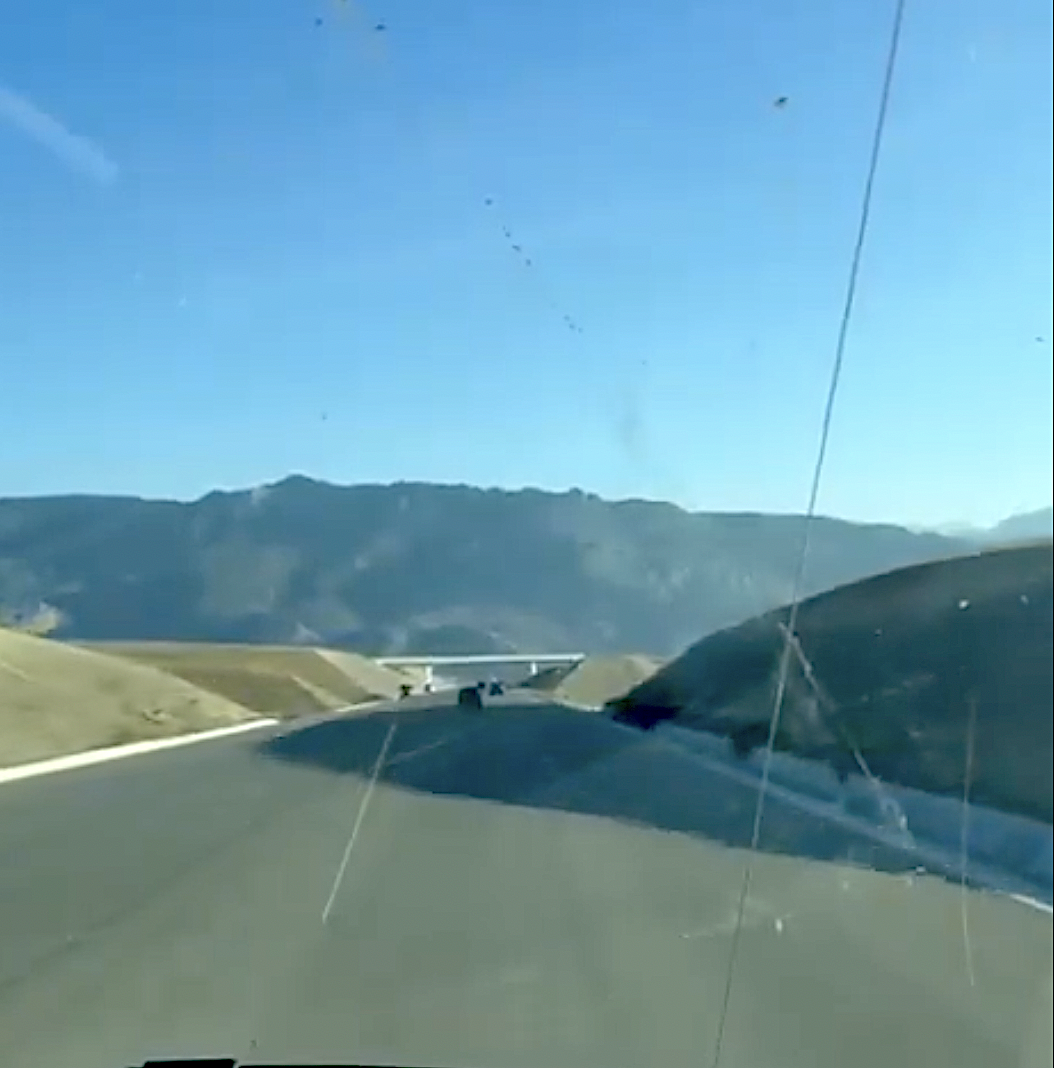
● Members of the Presidential Administration and the Coordination Headquarters for issues related to territories liberated from occupation inspected the construction of a highway and railway line within the Zangezur Corridor, as well as the Agbend–Kelale bridge over the Araz River. The press release highlights the strategic importance of these transport links for regional connectivity.
● Presidential aide Hikmet Hajiyev posted footage from the visit on X, calling it “the high-speed highway of the Zangezur Corridor – a pivotal hub and intersection connecting major international transport arteries: the East–West route stretching from Shanghai to London, and the North–South and Southwest routes linking the Indian Ocean with the North Sea, and the Persian Gulf with the Black Sea.”
In Azerbaijan, the term “Zangezur Corridor” refers to part of the “Trump Route,” TRIPP, which will link the main territory of Azerbaijan with its Nakhchivan exclave via Armenia. The agreement to open this transit route was reached during the historic summit between the leaders of the two countries with Donald Trump on August 8 in Washington. More details about the project here.
● Baku hosted the first Azerbaijan-U.S. Think Tanks Forum under the theme “A Shared Vision: Azerbaijan–U.S. Dialogue for Strategic Partnership.” Participants included representatives of the Atlantic Council, New Lines Institute, Hudson Institute, the Central Asia–Caucasus Institute, and The National Interest. Three sessions were held:
• “Assessing the Washington Summit: Implications for U.S.–Azerbaijan Relations”
• “Armenia–Azerbaijan Peace Process After the Washington Summit”
• “Energy Security and Connectivity”● “Implementing the TRIPP route is crucial for the South Caucasus, which today serves as a strategic bridge between Europe and Asia,” said John DiPirro, research fellow at the Central Asia–Caucasus Institute. He said it was time to sign a peace agreement between Azerbaijan and Armenia and stressed the need to normalize Armenia–Turkey relations. DiPirro reminded participants that the U.S. has allocated $145 million to support the TRIPP project and has already established working groups with both Azerbaijan and Armenia. “This once again demonstrates how essential it is to ensure the project’s implementation,” he said.
● “The TRIPP agreement carries not only diplomatic importance but enormous commercial potential,” said Rich Outzen, nonresident senior fellow at the Atlantic Council. “The project, which includes a 26-kilometer section in Armenia, will form a transit corridor connecting Azerbaijan, Turkey, Central Asia, and Europe. Central Asian states view it as an opportunity to strengthen ties with Western economies. With around ten countries now interested in its success, the project has become multidimensional and strategically significant. Combined with opportunities for the private sector, it offers strong grounds for optimism,” Outzen said.
● A series of visits by Azerbaijani civil society representatives to Armenia is expected over the next six months. A visit by an Armenian expert group to Azerbaijan is scheduled before the end of the year. The announcement was made at the forum by Farhad Mammadov, chairman of the South Caucasus Research Center. He said the Armenian delegation will meet not only with their Azerbaijani counterparts but also with senior officials.
Mammadov was among the Azerbaijani NGO representatives who visited Yerevan in October for meetings with Armenian colleagues and the Secretary of the Security Council – a visit many called unprecedented. “Our trip was not a one-time action; it was part of the ongoing bilateral dialogue and a wider cooperation program,” he said. Read more about the trip of Azerbaijani experts to Yerevan here
● Turkish Foreign Minister Hakan Fidan: “When Azerbaijan and Armenia sign a peace agreement, we will be ready to normalize relations with Yerevan.”
● Baku hosted the plenary session of the World Telecommunication Development Conference WTDC-25.
● A new court hearing was held in the case of Anar Mammadli, head of the Election Monitoring and Democracy Studies Center, who remains in pre-trial detention. His lawyer filed a motion requesting access to European Court of Human Rights documents that “thoroughly challenge the legal and factual basis of the charges and prove their complete groundlessness.” The lawyer recalled the 2018 ECHR ruling declaring Mammadli’s previous arrest unlawful. “Despite this ruling, that conviction has still not been overturned, and now this ‘previous conviction’ is being used as an aggravating factor,” he said. The court rejected the motion. The next hearing is scheduled for December 8 and will continue with witness testimony.
Mammadli was arrested in April 2024 and charged with smuggling committed by a group with prior agreement, carrying a sentence of up to 12 years. He denies the charges.
According to human rights groups, Azerbaijan currently holds more than 390 political prisoners. The authorities argue the detainees were prosecuted for criminal offenses.
● Anass Derraz, vice president of the French company Saur, has been sentenced in Baku to 12 years in prison, Radio Free Europe’s Azerbaijani service reports. He was accused of receiving a bribe from Russian billionaire of Azerbaijani origin Farkhad Akhmedov. Another defendant — former security chief to the French president Alexandre Benalla — has been placed on an international wanted list. Investigators say Derraz and Benalla deceived Akhmedov by promising to free his yacht Luna, seized by a British court and held in Dubai. They allegedly promised to return it to international waters in exchange for $600,000.
Akhmedov testified on October 16 in the Baku Grave Crimes Court, saying the yacht was impounded due to an unfounded lawsuit by his ex-wife. “We were trying to lift the arrest legally. My son lived in Dubai and we were looking for people who could help,” he said. He claimed Derraz and Benalla ultimately demanded $6.14 million, beginning with the initial $600,000 payment.
● The trial continued in the criminal case against Ruben Vardanyan, former state minister of the former unrecognized “Nagorno-Karabakh Republic” and an Armenian citizen. He is charged with torture, mercenary activity, war crimes, terrorism, and other offenses. According to state agency Azertac, the hearing began with discussion of Vardanyan’s request to dismiss translator Islam Agakerimov, who made an error while translating a court decision at a previous hearing. Agakerimov said it was a mechanical mistake that did not affect the content. After deliberation, the court rejected the request.
Testimony was then heard from individuals wounded in, or witnesses to, the deaths caused by Armenian military actions during Vardanyan’s tenure in the unrecognized entity. The next hearing is scheduled for November 20.
-
Wednesday, November 19, Armenia. The parliament is discussing the 'March 1 case' – the death of 10 people during the dispersal of a protest in Yerevan in 2008
● The first EU assessment mission on the implementation of Armenia’s visa-liberalisation action plan will visit Yerevan in the near future. Experts from EU member states will evaluate progress on the first stage of the plan — the legislative and policy framework. After the visit, the European Commission will prepare an assessment report, scheduled for publication in spring 2026.
● Foreign Minister Ararat Mirzoyan met in Yerevan with Magdalena Grono, the EU Special Representative for the South Caucasus and the crisis in Georgia. They noted significant progress in the developing Armenia–EU partnership and discussed new initiatives aimed at strengthening Armenia’s democratic resilience.
● Public hearings on the March 1 case — the deadly dispersal of post-election protests in Yerevan in 2008 that left 10 people dead — are underway in the National Assembly. Prosecutor General Anna Vardapetyan said the case consists of 625 volumes and will be divided into episodes because it is impossible to investigate everything at once. Separate episodes may be sent to court as they are completed; otherwise, she said, proceedings with so many defendants could last “until the end of my life.”
● Anti-Corruption Committee chairman Artur Nagapetyan said Yerevan will again request Moscow to extradite two former officials wanted in the March 1 case. He noted that the renewed investigation faces technical and practical difficulties, including the lack of equipment needed to match weapons and bullets, problems obtaining evidence, and delays. He said all legal means and tools will be used.
● During the 23rd autumn session of the OSCE Parliamentary Assembly in Istanbul on 18 November, Armenian and Azerbaijani parliamentary delegations held a bilateral meeting. They highlighted the positive role of the Washington summit with the participation of Donald Trump, exchanged views on the agreements reached, and discussed next steps for strengthening peace between Armenia and Azerbaijan, stressing the importance of parliamentary support.
● The Anti-Corruption Court extended the pre-trial detention of Russian billionaire Samvel Karapetyan for another two months. He has been in custody for several months on charges of incitement to seize power.
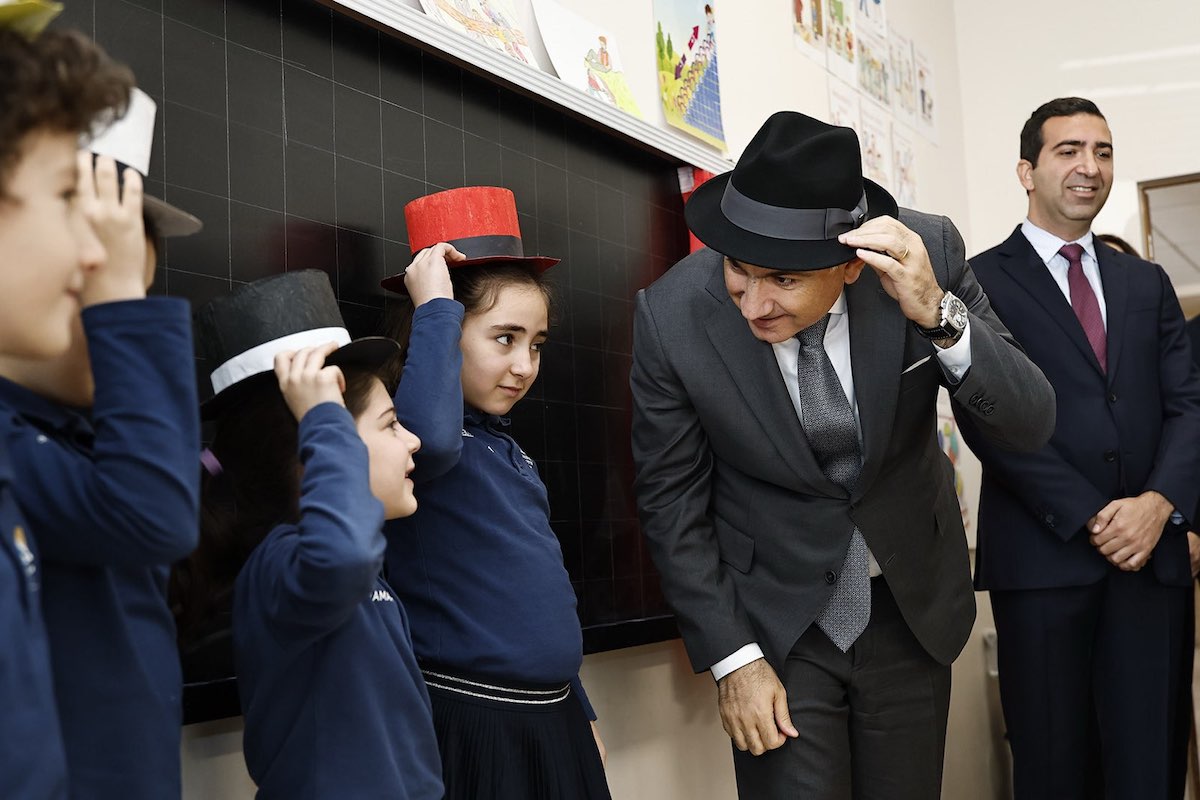
● Prime Minister Nikol Pashinyan visited the Horen and Shoushanik Avetisyan educational complex in the Malatia-Sebastia district of Yerevan, founded by the Armenian Missionary Association of America (AMAA). He was presented with a project for a similar school for 300 students to be built in Vardenis in 2026. Pashinyan proposed aligning state and private programmes to build a facility for 600 students instead, and AMAA representatives accepted the proposal.
-
Tuesday, November 18, Armenia. Armenian-American working groups have been established to implement the agreements reached at the historic Washington summit
● Armenian Prime Minister Nikol Pashinyan, government members, and parliamentary leaders met with a high-level U.S. delegation led by Under Secretary of State for Political Affairs Alison Hooker in Yerevan. The delegation arrived to advance the agreements reached at the historic August summit of Armenian and Azerbaijani leaders in Washington, attended by Donald Trump. Hooker emphasized that signing a peace treaty between Armenia and Azerbaijan and normalizing relations with Turkey would make the South Caucasus an important trade route.
● Armenia and the U.S. have established a joint working group to implement the “Trump Route” — a road running from Azerbaijan to its Nakhchivan exclave through Armenian territory. The U.S. side will be led by Deputy Assistant Secretary of State Sonata Coulter.
● The meetings also discussed the work of the U.S.-Armenia bilateral working groups, which will develop cooperation in trade, investment, infrastructure, security, and regional connectivity.
● The Anti-Corruption Court spent more than 12 hours considering a request to extend the detention of Russian dollar billionaire Samvel Karapetyan by two months. The decision will be announced today. Hundreds of his supporters held a demonstration outside the court. Karapetyan has been detained since June 18, accused of calling for the overthrow of the Armenian government.
● The Public Services Regulatory Commission revoked the license of Electric Networks of Armenia, owned by Samvel Karapetyan, a company considered strategically important for the country. Read more here
● Armenia and the UAE signed a defense cooperation agreement during Defense Minister Suren Papikyan’s visit to Abu Dhabi.
● An armed man robbed a bank branch in Yerevan, stealing about 1 million drams (roughly $2,600), and fled. Local media reported he entered the bank with a sign around his neck reading: “If you don’t give me my money, I will blow everything up in 20 seconds.”
● Armenian authorities barred Russian designer Artemy Lebedev from entering the country, according to blogger Ateo Breaking citing sources. The move follows comments from Parliament Speaker Alen Simonyan, who called Lebedev a “propagandist” and “media dwarf” and criticized his remarks on Armenian brandy and internal affairs.
● Yerevan has collected 97% of its planned revenue for January-October 2025. Of the targeted 72.268 billion drams, 70.136 billion drams have been collected, according to the city’s revenue department.
● Yerevan ranked among the top ten cities worldwide for nighttime quality of life, the Tourism Committee reported. “Lit streets, evenings filled with wine and jazz — these are the experiences that make our city an indispensable nightlife destination,” the committee said.
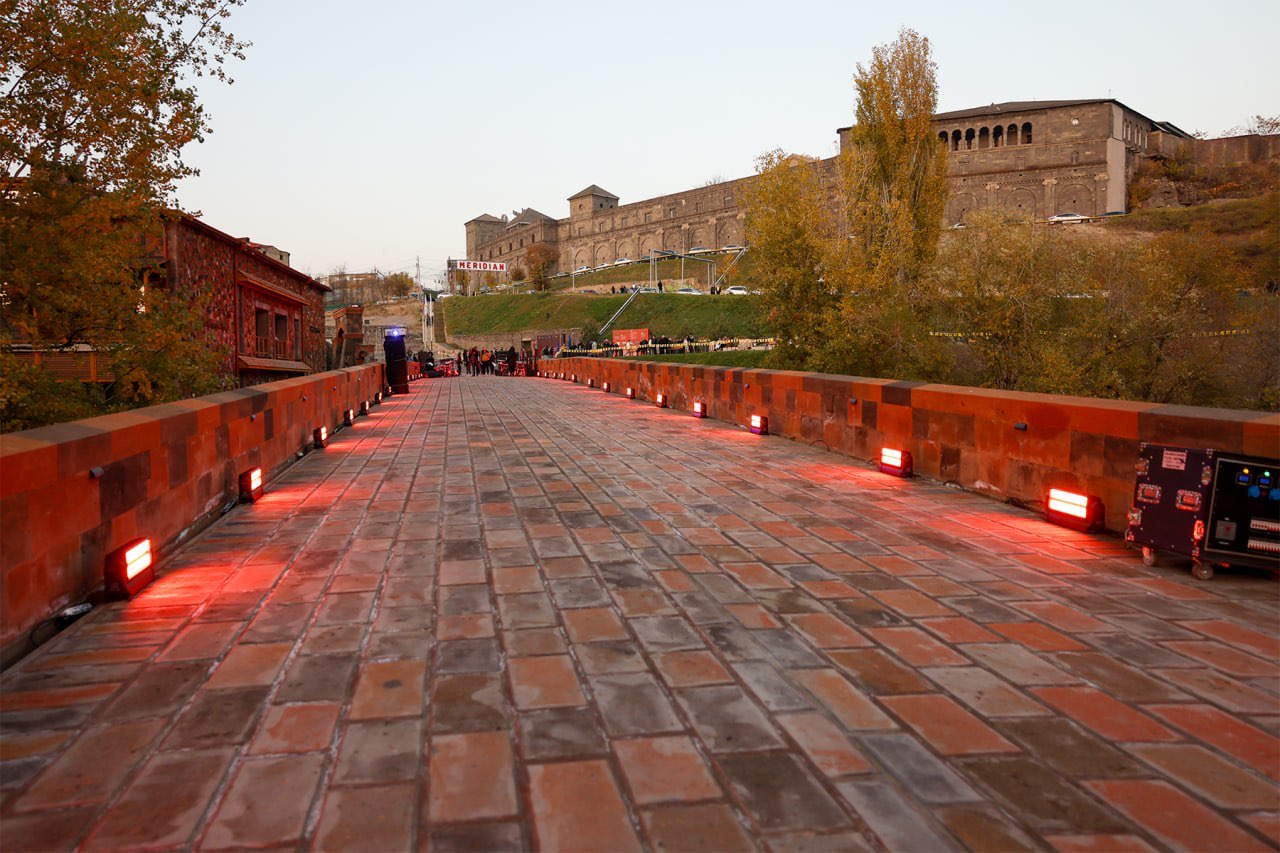
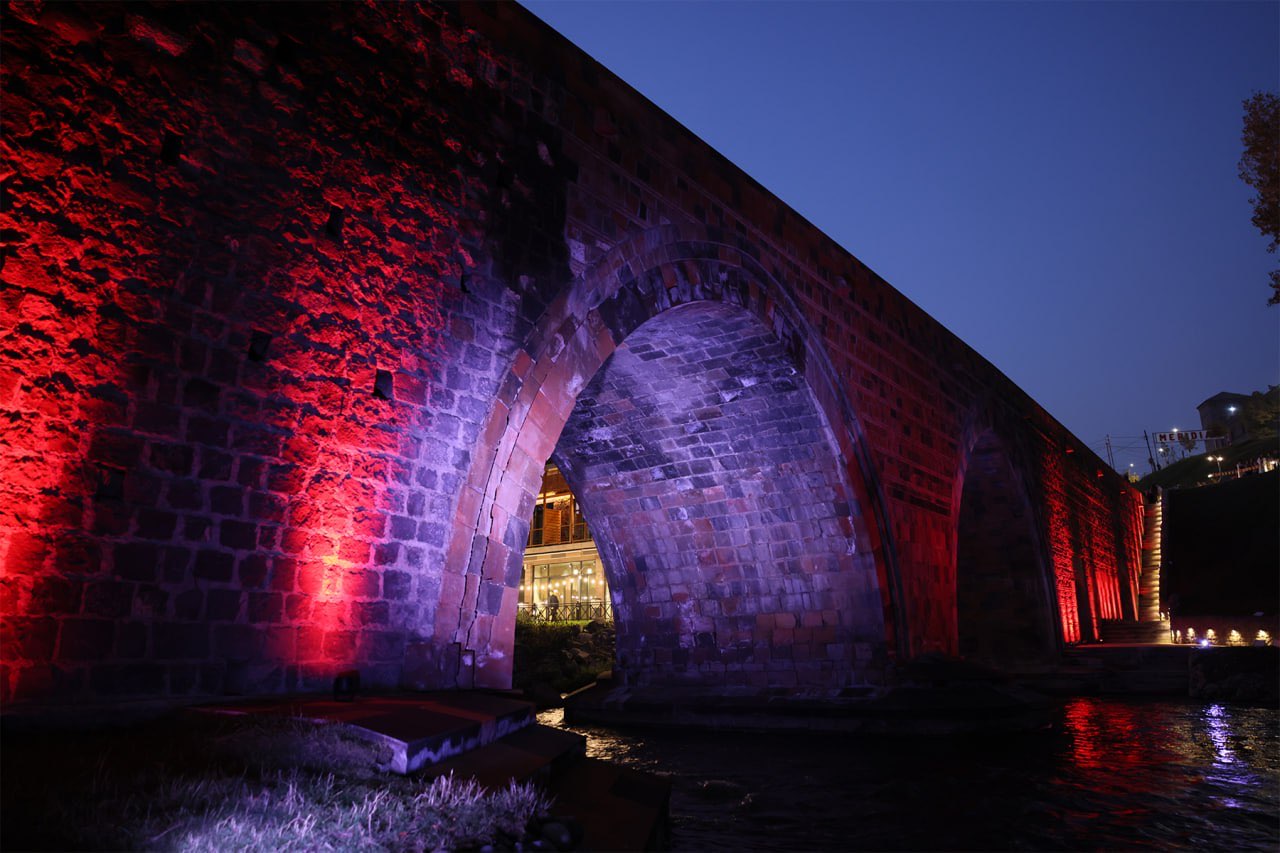
● The historic Red Bridge, the oldest bridge in Yerevan, reopened after renovation (pictured below). The bridge is 11 m high, 80 m long, and 6.5 m wide. Before the Victory Bridge opened in 1945, the Red Bridge was the city’s main crossing over the Razdan River, connecting it to the right bank.
-
Tuesday, November 18, Azerbaijan. Euronews has opened an office in Baku
● Under Secretary of State for Political Affairs Alison Hooker will visit Azerbaijan this week. According to the U.S. State Department website, she “will be on a working visit to Armenia and Azerbaijan from November 15 to 21, 2025.” No further details were provided.
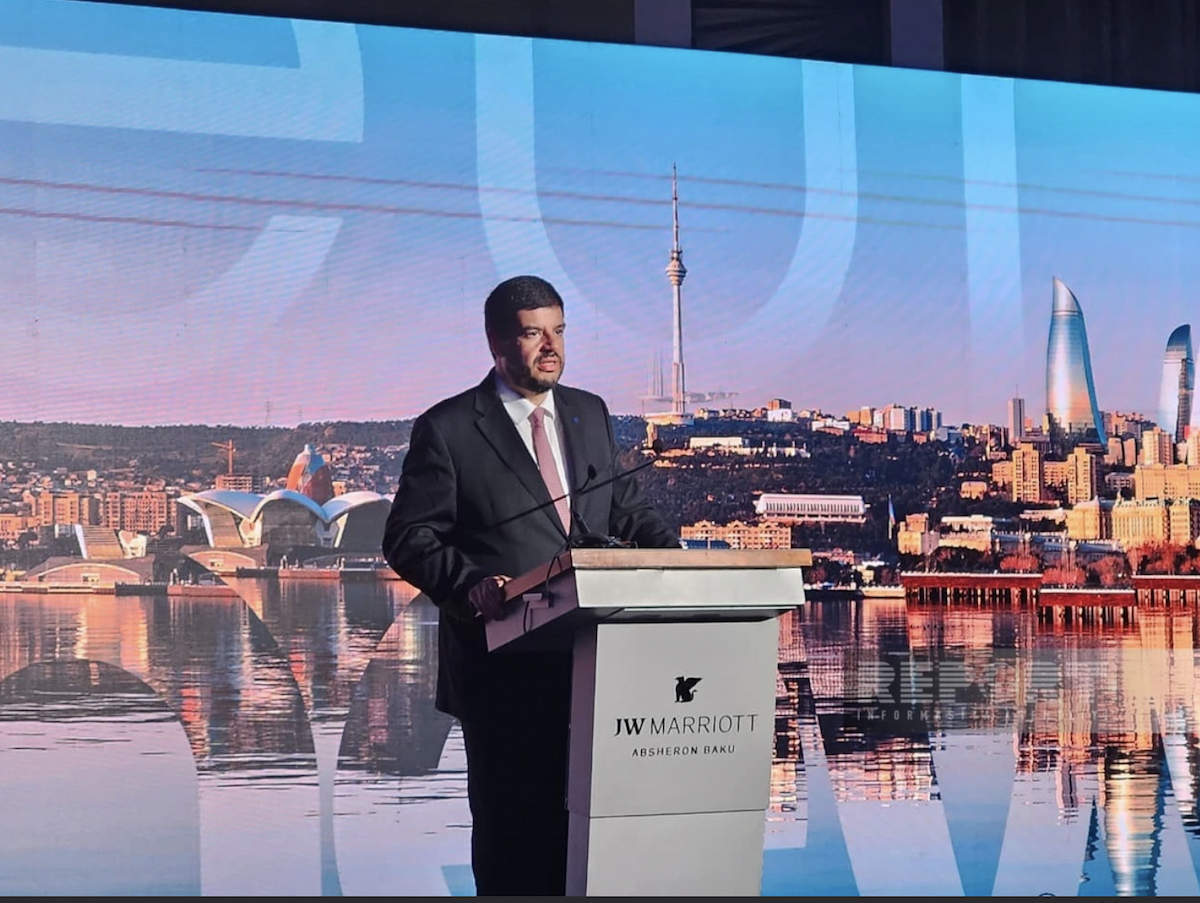
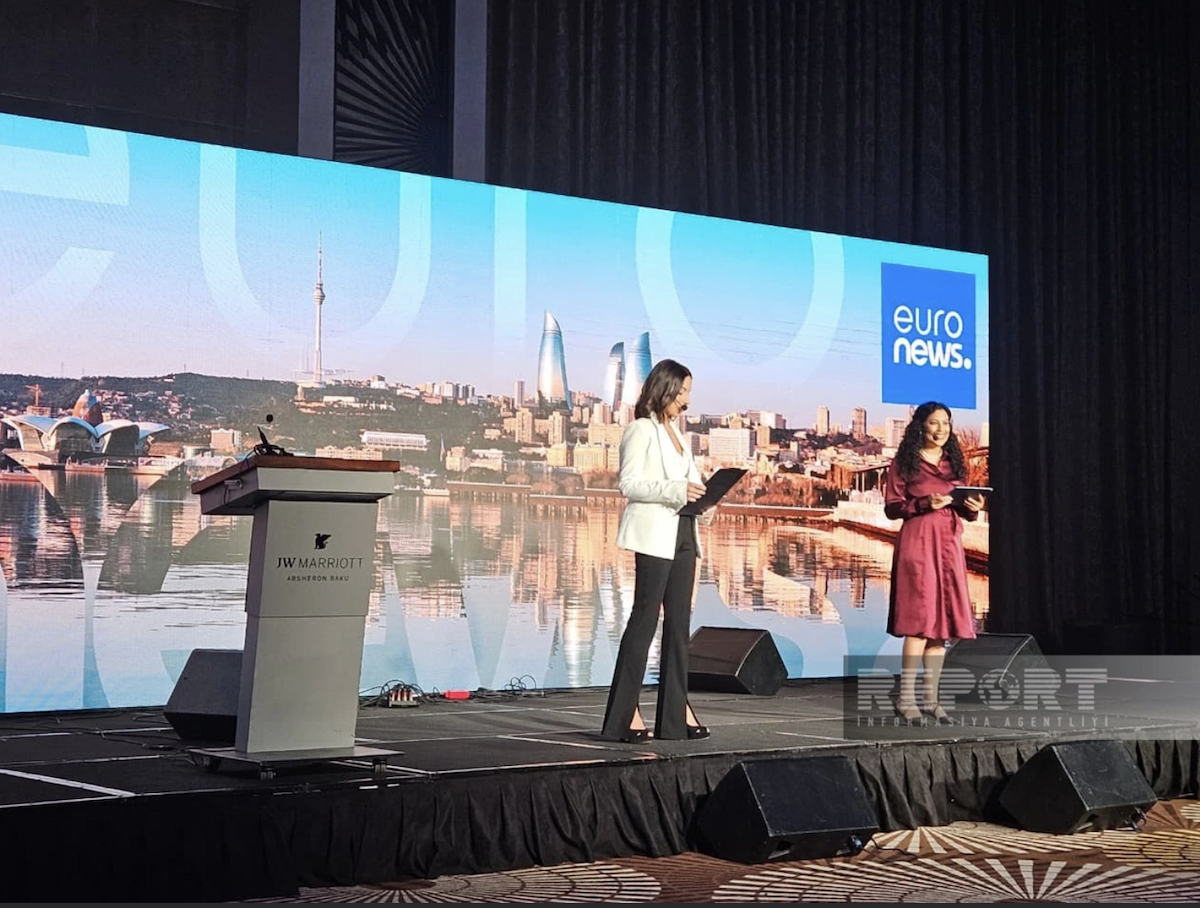
● Euronews has opened an office in Baku. Company chairman Pedro Vargas David said at the opening ceremony that the Baku newsroom will have 15 staff members, half of whom have already been hired. “We will continue bringing in journalists from abroad, but our long-term goal is to gradually expand the participation of local staff. We want to see more Azerbaijani journalists both in this office and across Euronews,” he said.
● Vargas David said Euronews has repeatedly faced pressure in Europe over its joint projects with Azerbaijan. “Many in Europe did not accept our balanced approach toward this country. But Euronews firmly adheres to its priorities. Strengthening information cooperation with Azerbaijan remains a key objective for the company, given how important developments in the country are for European audiences. After all, the EU is Azerbaijan’s largest partner and investor, as well as the main importer of Azerbaijani products,” he said.
According to local human rights groups, more than 30 independent journalists are currently imprisoned in Azerbaijan, including nearly the full staffs of AbzasMedia, Toplum TV and MeydanTV. They have been charged with smuggling and other serious crimes, which they deny, saying they are being punished for criticizing the authorities.
● The sentence of young political analyst Bahruz Samedov, who was convicted of treason and given 15 years, may be toughened. He denies all charges, saying he was punished for calling for peace with Armenia, especially during the 2020 war and the 2023 fighting in Karabakh. According to RFE/RL’s Azerbaijani service, prison authorities accuse him of violating internal rules. His grandmother told reporters that he has been held in solitary confinement since October 17. She said Samedov and his lawyer told the court that the alleged violations were fabricated and demanded evidence and video footage, but were told that “no cameras were installed in the location where the incident occurred.” The court refused to consider Samedov’s complaint about being placed in solitary confinement.
● From January to October this year, Azerbaijan exported 20,754,593 tonnes of oil to 21 countries. According to the customs committee, the top five importers were Italy, the Czech Republic, Croatia, Germany and Romania.
● British company BP plans to complete full-scale work at the Karabakh oil field by the end of this year. The company also announced it is preparing to resume exploration at the Shafag-Asiman gas field in the Azerbaijani sector of the Caspian Sea.
● The Foreign Ministry issued a statement after another landmine explosion on the Azerbaijan-Armenia border. An employee of the national demining agency ANAMA sustained serious injuries. “Since the end of the 44-day war in 2020, 412 people have fallen victim to mines. This humanitarian tragedy targets civilians. It obstructs reconstruction work and hinders the safe return of people, constituting a gross violation of international humanitarian law. Urgent international support is needed to accelerate demining efforts,” the statement said.
● Yalchin Rafiyev, who chaired last year’s COP29 environmental forum in Baku, delivered a report at the ongoing COP30 forum in Brazil. He spoke about Azerbaijan’s ambitious climate initiatives, including new commitments to reduce emissions by 40%. While the previous target date was 2050, Azerbaijan now expects to achieve this by 2035. Major programs for protecting the Caspian Sea have also been launched. Rafiyev again called on the international community to unite and support these initiatives.
● The Cybersecurity Service issued a special warning about a sharp increase in attempts to gain unauthorized access to WhatsApp accounts. “Clicking on links sent by unknown individuals and sharing verification codes poses a serious risk,” the statement said.
● The decoding of the flight recorder (“black box”) from the Turkish C-130 military transport plane that crashed in Georgia on November 11 will take two months, Turkish Defense Minister Yaşar Güler said. All 20 people on board were killed. The minister said that “preliminary data indicate the tail detached first, after which the aircraft broke into three parts.” The plane had taken off from Azerbaijan and was heading to Turkey when it crashed near the Azerbaijani border. A criminal investigation has been launched in Georgia into possible violations of aviation safety rules, and the inquiry is being coordinated with Turkey and Azerbaijan.
● Turkish President Recep Tayyip Erdoğan thanked Azerbaijan and Georgia “for mobilizing all resources to provide assistance after the plane crash. The bodies of the victims and the black box were located in a short time,” he said.
● Border guards prevented an attempt to smuggle more than 17 kg of drugs from Iran using a drone. A citizen of Azerbaijan, Azer Orudjov, was detained at the scene and confessed he had come to collect the shipment.
-
Tuesday, November 18, Georgia. Georgian citizens will no longer be able to vote in elections abroad; they will have to return to the country to do so
● In Georgia, several government bodies will be abolished, including the so-called South Ossetian Autonomous Region Administration, the Anti-Corruption Bureau, and a few other agencies. The Anti-Corruption Bureau and the Personal Data Protection Service will be merged with the State Audit Service. The amendments are planned to be adopted by the end of the year. Read more here
● Another bill, presented alongside the above, would prevent Georgian citizens from voting abroad. To participate in elections, citizens would need to come to Georgia. Read more here
● Prime Minister Irakli Kobakhidze from Georgian Dream supported the initiative to allow voting only on Georgian territory. He said: “We see that our citizens in other countries are exposed to foreign influence. For example, a person may fear that if their political preferences are revealed, they might be denied a residence permit or lose their job. It is known that at one particular embassy in Georgia, visas were not issued to people supporting the government. Therefore, elections should be held where the full jurisdiction of our country applies. I think it is possible to come to your homeland for even one day, see and assess the situation with your own eyes, and make a choice. But I can also say that in the parliamentary elections held last October, voting in other countries did not affect the final results in any way.”
● Irakli Kobakhidze also stated that there will be no early parliamentary elections. Elections will take place according to the Constitution on October 28, 2028. At the same time, he expressed confidence that even if early elections were held, Georgian Dream would easily gain a constitutional majority. “Everyone saw during the municipal elections on October 4 that support for the ruling party has increased even more. The opposition’s talk about early elections is an empty farce; they themselves do not want it. They prefer to wait three years rather than shrink their space again,” Kobakhidze said.
● Irakli Kobakhidze: “We are still in a mode of strategic patience with the United States. We have repeatedly said that we want to restore strategic partnership from scratch and with a concrete roadmap. So far, we see passivity. We will see who wins there. The informal government over the last four years has had full and total influence over the United States and the European Union. If informal rulers continue to prevail regarding Georgia, then perhaps nothing will change. But if a new administration wins this confrontation, then something new awaits us. We are patiently waiting and hoping that ultimately the subjective interests of the American people will prevail over the informal government.”
● UK MP James McCleary criticized the ruling party, saying it continues to suppress democracy by restricting media freedom, banning opposition parties, and now removing voting rights for citizens abroad. He called for sanctions against Bidzina Ivanishvili, the oligarch and founder of Georgian Dream, and his associates.
● Fifth President Salome Zurabishvili said: “The decision to deprive immigrants of the right to vote is unprecedented and shocking. I do not care whose side these one and a half million people are on, or how they would vote in elections. This is about their right to be full citizens. What was done in the parliamentary elections, which is probably being discussed today by the Strasbourg court, is a complete violation of all constitutional principles.”
● French Minister for European Affairs Benjamin Haddad stated that the Georgian Dream party’s repression of the opposition, civil society, and journalists hampers Georgia’s European ambitions. He emphasized that most Georgians support the European path, which France and other EU countries back. Read more here
● The Ministry of Internal Affairs submitted legislative amendments to Parliament regarding the circulation of acoustic weapons, stun guns, and gas-aerosol devices, aiming to strengthen public safety and prevent crimes.
● The EU Council approved updated rules for suspending visa-free travel. The new mechanism will allow the EU to respond more quickly when visa-free regimes are abused or conflict with EU interests. Experts note this could affect some Georgian citizens. Read more here
In Tbilisi, pro-European protests have been ongoing continuously for over a year. The demands remain the same: to release dozens of arrested protest participants, hold new fair parliamentary elections, and return the country to the path of European integration. Video by JAMnews.
And this evening, the mass pro-European protest continues in Tbilisi – as it has every evening for more than a year. Thousands of people march through the city, taking different routes each time, calling on everyone to join them.
Their demands remain unchanged: to free the… pic.twitter.com/p2TDbf7rFE
— JAMnews (@JAMnewsCaucasus) November 17, 2025
-
Monday, November 17, Georgia. A scandal is growing around the UAE investment project; Erasmus+ has ended its operations in Georgia
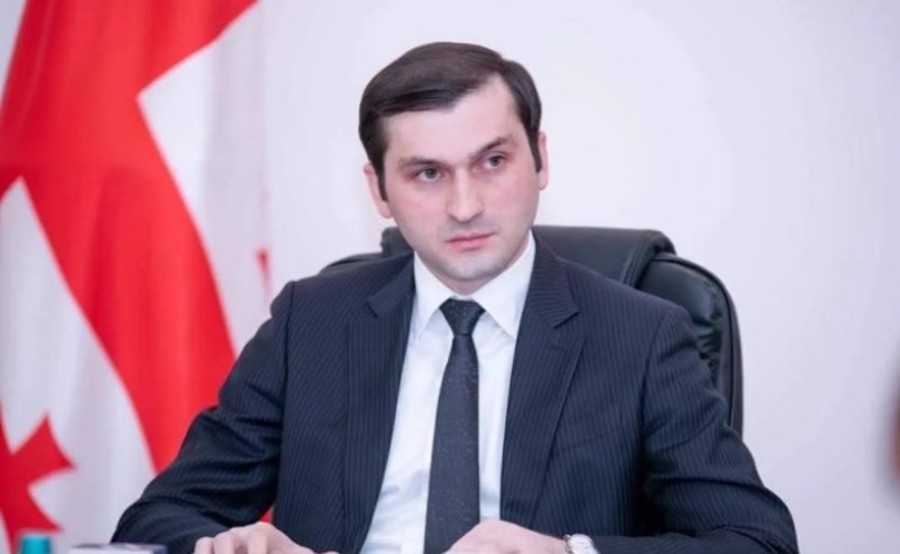
● Former head of the Adjara region, Tornike Rizhvadze (pictured), who attempted suicide, has moved to Germany together with his parents, wife, and children, according to the local outlet Ajara Times. Rizhvadze had previously been an active supporter of the ruling Georgian Dream party. The reasons behind his unexpected suicide attempt in July remain unclear. It was reported that he shot himself with a pistol belonging to Alexi Akhvlediani, the now-former director of Georgia’s Maritime Transport Agency, who faced trial for negligent firearm storage. Rizhvadze was taken in critical condition to a clinic in Turkey. Citing its sources, Ajara Times writes that Rizhvadze is still under medical supervision and has lost vision in one eye following the incident. More details on this story are available here.
● The European Union’s Erasmus+ program, which funds youth education, vocational training, and sports, will no longer include projects in Georgia starting in 2026. “In response to recent political developments in Georgia, the European Union has reviewed the financial assistance that directly benefited the country’s government. The direct financial support provided by the program to the Georgian government is no longer considered aligned with the EU’s interests,” the Erasmus+ statement says.
● The opposition alliance Lelo – Strong Georgia has called on the government to disclose details of its contract with the UAE regarding the Eagle Hills project. “The entire contract is classified. Why are the authorities hiding from the people details concerning 9 million square meters of Georgia’s strategically important land, as well as issues of demography, ecology, and the future of our cities and country? There is also a second important question: has the Emirati company’s $1.2 billion share been deposited in Georgian banks?” said party representative Grigol Gegelia.
The Eagle Hills project is an investment agreement with the Abu Dhabi–based company Eagle Hills Properties to build large-scale multifunctional complexes in Tbilisi and in Gonio on the Black Sea coast, including residential and commercial facilities. The project is estimated to be worth over $6.5 billion. As far as known, Georgia is a partner and co-owner of a 33% stake in the project, which launched in October this year.
● Prime Minister Irakli Kobakhidze of the Georgian Dream party responded to the allegations. “This single investment project has an enormous impact on the country’s development, so it is no surprise that Georgia’s ill-wishers among foreign agents are actively opposing it,” Kobakhidze said. He added that “the government bears full responsibility for implementing the project in complete accordance with Georgia’s national interests.”
● Olympic judo champion and former Georgian Dream MP Zurab Zviadauri has signed a plea agreement. He will be released from prison in four months in exchange for a fine of 5,000 lari (about $1,800). Zviadauri was arrested in Tbilisi in September for the illegal purchase, possession, and carrying of firearms and ammunition. He had already been arrested in August 2021, when he was charged with premeditated murder. The Interior Ministry reported that Zviadauri fatally shot a man who had earlier killed his brother. On 4 December of the same year, Zviadauri was released on 50,000 lari bail (about $18,000).
● The Special Penitentiary Service called claims circulating in the media and on social networks that prisoners are underfed “yet another lie.” Following reforms implemented in the penitentiary system in 2019, every detainee or convicted person is provided with three meals a day according to a menu designed with their health needs in mind, the service stated.
● The prosecutor’s office has charged a woman who worked in Tbilisi as a nanny with violence against minors, and she has been detained. The investigation established that on November 11 she used physical violence against a one-year-old and a six-month-old child. The charges carry a sentence of up to two years in prison.
-
Monday, November 17, Azerbaijan. Azerbaijan has officially joined the format of meetings of the Central Asian heads of state
● Azerbaijan marks National Revival Day today. Local media report that the holiday commemorates the start of the national liberation movement in 1988, a reaction to the Soviet leadership’s anti-Azerbaijani policies around the Karabakh issue. On 17 November 1988, mass rallies began on Baku’s Azadlıq Square (then Lenin Square), later violently dispersed by Soviet internal troops.
● President Ilham Aliyev visited Uzbekistan over the weekend, taking part in the Consultative Meeting of Central Asian Heads of State. At the meeting, Azerbaijan was announced as a full participant in the format. “We will build a strong bridge between Central Asia and the South Caucasus and pave the way for a unified cooperation space,” said Uzbekistan’s President Shavkat Mirziyoyev. Aliyev emphasized that “Azerbaijan and Central Asia are already a link between East and West, North and South.” A greeting letter from UN Secretary-General António Guterres was also read.
● Aliyev highlighted the strategic importance of the Middle Corridor, presenting new data on Azerbaijan’s progress in the project.
- Cargo transit through Azerbaijan along the Middle Corridor has grown by 90% over the past three years.
- Transit times have been significantly reduced.
- The Baku Port’s capacity will reach 25 million tons per year in the coming years.
- The Baku–Tbilisi–Kars railway, nine international airports, and the region’s largest cargo airline continue to expand.
Agreements reached in Washington in August on connecting mainland Azerbaijan with the Nakhchivan Autonomous Republic will further increase transit potential. The new railway, with an initial capacity of 15 million tons, will become a key segment of the Middle Corridor.
The Digital Silk Road project — a fiber-optic cable along the Caspian seabed — will also open major opportunities for joint electricity exports.
● Exiled historian Altay Goyushov, now living in Paris, has been summoned for questioning by the Prosecutor General’s Office. He is accused of repeated calls for treason and has been under a remote arrest order since February. Goyushov, known for his criticism of the authorities, has not commented. He previously worked at Baku State University and the Institute of Political Studies, and was involved with the Musavat Party and the REAL movement, but later left both.
● Baku hosted an international academic conference titled “The Right of Return in the Context of International Peace and Cooperation.” The event was organized by the Western Azerbaijan Community. The main focus was the right of Azerbaijanis expelled from Armenia in the early 1990s to return with dignity, discussed through the lens of human rights, international law, and regional security.
● President Aliyev congratulated Palestine on its national holiday and affirmed that Azerbaijan will continue providing humanitarian assistance.
● A local resident was injured by a landmine in the village of Sirkhavend in the Agdere district, liberated during the Second Karabakh War. His left leg was partially amputated. The Foreign Ministry, Interior Ministry, Prosecutor General’s Office, and ANAMA issued a joint statement urging citizens to follow safety rules, heed mine-warning signs, and avoid unfamiliar areas.
● Azerbaijan’s national football team lost its final 2026 World Cup qualifying match to France.
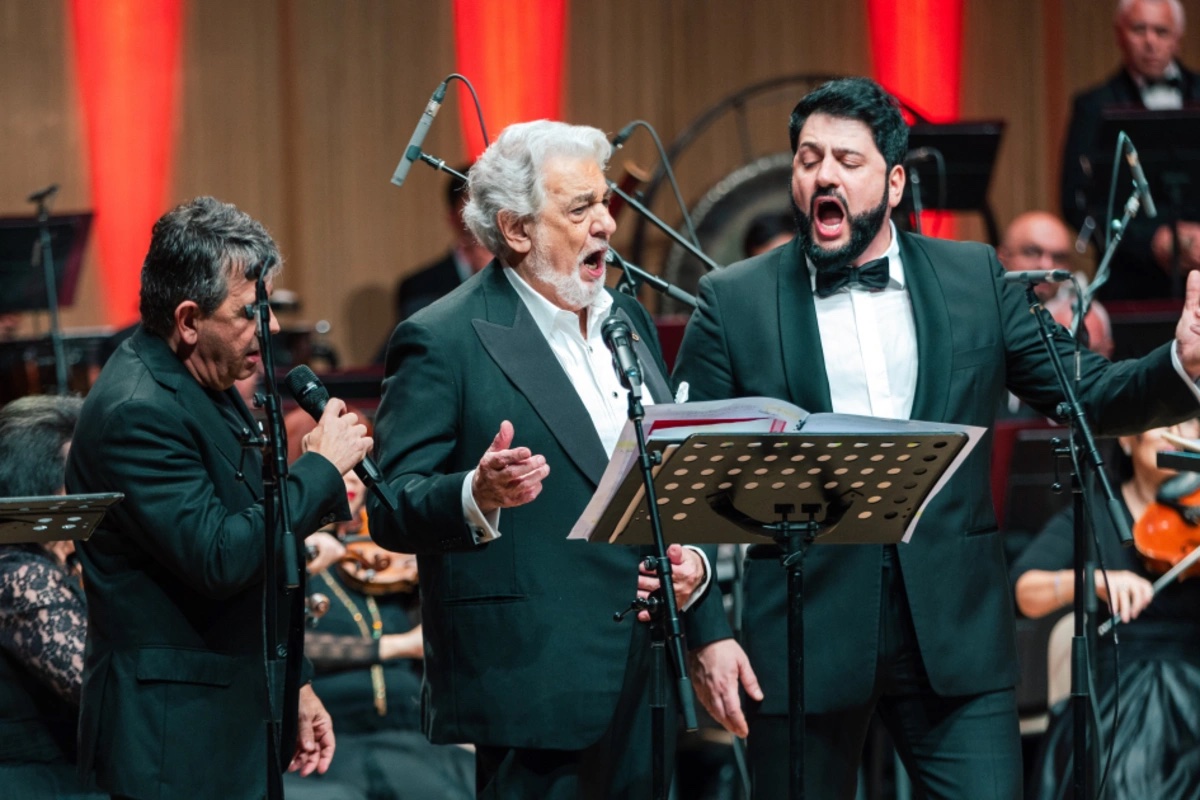
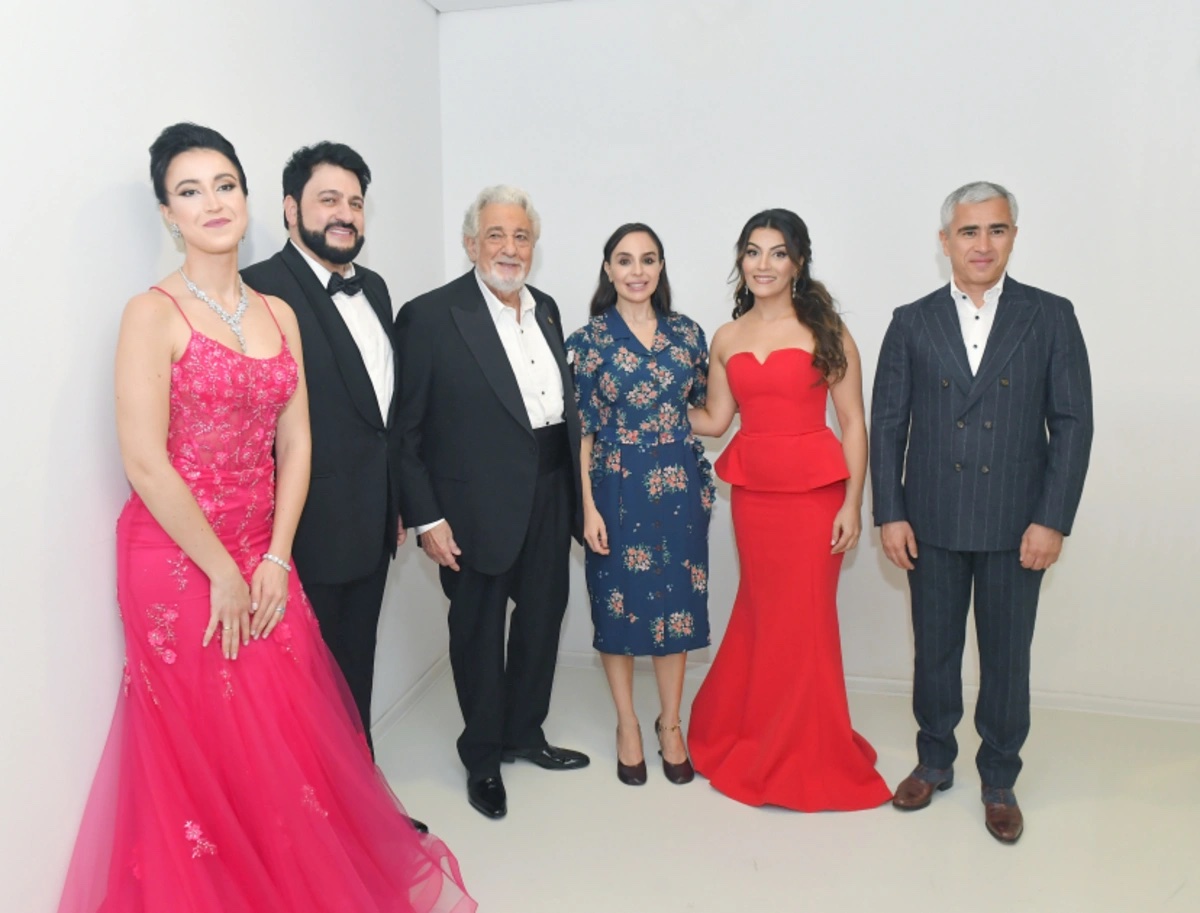
● World-renowned opera star Plácido Domingo performed at the Heydar Aliyev Center in Baku, joined by his son Plácido Domingo Jr., Azerbaijani singers Yusif Eyvazov and Afag Abbasova, and Swiss opera singer Daria Ryback. At the end of the evening, Domingo performed the Azerbaijani folk song Küçələrə su səpmişəm.
-
Monday, November 17, Armenia. The ruling party won the elections in the Vagharshapat community, a victory that is significant for the government amid its conflict with church leaders
● Nikol Pashinyan’s party has won the elections in the Vagharshapat community and will be able to form the local administration on its own. According to preliminary data from the Central Electoral Commission, the ruling Civil Contract party is leading in all 47 precincts with 48.5%. In second place is the opposition bloc “Victory” (which includes the Forward party and Dashnaktsutyun) with 31.9%, and in third place is “Mother Armenia” with 5.4%. The Armenian opposition is widely viewed as pro-Russian.
These elections were particularly important for the authorities. Echmiadzin is the spiritual capital of Armenia, and the victory there, as many media note, is significant for the government in the context of its conflict with leaders of the Armenian Apostolic Church.
● The Independent Observer mission reported violations during the elections. According to program coordinator Daniel Ioannisyan, there was one instance of unauthorized presence at a polling station, one threat, one case of inaction by the head of an electoral commission, and four cases of significant violations in filling out the voter registry. There were also breaches of the ban on campaigning, including paid ads on Facebook that continued even on the day when campaigning is prohibited. Ioannisyan also noted that voter turnout was exactly twice as high as in the comparable elections of 2021, and in three localities turnout was five times higher. According to the CEC, 45.12% of eligible voters in the Vagharshapat community took part in the vote.
● A delegation headed by Defense Minister Suren Papikyan has departed for a working visit to the United Arab Emirates.
● Pro-government MPs have raised the issue of the property belonging to the Journalists’ Union. “It must be returned to the ownership of the country,” wrote Sisak Gabrielyan, an MP from the ruling faction, on Facebook. “A lawsuit has already been filed, and a criminal case has been opened. The plot is located in the center of Yerevan, covers about 2,400 square meters, and its market value is around $3–5 million,” Gabrielyan said.
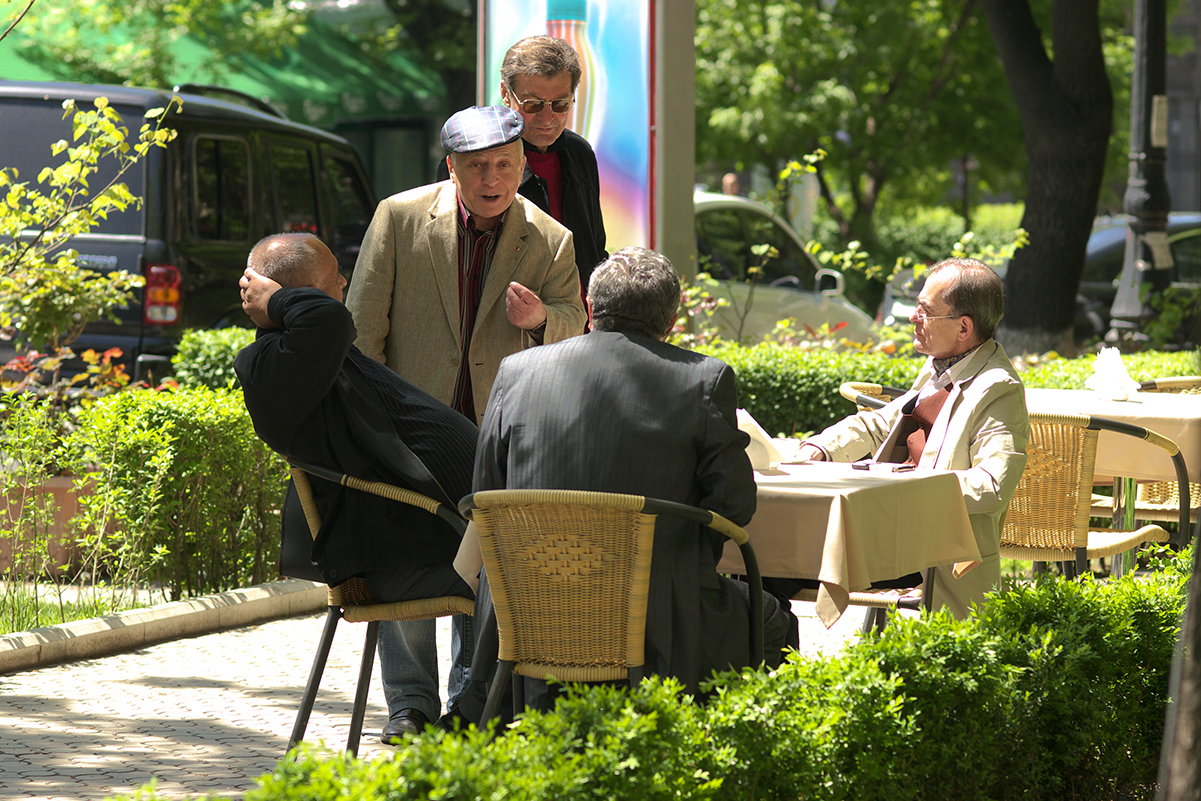
● The President of the Journalists’ Union is Satiq Seyranyan, editor of the newspaper and website “168 Hours.” She is known as a journalist critical of the authorities. “For seven years, I have heard threats addressed to me, to the Journalists’ Union of Armenia, and to the media outlet I lead. Everything is documented, including personal threats and fake videos created with artificial intelligence,” Seyranyan said.
A few days ago, “168 Hours” published an article, citing Turkish media, claiming that ten mosques are being built in Armenia at the request of Turkey’s president. Seyranyan shared this material on her Facebook page. A ruling party MP, Arusyak Julhakyan, responded: “Armenian journalism died the day Satiq Seyranyan was elected president of the Journalists’ Union. They simply didn’t tell us, so our mood wouldn’t worsen.”


-
Top stories in Azerbaijan, Armenia, and Georgia from 10-14 November, 2025