

EU commissioners: 'Georgian Dream undermines long-term partnership with EU'






European Commission on new laws in Georgia
A new package of laws adopted by the Georgian parliament regulating foreign funding and political activity has drawn sharp criticism from the European Union.
Kaja Kallas, the EU’s High Representative for Foreign Affairs and Security Policy, and Marta Kos, the EU Commissioner for Enlargement, said in a joint statement that the new laws derail Georgia from its path towards EU membership and violate international human rights obligations.
They said the legislative changes introduce a new system of state control over political activity and create serious legal uncertainty.
“The adoption by the Georgian parliament on 4 March of a package of legislative acts on foreign funding and political activity is part of the Georgian government’s systematic efforts to restrict the country’s democratic and civic space.
The new laws introduce broad state control over political activity in the country. They create potential criminal liability for individuals or organisations receiving support from foreign sources. Their vague provisions create serious legal uncertainty and significant risks of arbitrary and selective enforcement.
By adopting this package of legislation, the Georgian government is further disregarding its international human rights obligations, its commitments under the EU–Georgia Association Agreement, and moving even further away from the goal of EU membership enshrined in Georgia’s constitution. This comes against the backdrop of actions already taken by the Georgian government which have led to the unjust detention of politicians, journalists and activists, who must be immediately released.
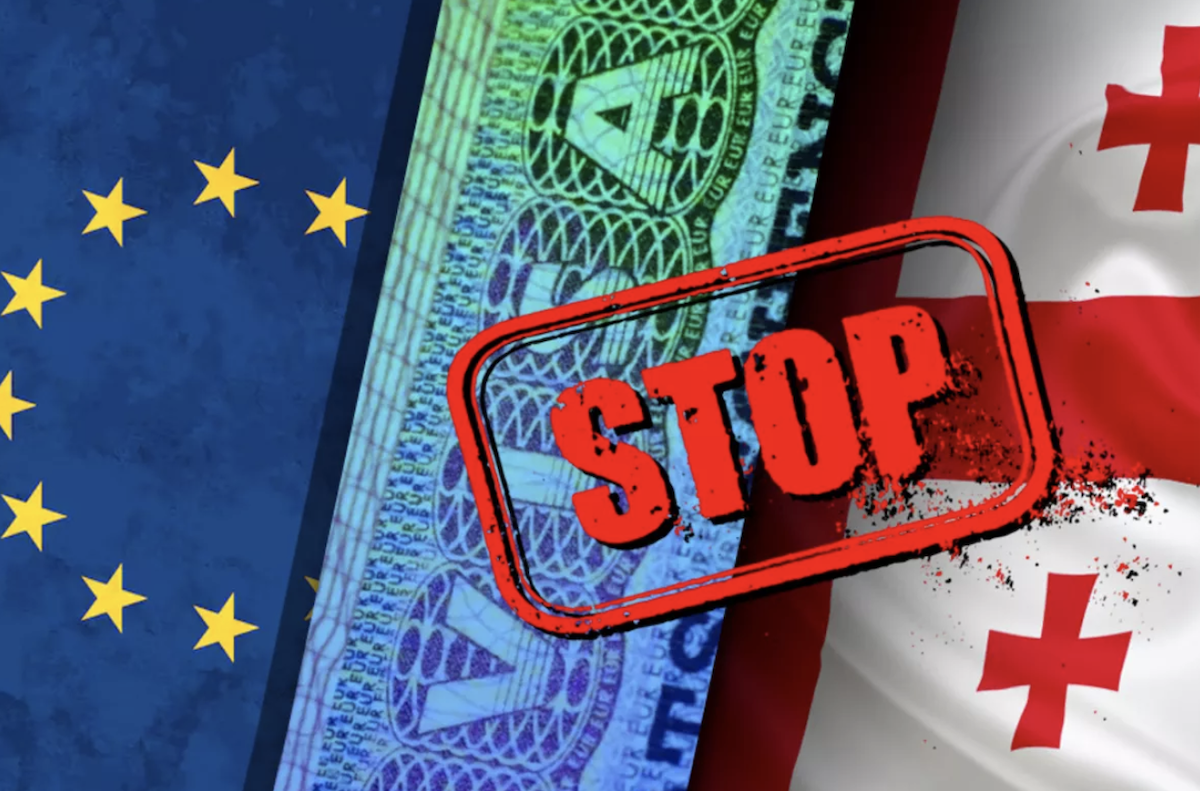
The actions of the Georgian authorities have had consequences. For example, today, in response to Georgia’s deliberate and systematic violation of its obligations under the visa-free regime in key areas of democracy and fundamental rights, the European Commission suspended visa-free travel for holders of diplomatic, service and official passports under the updated visa liberalisation suspension mechanism.
In this context, it is important to recall the depth and substance of the cooperation that has developed between the EU and Georgia over many years. The EU and its member states have consistently expressed their commitment to Georgia’s prosperity and stability and have provided reliable support at critical moments, including through the work of the EU Monitoring Mission since 2008.
The EU supported Georgia during the economic crisis and provided financial assistance. After Russia imposed restrictions on Georgian exports, the EU expanded trade opportunities for Georgian producers. Unlike holders of Georgian diplomatic, service or official passports, Georgian citizens can still travel to the EU without a visa.
The EU welcomes young Georgians, offering hundreds of scholarships. EU support for Georgia’s security, territorial integrity and sovereignty within its internationally recognised borders remains unwavering. We opened the door to Georgia’s accession to the EU family by granting it candidate status in 2023. The EU remains ready to support the people of Georgia on their European path.
The Georgian authorities are seriously undermining this long-standing partnership and are, regrettably, moving Georgia even further away from the path to the European Union — a goal supported by the overwhelming majority of the Georgian population. At this stage, we note with deep regret that Georgia’s status as a candidate country for EU membership has now been reduced to a mere name,” the statement by Kallas and Kos said.

Background
On 4 March 2026, the ruling Georgian Dream party adopted, in a third reading, amendments to the law on grants and added Article 316 to the criminal code — “extremism against the constitutional order” — which предусматривает punishment in the form of a fine, community service of 400 to 600 hours, or imprisonment for up to three years.
In addition, under the new amendments, a business legal entity can for the first time be fined (20,000 lari) for “political activity”, and in case of a repeated offence face a prison sentence of up to three years.
The government has also criminalised foreign lobbying and amended the Organic Law on Political Associations of Citizens. Under the changes, a person employed under a labour contract by an organisation receiving more than 20% of its annual income from a foreign state is barred from being a member of a Georgian political party for eight years.
European Commission on new laws in Georgia