

Azerbaijan’s Hijab Debate: Constitutional Rights vs School Restrictions





Hijab ban in Azerbaijani schools
Complaints from Secondary School No. 15 in Sumgayit and other regions suggest that the practice of barring female students wearing the hijab from attending classes has once again resurfaced in Azerbaijan’s schools.
Although there is no explicit ban on wearing the hijab in schools in the country’s нормативные акты, the restrictive practices being applied without a written decision appear to fall short of the requirement that limitations be “prescribed by law”. They may also breach the principle of proportionality and raise the risk of discrimination on religious grounds.
In an interview with Radio Azadliq, the mother of a schoolgirl, Sevinj Rzayeva, described what happened at Secondary School No. 15 in Sumgayit:
“A child under the age of 18 was expelled from school. She was left standing outside.”
According to Rzayeva, she was offered the following condition as a solution: “either remove the headscarf, or take it off at the school entrance, attend classes, and then put it back on when leaving.”
She said the school did not provide any official written notice explaining the refusal to admit her daughter, instead telling her: “it does not depend on us, it is an order from above.”
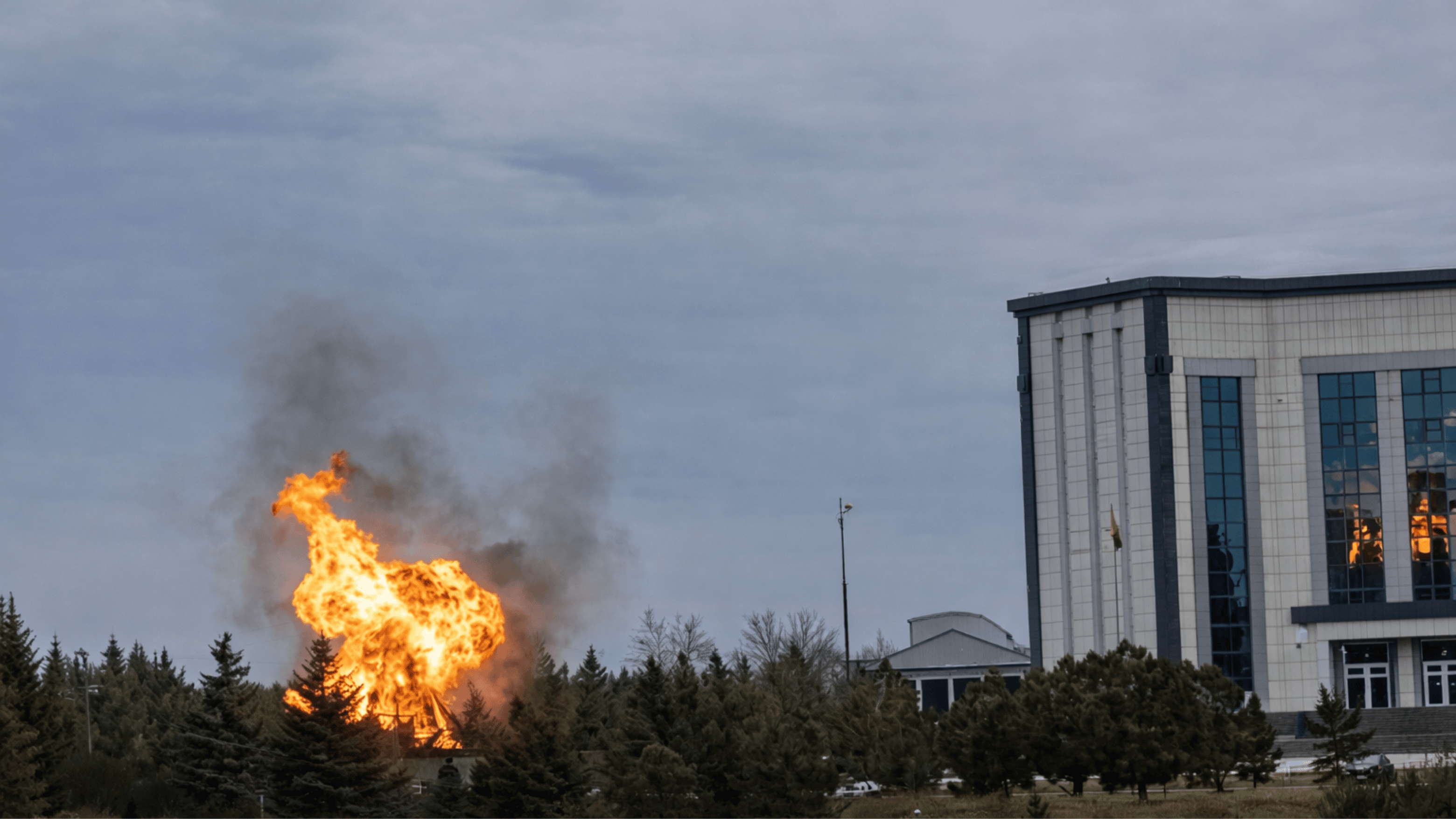
The same report notes that similar complaints have become more frequent following a drone attack on the Nakhchivan region on 5 March.
It was not possible to obtain a comment from the Ministry of Science and Education regarding these complaints.
Reports of replacing the hijab with the kelaghayi later denied
In recent days, reports have circulated on social media and in several media outlets in Azerbaijan claiming that “the hijab would be banned in official institutions and replaced with the national headscarf, the kelaghayi”.
Publications citing Yeni Musavat reported, based on unofficial information, that the wearing of religious head coverings, including the hijab, would be restricted in secondary schools, universities and state institutions, while the traditional Azerbaijani kelaghayi would be promoted instead. The publication was later deleted.
The head of the Yeni Musavat media group, Rauf Arifoglu, subsequently issued an official denial.
The statement said that information published on their platforms about banning religious head coverings and replacing them with the kelaghayi was inaccurate and unfounded. It also stressed that the report had been prepared on the basis of unverified information.
What does the Constitution say?
Article 42 of the Constitution guarantees the right to education as unconditional: “Every citizen has the right to education,” and “The state ensures the right to free compulsory general secondary education.”
Article 48, on freedom of conscience, not only enshrines this right but also prohibits coercion: “Everyone has the right to freedom of conscience,” and “No one may be compelled to express (demonstrate) their religious beliefs and convictions…”
In a school setting, these two provisions do not contradict each other. While providing secular education, the state is not entitled to exclude a student from classes on the basis of their religious beliefs; otherwise, constitutional guarantees effectively lose their meaning at the level of compulsory education.
A separate legal issue arises from claims of an “order from above”. Under the Constitution of the Republic of Azerbaijan, it “has the highest legal force” and “direct effect”.
If such a restriction does in fact exist, the relevant нормативные акты must be officially published.
“No one may be compelled to comply with an unpublished normative legal act…,” the Constitution states.
The absence of a written notice to the parent, and the presentation of the decision as a verbal “order”, effectively contradict the requirements of legality and official publication. If a restriction is asserted, it must be grounded in a legal framework and formalised in a written decision subject to appeal.
What does the Law on Education say?
Article 14.10 of the Law on Education regulates school uniforms as follows: “In the Republic of Azerbaijan, the dress code for students in all educational institutions is determined by the charter of the educational institution.”
This provision allows school charters to set technical requirements, but it does not grant them the authority to restrict the guarantees set out in Articles 42 and 48 of the Constitution.
School internal regulations require a unified dress code, but they do not mention the hijab. In this context, the practice of denying access to classes is based not on a legal norm but on arbitrary interpretation. However, arbitrary interpretation cannot serve as a sufficient basis for restricting constitutional rights.
Cabinet of Ministers decision
Cabinet of Ministers Decision No. 96 approves the “Description of uniforms for students of state general education institutions” and states that it has been in force since the 2022/2023 academic year.
The document describes the summer uniform for girls as a “short-sleeved shirt and skirt”, and the winter uniform as a “long-sleeved shirt, skirt or trousers, … jacket”. It also specifies that the final set of uniforms is determined by the pedagogical council, with one approved option in each school.
The decision defines the composition of the uniform and the procedure for its selection. However, it does not establish a separate ban on the hijab. Therefore, invoking this regulation to completely bar a student from attending classes goes beyond uniform requirements and effectively amounts to depriving her of the right to education.
International law: non-discrimination and proportionality
Article 9 of the European Convention on Human Rights permits interference with the manifestation of religious beliefs only if it is “prescribed by law” and “necessary in a democratic society”.
Article 14 requires that rights be secured without discrimination, including on the grounds of religion. Article 2 of Protocol No. 1 explicitly states: “No person shall be denied the right to education.”
It also emphasises the obligation of the state to respect the religious and philosophical convictions of parents. In this context, excluding a student from school represents one of the most severe forms of interference. The requirement that a restriction be “prescribed by law” implies the existence of a clear written rule, while the criteria of necessity and proportionality require that a student not be excluded from the educational process if less restrictive measures are available.
“If relations with Iran improve, the hijab ban will also be forgotten”
Complaints related to restrictions on the hijab in Azerbaijan’s schools have been raised repeatedly in previous years. In October 2012, an unauthorised protest took place outside the Ministry of Science and Education in Baku, where clashes with police occurred and several people were detained.
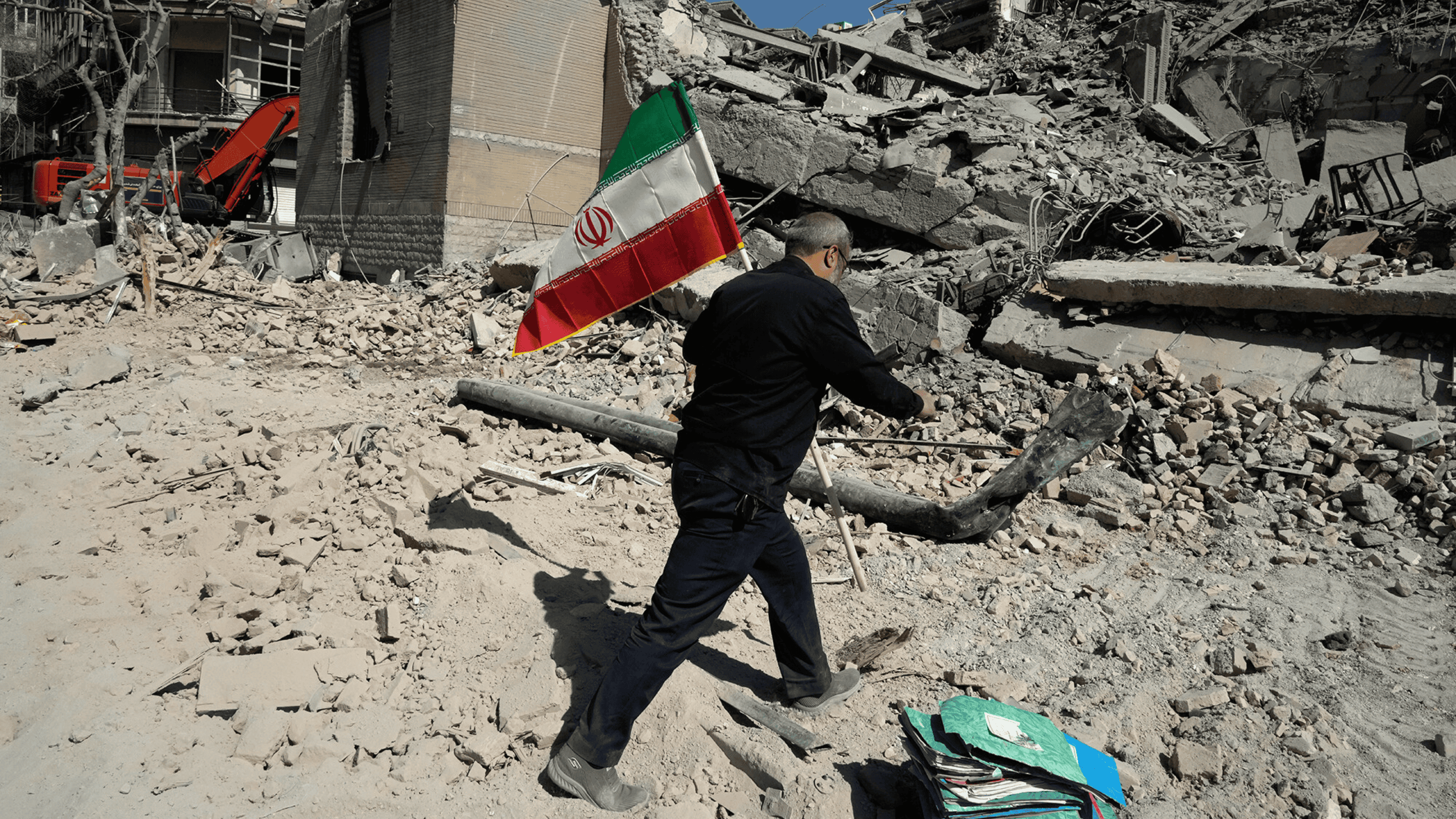
Human rights defender Arif Yunus, commenting on the situation, said that amid deteriorating relations between Azerbaijan and Iran, there is often a rise in arrests or similar restrictions:
“Alongside relations between Azerbaijan and Iran, the US factor also plays a role here. The Azerbaijani authorities want to demonstrate that they are taking measures related to Iran and carrying out detentions. On the issue of the hijab, they are also taking a tougher stance.”
Mr Yunus believes that if relations with Iran were to normalise, the hijab ban could also be quietly dropped.
Hijab ban in Azerbaijani schools