GYLA study: Laws passed in Georgia since 2024 affect fundamental rights






Personalised legislation in Georgia
A significant share of the legislative changes adopted in Georgia since 2024 have served to consolidate political power and restrict critical voices, according to a new study by the Georgian Young Lawyers’ Association (GYLA), which examines the practice of “personalised lawmaking”.
The organisation says personalised legislation refers to laws that serve the interests of ruling elites and are used against political opponents or to strengthen those in power.
According to the study, it is within this trend that Georgia’s parliament has adopted numerous legislative amendments since 2024, many of them through an expedited process and without broad public consultation.
According to GYLA, between 3 April 2024 and 20 February 2026, parliament fast-tracked and passed 304 laws. Some were introduced as legislative packages, while others took the form of individual amendments. The organisation argues that the process often lacked adequate scrutiny and democratic debate.
The study says some of the adopted changes have restricted fundamental rights, including freedom of assembly, freedom of expression and association, media independence, and the rights of civil servants.
The report gives particular attention to the “foreign agents” law adopted in May 2024, which GYLA says was aimed at stigmatising civil society organisations. The organisation notes that the law was passed amid mass protests and a violent crackdown on demonstrators.
The study also argues that the FARA law adopted in 2025, along with amendments to the Law on Grants, has significantly complicated the work of civil society groups and created legal mechanisms that risk effectively criminalising civic activism.
GYLA also highlights developments following the 2024 parliamentary elections. According to the organisation, repressive lawmaking intensified further against the backdrop of what it describes as systemic torture of protesters during demonstrations in November and December.
The study says amendments to the Code of Administrative Offences, the Criminal Code, and the Law on Assemblies and Demonstrations have sharply increased penalties related to protest activity and introduced new offences directly linked to the expression of dissent.
The organisation argues that the current legal framework effectively creates a risk of criminalising freedom of assembly. According to the study, existing rules require organisers to notify the Interior Ministry in advance in a manner that closely resembles a permit system, as the ministry is empowered to alter the time, location and route of a gathering, as well as decide when roads can be reopened to traffic. Violating these requirements can result in administrative detention, while repeat offences may lead to criminal liability.
The study also highlights changes affecting freedom of expression. According to GYLA, broadcasters’ ability to receive foreign funding has been restricted, vague requirements relating to impartiality standards have been introduced, and photography, video recording and audio recording at court hearings have been largely prohibited.
GYLA also considers problematic the introduction of a provision banning insults against public officials and civil servants. The organisation argues that the measure carries a risk of arbitrary enforcement and could have a chilling effect on critical expression.
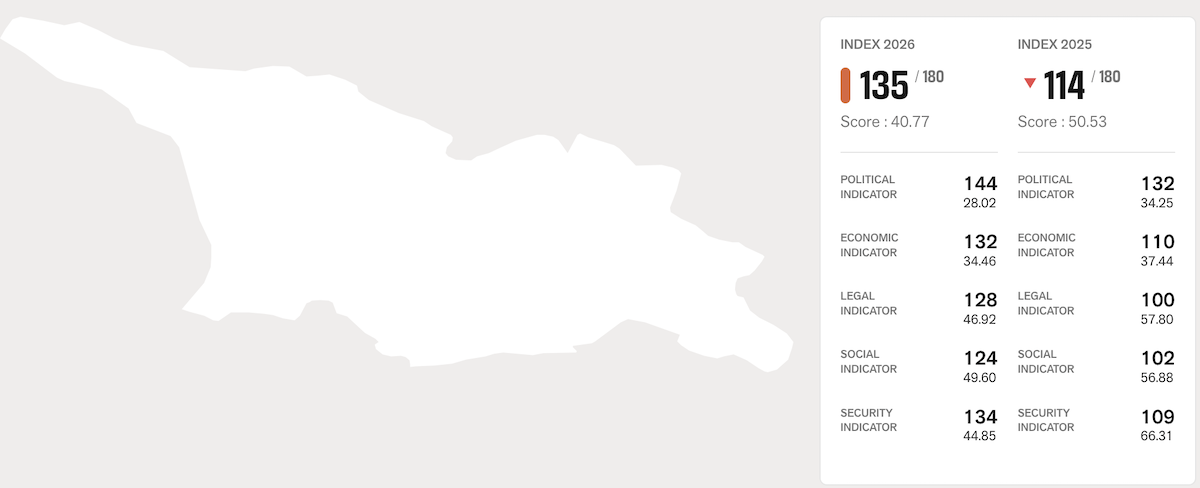
According to the study, the trend of personalised lawmaking continued into 2026. Amendments adopted in March further tightened regulations governing civic and political activity, including through stricter grant-related legislation, the introduction of new criminal offences, and the effective restriction of political party membership for representatives of civil society organisations.
The organisation argues that the impact of these changes extends beyond freedom of assembly, expression and association. According to GYLA, they also affect political pluralism, academic freedom, the right to privacy, safeguards for the independence of the civil service, the rights of LGBTQI people, as well as the legal status of foreigners and stateless persons.