Saving shelter puppies: Why Georgia is debating the fate of stray dogs again


Gori shelter
Footage from a municipal shelter in the Georgian town of Gori, showing dozens of puppies kept in a cramped, filthy enclosure, has sparked public outrage and protests. Animal rights activists removed hundreds of animals from the shelter, many of which they say were ill.
But the case in Gori is just one episode in a long-running dispute over stray dogs in Georgia. Why have government programmes failed to solve the problem? What happens to captured animals, and who is responsible for their fate?
Dozens of dogs in a single enclosure
On Thursday evening, Georgian media published footage from a municipal dog shelter in Gori. The short video, filmed on a mobile phone, shows a dirty enclosure with a wet floor. It appears to measure no more than five to seven square metres.
Dozens of puppies crowd into the enclosure, piled almost on top of one another. They huddle together and walk over each other’s heads. The footage shows that they are dirty; some are wet, while others look extremely thin. Their living conditions are clearly distressing and incompatible with the principles of humane treatment.
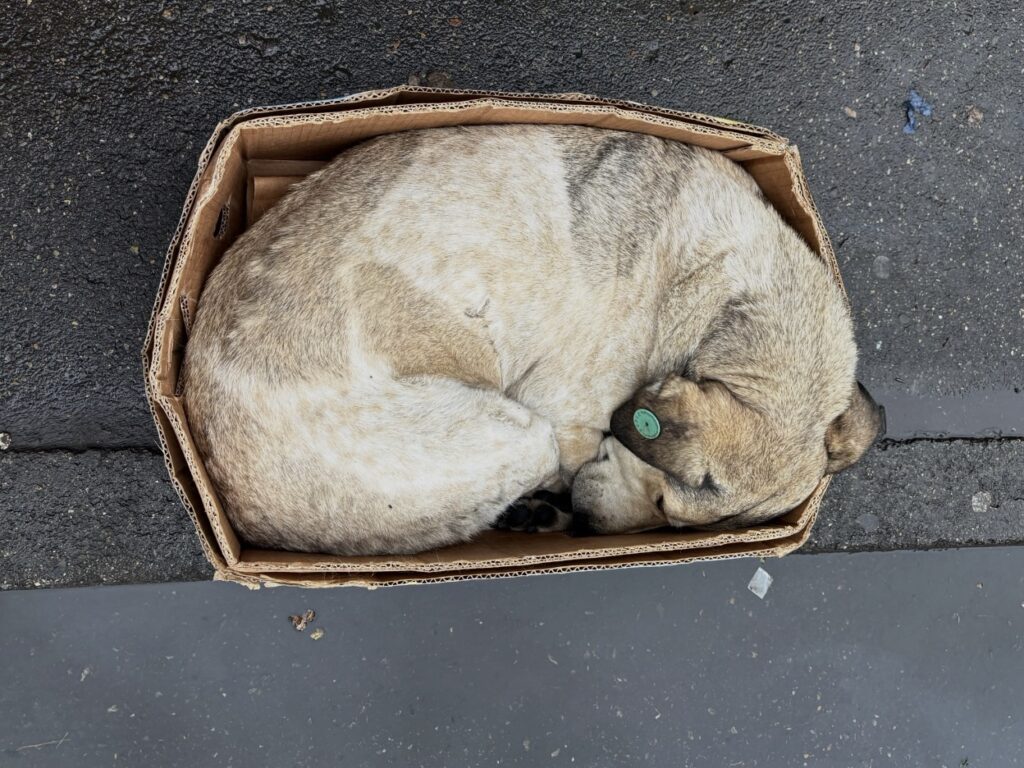
The shelter soon issued a response of its own. The regional Agency for the Management of Stray Animals published a statement on its Facebook page, saying that staff had been carrying out routine cleaning and had therefore gathered all the puppies in a single enclosure.
Activists dismissed the statement as an excuse. They argued that even if the staff had been cleaning, this should not have caused the animals to suffer or put them at risk.
Protests and animal rescue
The footage from Gori outraged animal rights activists, campaigners, animal lovers and other concerned members of the public. The videos spread rapidly across social media, and users soon began organising a protest outside the shelter.
The protest took place in Gori the following day, on Friday 16 October. It was noisy and saw several incidents. One report, for example, alleged that a shelter employee attacked a protester.
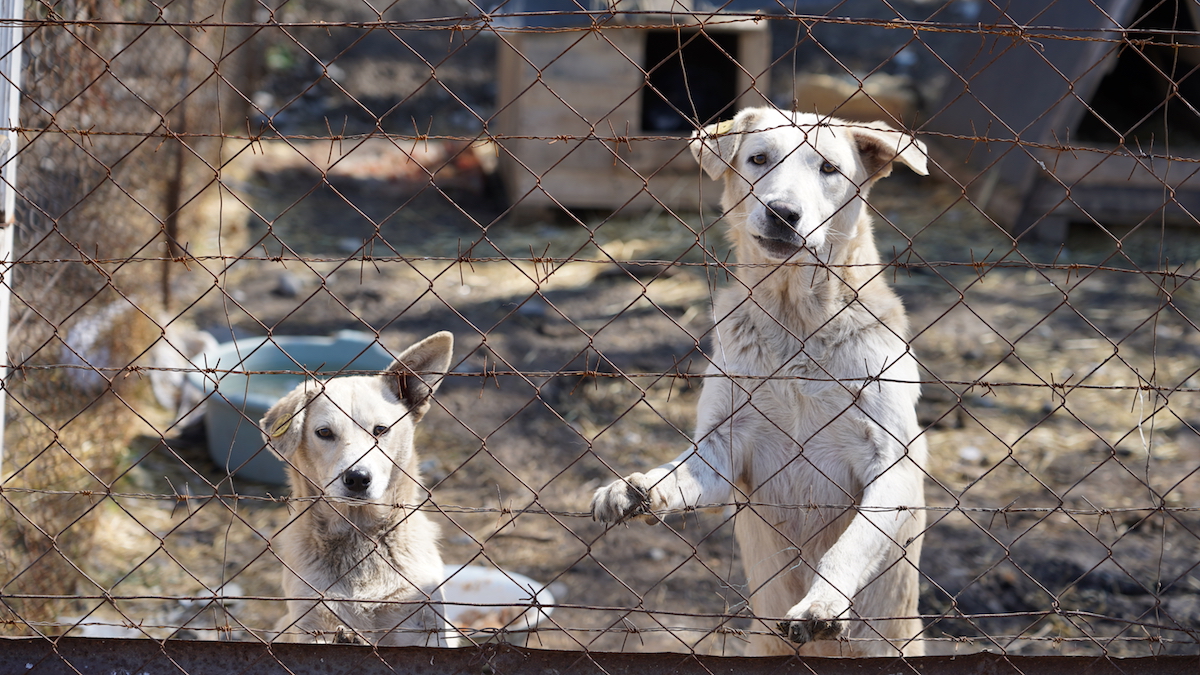
Nevertheless, the protesters managed to secure the release of most of the puppies. According to various reports, between 100 and 300 animals were removed from the Gori shelter. People launched a fundraising campaign and an urgent search for adopters. Several veterinary clinics joined the effort, offering to treat the rescued animals free of charge.
Abuses and new risks
That evening, activists told journalists that many of the animals had been diagnosed with a serious viral disease and that the weakest puppies had died on the way out of the shelter. They said the rescued animals drank and ate voraciously, which they believed indicated that the shelter had not provided them with enough food or water.
Other alleged violations included a lack of quarantine facilities, missing documents identifying where the puppies had come from, cold conditions and appalling sanitation. One enclosure reportedly housed sick and healthy animals together, alongside the remains of dogs that had died.
Veterinarians who joined the discussion highlighted another concern: the conditions at the Gori shelter could trigger viral outbreaks among dogs in Tbilisi and other cities.
Veterinarian Mariam Chkhikvishvili, for example, wrote that people should, where possible, treat the puppies rescued from Gori in a dedicated facility that allows them to maintain proper sanitary standards.
“Taking the puppies from one clinic to another makes very little sense: it could contribute to the spread of mutated viruses. We need to follow at least the basic rules of disease control: do not move infected puppies from place to place or put other animals — both pets and strays — at risk. These cases require an isolated facility where staff can properly clean and disinfect surfaces,” Chkhikvishvili said.
She added that Tbilisi had faced a similar crisis in the past, with cases in which serious diseases spread from a shelter in the capital.
A bad reputation
The footage has reignited debate in Georgian society about stray animals and how people treat them. But before examining this long-standing problem, which Georgia has struggled to resolve for decades, it is worth explaining why the images from Gori caused such an uproar.
At first glance, the public reaction might seem to stem from surprise, as though people had assumed the shelter met all the required standards, only to discover that it did not. In reality, the opposite is true: the Gori shelter had long been dogged by grim rumours, and the videos appeared to confirm them.
Activists have been raising concerns about poor living conditions and staff cruelty for years. This spring, the shelter even faced accusations of killing dogs on a large scale.
In April, footage spread across social media showing smoke rising from the Gori shelter’s crematorium at night. The person who filmed it claimed the crematorium had operated throughout the night and that a strong smell of burning hung over the site.
Animal rights activists suspected that staff were killing dogs in large numbers, including live animals. However, no convincing evidence emerged that anyone had burned animals alive, and the authorities never officially confirmed the allegations.
JAMnews covered the case in detail in an in-depth report on the mass capture of stray dogs and growing distrust of the state agencies responsible for their fate.
The October scandal was therefore far from the first time the Gori shelter had come under scrutiny. More than that, the events in Gori formed part of a much broader conflict between the state and animal rights activists, which has continued in Georgia throughout much of 2026.
Where do stray dogs disappear to?
In spring 2026, protests against the mass capture of stray dogs broke out in several Georgian cities. The demonstrations followed numerous reports of missing animals, including dogs that had been sterilised, vaccinated and cared for by so-called community carers — people who regularly feed, treat and look after strays without taking them into their homes.
A JAMnews report published on 23 May featured accounts from residents of different Georgian cities who were trying to find out what had happened to the dogs in their care and secure their return. In interviews with the publication, activists voiced fears that authorities were taking animals away from familiar surroundings and relocating them to places where they could not find food or water, effectively condemning them to die.
The authorities categorically deny allegations of mass killings. According to the official account, staff capture dogs as part of a state population management programme that includes veterinary examinations, sterilisation, vaccination and the subsequent return of animals to their habitat. Activists, however, say the programme captures all dogs, including those that underwent sterilisation long ago.
This raises one of the main contradictions. Under the programme’s rules, authorities cannot return animals to every location. Restrictions apply in areas near schools, kindergartens, medical facilities, markets and food outlets.
Yet stray dogs tend to live precisely around shops, markets and cafés. In cities such as Tbilisi, it would be difficult to find a street without a school, clinic or shop nearby. This raises an obvious question: where do the authorities take dogs that they cannot release at the places where they captured them? And who monitors what happens to the animals after they leave the shelter?
Animal rights activists who spoke to JAMnews say they have yet to secure a transparent, accessible system for tracking the fate of every captured animal.
Countless strays
Nobody knows exactly how many stray dogs live in Georgia. Despite the problem having persisted for decades, the country still lacks reliable nationwide statistics.
Relatively reliable figures exist only for Tbilisi, where the municipal Animal Monitoring Agency tracks the stray animal population. According to figures from the agency cited by JAMnews, the Georgian capital had around 29,676 stray dogs in 2025.
Animal rights activists estimate that Georgia could have hundreds of thousands of stray animals, but independent nationwide counts have yet to verify that figure.
The scale of the problem is also reflected in public attitudes. According to a CRRC Georgia poll for the National Democratic Institute (NDI), conducted in October 2023, 22% of respondents considered stray animals one of the country’s main social problems.
This comes as little surprise. Stray dogs are a familiar sight on Georgia’s streets. People encounter them near shops, markets, bus stops, residential courtyards and tourist areas. Many dogs wear special tags on their ears, indicating that they have undergone registration and veterinary procedures. Local residents and tourists often feed them.
However, peaceful coexistence between people and animals does not always work. Reports of dog attacks on people regularly emerge in Georgia, while the risk of rabies remains a public health concern. Calls to control the stray dog population and protect public safety therefore have a real basis.
Simply removing dogs from the streets, however, does not stop the population from growing. As long as pet dogs continue to breed without control and people abandon unwanted puppies, new animals will take the place of those authorities capture.
New laws, old problems
In 2025, Georgia’s parliament passed a law on pets intended to establish a unified legal framework for their care, registration and breeding control. In February 2026, the government approved a dedicated programme to manage the overpopulation of dogs.
The programme centres on an approach known as CNVR: capture, neuter, vaccinate and return. The World Organisation for Animal Health (WOAH) also describes this approach in its guidelines. When properly implemented, it can gradually reduce animal populations without resorting to mass culling.
However, the way authorities carry out each stage is crucial. Sterilisation must cover a substantial proportion of the population, vaccination must prevent the spread of disease, and the relocation and release of animals must take their welfare and public safety into account.
Georgian animal rights activists have raised numerous concerns about how the authorities implement these measures. They accuse state agencies of lacking transparency, mistreating animals, violating shelter standards and failing to monitor what happens to animals after their capture.
The overall effectiveness of government policy has also come under scrutiny. The authorities have tried to tackle the problem before, regularly announcing tenders over the years for sterilisation campaigns targeting stray animals in the regions. Yet the scale of the problem suggests that these programmes have failed to deliver significant results.
According to animal rights activists, private individuals still carry out much of the sterilisation work in practice. Animal carers and volunteers pay for operations, specialist non-governmental organisations take part, and volunteers from European countries travel to Georgia to help run sterilisation campaigns. Activists say state programmes reach far fewer animals than necessary, and they also question the quality of the work.
“Let the dog go”: where stray animals come from
Another serious problem is irresponsible ownership. In Georgia, people even use the common expression “let the dog go” to describe a practice in which owners take unwanted animals far from home and abandon them in a forest or by the roadside.
In rural areas, owners may abandon a dog because it hunts domestic poultry or otherwise “misbehaves”.
Energetic breeds that need plenty of attention and exercise are particularly vulnerable, as are hunting dogs that fail to meet their owners’ expectations. Meanwhile, effective controls on animal breeding remain largely absent.
The legal framework to tackle such practices already exists. Georgia’s 2025 Law on Pets explicitly prohibits owners from abandoning their animals and requires them to register their pets, partly to prevent such cases.
The law also introduces restrictions on dog breeding. Since July 2026, a three-year moratorium on breeding certain breeds has been in force.
The footage from the Gori shelter offers a glimpse of how effectively these rules work in practice. If the authorities properly enforced the law, many of the puppies found there — along with the hundreds of other emaciated and abandoned animals that people encounter along Georgian roads — might never have ended up on the streets.
Diana Petriashvili, Mediaset
Gori shelter